DD
MM
YYYY

PAGES

DD
MM
YYYY

spot_img

PAGES

Home Blog Page 6914

What Nigeria Can Learn from South Korea on Food Waste Management

0

By Nnamdi Odumody

According to the Food and Agricultural Organization, 1.3 billion tonnes of food is wasted every year. The 1 billion hungry people in the world could be fed on less than a quarter of the food wasted in the United States of America and Europe. Simply, food waste is a major problem in the world, creating disequilibrium where some regions waste food even as others go hungry.

According to the Food and Agriculture Organization, 35-50 percent post harvest losses for perishable agricultural products are lost annually in the region due to poor planting practices.

In a recent report released by the World Economic Forum, cutting food waste by 20 million tonnes could help the transformation of global food systems by 2030.

South Korea recycles 95 percent of its food waste. Its citizens generate more than 130 kg of food waste every year. In 2005, dumping of food in landfills was banned, and in 2013, compulsory recycling of food waste was introduced, using special biodegradable bags. An average family of four pays $6 a month for the bags which encourages home composting.

The bag charges meet 60 percent cost of running the scheme, and increased the amount of food waste recycled from 2 percent in 1995 to 95 percent presently. The South Korean government approved the use of recycled food waste as fertilizer although some wastes are also deployed as animal feed.

In Seoul, its capital city, 6,000 automated bins equipped with scales and RFID (Radio Frequency Identification) weigh food waste as it is being deposited in real time, and charges residents using an ID card. This had led to the reduction of food waste in the city by 47,000 tonnes, in six years, according to city officials. Before depositing waste, its residents remove moisture to reduce the weight which helps in reducing their charges as food waste is 80 percent moisture, saving the city $8.4 million in collection charges within the period.
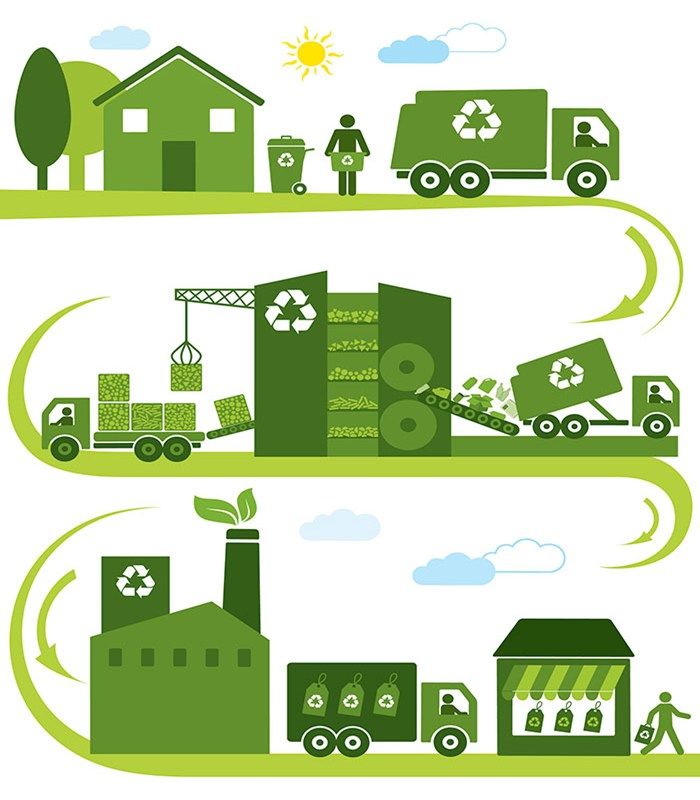
Recycling food waste in action (source: icas)

The waste collected using the biodegradable bag scheme is squeezed at the processing plant to remove moisture which is used to create biogas and bio oil. The dry waste in then turned to fertilizer for its urban farm industry which has increased in the past seven years, covering 170 hectares of community space in Seoul with the local administration providing between 80-100 percent of  startup costs.

Urban farming has helped to unite residents who are isolated from one another, and the city’s leadership plans to install waste composters to support this growing trend.

Nigeria and the rest of Africa can learn useful lessons from the South Koreans, in the sustainable management of waste, to create a circular economy that will make our environment livable for the 21st century.

Nigeria, Copy and Adapt China’s Shenzhen Special Economic Zone (SEZ) for our SEZs

0

By Nnamdi Odumody

On December 18, 1978, Chinese leader Deng Xiaoping decided to initiate reforms and economic policies aimed at opening up the economy. One of his experiments was the establishment of Special Economic Zones (SEZs). SEZs are clusters that would provide all the necessary support for industrialists to set up factories that would cushion China to become an industrialized nation.

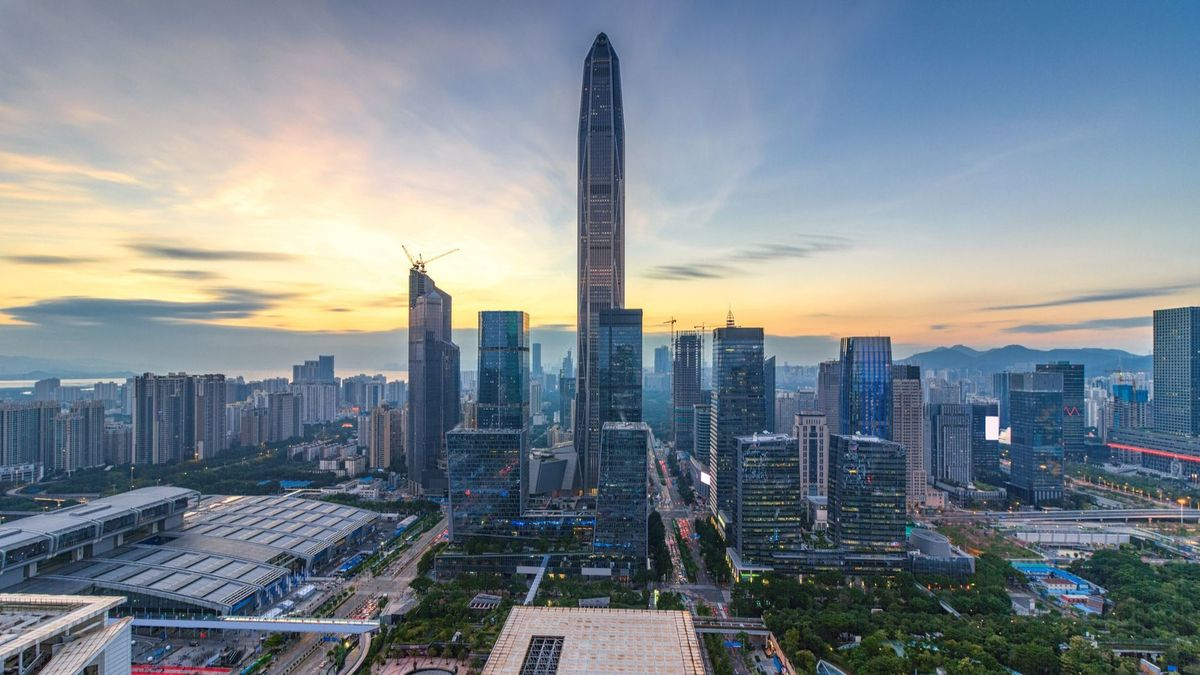
Deng took advantage of a fishing village of about 300,000 inhabitants called Baoshan which was close to Hong Kong, in the Pearl River Delta, of Southern China. This community also known as Shenzhen would be the first Special Economic Zone, and is now home to 12 million inhabitants from all over the world, with a per capita income of $27,199, and a nominal output of $338billion. According to The Economist, of out of 4,000 SEZs across the world, Shenzhen Special Economic Zone is the most successful.

‘’The development of global manufacturing industry shows a certain pattern. It relocates from one region to the other every twenty years.’’ Prof Qu Jian, VP China Development Institute

Nnewi, Nigeria

Since the 1950s, the global manufacturing base has relocated three times.

The first round of global industrial relocation dated back to the 1950s when the U.S and Europe began to shift their traditional industries to Japan, as they had established their leading positions in global economy, and technology.

The second round took place in the 1970s when the third scientific and technological revolutions accelerated Japan’s industrial upgrade. As a result, Japan shifted its focus onto developing capital intensive industries such as chemicals, automobiles, electronics, aviation, and biotechnology. This redesign was as a result of the Kaizen Philosophy which laid the foundation for Japanese manufacturing to become globally competitive.

The 1990s marked the beginning of the third round of industrial transfer, to relocate labor intensive industries, and some low technology industries, to the coastal areas of mainland China, specifically Guangdong Province.

The following policies made Shenzhen Special Economic Zone to succeed.

  • Policy On Imported Equipment for Foreign Funded Enterprises
  • Duty Free On Personal Use Goods in the SEZ
  • Land Tax Incentives.
  • Policy of Credit Funds
  • The Short and Medium Term Policy of International Commercial Loans
  • Corporate Income Tax Incentives for Enterprises in the SEZ
  • Coordinated Measures of Social Insurance in the SEZ
  • Liberalization Policy on Commerce and Industry in the SEZ
  • Reforms to allow establishment of Foreign Banks in the SEZ
  • Reform of the Shenzhen Port to make it a global destination for import and export of goods
  • Incentives for Processing Trade
  • Policy on Imported Goods

Shenzhen’s industrial redesign saw it to move from products imitation (shanzhai), in its factories, to a new level of innovation capability, and in the process powered the emerged China. Consequently, it invests 4.3 percent per annum of its GDP in Research and Development and is now China’s Innovation and Technology capital, playing host to Huawei, Tencent, BYD, and Beijing Genomics Institute – the world’s biggest genome sequencing lab. Other homegrown technology brands include Ping An Insurance, I-Flytek, DJI, Oppo, and Oneplus.

The Nigerian Special Economic Zone company is an initiative of the Federal Ministry of Industry, Trade and Investment with vision to develop world-class Special Economic Zones, across Nigeria, to boost the competitiveness of Made In Nigeria products for regional and global exports. Components include Enyimba Economic City in Abia, Funtua Cotton Cluster (Katsina) and the Lekki-Epe Industrial Park in the Lekki Free Trade Zone.

Nigeria should copy and adapt Shenzhen SEZ to ensure we can deliver something competitive. The global capital is scarce, and investors will only flock to where there are incentives to attract them. This means our SEZs must be dynamic and innovative to attract the right capital.

Aba Will Become Shenzhen Of Africa With Its FTZ Status

Jumia IPO Was Good Business for Me – More IPOs Please

0

The Jumia IPO was really good, not just for Jumia, but for many others. I spoke with many media organizations, and added some clients in the process. A radio station invited me to Philadelphia but I had to decline because of scheduling conflicts. It turns out that my 30 million addressable market size is it.  A VC fund asked us to rework numbers from its African portfolios Can we have more IPOs?

The Precious 30 Million Nigerians

Here is an excerpt from one of my interviews to a U.S. publisher.

“You can’t scale as quickly as Alibaba did in China or Amazon did in the States,” said Ndubuisi Ekekwe, founder and chairman of Fasmicro,. ..

“In Nigeria, companies like Jumia only have about 30 million potential customers, we estimate, with the necessary disposable incomes for travel, out of about 190 million residents,” said Ekekwe. “Social mobility is too static. Africa’s strongest economies typically don’t have the broad and growing middle classes you need to repeat the success of a Ctrip.”

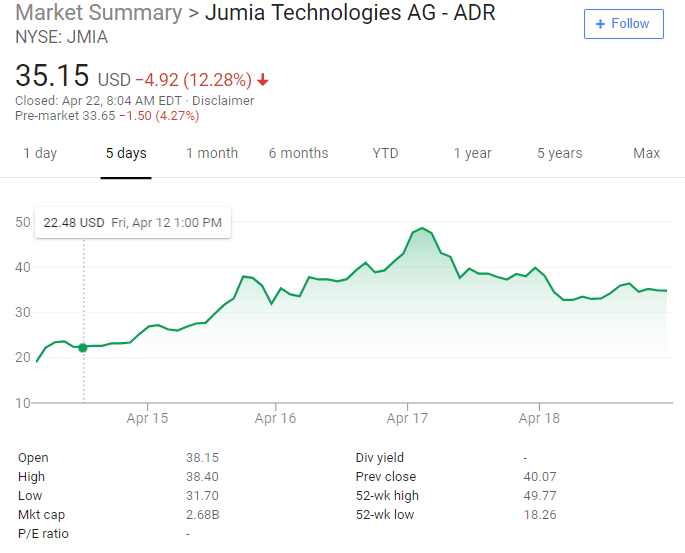
Jumia has a date with destiny as it works for its first quarterly for the NYSE. If it shows growth, Jumia can hit north of $4 billion but if it misses key indicators like revenue and active users, Jumia will be under severe stress. It has already given up more than $1.2 billion from its top numbers (now worth $2.7 billion from $3.9 billion). It has to make sure that stops, as American investors are panic-prone when it comes to foreign companies.

Jumia stock

We need more IPOs as it makes people pay attention on the promises. Interswitch and Andela should get ready. This is good business as the world pays attention on Africa and Nigeria! Tekedia coverage of the IPO is here.

WinX DVD Ripper Platinum Fixes DVD Playback Problems by Decoding DVDs of Any Type

0

You have that legendary and iconic artist on DVD but technological trajectories have caught up with you: the DVD is there but you cannot play the artist because your present tech gadgets are not compatible with that DVD format. It is a big friction we all go through, missing precious pasts as dislocations engineered by innovations distort moments we have saved and archived in DVDs. I had the same issue – and overcame it. A brilliant software called WinX DVD Ripper Platinum, a DVD Ripper/Rip DVDmade the difference.

WinX DVD Ripper Platinum is a Windows-based software capable of ripping any DVDs/ISO images to hard drive. It can rip DVD to MP4, MPEG and more. More so, using the software, one can convert DVDs for playback on Apple products like iPhone, iPad, Apple TV, and iTunes. For the non believers of Apple world, who use broad Android devices, you are also covered as products from Huawei, Samsung, Tecno and even Amazon Kindle are supported.

I have Microsoft Xbox and Sony phone and was able to copy my DVD library to Plex Media Server, and NAS drive.  Simply, WinX DVD Ripper Platinum allow people to solve DVD playback challenges as it can decode  DVDs of any types from any countries.It supports the following versions of Windows – Windows 10, Windows 8/8.1, Windows 7, Vista, XP, 2003, and 2000.

The capability to work in any nation means WinX DVD Ripper Platinum. overcomes DVD playback errors which can include things like failed to read DVD, DVD won’t play on Windows 10, etc. These are errors related to region encoding and encryption restrictions. By rippling the DVD to video with WinX DVD Ripper Platinum, these issues are managed.

Core Features and Advantages

There are many great features and inherent advantages in this largely free DVD Ripper software. Some include:

  • The solution is fast – the whole ripping process of DVD to video can happen in 5 minutes. This is possible with the patented in-built Level-3 hardware acceleration technology.
  • It has deep features making it versatile. This means the outputs are available in many formats to enable playbacks in any device like Android, iPhone, etc
  • No matter your DVDs –  made by yourself, or purchased from stores (from other countries), you can make perfect backup by using the powerful DVD ripper. Even if your DVDs are scratched, damaged or unplayable, the software is here to offer a solution.
  • High Quality Engine helps deliver highest possible image quality. On top of this, you can balance and master the video quality and file size according to your own need.
  • This DVD ripping software is preloaded with a video editor to polish your DVD movies. You can crop video to remove the unwanted borders and area, trim video to set the start/end time to cut video clips out and merge to combine several titles. You can also select subtitle track (incl. forced subtitle) and even add the downloaded SRT subtitle files in any languages.

How to rip DVD to Video

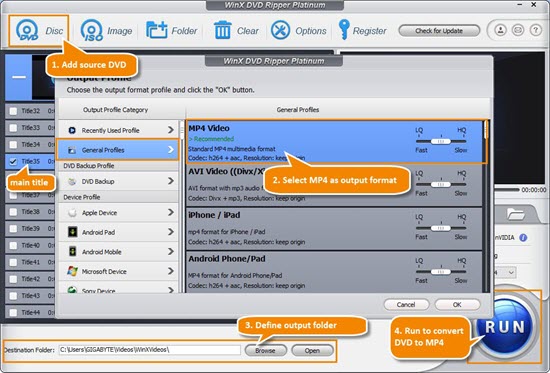
To rip DVD to video (MP4/MKV/AVI) with WinX DVD Ripper Platinum, there are simple steps. First, install and launch WinX DVD Ripper Platinum on your PC. Then follow the tutorial below to rip DVD to MP4 on Windows (10) easily and quickly. You should insert the DVD Disc into the DVD drive in advance.

Step 1. Add the source DVD disc/folder.
Open WinX DVD Ripper, click DVD Disc icon. A dialogue box appears asking you to select source disc. Do it and click OK.

Step 2. Select MP4 as the output format.
A couple of seconds later, all DVD titles will be listed and the main title will be automatically checked. Meanwhile, Output Profile window pops up.

Find General Profiles category and select MP4 Video (codec: h264+aac) as output format. Click OK. Additionally, you can choose MP4 output profile from other categories, such as YouTube Video, to iPhone Video, to Android Video according to your needs.

Step 3. Define output folder to save MP4 video.
At the Output Setting area, click Browse button to select a destination folder in the dialog box that opens, and click OK.

Step 4. Start to convert DVD to MP4 without quality loss.
This DVD to MP4 ripper will automatically enable hardware acceleration according to your GPUs. you just need to click RUN button on the bottom right and It takes roughly 5 minutes to rip a feature-length DVD movie to MP4. Certainly, a process bar can tell you how the conversion goes.

Step 5: End

All Together

I know you are excited to go straight and use this software. Yes, you want to get DVD Decoder for Free. I refer you to this WinX DVD Ripper Platinum giveaway campaign for a start.

Intel Exits 5G Modem

0

When Apple and Qualcomm settled their legal cases, Intel experienced the consequence of that truce. Intel is Apple’s current 4G modem supplier but has struggled to create 5G modem. With the Apple 5G modem opportunity out, Intel does not see a clear future therein. Consequently, Intel has exited the 5G modem business.

Intel abandoned its efforts to develop modems for the next generation of wireless technology Tuesday, just hours after rival Qualcomm reached a settlement with Apple over wireless technology for the iPhone.

Intel chief executive Bob Swan said the chipmaker is now “assessing our options” for the future of its wireless business but said the forthcoming, superfast 5G technology “continues to be a strategic priority across Intel.”

“We are very excited about the opportunity in 5G and the ‘cloudification’ of the network, but in the smartphone modem business it has become apparent that there is no clear path to profitability and positive returns,” Swan said in a written statement. He said the company will say more about its wireless plans when it releases first-quarter financial results next week.

This was my postulation when the truce news broke: Apple wanted 5G modem and no one would give it that but Qualcomm. With Intel not ready, and Huawei a no-go-area, Apple had to dance to the music of Qualcomm. So, magically, the legal cases and the premises upon which they were built became irrelevant – iPhone 5G must be in the market to compete with Samsung Galaxy! Just like that Apple has to work with Qualcomm, and yes –  they settled.

Do not be deceived, Apple would not have settled with Qualcomm if it has any other alternative to get 5G into iPhone effectively. As it stands today, Intel is not ready and Huawei is a no-go area, so only Qualcomm can power Apple’s 5G future. That is why after all the wasted years and making lawyers richer, Apple agreed to pay Qualcomm to close all the legal issues, and then quickly placed orders with six-year licensing agreement.

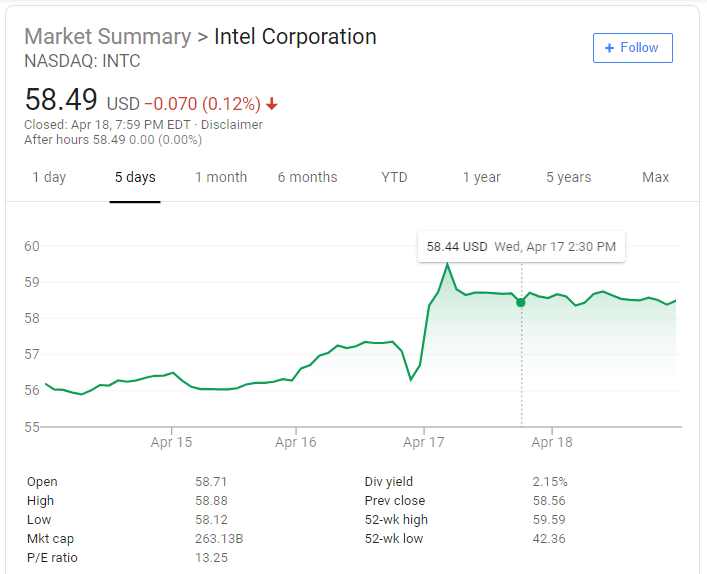
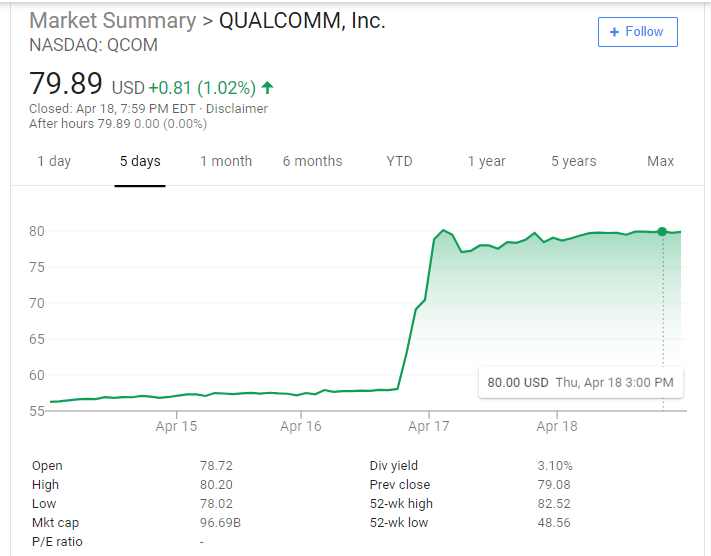
But note that market rewarded both Intel and Qualcomm – Intel has no business in 5G modem; high-end mobile modem has always been Qualcomm domain. Simply, Intel should focus on what it knows how to make – server chips. Yes, markets think Apple just did Intel a favor by getting it to focus on what it knows how to do. For Qualcomm, it was a moment – the enemy is back to the fold, as a friend. The stock responded.

LinkedIn Comment on Feed

Apple and Qualcomm were always going to settle, eventually. When Apple sued Qualcomm over alleged monopolistic contracts, extortionist pricing practices, patents infringements, and other poisons in the new year, Qualcomm had not only counterclaimed but also countersued.

The only way out of such battles between big boys is settlement, except you want to have a long war like that between Apple and Samsung. So I’m happy that both Apple and Qualcomm have settled this matter. While this settlement allows Intel focus on its core market as you have said, I am more concerned about the monopoly this might lead to in the market. I remember that anti-trust regulators have raised concerns about this before.

In Europe, Qualcomm was fined $1.2 billion for paying Apple to use its chips and keep its fingers off competitors’ chips from 2011 to 2016. With the new romance between Apple and Qualcomm, regulators should keep their eyes open.

My Response: Good points. Intel is not leaving out of strength. It knows it cannot compete with Qualcomm on 5G modem and with Apple signing 6- year contract, there is no market to serve. So, not pretending it is still doing 5G modem is wisdom. On antitrust, it is what it is – the market is free, anyone can jump in if you can handle the heat. That should not be an issue.

Another Comment

It’s about making use of that famous thing called ‘common sense’, which most times – a lot of people fail to activate theirs, thereby allowing their stupidity to take preeminence! Apple was able to activate its common sense, Intel did same, Qualcomm did likewise; so all of them are likely to live happily after.