DD
MM
YYYY

PAGES

DD
MM
YYYY

spot_img

PAGES

Home Blog Page 6923

Google Africa Unveils Software Scholarships

1

If you can, apply. This is one way to get decent capabilities in the software domain. Google offers the best in the industry and with scholarships available, there should not be any reason not to pursue that mission.

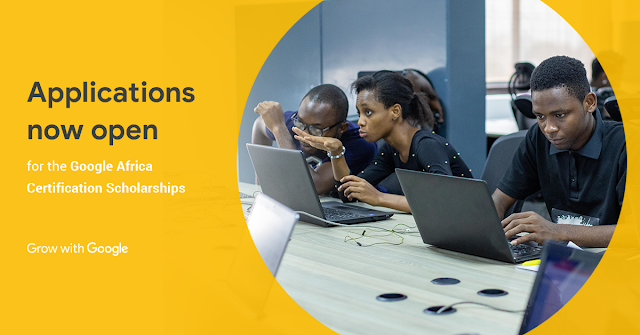
Applications are open for the next round of Google Africa Certifications Scholarships. Google is offering 30,000 scholarship opportunities and 1,000 grants for the Google Associate Android, Mobile Web, and Associate Cloud Engineer certifications. The training is available to applicants from across Africa, and will be delivered by Google’s partners, Pluralsight and Andela. These scholarship provisions are in line with Google’s commitment to provide mobile developer training to 100,000 Africans. Learn more and apply here. (From TC Daily newsletter:)

Google is partnering with Pluralsight to give you free access to Pluralsight course content plus support from the Andela Learning Community across three skills development tracks: Mobile Web, Android and Google Cloud.

After completing your desired skills development track, you will be eligible to receive a Google certification grant to take Google’s Associate Android Developer, Mobile Web Specialist and Associate Cloud Engineer certification exams


Google Blog announcement of this scholarship

Building upon our pledge to provide mobile developer training to 100,000 Africans to develop world class apps, today we are pleased to announce the next round of Google Africa Certifications Scholarships aimed at helping developers become certified on Google’s Android, Web and Cloud technologies.

This year, we are offering 30,000 additional scholarship opportunities and 1,000 grants for the Google Associate AndroidMobile Web, and Associate Cloud Engineer certifications. The program will be delivered by our partners, Pluralsight and Andela, through an intensive learning curriculum designed to prepare motivated learners for entry-level and intermediate roles as software developers in these fields. Interested students can learn more about the Google Africa Certifications Scholarships and apply here.

Africa is on track to have the largest working-age population of 1.1 billion by 2034. Today’s announcement is about preparing the youth for the jobs of tomorrow by equipping them with the right developer skills. Google’s certifications are developed around a job-task analysis that test learners for skills employers expect developers to have in these domains.

Our continued initiatives focused on digital skills training, education and economic opportunity, and support for African startups and developers, demonstrate our commitment to helping advance a healthy and vibrant developer ecosystem. By providing support for training and certifications we will help bridge the unemployment gap on the continent through increasing the number of employable software developers.

We have already seen evidence that becoming certified can make a meaningful difference to developers and employers. Adaobi Frank – a graduate of the Associate Android Developer certification – got a better job that paid her 10X her previous salary after completing her certification. Her interview was quicker as her employer was convinced that she was great for the role after she mentioned that she was certified. Now, she’s got a job that helps provide for her family. Through our efforts this year, we want to help many more developers like Adaobi and support the growth of startups and technology companies throughout Africa.


Please click here to apply for the scholarship.

The Promise of 5G iPhone is Why Apple Settled with Qualcomm

2

In October 2017, I wrote on “Apple’s Troubling Sainthood” as Apple and Qualcomm intensified their legal battles: “Apple thinks that Qualcomm is greedy by asking smartphone companies to pay a percentage of the product value as royalty for using its mobile chipsets. Apple had wanted a fixed price for the chipsets. By asking for a fixed price, it will be possible for Apple to buy a Qualcomm chipset at say $18 and create a luxury product it sells for $1,000. Qualcomm maintains that it wants a percentage and that means if Apple jacks up its price, Qualcomm makes more money since the percentage remains the same.

I concluded that Apple was not overly fair: it wanted to buy a key component of $18 to power a product of $1,000 (the iPhone) when Qualcomm wanted a percentage of final value, not absolute fixed amount. Qualcomm had to do that because as a “monopoly”, it could not have raised price from that $18 to say $250 without running into regulatory troubles. So, the only option was percentage of final-value pricing.

In the semiconductor industry, what Qualcomm asked was new.  Usually, partners pay for fixed prices of components. The prices are usually discounted for bulk buyers. Apple buys many chips from Samsung and pays at fixed prices.

Apple did not like that: so, they wasted money on lawyers for years. Today, they have called a truce, and Apple will send money to Qualcomm. To make this exciting, Apple will be buying more chipsets from Qualcomm to explain the total victory of Qualcomm against the fashionista company.

  • Agreement ends all ongoing litigation, including with Apple’s contract manufacturers
  • Companies have reached a global patent license agreement and a chipset supply agreement
San Diego and Cupertino, California — Qualcomm and Apple today announced an agreement to dismiss all litigation between the two companies worldwide. The settlement includes a payment from Apple to Qualcomm. The companies also have reached a six-year license agreement, effective as of April 1, 2019, including a two-year option to extend, and a multiyear chipset supply agreement.
Qualcomm invents breakthrough technologies that transform how the world connects, computes and communicates. When we connected the phone to the Internet, the mobile revolution was born. Today, our inventions are the foundation for life-changing products, experiences, and industries. As we lead the world to 5G, we envision this next big change in cellular technology spurring a new era of intelligent, connected devices and enabling new opportunities in connected cars, remote delivery of health care services, and the IoT — including smart cities, smart homes, and wearables. Qualcomm Incorporated includes our licensing business, QTL, and the vast majority of our patent portfolio. Qualcomm Technologies, Inc., a subsidiary of Qualcomm Incorporated, operates, along with its subsidiaries, all of our engineering, research and development functions, and all of our products and services businesses, including, the QCT semiconductor business.

The Promise of 5G

Do not be deceived, Apple would not have settled with Qualcomm if it has any other alternative to get 5G into iPhone effectively. As it stands today, Intel is not ready and Huawei is a no-go area, so only Qualcomm can power Apple’s 5G future. That is why after all the wasted years and making lawyers richer, Apple agreed to pay Qualcomm to close all the legal issues, and then quickly placed orders with six-year licensing agreement.

The praise above is because of iPhone: “Qualcomm invents breakthrough technologies that transform how the world connects, computes and communicates. When we connected the phone to the Internet, …. As we lead the world to 5G, we envision this next big change in cellular technology spurring a new era of intelligent, connected ..”. Simply, there will not be 5G Apple without Qualcomm, and Apple has no future without 5G. So, it settled to allow 5G blossom in Cupertino, USA.

The Power of “Sorry”

0

In human history, men have saved empires and kingdoms with one word: “Sorry”. Elevate it to “My apologies, Sir/Madam”, disputes melt. In ancestral Igbo, elders will remind you that “Ndo na-ala uwa azi” [Sorry mends grievances]. Learn to use ‘Sorry” or better “My apologies”.

Have you noticed how they entertain for free in Lagos motor parks? No one wants to say “Sorry” and fights begin because everyone feels big. In America, you pay to watch fights, as Wrestle Mania, but in Nigeria, it is copyright-free. Yet, most of those fights would have been prevented with simple ‘Sorry Sir”.

Try the power of “Sorry” or better “My Apologies” when tensions rise. They do not make you weak; it takes care of nonsense to focus energies on what really matters. In Ajengunle motor park, the place is so congested that when you raise your leg, by the time you want to return it to the ground, as you walk, someone would have likely occupied the space. You can argue with him or her, and quarrel will begin, or you can simply say “sorry” or “excuse me” and continue moving.

That Sorry will magically melt all the tensions; life moves on. Learn how to use and apply it.

NB: English does not really use “Sorry” the way we do in Nigeria. Yet, I will leave it that way; in Nigeria we understand the context no matter what England thinks.

LinkedIn Comment on Feed

It’s for the brave to say such, and never for the weak. The problem sometimes begins when people come to expect it indiscriminately, without admitting malfeasance on their own part, it then leads to error in judgement; another catastrophe…

If you are wise, you know when to diffuse tension in order to move on to more important things.

Beyond 303 NEW Private University Applications in Nigeria, Quality Access Is Key

0
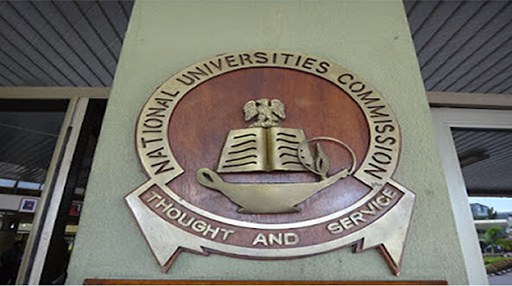
National-Universities-Commission-NUC

Nigeria’s university regulator, National Universities Commission (NUC), is processing about 303 applications for private universities in the nation. Today, Nigeria has 43 federal, 48 state and 79 private universities. But note that ABU Zaria admits more than 30% of the combined 79 private schools on capacity. So, looking at the number of private universities may seem like they are many, but examining the access they enable, you will see the impacts have been marginal.

The National Universities Commission (NUC) said it is processing about 303 new applications for the establishment of private universities in Nigeria.

Nigeria currently has about 170 universities (43 federal universities, 48 state-owned universities, and 79 private universities).

The NUC chief, Abubakar Rasheed, said this in Abuja at a two-day summit on Nigerian private universities. The summit had the theme: “Private University Education Delivery In Nigeria; Challenges and Opportunities.”

My proposal is M&A (mergers and acquisitions) in the private university space to deepen capacity through the economies of scale. Sure, pure acquisition will not happen, because by law, private universities in Nigeria are charities making the institutions harder for direct acquisition. So, mergers will be the likely option.

Nigeria needs to look for expanding access over just awarding licenses where every local government area will have a university where about 200 students are admitted in a year. Today, all the private universities account for about 6% of the total capacity in the nation. One federal university, NOUN (National Open University of Nigeria), admits more in one year than what the private schools enroll in four years: “NOUN admits over 100,000 every year, has 450,000 students and is targeting 750,000 in the next few years”. We need access; we also need quality. Most times, scale helps to get both done. That is why NUC should explore looking at how these schools can combine!

The National Universities Commission (NUC) on Monday said the 75 private universities Nigeria account for less than six per cent of students’ population in the country’s university system.

The Executive Secretary of the Commission, Abubakar Rasheed, disclosed this at a retreat organised for Vice Chancellors of Nigerian universities in Abuja.

According to Daily Trust newspaper, the Executive Secretary said the number of students being admitted each year by the National Open University of Nigeria (NOUN) was more than what the 75 private universities enroll in four years.

What Africa’s Shoprite and Spar can Learn from Walmart Robots

0

By Nnamdi Odumody

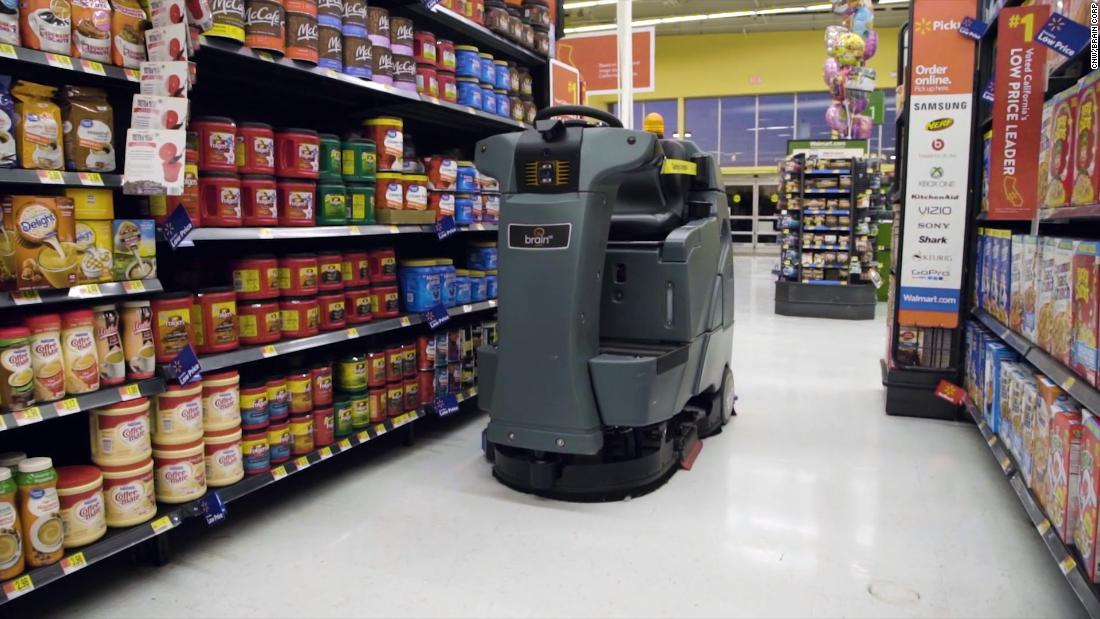
Walmart will deploy thousands of robots to its stores. By 2020, it will have 920 autonomous floors scrubbers in 1860 of its more than 4700 stores. It will also have robots that scan shelf inventory in 350 stores, and bots at 1700 stores that can automatically scan boxes as they come off delivery bucks and sort them by department onto conveyor belts.

According to Walmart, these smart assistants will reduce the amount of time workers spend on repeatable, predictable and manual tasks in stores, and allow them switch to selling merchandise to shoppers and other customer service roles.

CEO Doug McMillon said that automating certain tasks will give associates more time to do work they find fulfilling and to interact with their customers. He believes that deploying robots will increase sales and make stores more efficient in operations because while robots can unload trucks and keep up stores overnight, it will prove difficult with humans.

Walmart has been testing out this technology in hundreds of its stores over the past year. Running operations in its 178,000 square foot supercenters are expensive as more shoppers prefer ecommerce. It invested more than $2billion in 2018 to remodel stores across the country and equip them to handle online purchases for in store pickup.

Its strategic redesign has seen it leverage emerging technologies like artificial intelligence and blockchain to deliver the best customer experience better than its physical competitors. Today, the race is between Walmart and Target in the physical retail space, and Walmart and Amazon in the digital retailing space.

Africa’s leading retail brands Shoprite and Spar should learn from Walmart and invest in robotics to deliver smart services for its customers across the continent. Besides saving labour costs, they can improve efficiency and build stores for the smart economy which will improve margins.