When you fail to communicate effectively, you go alone which leads nowhere.




By Ifeanyi Emmanuel Okonkwo
Trademark in Nigeria means a mark used or proposed to be used in relation to goods. A mark itself, as recognised and defined by the Trade Marks Act (TMA) 1967 indicates ‘a device, brand, heading, label, ticket, name, signature, word, letter, numeral, or any combination thereof’.[1]
The above definition, unfortunately, does not cover brands of taste and smell. So why companies may protect their names, signatures, et al, from infringement, a germane aspect of their trade, a brand-taste/smell from which they are known for, is exposed to commercial exploitation.
Indeed, to protect itself, Companies embark on ‘Restraint of Trade’ contracts with employees, affiliates and agents. But we know the sad realities of such contracts – unless they fall in line with public policy and are found to be reasonably necessary, such contracts are usually judged void. When the blue pencil rule is applied in interpreting such restraint clause, what is often left may just not be enough to protect the trade secrets of the proprietors. Besides, why should the law hesitate to protect the rights of every free citizen to participate in trade? Indeed, and truly, sometimes, the restraint of trade clause is not the best of methods. How best then can we protect the trade secrets of a proprietor/employer?
The Trademarks Act essentially is there not to restrain trade/traders, but to protect and promote trade. It is an Act that protects the right to use one’s invented trade mark to the exclusion of others. The owner of such a mark could, of course, assign or licence another to use the mark. The point is that the consumers are not deceived into mistaking the origin of the goods of the proprietor. That way, the proprietor’s customers are protected, and so is the proprietor’s goods, goodwill, and accruable profits.
Suppose then, that the Nigerian TMA defined a mark to include smell and taste, the consequence would be positive. Thus, even when an employee leaves the employer’s company, that employee cannot produce the same product of the employer nor a confusingly similar or identical product. This is because the TMA protects against the use of such mark or confusingly similar marks.[2] Any such mark must be distinctive of a registered mark.
Now, apart from the fact that the Nigerian Act did not define a mark to include taste and smells, there is another problem. The problem here is that a mark sought to be registered, has to be presented or placed in a graphical manner. Such is the necessary interpretation of regulation 23, 24, 25 and 30 of the Trade Marks Regulation (TMR).
The problem is not unknown to developed countries. According to Cornish, Lleweelyn and Aplin:
‘smell marks face even greater difficulties. When the smell is the main object of the product (as with scent or an air freshener) it should not be capable of being a trademark at all. Even when it is secondary additive (detergent, shampoo, notepaper) it is registrable only on very strong evidence of recognition as a trade mark, assuming that in some way the applicant has complied with the ‘graphical representation’ requirements set out in Sieckmann (2003) R.P.C 38 ECJ’[3]
While it is easy to represent such marks as names, letters, numerals, even colour in the space provided in Form 5, Some have argued that it may be practically impossible (I have used may because I do not believe in impossibilities) to represent a smell or taste in the space provided and present same online. Submitting in person however, may be much easier than through online submission. This is because the product could be glued to the space and covered. Upon opening, the nostrils of the Registrar are visited by the smell. Same can be said when the product is tasted. Now the application makes it clear that what is sought to be registered is not the product but the smell or taste.
Truly, sounds, smells, taste and touch have been successfully recorded and registered in the foreign practice of trade marks. Accordingly, Lea and Cornford assures us:
‘Smell marks are recorded both as having been registered, such as ‘the smell of fresh cut grass’ for tennis balls, and as having been refused registration, such as the ‘smell, aroma, or essence of cinnamon’ in relation to furniture… However, the ECJ in Sieckmann, whilst confirming that smells may act as distinctive signs, appears to have rejected all current practical methods of representing them graphically.’[4]
It is to be noted that the requirement of a graphical representation is a condition established by the Trade Mark Laws of these Countries. Unfortunately, the Nigerian TMA did not expressly provide for such. The graphical representation is a consequence of the Trade Marks Regulations.
Kerly brought out the full fact and implications of the Sieckmann case. He reported:[5]
‘In Sieckmann, the application was to register an olfactory mark comprising “the pure chemical substance methyl cinnamate ( = cinnamic acid methyl ester)” and the structural formula was provided: C6H5-CH=CHCOOCH3. In addition, Mr Sieckmann gave details where one could obtain the chemical, he submitted with his application an odour sample of the sign in a container and stated that the scent was usually described as ‘balsamically fruity with a slight hint of cinnamon’. The ECJ answered the various questions referred to it in the following way. First, it stated that a trade mark may consist of a sign which is not in itself capable of being perceived visually, provided that it can be represented graphically. Second, so far as the graphic representation is concerned, it laid down the requirements that it must be clear, precise, self-contained, easily accessible, intelligible, durable and objective. Third, the ECJ stated that, in respect of an olfactory sign, the requirements of graphic representability are not satisfied by a chemical formula, description in written words, deposit of an odour sample or combination of those elements’.
Kerly went on to provide his view on the matter on pages 17-18:
‘In the light of those emphatic statements one may ask: how else can one attempt to provide a satisfactory graphic representation of an olfactory mark? There are some possibilities which Mr Sieckmann did not put forward, such as defining the odour by reference to accepted standards of classification for odorants such as Zwaardemaker, … but it is very difficult to find any alternative which would satisfy the requirements laid down by the ECJ. The practical effect of the Sieckmann judgement is probably that it is impossible to obtain a valid registration of an olfactory mark unless or until the requirements for recording the ‘sign’ in question are changed to allow representations other than purely graphic or descriptions in words’.
Kerly concluded that the same fate befalls a taste mark. It is to be noted that the major reason behind the graphical presentation is certainty. There has to be certainty to even a lay man as to what is sought to be registered.
As far as signs/marks of smell and taste are concerned in foreign countries, the ECJ has made their registration almost practically impossible. That fate however, is not and should not be the same for Nigeria.
First, our deduction of the ‘graphical requirement’ is traced to the Regulation which can be amended easily by the Minister of Trade and Commerce.
Secondly, it is my hope that the IPCOM bill sought to be passed would redefine the meaning of a mark and trademark to include smells and taste. That way, many of the problems on restraint of trade will be alleviated if not totally solved; proprietors can be fully protected; and employees/traders can enjoy the fullness of their rights to work/trade.
[1] Section 67 TMA.
[2] Section 5, 11, 13 TMA
[3] Cornish, Llewelyn and Aplin, Intellectual Property: Patents, Copyright, Trade Marks and Allied Rights (7 edn:
Sweet & Maxwell) 2010, p. 738 paras. 18-34.
[4] Gary Lea & Peter Cornford, Trade Marks: law and practice (3rd edn: Jordans, 2012) Pp. 27-28.
[5] Kerly’s Law of Trade Marks and Trade Names (14th, edn: Thomson; Sweet & Maxwell) 2005, p. 7
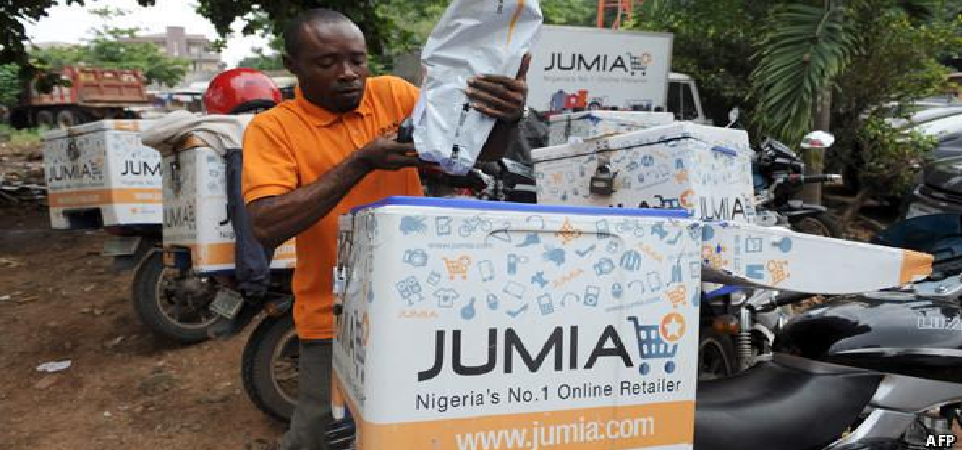
Jumia has done it: it has filed paperwork at the NYSE to go public. Last week, I wrote that its IPO was “imminent” after it hired an NBA superstar: “It is very evident that Jumia will like to list in U.S. as early as possible. How? It has brought Andre Iguodala into its Board. Andre plays for Golden State Warriors, an NBA team. I do think with Andre, Jumia will lift its brand in U.S. as it pushes for the journey to IPO, possibly in U.S.”
Pan-African e-commerce company Jumia filed for an IPO on the New York Stock Exchange today, per SEC documents and confirmation from CEO Sacha Poignonnec to TechCrunch.
[…] Poignonnec would not pinpoint a date for the actual IPO, but noted the minimum SEC timeline for beginning sales activities (such as road shows) is 15 days after submitting first documents. Lead adviser on the listing is Morgan Stanley .
“You’ll see in the prospectus that last year Jumia had 4 million consumers in countries that cover the vast majority of Africa. We’re really focused on growing our existing business, leadership position, number of sellers and consumer adoption in those markets,” Poignonnec said.
Jumia was founded in 2012 and has gone through metamorphosis. It has operations in about 14 African countries with services across many digital sectors like food delivery, hotel booking, ecommerce marketplace, etc. Nigeria remains the heart of Jumia business. With only 4 million customers across Africa, the private sector unicorn ($1 billion valuation) it was baptized with few years ago, post-MTN investment, may be a tall call in the public market.
Jumia has not yet turned a profit, but a snapshot of the company’s performance from shareholder Rocket Internet’s latest annual report shows an improving revenue profile. The company generated €93.8 million in revenues in 2017, up 11 percent from 2016, though its losses widened (with a negative EBITDA of €120 million). Rocket Internet is set to release full 2018 results (with updated Jumia figures) April 4, 2019.

Few months ago in Harvard Business Review, I wrote that doing anything that Google or Facebook can decide to do may be dangerous for African startups. With their unlimited resources, they could run you out of the roads. Yes, as ICT utilities, these entities are the entry and exit points in the digital communities. That makes me wonder what happens now that Google Hotels will help us search hotels, book hotels and even last-minute ones.
Flying under the radar in travel news, Google quietly released its own hotel search and booking site last week. Aiming to compete with other hotel booking sites, as well as services like Airbnb, Google Hotels also offers last-minute booking on lodging.
In a blog post written on March 7, Richard Holden, Google’s vice president of product management for travel, wrote that one key benefit of using Google’s hotel booking site is the company’s well-known search functionality. For example, machine learning powers a filter to search for hotel deals. Plus, Holden wrote, “You can also view a hotel’s highlights—like a fancy pool, if it’s a luxury hotel, or if it’s popular with families—with expanded pages for photos and reviews curated with machine learning.”
The convergence is here and indigenous players like Hotels.ng and Wakanow must elevate their games if they hope to win in these largely commoditized digital businesses where what really matters is who can help me book a room in a hotel at the cheapest rate possible!

We are looking for software developers in Kobo360 to help as we build a G-LOS (global logistics operating system). Kobo360 raised millions of dollars from World Bank IFC in Dec 2018. Join Africa’s leading digital logistics company. Details on how to apply below; notice, no degree requirements but you must be great to make it without one.
We require young, smart and highly motivated software developers that help in our mission of developing a Global logistics operating system (G-LOS).
The candidate will be actively involved in developing new products and suggesting improvements to our existing solutions in line with business and functional needs.
Do you have at least three years experience of professional experience as a Software Engineer, writing code for web applications, data initiatives, core services, or mobile products?
Are you comfortable writing codes in Node, PHP, Angular, React, PHP, and Python? And also familiar with SQL and NoSQL stores and enjoy learning new languages, frameworks, and technologies?
Kindly send your CV to careers@kobo360.com
Kobo360 is a tech-enabled digital logistics platform that aggregates end-to-end haulage operations to help cargo owners, truck owners and drivers, and cargo recipients to achieve an efficient supply chain framework. Through an all-in-one robust logistics ecosystem, Kobo uses big data and technology to reduce logistics frictions, empowering rural farmers to earn more by reducing farm wastages and helping manufacturers of all sizes to find new markets. Kobo enables unprecedented efficiency and cost reduction in the supply chain, providing 360-visibility while delivering products of all sizes safely, on time and in full. The Kobo mission is to build the Global Logistics Operating System that will power trade and commerce across Africa and Emerging Markets