DD
MM
YYYY

PAGES

DD
MM
YYYY

spot_img

PAGES

Home Blog Page 6946

Massive Job Creation in Nigeria’s Oil & Gas Sector Through Assets Co-location

1

By Nnamdi Odumody

About 13 percent of Nigeria’s total population is unemployed and in the next ten years, Nigeria’s working age is projected to reach 122 million people. Currently, there are not enough jobs for millions of graduates who pass through the tertiary institutions.

According to a research carried out by Dr Solomon Adeleye and other oil and gas consultants, about 2 million jobs can be created in the oil and gas industry, through Co-Location, which is a practice that promotes optimization through one or more plants sharing mature pre-existing infrastructure rather than building their own or waiting for third party to do so. Dr Adeleye said that if colocation is encouraged in the hydrocarbon sector, Nigeria stands to maintain a minimum of 3 percent GDP growth in the next decade.

Co-location concept is defined as a practice, which promotes optimisation through one or more plants sharing mature pre-existing infrastructure rather than building their own or waiting for a third party to do so.

Speaking at a lecture organized for journalists, on the benefits of colocation, in the nation’s existing hydrocarbon facilities in the country, in Lagos, On Wednesday, consultants in the oil and gas sector, Mr. Charles Majomi, Dr. Solomon Adeleye and Dr. Brown Ogbeifun noted that if the Federal Government allows colocation in the key refineries and hydrocarbon facilities in the country, over two million jobs will be created in the next decade, warning however that a continuous neglect of the sector spelt doom for the country.

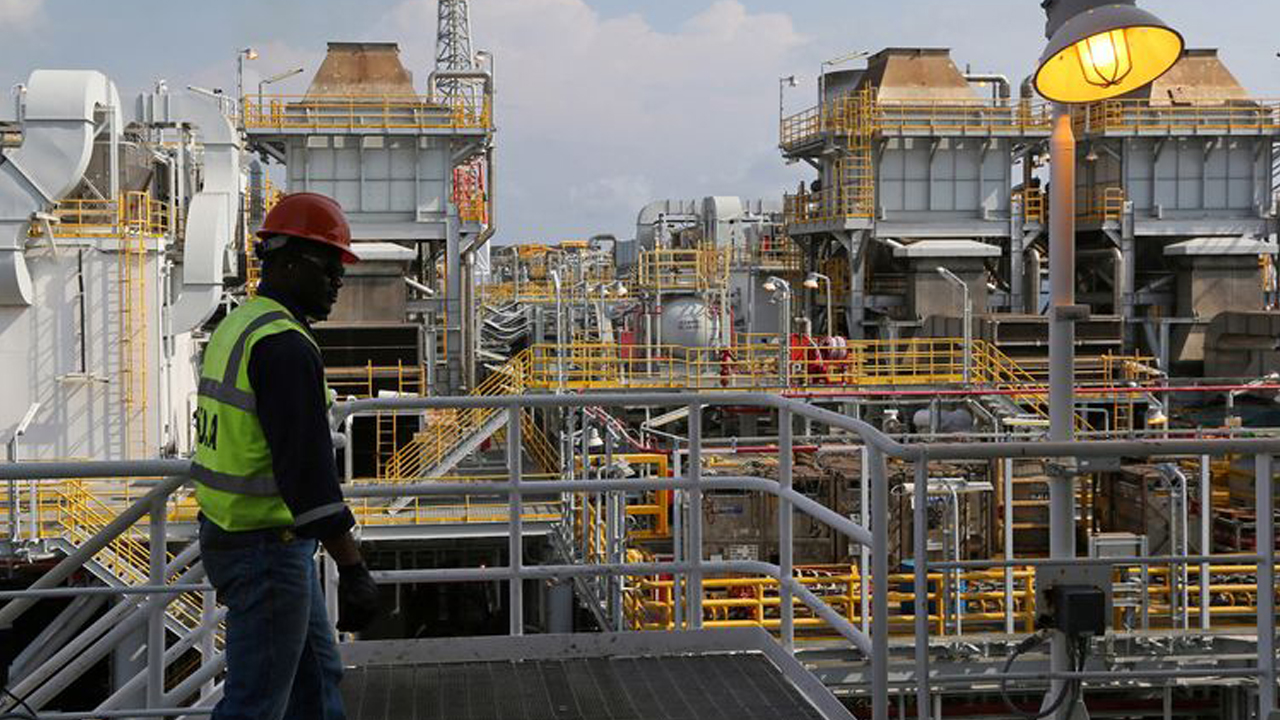
The Kaduna, Port Harcourt and Warri refineries can play host to fertilizer plants which will generate over 1000 jobs. Warri Refinery can create 200,000 jobs by hosting at least 20 plants which will make use of its dormant assets. The Ikot Abasi Aluminium and Fertilizer Plant at Akwa Ibom, can create 60,000 jobs, if the policy of co-location is adopted, while the Kaduna Refinery can create 10,000 jobs from the policy.

The Nigeria Liquefied Natural Gas company can change fuel source from ethane, utilize the extracted ethane, and as a result generate $2 billion per year, creating 200,000 jobs, and supporting 20 petrochemical plants. Some of these plants which make hair sprays, and pipes to support new sectors in the economy.

The Department of Petroleum Resources should encourage co-location as a strategy, to attract investors into the downstream sector of the oil and gas industry, as it will facilitate asset de-risking through efficiency in the utilization of the factors of production, as the existing assets will remove the barriers to entry that make new plants risky. This will lead to quicker time frame for establishing petrochemicals, plastics and fertilizer plants in the nation, leading to millions of jobs being created in less than a decade. This will be done without any direct financial commitment from the Federal Government.
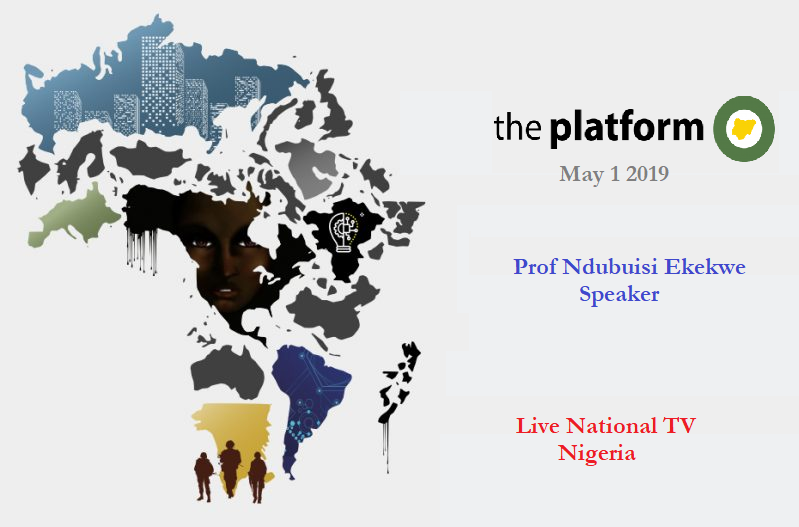
Ndubuisi Ekekwe to Speak in the Platform – the National Live TV program

5

I will speak in the Platform, the extremely popular national live TV conversation, on May 1 2019.  Prof Yemi Osinbajo (vice President of Nigeria), Dr Peter Obi (PDP 2019 vice presidential candidate), a Goldman Sachs Managing Director, and other leaders have spoken in the Platform. Few hours ago, I accepted to speak in this prestigious event. The invitation letter had, in part, included: “I am strongly convinced that your extensive work and contributions … will be of immeasurable benefit…”

Over the years, the Platform has emerged as an important platform for deep national conversations. With more than 35 million people watching live and online, I will present a redesign for our nation in a topic titled The Growth of Nations. Looking at drivers, enablers and other elements for economic prosperity, the talk will be a moment.

Make sure you tune in or attend the event LIVE at The Covenant Place, Iganmu (beside The National Theatre). I will share more as the date arrives.

NNPC Needs Restructuring To Become Profitable Like Peers

0

By Nnamdi Odumody

With international benchmark of Brent Crude averaging $71.19 per barrel in 2018, 31.5 percent gain from 2017 when it averaged $54.15 per barrel, the state-owned Nigerian National Petroleum Corporation (NNPC) performed poorly when compared with its global peers.

According to its full year report for 2018, between January and December 2018 it spent 730.9 billion naira on under-recovery (subsidy) while 140.6 billion naira was spent on pipeline repairs and management cost. Its operations and financial report for 2018 showed gains of 393.5 billion naira from its upstream and gas processing subsidiaries: Nigerian Petroleum Development Company, Integrated Data Service, National Engineering and Technical Company, Nigerian Gas Company Limited and Nigerian Gas Marketing Company were wiped off largely by its downstream subsidiary operations which recorded losses of about 351 billion naira.

In 2018, NNPC recorded 24.9 billion naira on product losses while cash call payment for the development of oil and gas assets consumed Federal Government’s revenue as 1.829 trillion naira was paid to oil companies from revenue of 3.11 trillion naira, generated from sale of crude oil and gas in 2018. The combined value output by the nation’s three refineries at Warri, Port Harcourt and Kaduna at import parity price for the month of December 2018 was 10.86 billion naira while the associated crude plus freight costs and operational expenses were 8.89 billion naira and 19.29 billion naira resulting in an operating deficit of 17.32 billion naira by the refineries. The Group Operating Revenue for December 2018 was 731.88 billion naira while expenditure surged by 429.52 billion naira from the previous month.

Brazil’s state owned Petroleo De Brasiliero (Petrobras) had a net income of $6.84 billion, EBITDA(Earnings Before Taxes Depreciation and Amortization) of $30.44 billion, and for the fourth straight year a positive cash flow of $14.17 billion in 2018, generating $40.14 billion in municipal, state and federal taxes plus government take.

Sinopec (China’s state owned oil company) registered a 22 percent year over year growth to achieve $426 billion as operating revenue in 2018 with its downstream business accounting for about 60 percent of its revenue which increased by 2.31 percent to 244 million tonnes while total domestic sales volume of refined products increased by 1.4 percent to 180.24 metric tonnes.

Rosneft of Russia boosted revenue by 31.4 percent to $133.7 billion in 2018. It’s oil and liquids production increased by 2.1 percent to 4.7 million bpd while gas production averaged 1.12mboed per day.

Equinor of Norway earned $7.5 billion as profit – a 64 percent increase from its previous operating year result of $4.6 billion while total oil production hit 2,170mboe per day as at the last quarter of 2018.

Saudi Arabia’s Saudi Aramco earned the biggest profit of all the oil companies. Its net income was $111billion and it generated $224 billion as EBITDA. Currently it wants to raise funds from the global capital markets by offering a percentage of its shares which will value it as the world’s first trillion dollar oil corporation.

The failure of the President who is also Nigeria’s Minister Of Petroleum Resources to sign into law The Petroleum Industry Governance Bill aimed at making Nigeria’s oil and gas industry globally competitive like that of other oil producing countries, and reforming NNPC to operate as a successful business entity, is making the Nigerian state-owned corporation underperform below its potentials.

Five Business Models for African Telcos to Thrive

0

Telcos have constantly complained of dwindling resources from their connectivity offerings as well as fierce competitions from other players within the technology space. Besides, mobile voice calls are declining in some parts of the world, and consumers are generally unwilling to pay more for data services.

Even though 5G presents new business opportunities through verticals like the automotive industry, health care, and agriculture, telcos are generally unclear on the right business models to develop to reap the full benefits of these new opportunities. Besides, telcos also worry about the huge investments needed to migrate their networks from 4G to 5G.

The virtualization and softwarisation of 5G networks would no doubt trigger the development of new business models which were otherwise impossible with previous generations. In view of the future trend, I hereby highlight some business models that may present opportunities to telcos looking to diversify their offerings.

24/7 Connectivity

Here, besides the traditional provision of connectivity services, telcos can guarantee clients a 24/7 connectivity service through an automatic diversion onto their mobile data services during outages.

Connectivity + Data Storage + Analytics

Besides, connectivity, telcos could offer data storage services as well as data analytics applications to interested clients. Recently, some telcos (e.g. MTN) have begun acquiring data centres, as such telcos could easily diversify into this area of opportunity.

5G in automotive

Connectivity + Security

Here, telcos can offer clients the opportunity to secure their infrastructures as part of their offerings. This would perhaps require telcos to employ a dedicated team of cyber security professionals who would help deliver this new offering.

Connectivity + Cloud

For small companies and enterprises, telcos could provide them with cloud storage services as part of the connectivity offerings. This may require telcos to partner with cloud storage companies to offer this service.

Connectivity + Business Services

Telcos could also combine connectivity services with business services like business advice from seasoned consultants, facilitating meetings with leading industry experts, and professional service providers that may help organisations meet and fulfil their commercial obligations.

All Together

These business models can be implemented in both older and newer networks (2G, 3G, 4G). However, 5G will lead to a flurry of business opportunities which would prove beneficial to telcos looking to diversify their offerings.


Thank you #Peru

0

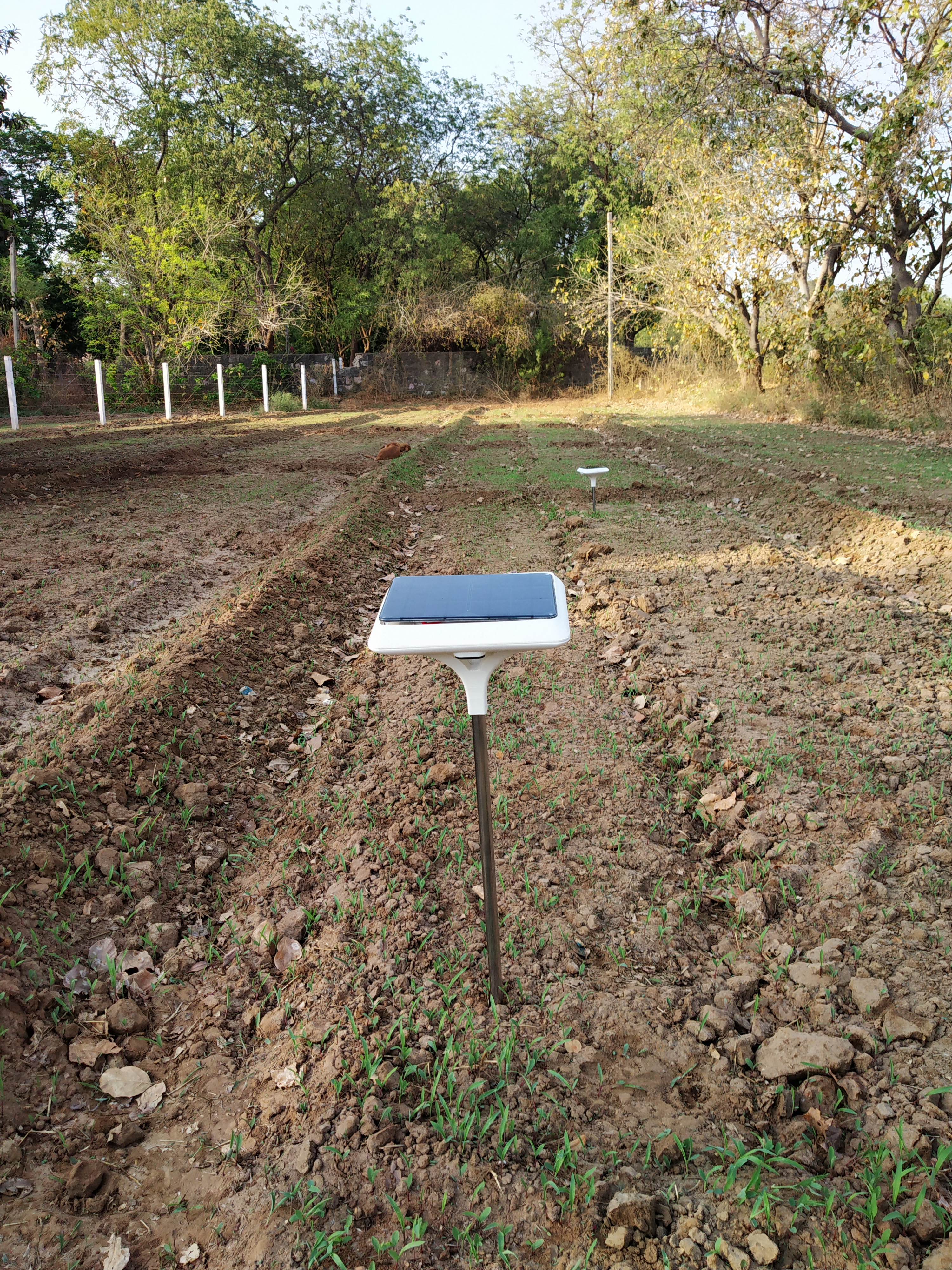
Thank you #Peru. My promise is at least 2x improvement on farm yields by concurrent reduction in input and maximization of output. Zenvus – the intelligent operating system for modern farming. #MadeInNigeria.

What Is Zenvus?