DD
MM
YYYY

PAGES

DD
MM
YYYY

spot_img

PAGES

Home Blog Page 6955

Digital Technologies for African Agriculture

0

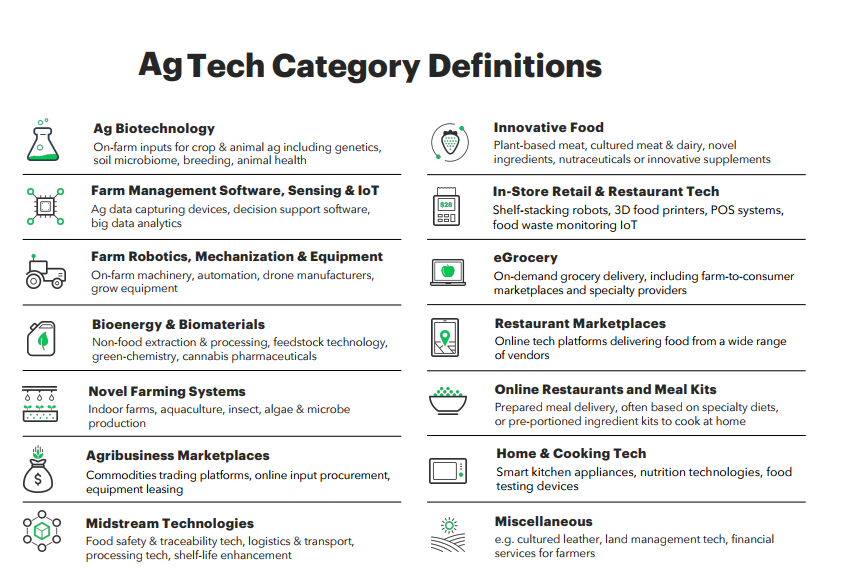
Digital technologies are tackling Africa’s food challenges including low farm productivity, high transaction costs, limited use of modern inputs, minimal levels of commercialization, climate change, and rural-urban migration. While digital tools have already proven to be effective elsewhere in the world, agricultural technology pioneers in Sub-Saharan Africa face roadblocks to scaling up, as the majority of the continent’s farmland is managed by smallholder farmers.

This is particularly evident in Nigeria where agriculture is the backbone of the economy, while its practice has remained unchanged over millennia. Digital agricultural technologies present an opportunity to leapfrog traditional technologies and redefine how food is produced, processed and marketed, disrupting the status quo across the Nigerian agricultural value chain.

A nation where more than 60% of the working population works in agriculture, and yet still farming mass poverty, in the communities of farmers, certainly needs a redesign. Nigeria must adopt emerging digital technologies to feed its growing population.

30 Agro and Agtech Venture Ideas – Execution and Commercialization (Videos & Text)

*Adapted from World Bank newsletter.

Remittances From Nigerian Diasporas Now Exceed The National Budget

0

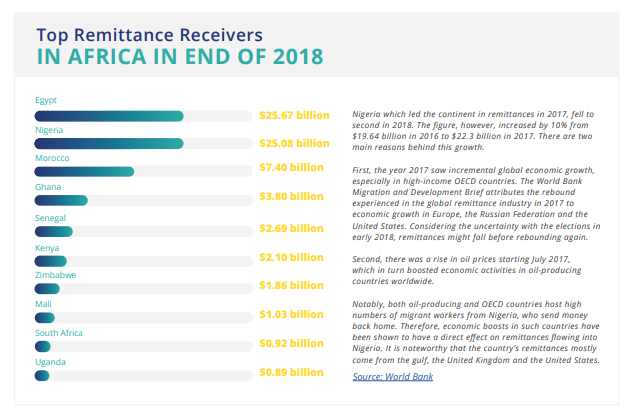
Remittance from Nigerian diasporas (those living outside the country) has exceeded the national budget if you use black market rate. Remittance brought in $25.08 billion last year while our 2019 national budget is $24.53 billion if you use black market exchange rate. Of course there are many elements of the remittance inflow which the World Bank system does not capture. Largely, if you add all of them, the government may decide to create another ministry – Ministry of Remittance Taxation – to boost internally generated revenue in Nigeria! Lol.

With the burgeoning trends of the African diaspora, the citizens of the continent provides a massive economic opportunity both inside and outside Africa. According to the World Bank, the 10% increase in remittance inflows from 2016 to 2017, and is only expected to grow more in the coming few years. While the outside world may see the rising number of Africans moving abroad, this is actually fueled by the relative improvement of economic activities in OECD countries, not by a relative declining of the conditions within Africa. The economic value that Africans creating abroad are the main sources of remittances for Sub-Saharan African countries.

[…]

Nigeria which led the continent in remittances in 2017, fell to second in 2018. The figure, however, increased by 10% from $19.64 billion in 2016 to $22.3 billion in 2017. There are two main reasons behind this growth.

This number for Nigeria is more than the total national budget.

LinkedIn Comment on Feed

Looking at the chart, in other words, if a country is making progress, or show signs of development, less people travel out, and you have decreased remittance…

Head or tail, it’s a pathetic situation, the paltry national budget of less than $25B is nothing, with the level of deficits we are already in. So as the remittances grow, the national productivity output lowers; and decay in infrastructures will accelerate…

There is serious problem here, the countries that have been answering “developing countries” may remain so forever, because the tides are already against them.

You cannot develop a country of Nigeria’s size via remittances that go to families, herein lies the challenge.

We are about to spend half of the year on elections and squabbles that go with them, while more people line up at Immigration offices, waiting for their “calls” to be answered.

The Problem Is Execution, Not Competition

0

Poor execution destroys more startups than any competition. That is why after they are gone, the market frictions remain unfixed. Spend more time thinking on your execution than worrying about competition which may not really matter in inventive but not innovation societies. Inventive societies are full of ideas but innovation societies are full of products and services.

Comment on LinkedIn Feed

It is in execution that capabilities are tested, not at ideas or talking stages. Both in football stadiums and TV studios, we have ‘coaches’ all over the place, until you bring them to sit on the bench; then the brain begins to short-circuit…

Of course when you are starting a business, it’s very easy to sit in your house and imagine how you will acquire 10k customers in six months, or sell N50 million worth of products/services per quarter. By the time you go out to talk to the first prospect, you suddenly realise how tough it really is out there.

Yes, ten people can have similar product ideas, including those who are worried about their ideas being stolen. Anyone who can execute better will always have better chance of winning. What makes a TV or car to come alive is not found in any textbook, it’s always hidden!

The Problems With Inventive Societies [Video]

Webinar Link Sent To Participants

0

You must have received an email from our team if you did register for the webinar which takes place tomorrow (and to be repeated on Saturday). If you have any question, reach the email they have provided below. Of course, you can still register before today’s midnight in Lagos; learn how here.

Hello,
Thank you for joining us for Q1 2019 Tekedia Business Innovation Webinar on Friday (repeat on Saturday). We are truly honoured to be spending hours with you.

This is the page where the webinar will hold tomorrow (Friday) and Saturday. You are free to join either. Click and login as a test now: [link via your registered email]

Please login with your Tekedia credential and password, as provided, by the webmaster. Please note a minor adjustment on time to accommodate more participants.

Dates: Friday March 22 2019 (repeat, Saturday March 23, 2019)
Venue: Online.
Time: 10am – 12noon (Webinar); 2.00pm-4.00pm

For Questions which you want answered: email tekedia@fasmicro.com or comment below the link.

Again, thank you for joining our community. Any question, email me.

Regards,

Tekedia Team

Nigeria’s Farmcrowdy Raises $1 Million from Cox Enterprises, Techstars, etc

0

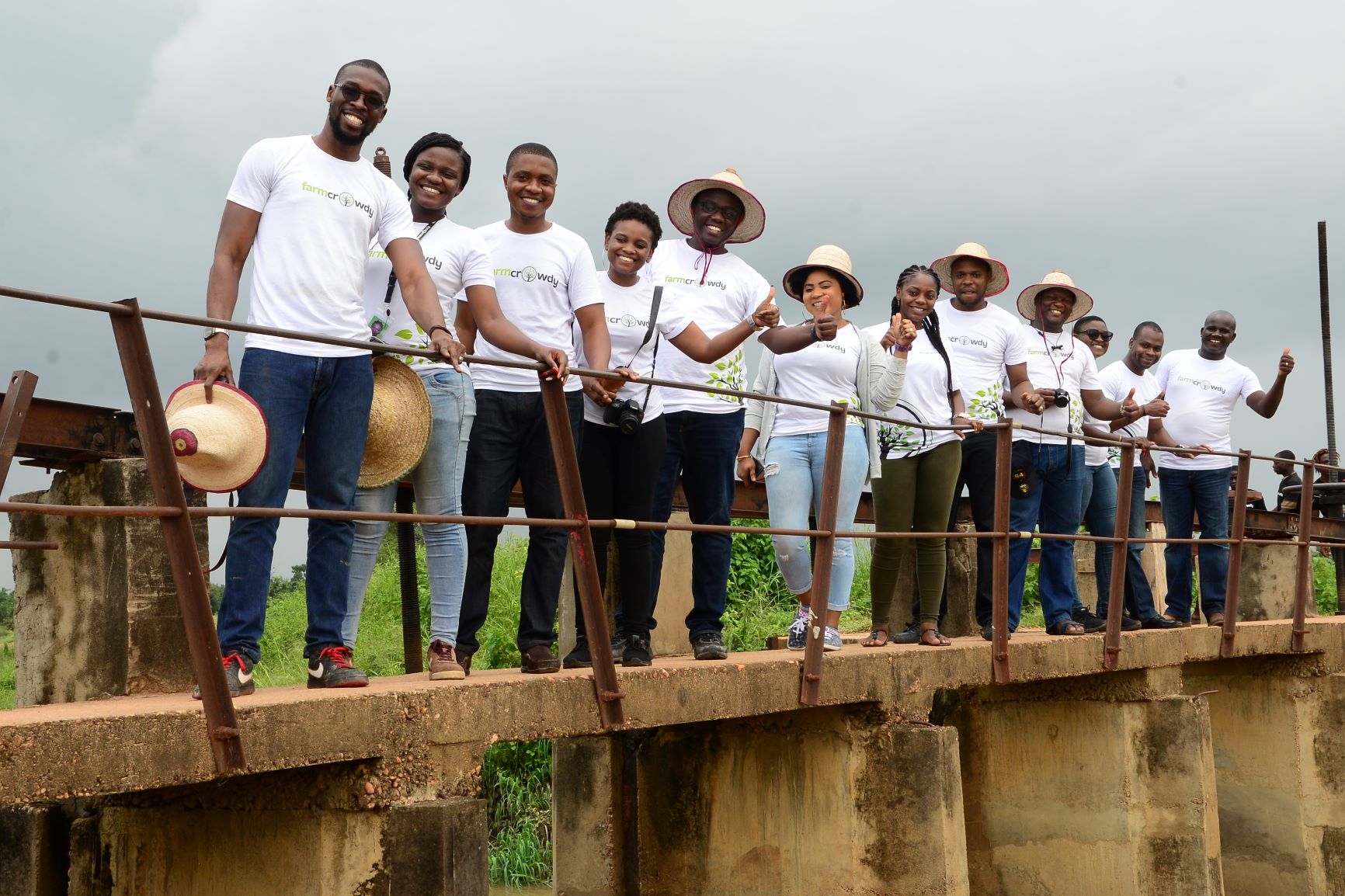
Farmcrowdy, the agro-financing marketplace in Nigeria, has raised $1 million from Cox Enterprises, Techstars and Ajayi Solutions to finance growth across all Nigerian states.

Press Release

Farmcrowdy, Nigeria’s first and leading digital agriculture platform which allows Nigerians to invest in agriculture, today announced that it has closed on additional seed funding of $1 million. This follows on from the company’s initial investments of $1 million in 2017. International investors Cox Enterprises and Techstars, along with local investor Ajayi Solutions have participated in the round as the startup prepares for an upcoming Series A fundraise later in 2019.

Farmcrowdy will use the investment to continue building their award-winning model, whilst expanding across Nigeria to cover 50% of all 36 states in the country over the next 12 months.

Today, the company has also announced the launch of the Farmcrowdy Group, which will support the startup’s mandate of building agritech solutions that enable the achievement of food security on the continent of Africa.

Pioneers of digital agriculture in Nigeria since 2016 and with a team of 50, Farmcrowdy has empowered over 12,000 farmers across 14 states in the Nigeria, reared close to 2,000,000 broiler birds as part of its poultry farm cycles and cultivated over 16,000 acres of farmland with over 35,000 farm units sold to date. With farm sponsors in Nigeria and across the diaspora, Farmcrowdy is effectively growing a community model that is set to continue the empowerment of local farmers and facilitate food production in Nigeria and eventually across Africa.

Onyeka Akumah, Founder and CEO of Farmcrowdy says “Today’s announcement of this additional funding, marks another milestone for us as we amplify our presence in the country and explore new opportunities. We are delving into the possibility of utilising drone services for field analysis, improving our farmers yield with additional research and 3D mapping, as well as entering into formidable strategic partnerships that will grow the impact of our work. We’re continually grateful that we have a group of investors who share and support our vision as much as we do. It is a great source of motivation for the entire team as we look to the next phase of growth as a company.”

In a bid to improve the management of Farmcrowdy’s farmers and farm operations, the startup has also launched the Farmcrowdy TFS App, available to its Technical Field Specialists that will aid in better profiling farmers, managing inventory, as well as data collection and analysis from existing farmers.

According to Cody Simms, a Partner at Techstars who did a follow-on investment in this round of funding after their previous investment, said, “Techstars has been deeply impressed by Farmcrowdy’s mission to end poverty in Africa one farmer at a time since we first invested in the company in 2017 as part of Techstars Atlanta in partnership with Cox Enterprises. We are excited about the continued growth of the Farmcrowdy platform and thrilled to continue our support of the business with the most recent financing.”

For almost two and a half years, Farmcrowdy continues to inspire a renewed interest in farming across generations. In order to better serve the startup’s existing farm sponsors and attract new sponsors to the platform, the startup is in the process of upgrading the Farmcrowdy app to optimise user experience which currently has 90,000+ users and farm followers.


Farmcrowdy’s $1M Seeded Agro-Aggregation Construct Business