
DD
MM
YYYY

PAGES

DD
MM
YYYY

spot_img

PAGES

Home Blog Page 6963

18+ Speakers Line up for Big Data and Business Analytics Conference 2019 in Lagos

0

  • Professors Ekekwe, Sonaiya, Ghose, Ndemo, others endorse the DABConference

Lagos, Nigeria: February 28, 2019: Information and Data Analytics Foundation (iDAF) has lined up over eighteen speakers for the maiden Big Data and Business Analytics Conference (DABConference).

The three-day Conference is scheduled to hold from March 5 to 6, 2019 in Lagos, Nigeria under the theme: Unleashing the Power of Data Analytics to Drive Business Results.

The Conference aims to bring together the leading figures in the Big Data and Business Analytics circle across Sub-Saharan Africa to share insights on leveraging data for strategic business decisions, with Prof. Yemi Osinbajo, Vice President, Federal Republic of Nigeria, as the Special Guest of Honour.

Line up of Speakers include; Prof. Emmanuel Sonaiya, Professor of Animal Science at Obafemi Awolowo University (OAU), Ile-Ife; Prof Ndubuisi Ekekwe, Founder and Chairman of Fasmicro; Prof. Anindya Ghose, Professor of Business at NYU, Stern; Yemi Keri, CEO of Heckerbella; Shingai Manjengwa, CEO of Fireside Analytics (Canada); Bayo Adekanmbi, Chief Transformation Officer, MTN Nigeria; Andrew Collier, Lead Data Scientist at Exegetic Analytics (South Africa) and Prof. Bitange Ndemo, Professor of Entrepreneurship (Kenya); Ugwem Eneyo, CEO Solstice Energy Solutions; Hon. Afam Mbanefo, Commissioner of Agriculture, Anambra State; Theo Medeiros, Founder of iDAF.

Others are Adeyemi Odeneye, Lead Data Scientist; Temitope Azeez, People Director, Jumia Services; Tony Ayabam, CEO of Infohob; Adedayo Ojo, CEO of Caritas Group amongst other speakers.

The Conference shall explore Insights and Analysis, while evaluating the African market opportunity, identifying top-ranking industries and providing market forecasts by over 18 high profile Big Data and Analytics experts who have confirmed attendance.

“Big Data has the potential to have a considerable impact on just about every industry. Its promise speaks to the pressure to improve margins and performance while simultaneously enhancing responsiveness and delighting customers and prospects or the citizens when you assess the impact of Big Data on governance,” says Theophilus Medeiros, the lead convener of the DABConference. “Despite this compelling value proposition, businesses and decision-makers will need to take a proactive approach to harness and turning insights to improving business decisions or as the case may be.”

“The primary objective of the DABConference is to discuss ways businesses can take advantage of their data as intellectual property to make informed strategic business decisions. It is time for business leaders and policy-makers in Africa to shift from intuition-based decisions to making data-driven decisions that align with organizational strategies” Medeiros explained.

The Conference, according to the Lead Convener, will include panel discussions, workshops, executive network cocktail, Hackathon and exhibitions from brand and stakeholders.

On his part, Prince Ogwuru, co-founder Information and Data Analytics Foundation (iDAF) said, “The understanding and adaptation of data-driven decision-making using big data analytics provide the pivots for the evolution of next level peer-to-peer accomplishments in organizations. Thought leaders in various sectors of the economy, therefore, must buy into the big data analytics ecosystems to stay ahead of the curve in the ever-evolving marketplace.” The Big Data and Business Analytics Conference 2019 promises that platform. He concluded “Intrinsic in data is the change code an organization requires and the elevator pitch you need to blossom.”

How to participate and Display your Brand

The conference hosted by iDAF in partnership with DPR, ManiFold, DigitalPRWire, TechEconomy.ng, provides an opportunity for brands to showcase their products and services to over 1000 participants expected at the event while registration has started at the website – dabconference.com.

 

Google And SAP Looking for African Innovators: Many $Prizes Including $100k Grand Prize

0

Google and SAP are looking for African game-changers, impact leaders, and innovators. The grand prize money is $100k. Then the other finalists will get $25k each. Link to apply, below.


Calling all game-changers, innovators and social impact leaders! SAP and Google Cloud are asking for your revenue-generating ideas that use data analytics and machine learning to power circular economy businesses.

According to the Global Footprint Network, the global demand for resources was 1.7 times more than what the Earth could support in 2018; by 2030, we may need two Earths to sustain our way of life. In response, the concept of the circular economy, where consumption and emissions are minimised through recycling, reuse, refurbishing and repair, has gained ground at a global level. According to estimates, a circular economy that increases social well-being and economic output while fostering a healthy environment could generate $4.5 trillion of new economic output by 2030.

Sunil Geness, Head of CSR at SAP Africa, said urgent action is needed to ensure the world corrects to a more sustainable path and achieves the ambitions set out in the United Nations Sustainable Development Goals. “As a purpose-driven organisation, SAP is deeply committed to embracing the challenge of environmental responsibility and to put technology, people and passion to work to solve some of the bigger issues of the digital age. Through our partnership with Google, we are hoping the launch of the Circular Economy 2030 initiative will ignite a new wave of inspiration and innovation among social entrepreneurs as we search for data-driven and technology-enabled solutions that can help the world run better and improve people’s lives.”

As part of the Circular Economy 2030 initiative, SAP and Google Cloud are working closely with experts in the fields of circular economy and sustainable development, including UN Environment, the Ellen MacArthur Foundation, the World Wildlife Fund, and the Global Partnership for Sustainable Development Data.
Google Marketing Director for Africa, Mzamo Masito, said: “We believe that with the help of modern technology, businesses can become positive catalysts for a more sustainable future. Our partnership with SAP will not only support social entrepreneurship but continue our commitment to achieving the Sustainable Development Goals and advancing a circular economy.”

The deadline for submissions is March 17th. Five finalists will be selected and announced at the Google Cloud Next Conference taking place from April 9th to 11th and will compete in a hackathon taking place in San Francisco on April 12th. Judges will look for original ideas that can benefit any aspect of the global economy. Proposals must include a viable business model, a vision for advancing Sustainable Development Goal #12 (Responsible Consumption and Production) and should use both SAP and Google Cloud solutions to enable the idea at scale.

The winner will receive more than $100 000 in prize money and benefits, including participation in Google Cloud for Startups’ Bootcamp and one-on-one mentorship, and will be announced at SAPPHIRE NOW on May 7th. The remaining four finalists will each receive $25 000 in prize money.

For more information and to apply, please visit http://g.co/Circular2030 before March 17th.

MultiChoice Begins Trading in South Africa, Valued More Than Any Nigerian Bank

0

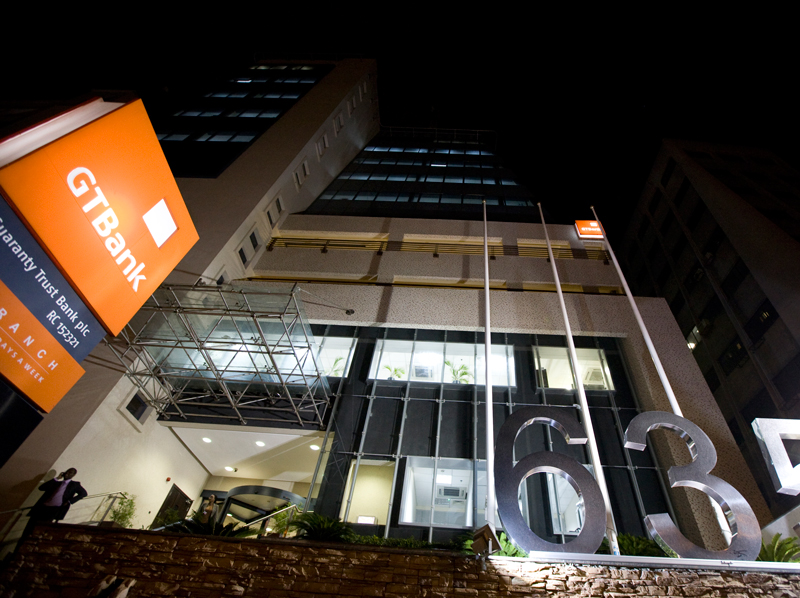
MultiChoice, the brand behind DStv and GOtv, is now trading in the Johannesburg Stock Exchange, hitting a market cap of $3.5 billion on its debut. In other words, MultiChoice is bigger than the market cap of Nigeria’s largest bank by market capitalization, GTBank. I am yet to understand why South African firms are valued way higher than Nigerian entities despite our economy being larger [sure, I understand rule of law, maturity of economy, etc but those cannot explain all]. The Nigerian Stock Exchange has a total market cap in the region of $35 billion while Johannesburg Stock Exchange is in the north of $400 billion.

The shares traded at 111.12 rand as of 11 a.m. local time on Wednesday, valuing the company at almost 50 billion rand ($3.5 billion). That’s the biggest listing in the city since Steinhoff International Holdings NV unbundled its Africa retail operations, now known as Pepkor Holdings Ltd., almost 18 months ago. The shares first traded at 95.5 rand.

[…]

The move creates an Africa-focused company free from Cape Town-based Naspers, which has expanded around the world since making a blockbuster early investment in Chinese giant Tencent Holdings Ltd. in 2001. MultiChoice broadcasts live sport such as English Premier League soccer, global hit dramas like Game of Thrones and locally produced content, and services about 14 million households.

MultiChoice has a challenge ahead of it with Netflix, iROKOtv and others battling Showmax and its TV app. Bloomberg analysts believe that the company could “eventually settle at about $5 billion to $6 billion”. Yet, that will be for a while before a deceleration of value due to competition, not just from Netflix but from YouTube, Facebook, or anything that engages user’s time.

LinkedIn Comment on Feed

The first question to address is, how integral is Nigeria’s Stock Exchange market to the overall economic value? I do think everything in Nigeria operates in silos, a lot of people don’t even know if the NSE here adds any value or not.

Again, larger aspect of our economic activities are informal, so it makes valuations very tricky. Even the banks in question, what is their revenue and growth model like? It’s not enough to declare big profits, so many things remain fuzzy in our economic space.

Until we learn to calibrate rightly, and also tie outputs to productivity; I am not sure how we can grow past the circles we have been drawing for ages.

Nigeria is a strange place, not just in politics, its economy is even stranger. So the key players in the economy cannot be totally decoupled from the fuzzy environment.

Why Naspers Unbundled MultiChoice (DStv, GOtv, etc) As A Separate Company

The Lagos-Based Co-Creation Hub’s $11 Million Investment in Rwanda

0

By Nnamdi Odumody

Social Innovation Incubator, Co-Creation Hub has decided to invest $11million in the country of a thousand hills; Rwanda. The R&D Unit will house designers, product developers and engineers who will collaborate with top scientists globally to solve some huge social challenges. The East African nation with its visionary leader Paul Kagame has made a bold decision to become a middle income knowledge-driven economy in Africa by the year 2020.

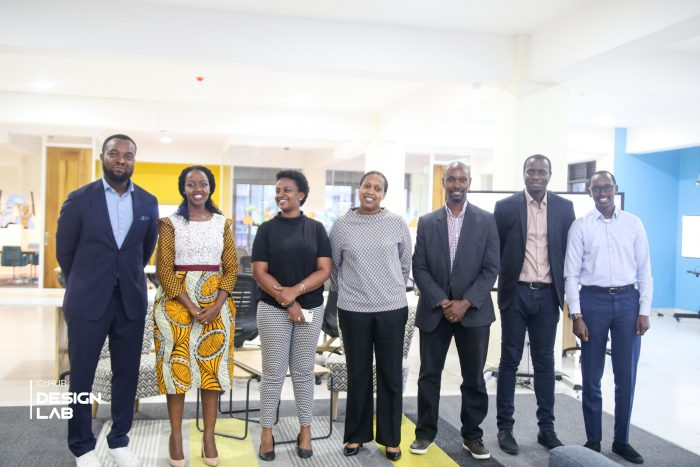
Co-creation Hub [CcHUB] will today officially launch the ‘CcHUB Design Lab’. The design lab is an unprecedented next step in Africa’s growing tech sector, and is set to become a leading creative space where its multidisciplinary team of product designers and engineers will collaborate with scientists and stakeholders globally, to explore the application of emerging technologies that will solve Africa’s systemic problems in Public Health, Education, Governance and the Private Sector.

The new state-of-the-art lab, located in Kigali, Rwanda, sees CcHUB, the leading innovation centre dedicated to accelerating the application of social capital and technology for economic prosperity, expand its physical presence to another African country, for the first time in its eight year history. CcHUB is now looking to partner with both public and private industry bodies from across the continent.

[…]

With the expansion, CcHUB plans to invest approximately $11m in Rwanda.

President Kagame wants to change the narrative of Rwanda from its horrific genocidal past which led to the death of several citizens to becoming Africa’s Singapore. His government has made massive investments in technology infrastructure and human capital development with the Kigali the capital city offering free internet services. The Kigali Innovation City (KIC), a $2billion project located in Kigali’s Special Economic Zone, plans to create an innovation driven-economy which will play host to world class universities, technology companies, biotech firms, commercial and retail real estate on 70 acres of land.

The KIC project is expected to create over 50,000 jobs and generate about $150 million in ICT exports annually as well as attract over $300 million in foreign direct investments. Over 2600 students are expected to graduate annually from the universities inside KIC adding to Rwanda’s tech talent. Some of the human capital development institutions include the African Institute Of Mathematical Sciences to nurture solution providers using data science to solve the continent’s problems, Carnegie Mellon University USA, the world’s highest ranked in Robotics, and African Leadership University Rwanda. There is $100million fund for innovative startups.

Also, Andela which develops world class technology talents and connects them with jobs in leading global organizations is setting up a technology hub in Rwanda, its fourth African market, partnering with the Rwanda Development Board which is responsible for transforming the country into Africa’s hub for business, investment and innovation. Rwanda ranks 29th in the World Bank’s Doing Business Report, and has an easy visa system for other African nationals in order to attract talent.

The Smart Africa initiative which is to create a framework for African states, to utilize smart technologies for digital transformation in order to improve productivity, and the quality of living in their respective countries is also based in Kigali.

Kigali is also home to a Fab Lab for hardware makers, the African Design Centre, the highly ranked University of Rwanda with World Bank African Centres of Excellence in Data Science and the Internet Of Things.

CcHub was attracted by the burgeoning talent available in Rwanda, the infrastructure, ease of doing business and Rule of Law which informed its decision to venture into the East African market.

Nigeria has a lot of lessons to learn from this, as investors will only put their money where the government of the day has sowed ahead for the harvest, as they want to reap bountifully.

Your Ecommerce Needs Fulfillment Center Logistics Strategy

0

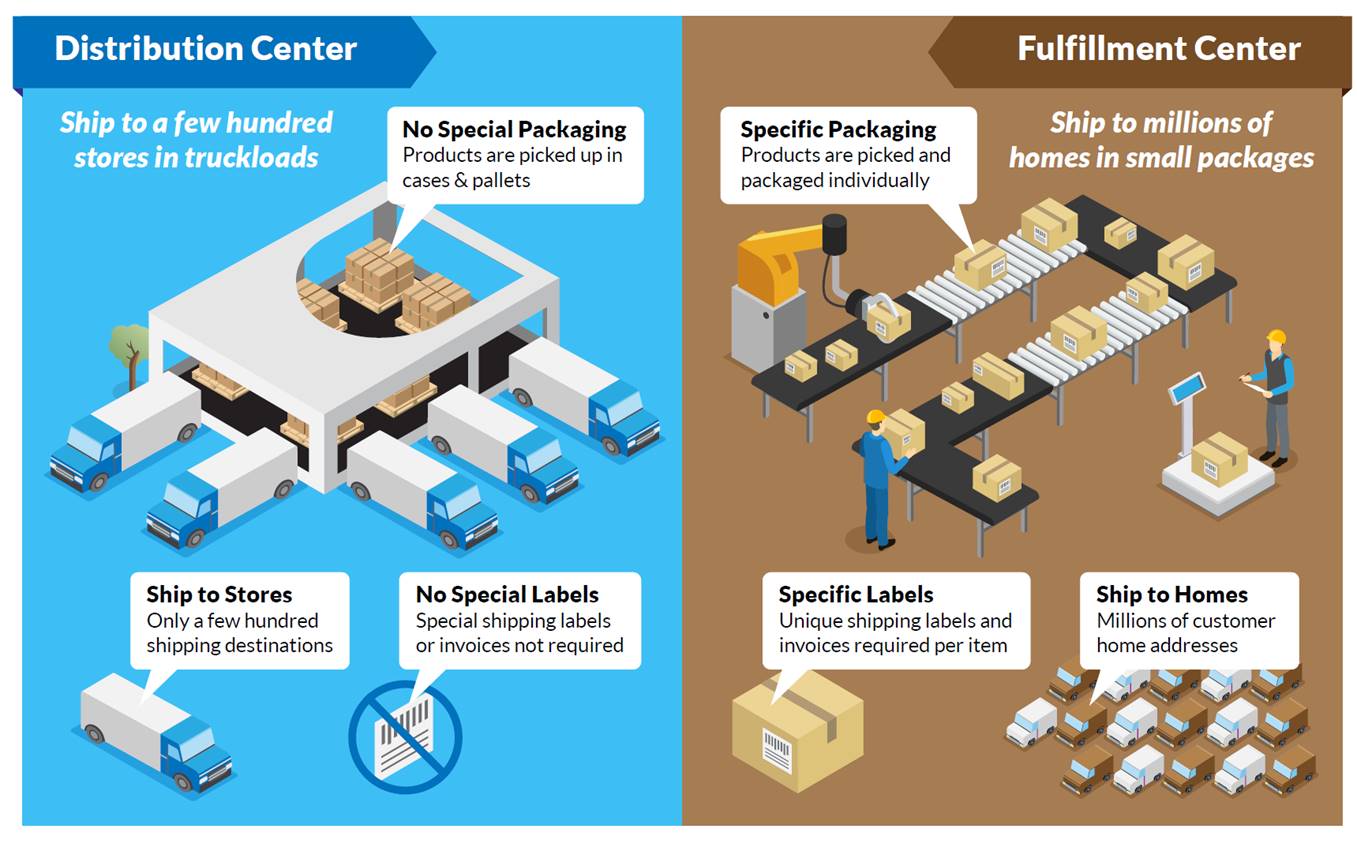
Until you can master Fulfillment Center logistics (ship goods directly to end customers), your ecommerce operation will struggle. Today, companies like Konga are going hybrid – online and physical stores. That is the first phase towards the equilibrium which will be the omnichannel where immersive integration of supply chain and service will make customers agnostic of whether online or offline. Simply, you will have anywhere and anytime retail operation.

The key sentence is thus: “Our mid-term goal would see to the establishment of more stores across Nigeria”. Yes, the new Konga would be opening physical stores across Nigeria. Certainly, that is a great winning business model. Besides the money being in the physical space, having stores will reduce the marginal cost challenges associated with pure play ecommerce. The piece quoted me as it argued the brilliance of pursuing this hybrid commerce for Konga.

[…]

The new Konga understands this and is working to enter the race where the opportunities abound. With these stores, the new Konga will crash its marginal cost and that would help it to take advantages of the online elements to deepen its competitive capabilities in the physical. As it does this, Konga would become the most respected retail chain in Nigeria.

Yet, no Fulfillment Centers (FC) can win without great Distribution Centers, DC (ship goods to stores) for a nationwide operation. Investing in that requires moving into big logistics like the ones companies like Kobo360 do.

The fact is this: the pieces are emerging in Africa provided the players can work together! Yes, you can focus on your FC while the DC is outsourced. But that outsourced partner must be wholly integrated in your operations to have efficient supply chain framework.

source: Techcrunch

The Brilliance of the New Konga Strategy