After running the piece where Nigeria has spent $107.4 billion, over 15 years, only to deliver mass poverty across the nation, a Tekedia reader (Akintola T. Obafemi who runs Going Global Consultancy, an FMCG consultancy), sent these notes and asked me to share with the community. I want you to pay attention to his #3 which is a very important element as Nigeria votes this Saturday.
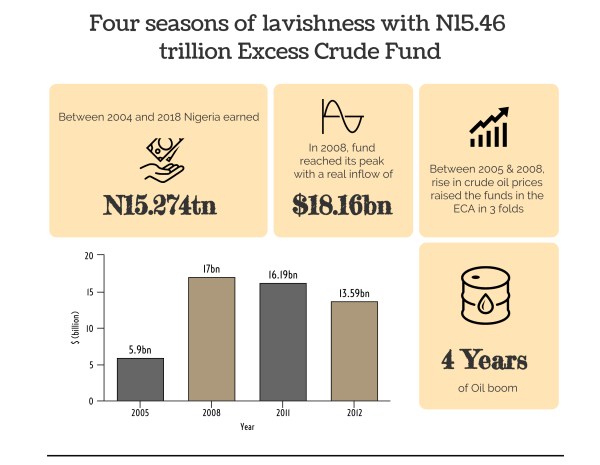
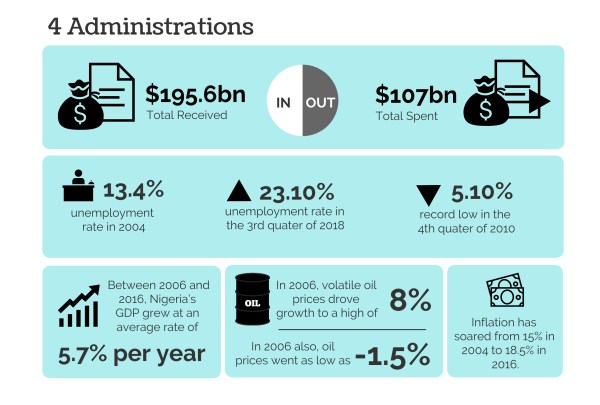
So, the trending Premium Times report which noted that in the last 15 years Nigeria has spent $107.4 billion (the equivalent of N15.46 trillion) from the Excess Crude Account (ECA) under the administrations of Olusegun Obasanjo, Umaru Musa Yar Adua, Goodluck Jonathan and incumbent President Muhammadu Buhari while recording mass poverty is nothing new.
Mr. Akintola Notes and Questions
1. Maybe our problem is a scale problem:
Nigeria is such a big country where we need all channels to work for us to progress, however unlike the US and Canada which are way bigger countries, we have not been able to work on a micro level. We run after big issues everytime forgetting those small fixes that’s needed to make everything work.
Who monitors the performance of the electorate starting from local govt counsellors and chairmen?
2. Shouldn’t Nigeria be run like a corporation?
Yes corporation. The same way you would run Fasmicro with targets, KPI’s, business plans, strategy plan and all. Shouldn’t this plan be shared amongst all stakeholders (including the masses) and shouldn’t ineptitude be frowned at and voted out when discovered. I think with only a business corporation model can we make the forward movement we desire. UAE, Malaysia and Singapore are recent countries who have worked this model.
3. Are we not still ripe for true federalism?
Let each state independently govern itself and run to federal purse only when necessary. Generate your own revenue and use it under the watchful eyes of the accountant general and chief justice of the federation. I believe this would help diversify our economy and reduce dependence on oil. The groundnut pyramids of the North would resurface, cocoa house in Ibadan would breath again, the palm oil and copper mines of the East would rise up and then no one would blame oil price plummet for ineffectiveness or austerity measures.
What do you think? Many are postulating that Nigeria can experience digital blackouts (internet will not work, cut off by MTN, Glo, Airtel and 9Mobile) after the presidential election this Saturday.
With less than a week until the Nigerian election, there are mounting fears that access to the internet and social media services could soon be restricted.
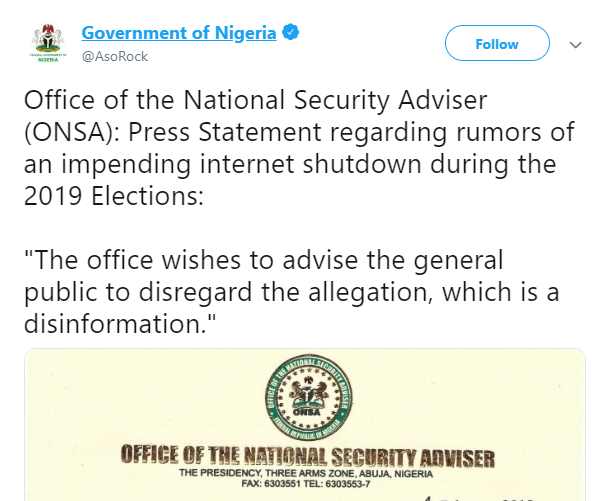
The run-up to the vote, which will be held on February 16th, has been plagued by rumours that there are plans to shutdown the internet while the election takes place.
[…]
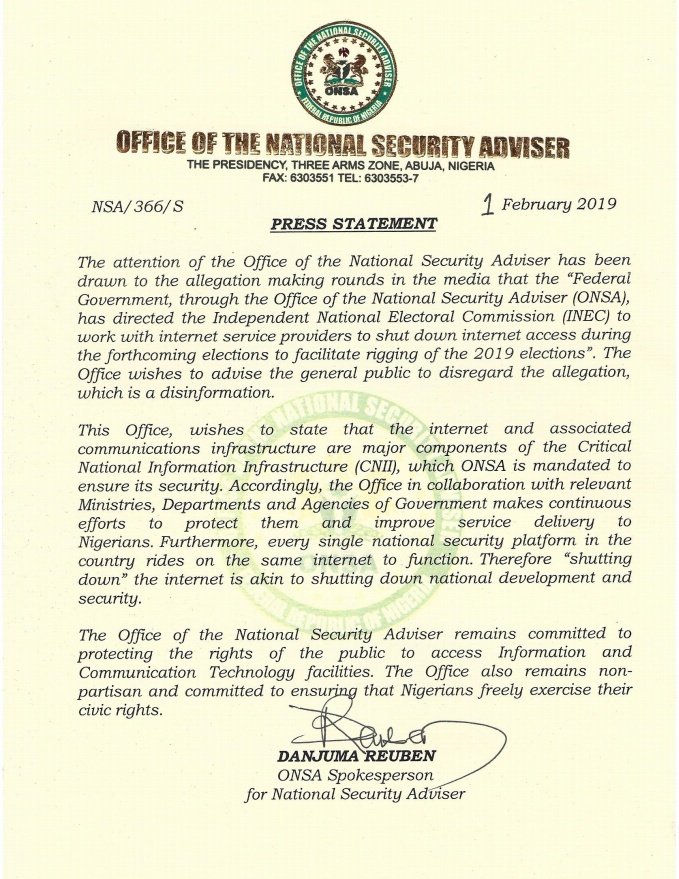
The press release goes on to state that the NSA “remains committed to protecting the rights of the public to access Information and Communication Technology facilities.”
Whether or not this will appease those concerned is unclear. However, with international monitoring and rising domestic political pressure, any attempts to limit internet access in the coming weeks are likely to be met with widespread condemnation.
Honestly, I do not believe it – I think we have gone beyond Cameroon, Congo DRC, Angola, etc on that one. Yet, my colleagues in my office are asking me to approve for contingencies in case Nigeria goes offline.
I do not see digital blackout as a possibility as Nigeria is relatively advanced to do that nonsense they do in some African countries. I believe our government on this one.
Meanwhile, from TC Daily newsletter, we learnt of this link from Quartz on things to do to stay online in case we have internet blackout.
Prof Ndubuisi Ekekwe, I’m surprised that you think Nigeria’s beyond that. I hope you’re correct, but I never put anything past anyone and any country in this day and age. Absolute power corrupts absolutely.
Having said that, my reasons for being marginally optimistic are as follows:
* It’ll require a massive coordinated plan for the mobile operators to simultaneously cut off service to the entire country as there’s no single company that controls everything.
* The telcos like their monies and it’ll require so much money for them to be influenced by the political operators to do such a thing. Fortunately for us, the politicians are busy spending those monies in their bids to rig the elections that I doubt that they’d have the appetite to spend the inordinate amounts that might be required to pay off all the telcos if it were doable.
* Even if one or two telcos are paid off, many people have multiple SIM cards and it may not affect the country as significantly unless the companies involved are MTN and Globacom. Then, we’re in trouble.
It’s not impossible, but it’s highly improbable. So, there’s no need to think that a digital blackout is imminent. Besides, what contingency will you put in place? Satellite phones?
Health is wealth, and across nations, different innovations have been pioneered by governments and organizations to improve the wellbeing of citizens by making healthcare services more accessible. Before the modern digital age of aggregation and orchestration of demand and supply, in platforms under the positive continuum of network effects, the healthcare systems in most developed nations have followed such redesigns. Yes, ecosystem players make it possible for those offering health services and those needing those services to have efficient equilibrium within healthcare service frameworks.
In Nigeria, however, we are just beginning to build such systems as enablers of healthcare service delivery remains inadequate. One company that is looking at how to pioneer this new future where ordinary citizens, employed or otherwise, can have healthcare plans is HealthPoint.ng. Unlike the HMO model where most times, users must be banded in groups, HealthPoint offers an on-demand and fully business-to-consumer solution, among others. In other words, anyone can buy the plans without being part of any group or organization.
Our belief is that healthcare should be accessible to everyone; whether they are young or old, male or female, sick or healthy, regardless of their socio-economic status.
We are propelled to serve major health deficiencies in urban, rural and peri-urban areas with an ultimate vision to promote and facilitate inclusion health in Africa particularly to contribute to the Universal Health Coverage agenda.
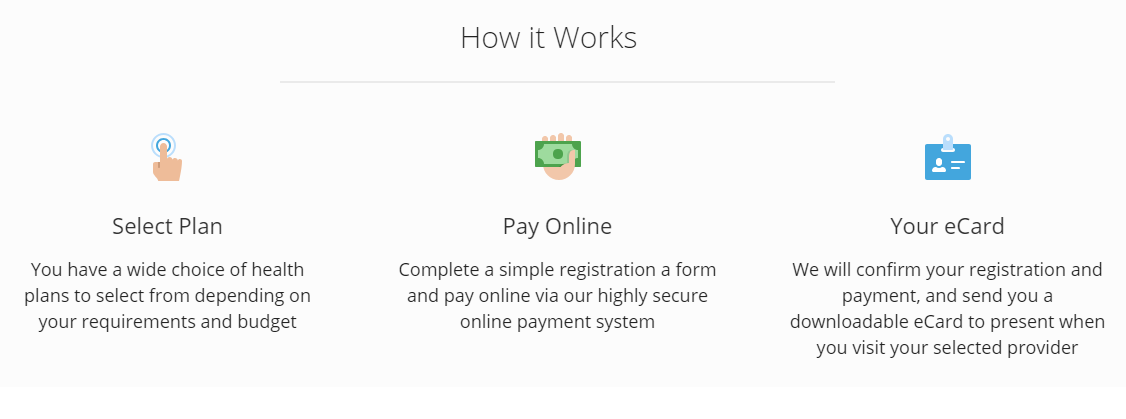
We have designed the most affordable and easy-to-use health management plans at monthly subscriptions, to fit seamlessly into your monthly budget/cash flows.
You can select from and access a wide number of hospitals of your choice from our A-list hospitals/provider network for medical attention and complete healthcare.
This vision of democratization of healthcare is what Nigeria needs. As an entrepreneur in the healthcare space, through Medcera, I have observed that Nigeria must innovate and improve the number of its citizens covered with health insurance. Stuck in single digit percentage national healthcare coverage, primarily via HMOs and sub-optimal government schemes like the National Health Insurance Scheme, bringing technology into the space will engineer new product classes. In a recent piece in Harvard Business Review, I explained a future which is possible in the Nigerian healthcare sector. Interestingly, that future can only happen when startups like HealthPoint thrive. Yes, until we can get citizens to have adequate health insurance, the healthcare industry will not have functioning equilibrium points to keep the nation healthy.
How Technology Is Transforming On-Demand Retail Health Insurance
There are things which are very hard pre-internet especially in a place like Nigeria: on-demand retail health insurance plan. But with the web, the capacity to manage network of clinics, patients and healthcare ecosystem players becomes easier. HealthPoint is taking advantage of the web to deliver a service which can serve people across the nation.
Simply, ICT is facilitating the process of socio-economic development in Nigeria. It has offered new ways of exchanging information, and transacting businesses, efficiently and cheaply. It has also changed the dynamic natures of healthcare and financial industries and provided better means of using the human and institutional capabilities of the nation in both the public and private sectors.
Increasingly, technology is rapidly moving Nigeria towards knowledge-based economic structures and information societies, comprising networks of individuals, firms and states that are linked electronically and in interdependent global relationships. This remarkable success of ICT in Nigeria is what HealthPoint is tapping as it executes its business model. By using the web, it reduces its marginal cost, improving its capacity to scale the service.
The HealthPoint Mission
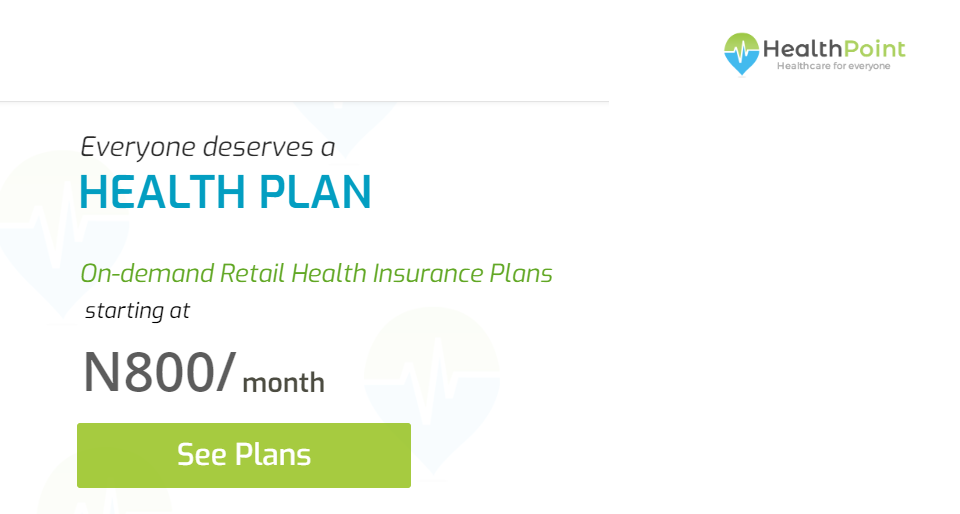
HealthPoint is one of Nigeria’s emerging on-demand health plan retailers providing access to healthcare at affordable monthly subscriptions starting at N800/month. Through its services, subscribers can enjoy some of these benefits:
Health insurance covers essential health benefits critical to your health, treating illness and accidents
Health insurance protects you from unexpected, high medical costs.
You pay less for covered in-network health care
You get free preventive care, like vaccines, screenings, and some check-ups.
Besides the individual plans, the firm also offers the typical group/business packages.
All Together
The unbounded distribution capabilities which Internet makes possible will unlock many new business models. HealthPoint has demonstrated that we can find new sectors to redesign in Nigeria with technology. The broad insurance sector has been extremely impervious to technology but that is changing as broadband penetration continues to deepen nationwide.
There is BIG fear in Abuja: Britain will revoke visas and seize properties of any politician that causes trouble during Saturday’s elections. Can I order a big laugh? If you check, Britain sent a similar statement in Kenya during the last general election, and after the election, the first place the “troublemakers” vacationed was United Kingdom. They went to the big stores and spent money! Nothing happened despite all the paralyses.
The British High Commissioner to Nigeria, Catriona Laing, has warned that Nigerian politicians who incite or execute violence during Saturday’s elections would have their visas banned and assets in the UK seized.
Ms Laing gave the warning at a press briefing on Wednesday in Abuja to unveil the Election Situation Room of the Civil Society Situation Room set up by a coalition of civil society organisations to monitor the polls in Abuja.
She reminded political parties that apart from their assets being seized in the UK, they could experience a worst case scenario of prosecution.
Good people, the time to rely on foreign powers to help Africa has gone. Let us vote and demand accountability from our leaders through voting. I do not follow foreign election observers because they just come to see, and afterwards they fly out. Of course they put those meaningless statements.
Then, Nigeria will remain for all of us. When you recall that John Kerry, former U.S. Secretary of State, accepted a flawed Kenyan election, calling it “free, fair and credible” just for peace before the country’s Supreme Court cancelled it, you will understand where our hope will come from.
Former US Secretary of State John Kerry termed as “extra-ordinary” the organisation of the IEBC after he visited Bomas and held a morning meeting with Mr Chebukati.
“The IEBC has done an extraordinary job to ensure that Kenya has a free, fair and credible poll. People will need to be patient, and we wish everybody well,” said Mr Kerry, who is leading the Carter Centre Observer Group
Britain: Nigerian politicians do not care if you revoke their visas or seize their properties in London. But NIGERIANS care if you can ask politicians for sources of income as they buy those properties. There are adults in Nigeria, and you can help by imposing on Nigerian politicians to get clearance from the Nigerian Police (specifically EFCC) before they pay for those London properties with stolen commonwealth.
As I have noted, Nigeria’s problem is never money: we do have decent enough money in this country. Our biggest problem is paralysis at all levels of leadership. Interestingly, over the next 14 days, Nigerians will have opportunities to make their calls via elections.
So, the trending Premium Times report which noted that in the last 15 years Nigeria has spent $107.4 billion (the equivalent of N15.46 trillion) from the Excess Crude Account (ECA) under the administrations of Olusegun Obasanjo, Umaru Musa Yar Adua, Goodluck Jonathan and incumbent President Muhammadu Buhari while recording mass poverty is nothing new.
In the last fifteen years, the Nigerian government has spent at least $107.4 billion (the equivalent of N15.46 trillion) from the Excess Crude Account (ECA) under the administrations of Olusegun Obasanjo, Umaru Musa Yar Adua, Goodluck Jonathan and incumbent President Muhammadu Buhari.
A Premium Times Centre for Investigative Journalism (PTCIJ) report revealed that Nigeria earned $109.37 billion, approximately N15.274 trillion, as excess crude money between 2004 and 2018. According to the report, the fund reached its peak with a real inflow of $18.16 billion in 2008.
This is a country where people die like goats in campaign rallies as organizers cannot even manage simple partisan crowds. If you are counting, we have lost (or seriously wounded) more than 20 Nigerians during this election cycle. Life goes on after the usual apologies with no one going to jail for dropping the balls. Yes, no accountability at all levels.