DD
MM
YYYY

PAGES

DD
MM
YYYY

spot_img

PAGES

Home Blog Page 6977

MTN Nigeria To List Via Introduction (Not IPO) in Q2 2019

0

MTN Nigeria will be listed on the Nigerian Stock Exchange but it will not follow the typical process of initial public offer (IPO). MTN Nigeria will go via listing via Introduction, according to statements from its leaders in South Africa. This is how Listing by introduction is explained “It is a way of listing shares already in issue on another exchange. No marketing arrangement is required as the shares for which listing is sought are already widely held. The listing approval procedures for a new listing by introduction are the same as those for initial public offerings (IPO)”. The deal will happen in H1 2019, possibly Q2 since Q1 makes no sense with the election on the way.

MTN Nigeria has said it will list on the Nigerian Stock Exchange by way of introduction in the first half of this year.

The President and Chief Executive Officer of MTN Group, Mr Rob Shuter, disclosed this at the MTN Group’s investor update conference call

[…]

“It means that we will list the company in the initial phases without any public offer or sell-down or initial public offering. I think this will enable us to get the company listed whilst the market still digests the implications of what has happened over the last few months,” Shuter said.

He added, “We will in phase two be doing a project to increase the Nigerian participation in MTN Nigeria, targeting more a free float of around 35 per cent than the free float we have today which is around 20 per cent. So, we aim to conclude at least the listing by introduction in the first half of 2019, pretty much as soon as we can, and then subject to market conditions, appetite and demand we would in phase two do the sell-down.

There is nothing new here: I had expected this to happen in Q2 2019, after the election. The only surprise is the format of using listing by introduction. I had projected the value of MTN Nigeria to be $5.57 billion before the paralyses of fines and penalties which certainly have depressed the valuation before investors.

“So, for MTN Nigeria, I do think the strategists would move this IPO to Q2 2019 to happen after the election. If I am advising them, that would be the first point on slide. Going public in 2018 will cost you 15-20 percent because of the looming presidential election in Nigeria, which could depress international and Nigerian diaspora interests,” he concluded.

This is the value of MTN Nigeria

Yet – do not take this to the bank. MTN put a disclaimer in that statement “… conclude at least the listing by introduction in the first half of 2019, pretty much as soon as we can, and then subject to market conditions, appetite and demand we would in phase two do the sell-down”. Simply, they can claim anything and call it off.

I Will Vote YES for Access Bank to Merge with Diamond Bank

0

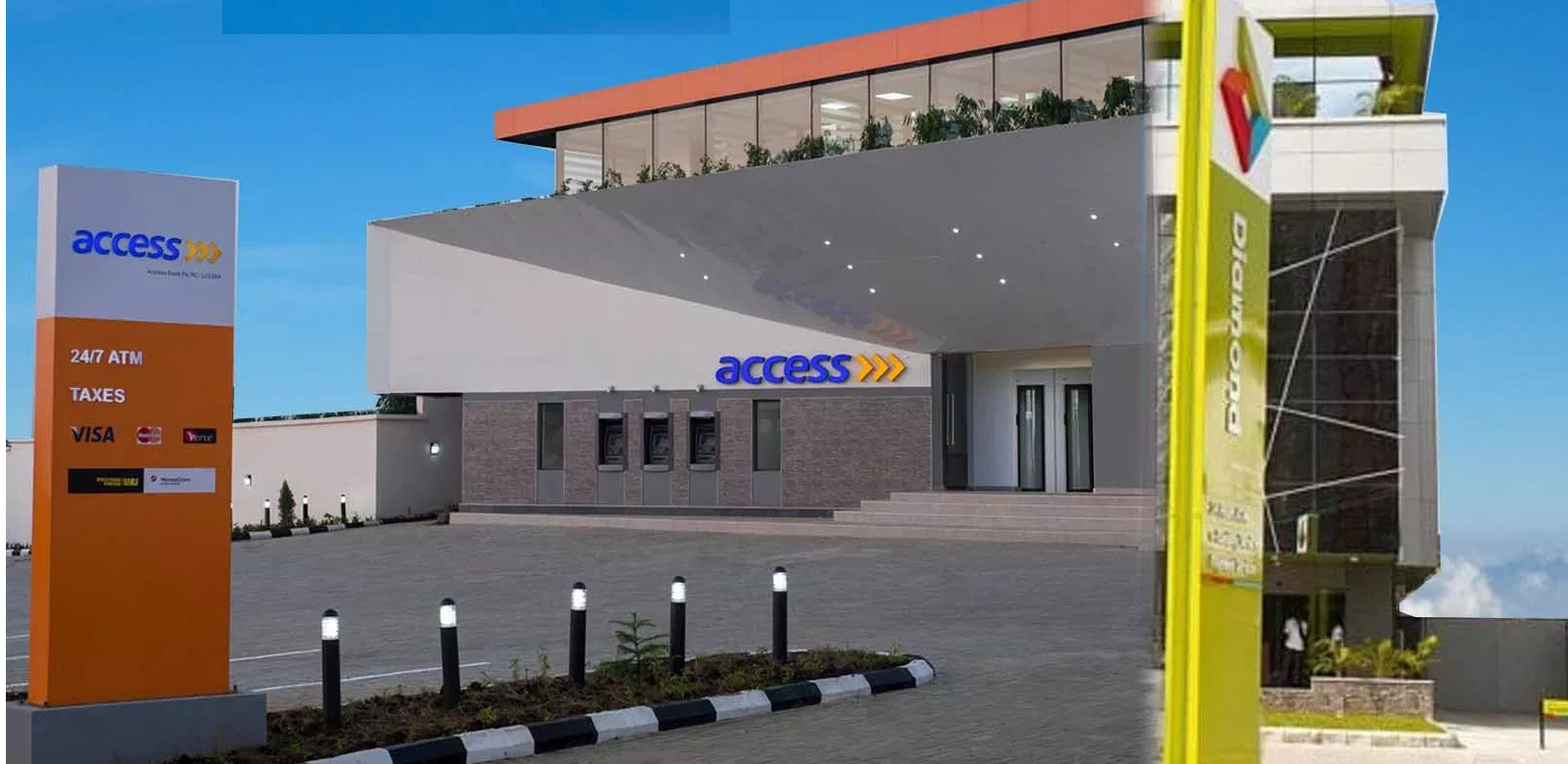
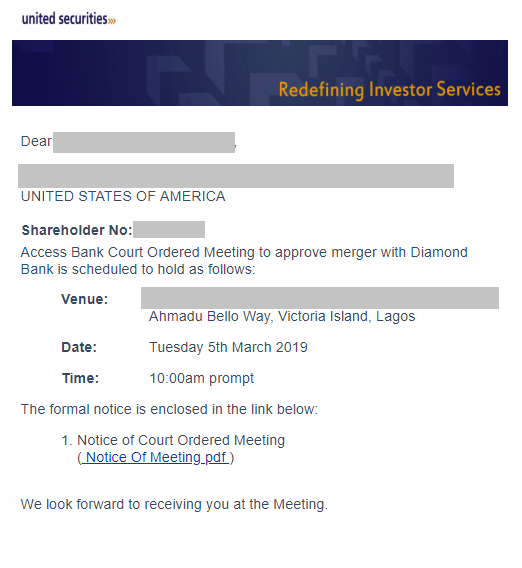
Access Bank has sent invitations to its major shareholders to attend a court-ordered meeting to approve merger with Diamond Bank. On March 5th, I will vote YES for the merger since there is no alternative. Access Bank few weeks ago noted that it was merging with Diamond Bank. I want to wish Access Bank CEO, Herbert Wigwe, my 2018 Businessperson of the Year, the best of luck as he executes to create values for all stakeholders (not just us the shareholders).

Bloomberg and local news have reported that Access Bank had acquired Diamond Bank in Nigeria. It is a very painful one, personally, because Diamond Bank seeded my career. As I have written, it was the only company I ever-interviewed in Nigeria, and the only one I sought employment: other jobs had come without applications or interviews. With a category-king leading innovative spirit, Diamond Bank was a peerless institution at its peak. It pioneered Nigeria’s modern banking with the best banking product ever in Nigerian history. Yes, the Diamond Integrated Banking System (DIBS) transformed Nigeria and solved the menace of armed robbery against traders than all the contributions of Nigerian Police. Yet, the Diamond lost the sparkle

For students of finance, you can read the Scheme of Merger document sent to shareholders.

Scheme_Document

The Strive Masiyiwa’s $100 Million Zimbabwe 2.0 Startup Fund – “Nwaoha” of Zimbabwe

3

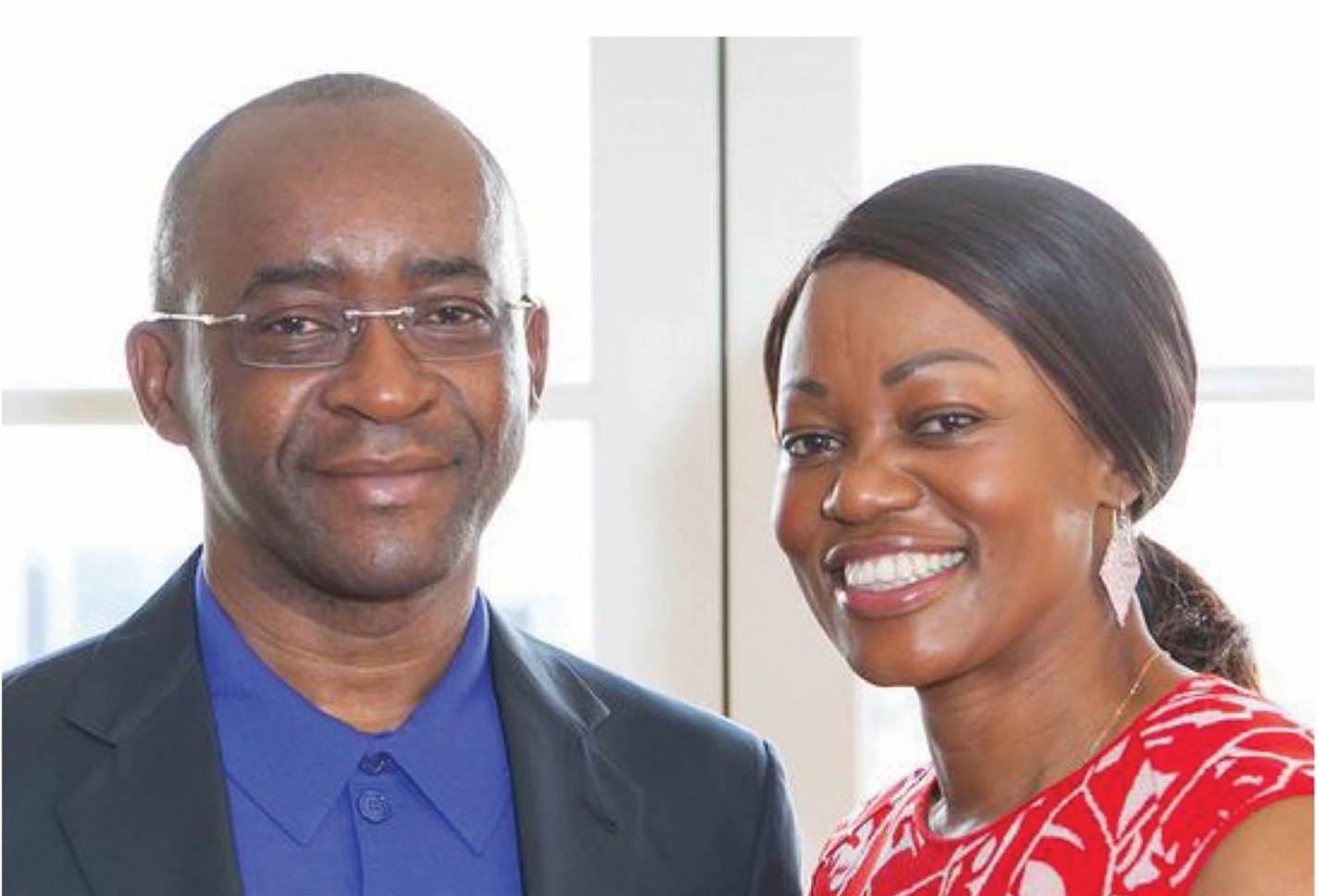
Strive Masiyiwa, the Founder of Econet, and his wife Tsitsi Masiyiwa have pledged $100 million to fund rural entrepreneurs in Zimbabwe. This is a massive moment in that African nation. This mirrors the Tony Elumelu $100 million structured for African entrepreneurs.

Some features for Strive Masiyiwa Fund: women will get minimum 50%, no collateral required, and no political lobbying for support required. In Igbo land (Nigeria), parents name their kids Adaora [daughter of all] and Nwaoha [child of all, usually males] symbolizing that a child belongs to all in the community, not just the parents.

Strive is Nwaoha of Zimbabwe: he is building Zimbabwe and he deserves our commendations.

My wife and I have decided to set up a special fund of $100m over 5 years for ReImagine Rural in Zimbabwe.

We have also challenged our friends in the philanthropy community to join us to expand it across Africa.
The fund which is our own personal money will be disbursed as loans through Steward Bank (a member of the Econet group).

The money will support projects from rural entrepreneurs or those entrepreneurs willing to focus on rural areas.

SB will set up a special team [Masiyiwa Rural Challenge Fund].

I want to use this initiative to challenge global donors to support mass entrepreneurship in Africa by putting my own money into what I believe. My wife is currently on a major drive to get this concept adopted by other philanthropists, so we can push into other African countries.

This initiative does not reduce our commitment to other areas of our philanthropy efforts including education and the $60m sanitation and water initiative in Harare.
We thank the Lord who empowers us!

Details of how the fund will work were posted on his Facebook page and we know the following:

  • 25% must be set aside for an area of Zimbabwe called Matabeleland;
  •  Women must get minimum 50%;
  • Young people must be the focus;
  • Traditional businesses like stores and grinding mills will be excluded. We want to see a new generation of businesses, to fulfil my dream of #ReImagineRural.
  • Min: $1000, Max $10,000.
  • No collateral;
  • Maximum interest 5%;
  • Repayments will go into revolving fund;
  • All entrepreneurs must undergo training before loans;
  • No political lobbying for support

Council of Experts Nominates For Top 100 Achievers

0

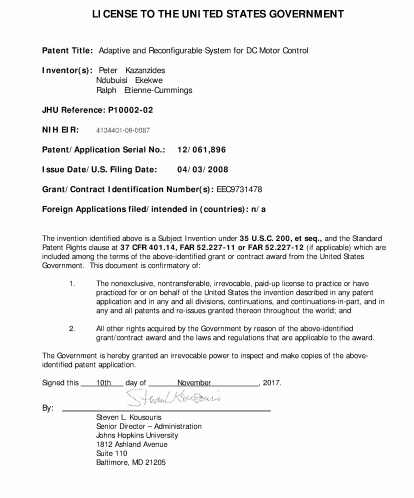
Yours truly received a letter yesterday that the Council of Experts (European Union) meeting in London UK has entered my doctoral work and the patent which came out of it for Top 100 Achievers in Minimally Invasive Surgery practice. I invented a special mechanism to build dexterous robots during my PhD in the Johns Hopkins University.  The United States Government acquired licensing rights on the patent last year.


Nigeria’s Minimum Wage Struggle – A Pyrrhic Victory

18

By Martins Eke

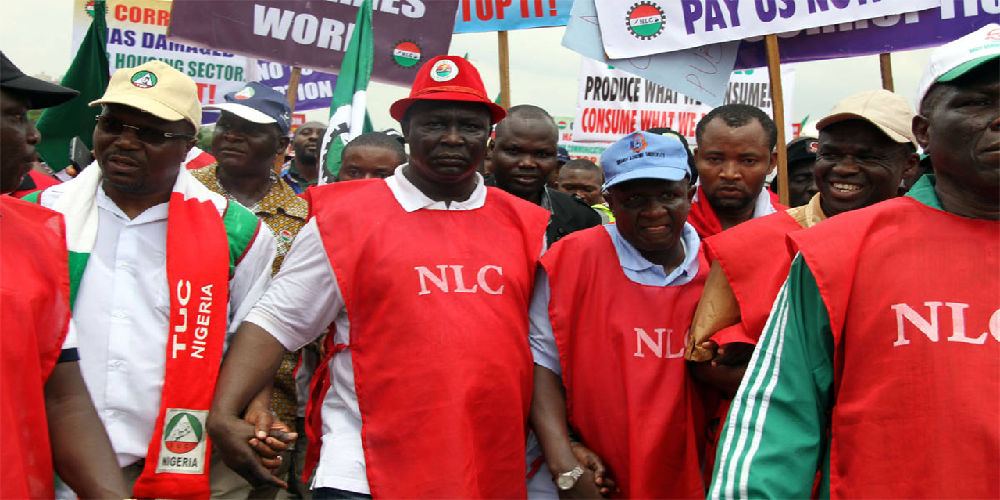
It is superfluous to mention that interlocutions relating to the minimum wage in Nigeria have unfortunately received little or no concern. For a fact, Nigeria’s minimum wage talks are as messy as the Brexit talks. Perhaps, the sparing attention lent it is the better of two conditions: What is more is that in times where minimum wage issues motivate some conciliatory attention, there appears to be disconcerting variation in the ends of both the Federal government, Nigerian Governors Forum and the Nigeria Labour Congress. What this sloppy condition means is that Nigeria may continue to whirl in circles – one that is immensely attributable to the unfathomable doggedness of the Nigerian Government Forum which has refused to agree with the threshold of 30,000 Naira minimum wage and the near justifiable insistence of the Nigeria Labour Congress, the effect of which is the irremediable nationwide strike.

It is logical to admit that the government of Nigeria cannot, or strongly ought not to put a flat minimum wage across the states in the Nation. An action in this direction reeks of two neat indices of feigned naivety: first, that every state in Nigeria has equal economic strength and a deliberate absentmindedness to the asymmetrical output of states over the years serving to unfairly cover for the inequities of some states in terms of their returns to the Gross Domestic Profit of the nation.

While we concede that a flat minimum wage cannot reasonably be made across board, we however express dissatisfaction at the lacunae in constitution – the originating source of all laws, contemplates a minimum wage that cuts across all states of the federation which in for our money, is the genesis of this vicious circle which promises no revelation of amity. Whether it pleases us to hear, the interplay of factors such as cost of living and income generation will always interface to determine what a state can pay and we must admit that the effect of these factors do not apply across board in similar fashion. One may ask, is it not foolhardy to then consequently react in similar fashion across board?

For some inexplicable reasons, it is apparent, if not intrinsically true, that Nigeria which ought to be a federal state has always gravitated somehow to  centralization. This is perhaps as disconcerting as it is unforgivable, considering the prodigious amount of literature including the constitution that theorizes the government of Nigeria as a palatable federalism. This organic hypocrisy perhaps is borne out of the caution to not become a confederate state. We are best suited to work like the United States of America but we are stuck to the cleavages of our colonial masters who do not even practice a federal system.

The United States of America adopts a minimum wage based on a state basis and also has a federal minimum wage. Facts and verifiable statistics have it that, 29 states in the U.S enjoy a minimum wage higher than the federal minimum wage while states like Georgia are a bit below the threshold.

If Nigeria is to take a cue from such idealism then maybe we may have had a reasonable head way presenting a more printable panacea than any cockpit fight between the Federal Government alongside the Nigerian Governors Forum and the Nigerian Labour Congress can possibly provide the citizenry without a choice but to remain at the unfortunate end of a meaningless tussle of unimaginable grandstanding.

The National minimum wage brawl is sheer wickedness on the citizens and governors who legitimately cannot pay or at best is a nearsighted fight of the Nigerian Labour Congress to either flutter settled waters or just for what it is worth. How prudent is it to ask of Lagos state that which can be reasonably asked of Sokoto state which has 81.2% poverty rate?

By and large, the controversy has lingered this long not because the NLC and Federal  Government have held doggedly to their jealous ends of bargain but because somehow, the Nigerian Governors Forum has not reconciled with paying 30,000 naira minimum wage and of course, they wear the shoe and know the attendant consequences of assenting to a figure that they cannot pay. In fact, how many governors have religiously kept the extant minimum wage of 18,000 naira and are not owing its civil servants?  Although, corruption is a contributory factor to this failure, nonetheless, we cannot say the plaint of the Governors have no bearing. No doubts, they all admit to top up the existing 18,000 naira minimum wage but not by almost a 100% as demanded  by the Nigerian Labour Congress, a good number are within the threshold of 24,000 naira as its minimum wage and in fact, that is the amount proposed by the federal government.

Furthermore, the implication of imposing a minimum wage which is difficult to maintain is often felt more by the labour force who are often at the behest of their employers. The likelihood of reduction in the workforce is too strong to be dismissed quickly, consequently leading to an increase in unemployment rate and its far-reaching negative effect on our economy and society at large and even those who would be fortunate to retain their job will have to live with the fear of job insecurity and of course, battle unpaid salaries. These indices are not mere speculations but are the challenges that we battle presently even at 18,000 naira minimum wage.

Be that as it may, how then does the present struggle improve the lives of the labour force if it comes with the attendant consequence of job insecurity? Isn’t the Nigeria Labour Congress being overly short-sighted in this struggle?  Wouldn’t it be fair to say that NLC victory over the minimum wage will spell tomorrow’s doom? can we then say such victory is laughably pyrrhic.

RECOMMENDATIONS

  1. Ultimately, the constitutional provision on minimum wage should be revisited. The extant placement of minimum wage as a matter for the exclusive legislative powers of the National Assembly is too rigid. The state should enjoy the privilege of legislating on minimum wage bearing in mind the threshold as contained in the national legislation, this will afford the State Labour congress a leverage to agitate  on a wage it thinks is fair in a particular state that way, it would avert possible nationwide strike.
  2. That the Nigeria Labour Congress should invoke the Freedom of Information, Act in demanding for the financial books of each state to ascertain the threshold of the federal minimum wage scale.