DD
MM
YYYY

PAGES

DD
MM
YYYY

spot_img

PAGES

Home Blog Page 6988

Mechanics of Aggregation Construct

0

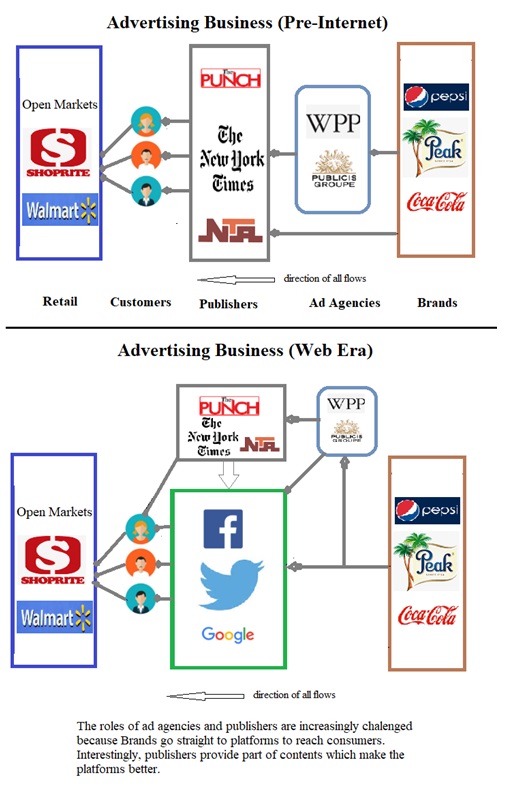
In this video, I explain the mechanics of aggregation construct which I have written extensively in this ecosystem. Aggregation powers most successful ICT utilities in modern commerce, from Facebook to Uber to Google. Simply, aggregators control demand, pulling amalgam of suppliers to operate on their terms. And as they do that, they execute a service framework equilibrium which facilitates a positive continuum, triggering network effect with category-shaping disruptive impacts.

Download Complete INEC Lists of All Candidates for Governorships and State Houses in Nigeria

0
Election cycle

INEC, Nigeria’s electoral commission, has published the complete lists of state-level candidates for governorships and state houses of assembly. Download the governorship list here, and for state house here. Note that the ruling party, APC, does not have candidates in Rivers and Zamfara states: call it own-goal in the worst way possible due to intra-party rivalry.


Fintecgrity: Leveraging Fintech solutions for enhancing Integrity in financial sector (CFP)

0

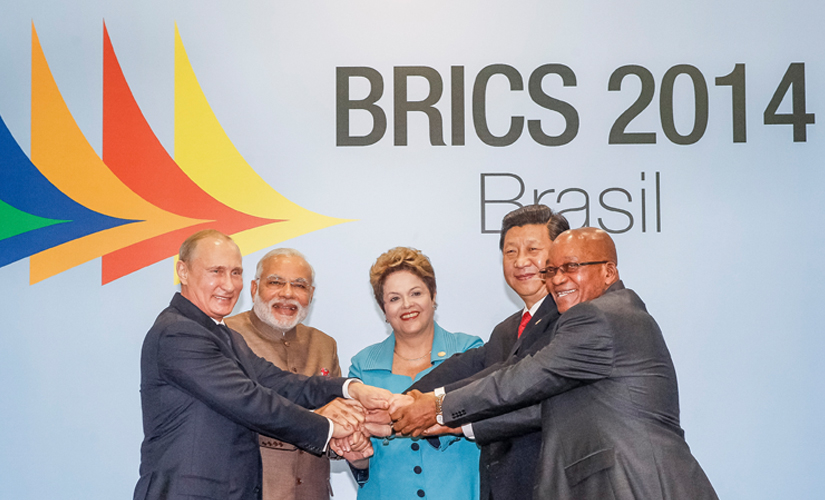
For the academics here, there is a Call for Papers from the New Development Bank (NDB is the BRICS bank serving Brazil, Russia, India, China and South Africa in their developmental paradigms). You can call it the World Bank (or even IMF) for BRICS. They offer some awards and also give you platforms to make a case before scholars.

CALL FOR ESSAYS
FINTECGRITY: LEVERAGING FINTECH SOLUTIONS FOR ENHANCING INTEGRITY IN FINANCIAL SECTOR

(Submission Deadline: February 28, 2019)

8-Dec-2018

On the eve of the International Anti-Corruption Day (December 9, 2018), New Development Bank (NDB) invites you to submit reflection pieces in the form of short essays on the topic, “Fintecgrity: Leveraging Fintech solutions for enhancing Integrity in financial sector”. NDB invites you to submit original contributions that address any one of the following topics:

  • How can innovative fintech solutions promote transparency in financial sector?

  • Can open access of data facilitated through fintech solutions enable effective monitoring of public funds?

  • How do, features of trust and transparency often cited in favor of the distributed ledger technology, assist in fighting corruption?

  • How can big data analytics and artificial intelligence assist financial crime and anti-corruption investigations?

  • What role does public policy have to play in ensuring effective deployment of fintech solutions for fighting financial crime and corruption?

Essays submitted shall be considered for awards for best two submissions.

NDB is particularly interested in essays (authored either individually or jointly) with practical orientation demonstrating a) an existing use-case of a technology solution in the above areas, b) a new proposal with possible technology features, or c) nature of security and other controls required for leveraging fintech solutions for the stated purpose. This listing is of course not exhaustive, though the scope of essays should be with reference to the areas listed above.

For further information and details of the competition, please refer to the attached Call for Essays

What is New Development Bank?

At the fourth BRICS Summit in New Delhi (2012), the leaders of Brazil, Russia, India, China and South Africa considered the possibility of setting up a new Development Bank to mobilize resources for infrastructure and sustainable development projects in BRICS and other emerging economies, as well as in developing countries. They directed Finance Ministers to examine the feasibility and viability of this initiative, to set up a joint working group for further study, and to report back by the next Summit in 2013.

Following the report from the Finance Ministers at the fifth BRICS summit in Durban (2013), the leaders agreed on the feasibility of establishing the New Development Bank and made the decision to do so. It was also agreed that the initial contribution to the Bank should be substantial and sufficient for it to be effective in financing infrastructure.

During the sixth BRICS Summit in Fortaleza (2014), the leaders signed the Agreement establishing the New Development Bank (NDB).


Nigeria’s 14% Central Bank Rate

0
CBN Governor

How the U.S. interest rates have gone downwards could explain the impacts of policies. Just in less than four decades, U.S. Federal Reserve (central bank of the U.S.) has moved rates from high 20% to now sub-3%. Thinking deep into that, U.S. makes debtors smarter while savers frowners. But as those happen, asset values are inflated with cheap capital everywhere. But do not worry – they have systems to seem to manage those until there is a black swan. Irrespective, the people that call the economy, Wall Street, love it.

I began my career in the days when the fed funds rate hit 20%. In the late 1980s, it topped out just short of 10%. At the end of the 1990s, it peaked at 6.5%. Even many millennials can remember June of 2006, when the Fed’s rate hit 5.25. The suggestion that 2.5% will be this cycle’s top is staggering. (Fortune Newsletter)

In Nigeria (certainly we have different economic structures), the fight on inflation has not given Central Bank of Nigeria (CBN) tools to use cheap rates to inject liquidity and stimulate the economy. Yet, we need to find a way since markets have become globalized.

If you have a nation that gets capital from the (Fed) basis of 2.5% and another at 12%, there is no strong basis to compete against because another has asymmetric advantage.

See it this way: if a bank gets capital from CBN at 14% (the current rate) and has to keep 1% to meet required ratios from NDIC (the deposit insurance commission), by the time it takes care of operating expenses, it cannot practically lend below 17%. Then imagine if the bank has started with 2.5%, you will then experience lending interest rate of say 5% in Nigeria.

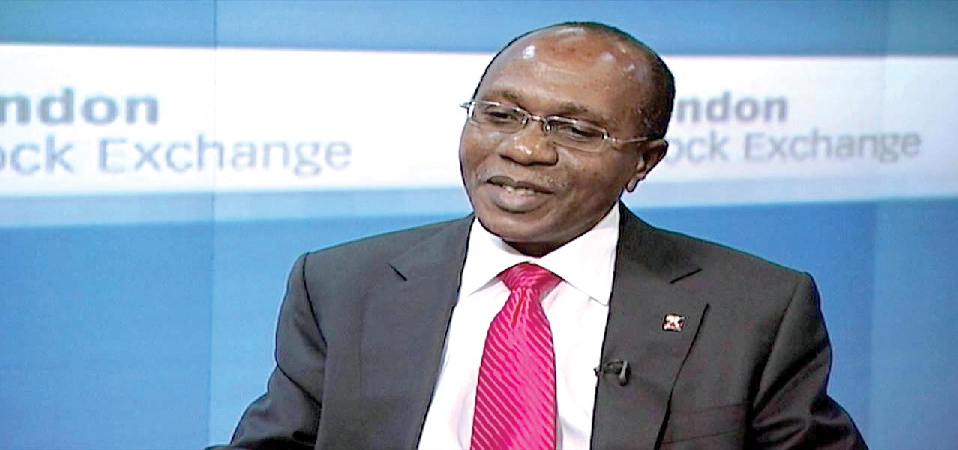
The Central Bank of Nigeria decided unanimously to keep the benchmark interest rate steady at 14 percent on January 22nd 2019, as widely expected. The last time policymakers changed rates was in July 2016, when they lifted the monetary rate by 200 bps. The Committee voiced concerns about inflationary pressures in the first half of the year, amid an increase in spending ahead of general elections and disruptions caused by recent flooding. In December, the annual inflation hit a 7-month high of 11.44% from 11.28% in November, well above the Bank’s target of 6.0%–9.0%. The Nigerian economy is projected to expand 2.28% this year, the CBN Governor Emefiele said. Interest Rate in Nigeria averaged 10.94 percent from 2007 until 2019, reaching an all time high of 14 percent in July of 2016 and a record low of 6 percent in July of 2009.

This is also the reason why when people accuse banks of high interest rates rip-off, I laugh because commercial banks are not to be blamed: the CBN sets the basis and banks cannot operate below the basis if they want to be in business. If CBN says rates begin at 14%, there is no sense for accusing banks of not giving cheap capital in Nigeria.

Fourteen percentage is a bad basis! Yet, CBN cannot be blamed as it has to fight inflation. The solution is redesigning the economy to improve productivity and move all from the spend-all-till-you-drop mentality in Nigeria.

Coca-Cola Acquires Nigeria’s Chi Ltd, Maker of Chivita and Hollandia; Plans To Scale Brands

0

Coca-Cola has acquired Nigeria’s Chi Ltd, the maker of Chivita juice and dairy brand Hollandia. Chivita is a category-king brand which actually knocked out Five-Alive brand in Nigeria. It has the best advertising model in the nation and continues to deepen its “freshness”.

Yet, in the short history of FMCG in Nigeria, when multinationals acquire our local brands, those brands rarely survive. I am hoping that Coca-Cola will deliver a different result with Chi. Chi Ltd has been in business since 1980 and has actually done well despite the challenging operating environments.

North and south, this is something to celebrate because it means from Atlanta USA, many still believe in Nigeria despite whatever CNN is breaking now as hard news on the nation.

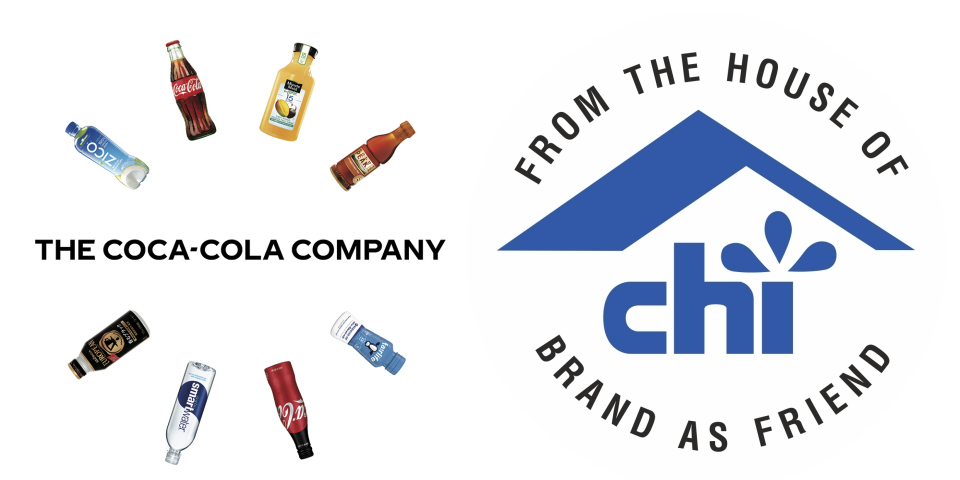
The Coca-Cola Company today announced that it has completed its acquisition of Chi Ltd. in Nigeria. Coca-Cola first announced a minority investment in Chi three years ago and, as planned, has now acquired full ownership of the company.

Chi is recognized in West Africa as an innovative, fast-growing leader in expanding beverage categories, including juices, value-added dairy and iced tea. The company, founded in Lagos, Nigeria, in 1980, produces juice under the Chivita brand and value-added dairy under the Hollandia brand, among many other products. Coca-Cola acquired a 40 percent stake in Chi in 2016 from Tropical General Investments Group, the holding company for Chi Ltd. Juices and value-added dairy categories rank among the fastest-growing beverage segments in Nigeria and Africa.

This acquisition further signals Coca-Cola’s optimism about Africa’s consumer opportunity and a commitment to its long-term investment and growth plan on the continent, where it has been present for more than 90 years.

“Coca-Cola is continuing to evolve as a total beverage company, and Chi’s diverse range of beverages perfectly complements our existing portfolio, enabling us to accelerate expansion into new categories and grow our business in Africa,” said Peter Njonjo, president of the West Africa business unit of Coca-Cola. “We will support the Chi management team in building on the company’s remarkable heritage and achievements, while using the scale of the Coca-Cola system to replicate their success in more markets across Africa.”