DD
MM
YYYY

PAGES

DD
MM
YYYY

spot_img

PAGES

Home Blog Page 7

Why Nonprofit Fundraising Efficiency Depends on Better Systems, Not Bigger Campaigns

0

In many industries, growth comes from scaling marketing efforts—more campaigns, more channels, more reach. But in the nonprofit sector, the constraint is rarely awareness alone. Instead, the bottleneck is often operational: how efficiently organizations convert interest into actual donations.

As digital transformation reshapes industries, nonprofits are beginning to realize that fundraising success is less about doing more—and more about doing it better.

The Hidden Inefficiencies in Traditional Fundraising

Nonprofits today operate in increasingly complex environments. They manage multiple campaigns, communicate across channels, and rely on a mix of tools—from spreadsheets to legacy CRM systems—to track donors and contributions.

Yet, despite this growing sophistication, many organizations still experience:

  • High drop-off rates during donation
  • Manual data entry and reconciliation
  • Fragmented donor records
  • Delays in processing contributions

These inefficiencies are not just operational—they directly impact revenue. Every extra step in the donation process introduces friction, and friction reduces conversion.

Digital Transformation Is Changing Donor Expectations

Donors today behave more like consumers than ever before. They expect:

  • Mobile-first experiences
  • Fast, intuitive transactions
  • Clear confirmation and feedback
  • Minimal barriers to giving

If the donation experience is slow, confusing, or overly complex, potential donors abandon the process—often permanently.

This shift mirrors trends seen in e-commerce and fintech, where reducing friction has been proven to increase conversion rates and lifetime value.

The Role of Systems in Fundraising Efficiency

To meet these expectations, nonprofits need to rethink their infrastructure—not just their messaging.

Modern fundraising systems focus on:

  • Streamlined donation flows
  • Mobile-friendly interfaces
  • Automated data capture
  • Integration with donor management systems

Instead of treating fundraising as a campaign problem, leading organizations are treating it as a systems problem.

From Transactions to Experiences

A donation is not just a transaction—it is an experience. And like any experience, it can either reinforce trust or create doubt.

When systems are optimized:

  • Donors complete contributions quickly
  • Data is captured accurately
  • Follow-up communication is timely
  • Reporting becomes easier and more reliable

This creates a positive feedback loop: better experience ? higher conversion ? stronger donor relationships.

A Practical Shift: Simplifying the Donation Layer

One of the most effective ways to improve fundraising efficiency is to simplify the point of donation itself.

Many organizations are adopting tools such as Glass Register donation forms for nonprofits, which are designed to reduce friction in online giving and streamline the donation process for both donors and administrators.

By focusing on simplicity and usability, these systems help organizations capture more value from existing traffic—without increasing marketing spend.

Efficiency as a Strategic Advantage

For nonprofits, efficiency is not just about saving time—it is about maximizing impact.

Every dollar saved in operational overhead is a dollar that can be redirected toward programs and services. Every completed donation represents not just revenue, but trust.

As funding environments become more competitive, organizations that invest in better systems—not just bigger campaigns—will be better positioned to scale sustainably.

Conclusion

The future of nonprofit fundraising will not be defined by who runs the most campaigns, but by who builds the most efficient systems.

Digital tools are no longer optional—they are foundational.

And in a world where attention is scarce and expectations are high, reducing friction may be the most powerful strategy a nonprofit can adopt.

Fed Chair Nominee Kevin Warsh Says Digital Assets Are “Already Part of The Fabric” of U.S. Financial System

0

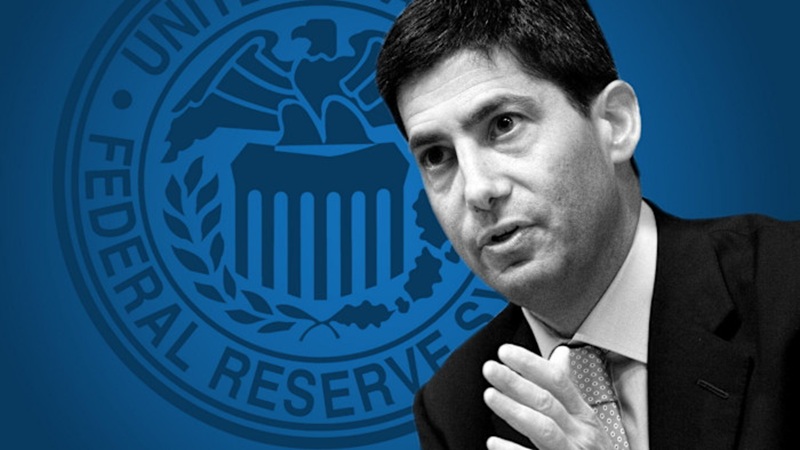
President Donald Trump’s nominee to lead the Federal Reserve, Kevin Warsh, an American financier and attorney, stated during his Senate confirmation hearing that digital assets have become an established part of America’s financial services industry.

He made this comment during questioning by pro-crypto Senator Cynthia Lummis (R-Wyoming) on Tuesday, April 21, 2026, when asked about incorporating cryptocurrencies into the broader financial system to provide Americans with more investment options and stronger consumer protections,

Warsh responded,

“Digital assets are already part of the fabric of our financial industry, so yes.”

For years, the Federal Reserve has maintained a measured and often skeptical stance toward digital assets. Rather than embracing cryptocurrencies outright, it has consistently emphasized concerns around financial stability, consumer protection, and the potential for illicit activity. Officials have repeatedly warned about the volatility of assets like Bitcoin, highlighting risks to investors and the broader financial system.

The central bank has also been cautious about how crypto could impact monetary policy and the traditional banking system. Its leadership, including figures like Jerome Powell, has stressed the need for clear regulatory frameworks before deeper integration of digital assets into mainstream finance.

Warsh straightforward acknowledgment marks a notable shift in tone from the Federal Reserve, which has historically approached crypto with caution. Analysts and market participants interpreted his statement as a bullish signal that the world’s most powerful central bank may be ready to treat digital assets as mainstream infrastructure rather than an experimental fringe.

Notably, Warsh’s comments carry extra weight due to his personal financial disclosures. In April 2026 filings with the Office of Government Ethics, the former Fed governor revealed over $100 million in assets, including significant stakes in more than 20 crypto-related projects.

His holdings reportedly include, Solana (SOL), Bitwise Asset Management, dYdX and other, DeFi protocols, Polymarket, Bitcoin Lightning Network infrastructure (Flashnet), and various Ethereum Layer-2 solutions and additional blockchain projects.

Warsh has committed to divesting most of these holdings if confirmed, in line with federal ethics requirements. Senators raised questions about potential conflicts of interest, but he maintained he would comply fully before taking office.

Broader Context of the Hearing

The nearly three-hour Senate Banking Committee hearing focused heavily on central bank independence, monetary policy, and Warsh’s relationship with President Trump. The Fed Chair nominee repeatedly emphasized that the Fed must remain “strictly independent” and denied making any pre-commitment to lower interest rates in exchange for the nomination.

Despite the political tension including questions about whether he would act as Trump’s “sock puppet”, Warsh’s crypto remarks stood out as one of the most market-moving moments. His background as a former Fed Board member (2006–2011) combined with his recent venture investments in tech and crypto positions him as potentially the most crypto-familiar Fed Chair in history, should he be confirmed.

Market And Industry Reaction

The statement quickly circulated on social media and crypto news outlets, with many viewing it as validation that digital assets are no longer on the regulatory sidelines. Crypto advocates see Warsh’s perspective as opening the door for more constructive dialogue on regulation, stablecoins, tokenization, and bank custody of digital assets.

Bitcoin and broader crypto markets showed mixed movement during the hearing, with some traders citing the overall bullish long-term implications amid ongoing macro uncertainty. BTC surged past the $78,000 price zone, trading as high as $78,418, raising optimism among investors.

Outlook

Warsh’s acknowledgment that digital assets are now embedded within the financial system could signal the beginning of a more pragmatic era for crypto regulation in the United States.

If confirmed, his leadership may shift the Federal Reserve away from a purely cautious stance toward a more balanced framework that supports innovation while still addressing systemic risks.

In the near term, markets are likely to remain sensitive to policy signals from the Fed, especially around interest rates and liquidity conditions, which historically influence crypto performance.

Why Nigeria’s Trusted Newsrooms are Trading Truth for Traffic

0

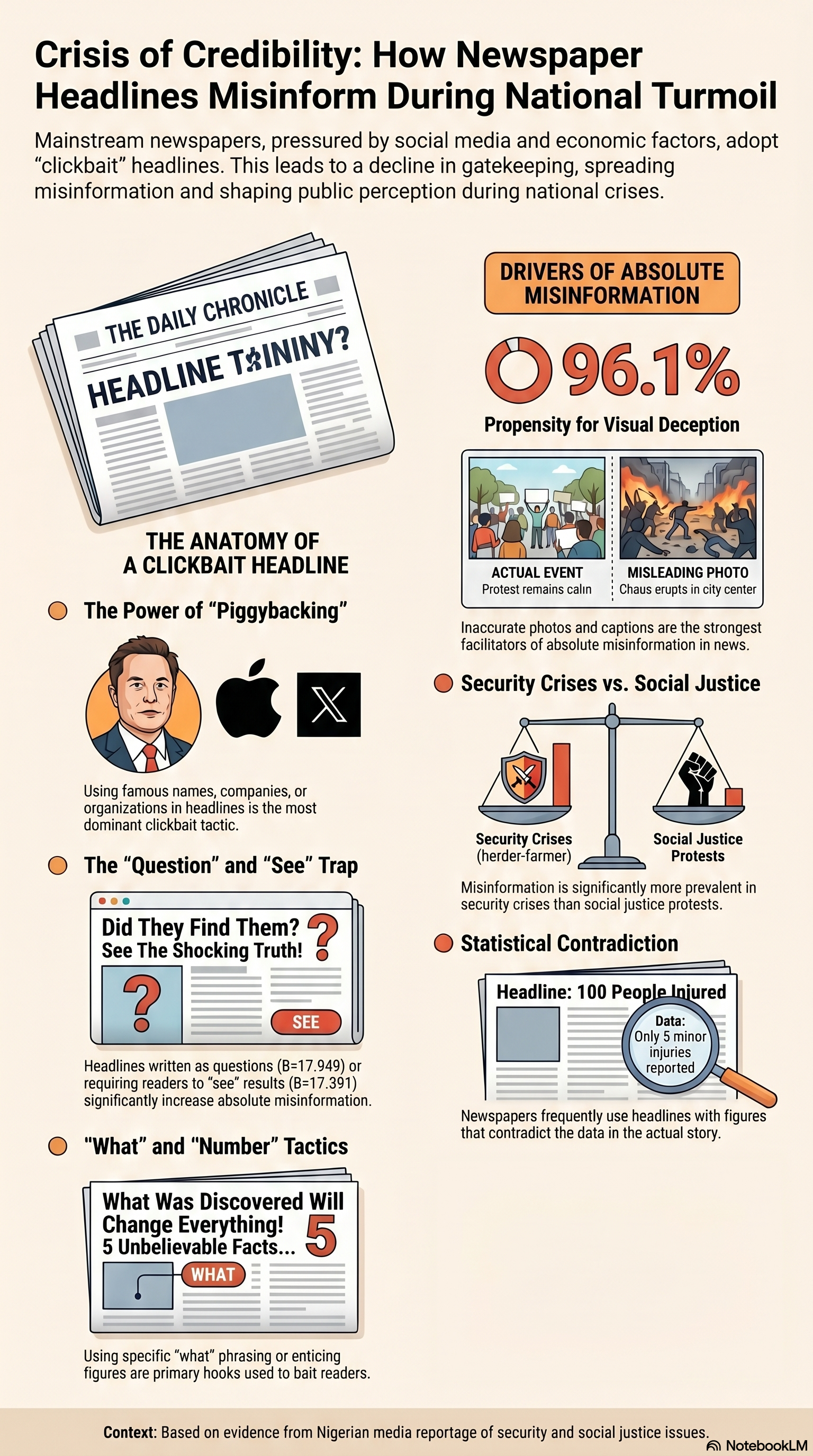
For decades, the headline of a Nigerian newspaper served a simple, sacred purpose, which was to provide an unambiguous summary of the day’s most important events. It was the “golden rule” of journalism that a headline should stand alone, offering a glimpse of the truth before a reader even turned the page. However, as the digital revolution reshapes how we consume information, results of a recent research by our analyst and his colleague [Published in 2022] indicate that these rules are being rewritten in a way that threatens the very fabric of our national discourse.

The Business of Attention

The shift from informative to “clickbait” headlines is not merely a change in style; it is a response to a survival crisis. With the rise of social media, mainstream Nigerian newspapers are locked in an unbridled competition for eyeballs. To generate revenue and stay relevant in a market dominated by instant sharing, many respected newsrooms have begun to adopt the hyperbolic and propagandistic formats once reserved for anonymous bloggers.

This “redefinition” of news construction has led to a dangerous decline in gatekeeping and content scrutiny. When the priority shifts from informing the public to winning the market, journalistic ethics are often the first casualty.

How the Bait is Set

Modern clickbait in Nigeria relies on specific psychological triggers designed to bypass our critical thinking. Research into hundreds of headlines reveals that newspapers predominantly use tactics like “piggybacking”, leveraging the names of well-known people or organisations to grab attention, and the use of dramatic numbers to establish a sense of urgency.

Even more concerning is the use of “question” formats or headlines that command a reader to “See” a specific issue. Data suggests that when a headline is framed as a question or uses a “See” feature, the likelihood of that story containing absolute misinformation increases by more than 17 times. These headlines are no longer summaries; they are traps designed to exploit curiosity, often leading to content that fails to deliver on the headline’s promise.

The Deception of the Visual

We have often been told that “seeing is believing,” but in the era of digital misinformation, the eyes can be easily deceived. One of the most potent tools for spreading false information in Nigerian media is the use of inaccurate photos and captions.

When a news story is accompanied by a photo that does not relate to the actual event, its “believability” among the public ironically increases. Repeated exposure to these misleading visuals makes the misinformation seem less unethical to share, even when readers have doubts about its accuracy. In fact, the use of inaccurate visualisations has a 96% propensity for facilitating absolute misinformation, making it one of the most effective and dangerous tools in the clickbait arsenal.

Fueling National Crises

The consequences of this trend are most visible during times of national tension. During crises like the herder-farmer conflict, headlines have been used to frame newsmakers in divisive ways, often demonising specific ethnic groups. By portraying certain actors as the perpetrators of every crime, these headlines do more than just attract clicks; they shape public concern and incite resentment between communities.

This “information pollution” acts as a catalyst for insecurity, threatening the unity and peaceful coexistence of the nation. When mainstream media (which the public trusts for balanced views) participates in this sensationalism, they lend a veneer of credibility to falsehoods that can lead to real-world violence.

Reclaiming the Golden Rules

Clickbait is a conduit for misinformation that erodes public trust. For Nigerian journalism to survive and serve its role in a democracy, media practitioners and managers must urgently revise their headline construction practices, especially during times of crisis.

We must move away from a model driven by “expected gratification”, the desire to pollute the public mind for economic gain, and return to the principles of clarity and accuracy. The public’s preference for conventional newspapers is built on a foundation of perceived credibility. If that foundation is traded for short-term traffic, the cost to our society will be far higher than any advertising revenue can cover. It is time for the Nigerian press to remember that a headline’s first duty is to the truth, not the click.


AI Euphoria Trumps War Risk as Global Stocks Reprice Faster Than Fundamentals

0

Global equities have moved past the shock of the Iran conflict with unusual speed, erasing early losses and pushing into record territory, in a rally that reflects not just improved sentiment but a deeper shift in how investors are pricing geopolitical risk.

The MSCI World Index, after dropping 3.29% in the immediate aftermath of the outbreak, has rebounded to trade nearly 2% above its March 2 level. The recovery places it firmly beyond pre-conflict pricing, even as the underlying geopolitical situation remains unresolved and fragile.

At the core of the rebound is a rapid compression of the “war-risk premium” that had briefly inflated asset prices across multiple markets. During the peak of tensions, investors priced in a chain of adverse scenarios, including sustained disruption to oil flows through the Strait of Hormuz, a spike in inflation, and tighter global financial conditions. As those scenarios receded from the base case, capital rotated back into risk assets with equal intensity.

This pattern reveals a structural feature of current markets where geopolitical shocks are increasingly treated as transient unless they directly impair economic transmission channels such as energy supply, trade routes, or financial liquidity. In this instance, the absence of immediate, large-scale disruption allowed investors to recalibrate quickly, effectively treating the selloff as a tactical opportunity rather than a sustained downturn.

Positioning dynamics amplified the move. Hedge funds and macro investors that had built defensive exposures—long energy, long dollar, short equities—were forced to unwind those trades as ceasefire prospects emerged. That repositioning created a feedback loop, accelerating the rebound and compressing volatility across asset classes.

Yet the speed of the recovery also points to a market anchored by a powerful secular narrative: artificial intelligence. Capital expenditure linked to AI infrastructure continues to expand at a pace that is reshaping earnings expectations, particularly in technology-heavy indices. Investors are increasingly willing to discount near-term geopolitical noise if long-duration growth drivers remain intact.

This helps explain why equity markets have shown a higher tolerance for risk than other asset classes. While stocks have rallied, fixed income markets continue to price a more cautious outlook. Yields and inflation expectations suggest lingering concern about the potential for energy-driven price pressures, especially if the conflict escalates or supply chains are disrupted at a later stage.

Policy expectations have also played a stabilizing role. The resilience of U.S. economic data has reinforced the view that the Federal Reserve retains flexibility to begin easing later this year without responding to crisis conditions. That outlook supports equity valuations by lowering the discount rate applied to future earnings, particularly in sectors with strong forward growth profiles.

The Fragility Still Much Around

The current rally has come with fragility. Statements from Donald Trump threatening renewed military action against Iran highlight how quickly the narrative could shift. Markets are effectively pricing a contained conflict with a diplomatic off-ramp. Analysts expect any deviation from that assumption, whether through escalation or prolonged instability, to reintroduce volatility and rebuild the very risk premium that has just been unwound.

There is also a question of sustainability. Much of the recent upside has been driven by positioning rather than a fundamental reassessment of earnings outside AI-linked sectors. While technology continues to deliver strong growth, other parts of the market remain sensitive to interest rates, input costs, and global demand conditions.

What emerges is a market operating on two tracks. One is cyclical and reactive, driven by geopolitical developments and macro data. The other is structural, anchored in expectations of technological transformation. For now, the structural narrative is dominant, allowing investors to look through near-term uncertainty.

However, this equilibrium is believed to be hanging on a delicate balance: geopolitical risks must remain contained, and the AI-driven earnings cycle must continue to validate elevated valuations. If either pillar weakens, the market’s current confidence could be tested. In that sense, the rally is not a dismissal of risk but a repricing of it.

Sam Spratt’s Skulls of LUCI Sold for 166 ETH ~$388,000

0

Skulls of Luci #2 Foreshadow by artist Sam Spratt sold for 166 ETH roughly $387,000–$388,000 USD at the time of the sale. This is the highest ETH-denominated sale in the Skulls of Luci collection to date; a small, ultra-rare set of 49–50 pieces originally gifted to supporters of Sam Spratt’s LUCI Chapter 1 genesis series

Foreshadow (Skulls of Luci #2) Sold via GONDI NFT liquidity marketplace. The sale happened around April 20–21, 2026, and immediately became the top NFT sale of the day in some trackers ahead of a CryptoPunk at 40 ETH. The Skulls of Luci are highly regarded in the digital art/NFT space for their dark, surreal aesthetic—often described as haunting skull interpretations tied to Spratt’s broader LUCI narrative.

Community reaction has been a mix of NFTs are dead sarcasm and genuine excitement that high-end 1/1-style pieces like this are still moving at strong ETH prices. LUCI is an ongoing, episodic series of digital paintings paired with original written psalms by NYC-based artist Sam Spratt.

Launched in October 2021, it unfolds as a syncretic, mythological narrative about rediscovery and preservation of ancient human values amid modern dissociation, networked isolation, and accelerating change. It sprang directly from Spratt’s personal breaking point—a period of violence, rupture, and profound disconnection after years of client work.

He felt he had missed even the most basic directives of the human experience left behind by our entire collective species. LUCI charts an isolated figure slipping through time, gathering trail markers from others to reconnect with humanity. The name Luci nods to Australopithecus afarensis (“Lucy,” the ancient hominid fossil from Ethiopia), framing the story as both primordial origin and refracted self-portrait—a joke on the artist and a mirror for anyone who senses they’ve overlooked shared human steps.

The arc follows a life cycle of birth, evolution, rupture, rebirth, and communal pilgrimage—from individual awakening to collective monument-building. Ten core paintings (so far) weave personal confession, ancient symbology, psychedelia/trip journaling, and modern digital lore.

Each chapter adds layers of mythology while inviting real-world participation. Spratt releases these episodically. A massive, interactive 1/1 painting sold for 420.69 ETH where 256 Players literally inscribe personal observations—confessions, fears, jokes, analyses—directly onto the artwork. These become metadata-linked forever.

The Council votes on the three most resonant; winners trade their edition for a Skull of Luci and Council seat. Skulls/Council are the inner circle, Players feed the fire with stories. It continues the theme of revelation through collision and performance. These 50 unique 1/1 paintings plus the origin Blueprint Skull are the narrative’s former husks—vessels of ancestry, porous bone ready for new flesh after little deaths.

Originally gifted as claimable NFTs to every unique bidder on Chapter 1’s three genesis paintings—a thank-you that turned early supporters into the Council of Luci. The Council became Spratt’s inner circle: advisors, friends, co-creators who nominate champions, deliberate votes, and help shape future chapters including Monument Game and Masquerade.

They embody the project’s philosophy: art isn’t just transactional; it forges real bonds, shared growth, and communal world-building. The Blueprint Skull is the literal source from which all others derive—sold publicly to seed the system. Every skull, mask, and chapter marks cycles of rupture and renewal. From solo wanderer to networked Monument built by many.

What we hide, reveal, or perform in the digital and human hive. Participation as art: On-chain history, observations, gifts, and real-life gatherings like home dinners, exhibitions are woven into the lore. Ancient + futuristic: Solomonic wisdom, hominid fossils, trip journals, and blockchain metadata all coexist.

Spratt describes it as a search for a feeling that is as ancient as it is futuristic—something true in us regardless of time. The NFT mechanics; bids ? gifts ? council ? game ? masks aren’t utilities—they’re deliberate extensions of the mythology, turning collectors into active co-authors.

The living archive lives at samspratt.com, where the ten paintings, 613 masks, psalms, and full mythology continue to expand. Recent high-profile sales like the 166 ETH Skull show the market still rewards the depth, but the real win is the expanding circle of people inside the story.