DD
MM
YYYY

PAGES

DD
MM
YYYY

spot_img

PAGES

Home Blog Page 7

Geopolitical De-escalation Sends US Stock Market to New Heights

0

The U.S. stock market experienced a remarkable surge as investors welcomed reports of progress in peace negotiations, adding an estimated $1.15 trillion in market value in a single trading session. The rally reflected a powerful combination of renewed optimism, reduced geopolitical risk, and growing confidence that a period of heightened global uncertainty may be easing.

As markets reacted positively to diplomatic developments, major equity indices climbed sharply, demonstrating once again how sensitive financial markets are to changes in the global political landscape. For months, investors have navigated an environment characterized by geopolitical tensions, concerns about military escalation, and uncertainty surrounding global economic stability.

These risks have weighed heavily on market sentiment, encouraging investors to seek safer assets such as government bonds, gold, and cash. However, the emergence of credible peace talks signaled the possibility of de-escalation, prompting a rapid shift in investor behavior. Capital quickly flowed back into equities as traders reassessed the likelihood of worst-case scenarios.

The gains were broad-based, with technology, industrial, financial, and consumer discretionary sectors leading the advance. Technology companies, which often benefit from improving economic confidence and stronger investment activity, saw significant buying pressure.

Industrial firms also gained as investors anticipated that a more stable geopolitical environment could support global trade, manufacturing, and infrastructure spending.

Financial institutions benefited from expectations of stronger economic activity and increased market participation. Market analysts noted that geopolitical stability plays a critical role in shaping investor expectations. Peace talks reduce uncertainty, improve business confidence, and encourage long-term investment planning.

Companies are more willing to expand operations, hire workers, and pursue growth initiatives when the risk of conflict diminishes. As a result, equity valuations often rise as investors factor in improved earnings prospects and lower risk premiums. The addition of $1.15 trillion in market capitalization represents more than just a short-term reaction.

It highlights the enormous amount of capital that remains on the sidelines during periods of uncertainty and how quickly sentiment can change when positive developments emerge. Investors who had adopted defensive positions rushed back into risk assets, creating a powerful upward momentum across the market.

The rally also underscores the interconnected nature of modern financial markets. Peace negotiations in one region can have far-reaching implications for energy prices, supply chains, trade routes, and inflation expectations worldwide. Reduced geopolitical tensions often lower fears of supply disruptions and economic shocks, creating a more favorable environment for businesses and consumers alike.

Despite the optimism, market participants remain cautious. Peace talks are often complex and can encounter setbacks before producing lasting agreements. Investors understand that negotiations may take time and that unexpected developments could still influence market direction. The market’s strong response demonstrates a growing belief that diplomacy may succeed in reducing tensions and supporting economic stability.

Looking ahead, traders and analysts will closely monitor further developments in the negotiations, as well as upcoming economic data and corporate earnings reports. Sustained market gains will likely depend on whether positive diplomatic momentum continues and whether broader economic fundamentals remain supportive.

The $1.15 trillion increase in U.S. stock market value serves as a powerful reminder of the role sentiment plays in financial markets. While earnings, interest rates, and economic indicators remain important, investor confidence can change rapidly when geopolitical risks begin to fade.

For now, the prospect of peace has provided markets with a strong catalyst, fueling one of the most significant rallies in recent memory and reinforcing the belief that stability remains one of the most valuable assets in the global economy.

Robinhood and Coinbase Partner With Twitter to Enable SpaceX Exposure

0

In a development that highlights the growing convergence of social media, finance, and digital assets, Twitter has reportedly introduced native trading access for SpaceX-related investments through partnerships with Robinhood and Coinbase.

The move marks another step toward transforming social platforms from communication hubs into comprehensive financial ecosystems where users can consume information and act on investment opportunities without leaving the app.

The integration allows users discussing SpaceX, one of the world’s most closely watched private companies, to access trading-related services directly from Twitter. By leveraging Robinhood’s retail investing infrastructure and Coinbase’s expertise in digital asset markets, the platform aims to streamline the investment process and reduce friction between market discovery and execution.

SpaceX has long been one of the most sought-after investment opportunities among retail investors. Despite its private status, interest in the company continues to grow due to its dominance in the commercial space industry, successful satellite deployment business through Starlink, and ambitious plans for interplanetary exploration.

Until recently, gaining exposure to SpaceX was largely restricted to institutional investors, venture capital firms, and accredited investors.

New trading mechanisms and tokenized representations have begun changing that dynamic, opening access to a broader audience. Twitter’s decision to integrate trading functionality reflects a broader trend in the financial technology sector. Social media platforms increasingly recognize that financial conversations generate significant engagement.

Discussions about stocks, cryptocurrencies, and private companies often trend globally, creating opportunities for platforms to facilitate transactions alongside content consumption. Instead of requiring users to switch between multiple applications, integrated trading creates a seamless experience that keeps engagement within a single ecosystem.

Robinhood’s participation is particularly significant given its strong presence among retail investors. The brokerage became a household name during the retail trading boom and continues to attract younger investors seeking simple and mobile-friendly investment tools. Coinbase, meanwhile, brings extensive experience in digital asset infrastructure and tokenized financial products.

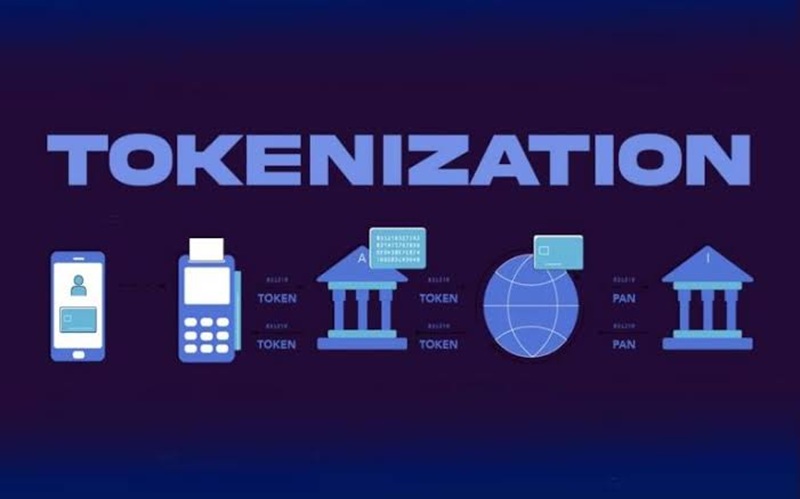
The two firms provide complementary capabilities that could support innovative investment offerings tied to SpaceX and other private-market opportunities. The announcement also underscores the increasing importance of tokenization in modern finance.

Tokenized assets allow traditional investments to be represented digitally on blockchain infrastructure, potentially enabling greater accessibility, transparency, and liquidity.

If SpaceX exposure is offered through tokenized instruments, it could represent a major milestone in bringing private-market investments to mainstream audiences. Such developments may eventually extend to other high-profile private companies that have historically remained inaccessible to everyday investors.

However, the initiative is not without challenges. Regulatory scrutiny remains a key consideration whenever private-company exposure, tokenized securities, or social-media-driven investing intersect. Financial regulators worldwide continue to evaluate how digital investment products should be classified, monitored, and protected.

Ensuring transparency, investor protection, and compliance will be critical to the long-term success of any such offering. Market observers also note that integrating trading directly into social platforms could amplify both opportunities and risks.

While investors gain easier access to markets, they may also face increased exposure to speculation, viral trends, and emotionally driven decision-making. Responsible product design and investor education will therefore play an important role in maintaining market integrity.

Twitter’s integration of SpaceX trading through Robinhood and Coinbase signals a new chapter in the evolution of digital finance. By combining social engagement, real-time information, and investment access within a single platform, the initiative reflects the broader transformation of how individuals discover, evaluate, and participate in financial markets.

Coinbase Introduces USDE Vault Amid Rising Stablecoin Regulation in the US

0

Coinbase’s latest product expansion—introducing a Clarity Act-compliant USDE vault in partnership with Ethena alongside the rollout of “Coinbase for Agents”—signals a structural shift in how regulated digital assets and autonomous financial systems are expected to converge in the United States.

Rather than positioning itself purely as a trading venue, Coinbase is increasingly evolving into a compliance-first financial infrastructure layer for both institutional capital and machine-driven agents. At the center of this development is USDE, Ethena’s synthetic dollar instrument issued by Ethena Labs.

USDE is designed to maintain dollar parity through crypto-native collateral and delta-hedging strategies rather than relying on traditional fiat reserves.

By integrating a Clarity Act-compliant vault structure, Coinbase is effectively wrapping this synthetic asset inside a regulatory-grade custody and reporting framework aligned with emerging U.S. digital asset legislation expectations.

This move is significant because it attempts to bridge the gap between decentralized synthetic dollar systems and the compliance requirements demanded by U.S. regulators and institutional allocators. From Coinbase’s perspective, this is a continuation of its broader institutionalization strategy.

Coinbase has steadily expanded from retail brokerage services into custody, derivatives, staking, and tokenization infrastructure. The introduction of regulated vault products for synthetic dollars allows Coinbase to position itself as a compliant gateway for yield-bearing stable-value instruments—an increasingly competitive segment as tokenized cash equivalents gain traction in global markets.

The second pillar of the announcement—Coinbase for Agents—is arguably more forward-looking. This initiative appears designed to support autonomous AI agents and algorithmic entities that can hold, deploy, and manage capital within pre-approved compliance boundaries.

In practice, this could allow software agents to interact with on-chain and off-chain financial systems under identity, permissioning, and risk constraints defined by Coinbase’s infrastructure layer.

The implication is that financial access is no longer exclusively human-centric; instead, capital management becomes partially delegated to machine agents operating under programmable guardrails.

This aligns with a broader industry transition where AI systems are increasingly expected to interact directly with financial rails, from executing trades to managing treasury operations. By embedding compliance logic into agent-facing financial infrastructure, Coinbase is attempting to preemptively solve one of the core regulatory concerns.

How autonomous systems can participate in markets without creating unaccountable or untraceable financial activity. The combination of a regulated USDE vault and agent-enabled financial tooling also reflects a convergence between two macro trends: the tokenization of real-world financial instruments and the rise of AI-driven economic actors.

In this framework, stable-value crypto assets like USDE become programmable cash layers, while agent infrastructure becomes the execution layer that deploys this capital in real time.

If successful, Coinbase’s dual launch could mark an early blueprint for what a hybrid financial system looks like in practice—one where regulated exchanges are no longer passive marketplaces but active intermediaries between human capital, synthetic dollar systems, and autonomous agents.

The model will likely face scrutiny around systemic risk, regulatory clarity, and the reliability of synthetic dollar peg mechanisms under stress conditions. Coinbase is signaling that the next phase of crypto infrastructure will not be defined solely by asset listing or trading volume, but by how seamlessly compliant digital money and autonomous financial intelligence can operate within the same ecosystem.

Why SEC Market Reform Could Reshape Global Equity Trading

0

The U.S. Securities and Exchange Commission (SEC) reportedly proposing the elimination of the Order Protection Rule would represent one of the most consequential structural shifts in American market microstructure since Regulation NMS was introduced in 2007.

The Order Protection Rule, often referred to as Rule 611, currently requires trading venues to prevent “trade-throughs” by ensuring that orders are executed at the best displayed price across national exchanges. Its removal would effectively unwind a core mechanism designed to enforce price priority and intermarket fairness in fragmented equity markets.

Moving away from strict price-time protection toward a more flexible, potentially competition-driven execution environment. Critics of the current regime argue that the Order Protection Rule has contributed to excessive complexity in routing logic, fragmented liquidity across dozens of venues, and increased reliance on intermediaries such as payment for order flow brokers and high-frequency market makers.

By mandating best execution through regulatory constraints, rather than allowing market participants to compete dynamically, the rule is often framed as artificially constraining market evolution. Scrapping it would open the door to a more permissive architecture in which execution venues can differentiate themselves on speed, settlement models, and asset design rather than purely on price priority enforcement.

Tokenized securities—digital representations of traditional stocks issued and settled on blockchain infrastructure—require fundamentally different market plumbing. In a tokenized environment, assets may trade 24/7, settle near-instantly, and potentially exist across multiple interoperable ledgers or custodial layers.

The rigid inter-exchange best-price enforcement of Rule 611 can become a friction point in such a system, particularly when liquidity is global, continuous, and composable. Removing the Order Protection Rule would therefore lower regulatory barriers for regulated tokenized equity markets to emerge within the U.S. framework.

Exchanges and alternative trading systems could experiment with unified liquidity pools or cross-platform settlement without being obligated to continuously reconcile displayed best prices across disparate venues in real time.

This could accelerate the integration of traditional equities with blockchain-based settlement systems, enabling hybrid markets where legacy securities and tokenized versions coexist or interoperate. However, the potential benefits come with substantial risks. The Order Protection Rule was originally designed to prevent adverse selection against retail investors and to ensure that fragmented markets did not degrade price quality.

Without it, there is a possibility of widened spreads, increased internalization of order flow, and greater informational asymmetry between institutional and retail participants. Market fairness could become more dependent on execution quality disclosures and broker fiduciary standards rather than hard regulatory constraints embedded in market structure.

Supporters of deregulation argue that modern market technology has already outgrown the assumptions underlying Regulation NMS. High-speed data distribution, smart order routing, and consolidated tape systems arguably already mitigate many of the inefficiencies the rule was designed to solve.

In this view, the rule acts less as a protective safeguard and more as a constraint on innovation, particularly in areas like tokenized settlement, real-time clearing, and programmable liquidity. If the SEC moves forward with such a proposal, it would likely trigger a major restructuring of equity market design.

Exchanges, broker-dealers, and emerging crypto-native financial platforms would be forced to reassess their execution models. Most significantly, it would signal an institutional willingness to converge traditional securities regulation with blockchain-native financial infrastructure, potentially accelerating the migration of equities into tokenized formats.

The debate over the Order Protection Rule reflects a deeper tension between market stability and market innovation. Its removal would not merely adjust trading mechanics; it would redefine the architecture of equity markets in the digital era.

SpaceX’s $1.75tn IPO: From Reusable Rockets to Orbital AI, Musk’s Company Bets Big on a Multiplanetary Future

0
SpaceX

The trajectory of SpaceX’s technology that culminated in a public listing frenzy didn’t just disrupt the aerospace industry; it fundamentally rewrote the economics of space access and helped spark an entirely new commercial space economy.

Now, Elon Musk’s flagship venture is on its most ambitious transition yet: becoming a publicly traded company in what could be the largest IPO in history. In an exclusive interview with CNBC just before the investor roadshow began, SpaceX President and COO Gwynne Shotwell reflected on the decision to go public, acknowledging it was not always a foregone conclusion.

“I wasn’t sure we would go public. It actually feels like the right time now,” she said.

Shotwell, who joined SpaceX in its first year in 2002 and has overseen day-to-day operations ever since, emphasized that staying private allowed the company to pursue long-horizon goals without the distraction of quarterly earnings pressure. With roughly 22,000 full-time employees, she has managed everything from Falcon 9 development to the rapid scaling of Starlink and, more recently, the integration of xAI.

“Elon jokes that we make the impossible, we just make it late,” Shotwell said. “Look at our track record, look at our history. We do really difficult things. We do bring them to product level. In fact, xAI is definitely starting to be product-focused.”

The IPO, targeting $75 billion at a $1.75 trillion valuation with shares priced at $135, would rank SpaceX as the seventh-most valuable company in the U.S., ahead of Meta and even surpassing Musk’s other public venture, Tesla, in market capitalization. At that level, it would trade at roughly 94 times projected 2025 revenue — a premium that reflects investor appetite for Musk’s vision but also invites skepticism from those focused on traditional metrics.

The Roadshow Pitch: Rockets, Starlink, and Orbital AI

SpaceX’s investor presentations have centered on three core pillars: its dominant position in space launch, the growing profitability of Starlink, and an ambitious push into orbital artificial intelligence infrastructure.

The company dominates orbital launches, accounting for roughly 80% of global mass sent to orbit since 2023. Last year alone, SpaceX completed 165 orbital missions, with 157 utilizing reused Falcon 9 boosters. This reusability has slashed launch costs by more than 90% compared to the Space Shuttle era, fundamentally changing the economics of space access.

Starlink, the satellite broadband constellation, has become the company’s clear profit engine. With over 10 million subscribers and roughly 9,600 satellites in orbit (and growing), the connectivity business generates strong margins and cash flow that funds other initiatives. Starlink Mobile (direct-to-cell) and Starshield (the defense variant) further expand its reach.

The most forward-looking element of the pitch is orbital AI compute. SpaceX claims it is “the only company with a commercially viable path to building orbital AI compute at scale,” targeting a potential $23 trillion market opportunity. By placing solar-powered data centers in space, the company aims to bypass Earth’s constraints on power, land, and regulatory hurdles.

Musk has described the first AI satellites as using Nvidia chips with computing power equivalent to a GB300 rack, with initial demonstrations now eyed for late 2027 — ahead of the 2028 timeline in the IPO filing.

Shotwell acknowledged the technical challenges but expressed confidence.

“The AI satellites are, to some extent, simpler than the next-gen V3 Starlink satellites. I’m not saying it’s a slam dunk by any stretch but I’m not worried about the development of the AI satellites,” she said.

Starship: The Critical Enabler

Much of SpaceX’s future hinges on Starship, the fully reusable super-heavy rocket designed to carry humans and cargo to the Moon, Mars, and beyond. Recent test flights of the V3 version have shown progress, though the vehicle remains years behind Musk’s original timelines.

Shotwell said the company is producing one fully assembled Starship per month and aims to reach two per week. Orbital flights are targeted for the end of this year, pending regulatory approval.

Starship’s success is essential for making orbital data centers economically viable. The vehicle is expected to reduce launch costs by another 95% compared to Falcon 9, unlocking the scale needed for massive space-based infrastructure.

Convergence with Musk’s Broader Empire

The IPO comes as SpaceX increasingly intersects with Musk’s other ventures. The company acquired xAI earlier this year in a deal valuing the AI startup at $250 billion. It has also struck a deal with coding platform Cursor (with a potential $60 billion stock option) and is collaborating with Tesla on the Terafab semiconductor project and AI-optimized manufacturing. Starlink Mini terminals are being integrated into Tesla’s Cybercab fleet, and SpaceX even purchased $131 million worth of Cybertrucks last year.

Shotwell acknowledged natural synergies but stressed focus, noting: “There’s no question that there are synergies between Tesla and SpaceX in our futures. There’s a convergence of what we’re all trying to accomplish in the future, but right now I’m focused on keeping the lights on here.”

The governance structure, which gives Musk supermajority voting control and final say on his own removal, has raised some eyebrows but is defended by Shotwell as essential for long-term vision.

“The company would not collapse without Elon, obviously, but it would by no means be the same. It’s incredibly important that he is the CEO,” she said.

Winning the Valuation Debate and Investor Confidence

At $1.75 trillion, SpaceX’s valuation implies rich multiples, but investors appear willing to underwrite the premium given Musk’s track record of turning ambitious ideas into reality. The IPO includes a significant retail allocation of up to 30%, tapping into Musk’s dedicated following. Proceeds will fund Starlink expansion, AI infrastructure, and other growth initiatives.

Skeptics point to the fact that only Starlink is consistently profitable, with other segments still burning cash. However, the combination of proven launch dominance, a scaling broadband network, and a compelling vision for space-based AI has generated strong demand — roughly $150 billion in indications, according to earlier reports.

“I do not want to focus on quarterly earnings. I’m not saying we’re not going to do right by our investors, but what folks who invest in SpaceX need to know is that what we’re doing is very futuristic,” Shotwell said, emphasizing the long-term horizon for new public investors.

SpaceX’s public debut represents more than a financial milestone — it is seen as a referendum on Musk’s multi-decade vision of making humanity multiplanetary while building the infrastructure for an AI-powered future. From reusable rockets that slashed launch costs to Starlink’s global connectivity and now orbital data centers, the company has repeatedly turned “impossible” into operational reality, albeit often later than initially promised.

Thus, as it steps into the public markets, SpaceX carries the weight of extraordinary expectations. Besides shaping investor portfolios, its success or struggles are expected to influence the trajectory of humanity’s expansion into space and the future of computing itself.