DD
MM
YYYY

PAGES

DD
MM
YYYY

spot_img

PAGES

Home Blog Page 7

Chip Stocks Roar Across Asia as U.S.-Iran Ceasefire Eases Supply Chain Fears and Revives AI Trade

0

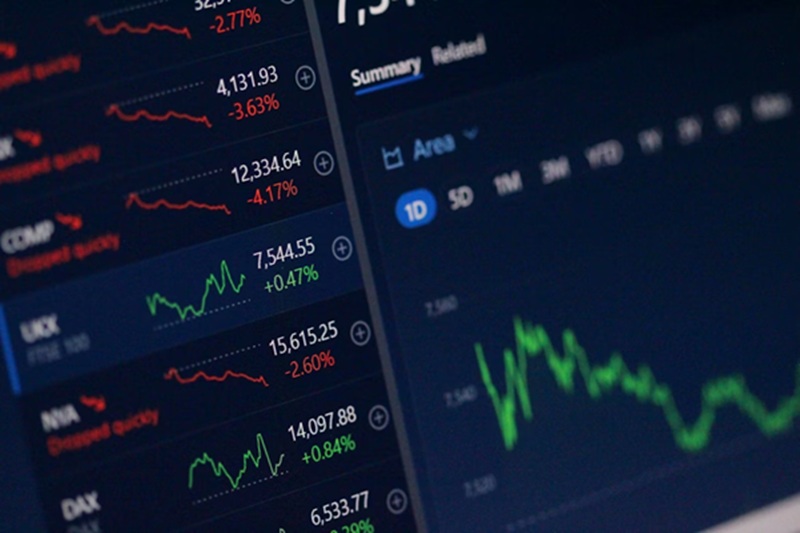
Asian technology and semiconductor stocks surged on Wednesday in one of the strongest relief rallies seen in weeks, as a conditional two-week ceasefire between the United States and Iran temporarily eased fears over energy flows, industrial gas shortages, and a deeper supply chain shock to the global chip industry.

The ceasefire, which includes a temporary reopening of the Strait of Hormuz, triggered a broad risk-on rally across Asia, with semiconductor names leading gains as investors rushed back into one of the market’s most geopolitically sensitive sectors.

Taiwan Semiconductor Manufacturing Company, the world’s largest contract chipmaker, which rose 4.84%, led the rally. China’s leading foundry, Semiconductor Manufacturing International Corporation, jumped more than 10%, while Japan’s Tokyo Electron climbed 9.6%.

The gains extended across the semiconductor value chain. Advantest Corporation surged more than 13%, Renesas Electronics Corporation rose 12%, and Fujikura Ltd. added nearly 11.6%.

In South Korea, the move was even more dramatic. SK Hynix surged more than 15%, while Samsung Electronics advanced over 9%, supported not only by ceasefire optimism but also by the company’s forecast of an eightfold jump in first-quarter profit, driven by strong AI-related demand for high-bandwidth memory chips used in data centers and servers.

This rally is significant for reasons that go well beyond a single geopolitical headline.

For the past several weeks, the semiconductor sector has been under mounting pressure as the Iran conflict raised the prospect of a dual supply shock: higher energy costs and a severe helium shortage.

That second point is particularly important. Helium is not a peripheral input in semiconductor manufacturing. It is indispensable in cooling, heat transfer, leak detection, and photolithography, where it is used in vacuum environments to help produce the microscopic circuitry etched onto advanced chips.

The recent attacks on industrial facilities in Qatar, which account for roughly 30% to 38% of global helium supply, have raised serious concerns that chipmakers could soon face operational disruptions if inventories are depleted.

This had become a major overhang on the sector. Unlike many industrial materials, helium has few viable substitutes for advanced semiconductor fabrication. That means prolonged disruption would not simply raise costs; it could materially slow production schedules for foundries, memory chipmakers, and AI infrastructure suppliers.

The temporary reopening of Hormuz, therefore, matters on multiple fronts. First, it restores confidence that energy shipments can resume, easing fears of another sharp rise in oil and LNG costs. Second, it reduces immediate concern around the flow of industrial gases and other chipmaking inputs moving through Gulf-linked shipping lanes.

Third, it supports margin expectations.

Semiconductor fabrication is highly energy-intensive. Any decline in crude prices directly improves the cost outlook for manufacturers operating large fabs across Taiwan, South Korea, and Japan.

Oil prices fell sharply on the ceasefire news, reinforcing the relief trade across chip stocks. What makes the rally especially notable is that it comes at a time when the AI boom remains structurally strong.

Demand for memory chips, GPUs, advanced packaging, and foundry capacity has already been running at elevated levels due to hyperscaler spending on data centers and AI servers. The ceasefire effectively removes, at least temporarily, one of the biggest downside risks to that growth narrative.

In market terms, this is a re-rating of geopolitical risk premium. Investors had been discounting semiconductor names for the possibility of prolonged supply-chain disruption.

With the immediate worst-case scenario off the table, capital is flowing back into high-beta technology and AI-linked names.

Still, this should be viewed as a relief rally rather than a full resolution. The ceasefire is explicitly temporary, lasting only two weeks, and market confidence will depend heavily on whether the truce evolves into a more durable diplomatic settlement.

Any renewed disruption to the Strait of Hormuz or further damage to Qatari industrial infrastructure could quickly reverse sentiment.

For now, however, Wednesday’s rally underscores that the semiconductor industry remains acutely exposed not just to demand cycles, but to geopolitical flashpoints that affect energy and critical industrial inputs.

The surge in Asian chip stocks is therefore seen as a sharp market repricing of how quickly war risk can reshape the economics of the global AI supply chain.
Ackman’s Pershing Square Launches $64bn Takeover Bid for Universal Music Group

0

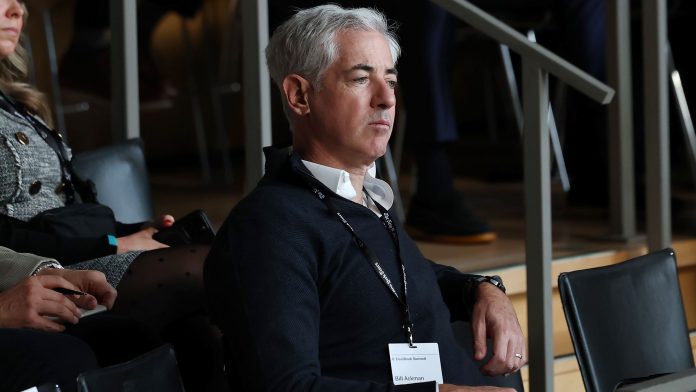
Billionaire activist investor Bill Ackman has thrown down the gauntlet once again. Through his Pershing Square vehicle, he formally proposed on Tuesday a full takeover of Universal Music Group, the world’s largest music company, in a deal valued at roughly $64 billion that blends cash and new shares.

The unsolicited offer marks the latest, and most aggressive, chapter in Ackman’s nearly five-year pursuit of the label powerhouse behind Taylor Swift, Billie Eilish, and Kendrick Lamar.

Pershing Square is offering 30.40 euros per UMG share through its acquisition entity, representing a hefty 78% premium to the stock’s last close of 17.10 euros. That works out to about 55.75 billion euros, or $64.31 billion, in total consideration.

The structure would see UMG shareholders receive 9.4 billion euros in cash plus 0.77 shares of the new combined company for each UMG share they hold. Funding would come from Pershing’s SPARC rights holders, debt, and proceeds from its existing Spotify stake.

The move comes as UMG prepares to shift its primary listing from Amsterdam to New York—an ambition Pershing has championed for years in the belief that broader access for U.S. index funds and deeper liquidity would finally unlock the company’s true value. Even as global music revenues continue to climb, UMG’s shares have lagged badly, losing nearly a third of their value since the 2021 Amsterdam IPO. The stock currently trades at about 21.8 times earnings, a sharp discount to peers like Spotify.

Universal Music Group responded swiftly but cautiously, confirming receipt of the non-binding proposal and saying its board would review it with advisers.

“The Board of Directors has complete confidence in UMG’s strategy and the leadership of Sir Lucian Grainge and the company’s management team,” the company said, adding that it would have no further comment until the review is complete.

For Ackman, the proposal represents a notably softer touch than his trademark activist campaigns. Investors and analysts described the approach as unusually collaborative. In a conference call outlining the financial terms, Ackman praised the company’s dominance while arguing it had “never really graduated” from being operated like a private company.

But his letter to the board struck a mixed tone—complimentary of Grainge’s leadership yet sharply critical of the company’s “underutilized balance sheet” and its handling of the 2.7 billion-euro investment in Spotify.

Ackman disclosed that he and former Hollywood superagent Michael Ovitz had dined with Grainge “a couple of weeks ago” to discuss the idea.

“Lucian encouraged us to send it in,” Ackman said.

Under the plan, Grainge would remain chief executive. Ovitz would join the board as chair, with two Pershing Square representatives also taking seats. The new entity would be reincorporated in Nevada and listed on the New York Stock Exchange.

The timing is notable. Fears over artificial intelligence’s impact on music, from copyright battles to AI-generated tracks, have weighed on the sector. A survey last year found that 97% of listeners could not distinguish between AI-created and human-composed songs. UMG’s market share has been slipping, streaming growth is slowing, and the company recently postponed its U.S. listing, citing market conditions.

Yet Ackman insists the deal would not derail UMG’s competitive edge. He has long pushed for the New York listing, having first bought a 10% stake from Vivendi ahead of the 2021 IPO. Pershing now holds 4.7%, making it the fourth-largest shareholder. Ackman himself served on the UMG board until last year, after an earlier, more complex SPAC-style attempt in 2021 was shelved amid regulatory concerns.

Any deal would require support from UMG’s key shareholders. Bolloré Group holds 18.5%, Vivendi 13.4%, and China’s Tencent is also a significant investor. The Bolloré family controls 80% of the voting rights, giving them decisive sway. Neither Bolloré Group nor Vivendi commented on the proposal.

Analysts were quick to weigh in. ING researchers noted that the offer appears to challenge UMG management’s own growth plans, which called for roughly 1 billion euros a year in emerging-market acquisitions.

“This seems a rather direct rebuttal of this strategy,” they said, warning the deal could prompt some executives to depart.

Dan Coatsworth, head of markets at AJ Bell, observed that the bid reflects Ackman’s long-standing admiration for Warren Buffett’s playbook of buying high-quality businesses at attractive prices. Still, he cautioned that success would demand “a full-on charm offensive” to win over the major shareholders.

Shares of UMG jumped 13% in Amsterdam trading on the news. Bolloré Group rose 5%, while Vivendi climbed more than 10%. The transaction, if approved, would need clearances from both boards, a two-thirds shareholder vote at a UMG meeting, and regulatory sign-offs. Pershing Square expects it to close by year-end.

Kalshi Partnership with Fox News Aims to Bring Real Time Prediction Markets Data into Fox’s Coverage

0

Kalshi has announced a partnership with Fox Corporation. This is a sponsored integration that brings Kalshi’s real-time prediction market data into Fox’s coverage.

Platforms involved: Fox News Channel, Fox Business Network, Fox Weather, and the FOX One streaming platform. Content focus: Real-time probabilities and crowd odds on politics, economics, weather, cultural events, and other storylines not primarily elections, per some reports. Kalshi data will appear in linear TV broadcasts, digital content, and visualizations. Kalshi is working directly with Fox’s data and production teams for seamless integration.

This follows similar deals Kalshi has with CNN and CNBC, reflecting a broader trend of major news outlets incorporating prediction market data as a complement to traditional polling and reporting. Fox reaches a massive audience over 200 million monthly viewers across its properties. Kalshi’s official post highlighted it as a milestone: “The largest news network in America integrates Kalshi… Prediction markets add accountability by rewarding accuracy. No spin. No partisan lens. Just incentives to be right.”

Prediction markets like Kalshi let people bet real money on event outcomes, creating market-driven probabilities that some view as more accurate or incentive-aligned than polls. Media partnerships help legitimize and distribute this data widely. Critics see it as paid product placement or a way for prediction markets to gain mainstream credibility, while supporters argue it adds transparency and skin in the game to news analysis.

EmageNewsDAO, a blockchain-based NewsFi (News Finance) project on Solana that functions as a decentralized news aggregator and platform. It combines journalism with community-driven elements like prediction and attention markets, meme bounties, events, and its proprietary BlockScripts framework.

The project positions itself as a disruptor to traditional corporate media by shifting control to the community via DAO governance, tokens, and immutable blockchain tech. While EmageNewsDAO doesn’t have a direct announced partnership with Kalshi or Fox News, its model aligns closely with the broader trend of integrating prediction markets into media coverage—as seen in Kalshi’s deals with Fox, CNN, and CNBC.

These deals use skin in the game market odds for more accountable, incentive-aligned probabilities on politics, economics, weather, etc. EmageNewsDAO extends this idea into a fully decentralized, on-chain ecosystem. Here’s how it claims to enhance credibility: Tamper-Proof and Verifiable Content via BlockScripts Uses cryptographic hashing to create unique digital fingerprints for articles or reports.

Timestamping and notarization on the blockchain anchors content in time, making it easy for anyone to verify origins, authorship, and any updates. Decentralized storage across nodes eliminates single points of failure or centralized control, so unauthorized changes are detectable.

Reduces fake news and manipulation risks common in traditional media. Readers can independently audit the record, adding a layer of transparency that complements or could integrate with prediction market data. Token holders stake, vote, and govern content decisions, similar to how prediction markets reward accurate forecasters with real financial outcomes.

Rewards via tokens go to creators and curators for high-quality, unbiased reporting and accurate predictions. This creates accountability: Poor or biased work can be downvoted or penalized by the community, while strong contributions earn revenue shares automatically. Ties directly to NewsFi: Blends news with prediction and attention markets, where participants put value behind their convictions.

Revenue from content or events distributes automatically based on proven value and quality, not ad-driven or editorial gatekeeping.
Shifts power from centralized corporations like traditional news networks to a community model, aiming for more equitable and less partisan outcomes. Features like meme bounties and events engage users in fun, viral ways while tying back to serious coverage and predictions.

EmageNewsDAO explicitly incorporates prediction and attention markets into its aggregator model. This mirrors Kalshi’s approach: Markets provide wisdom of the crowds with financial incentives for accuracy, which the project aggregates alongside blockchain-verified journalism.

On-chain prediction data + tamper-proof reporting could create hybrid BlockScripts + Prediction Events that feel more trustworthy than polls or legacy analysis alone. Kalshi’s integration with Fox and others legitimizes prediction markets as a complement to traditional reporting by adding real-money probabilities without spin.

EmageNewsDAO takes this further by making the entire news pipeline decentralized and auditable on-chain. Supporters argue this could: Restore public trust eroded by perceived media bias. Enable verifiable, community-vetted coverage of the same events Fox might feature via Kalshi which foster a reputation layer where accuracy is rewarded transparently.

Critics might note that DAOs can still face governance issues, low participation, or token incentives leading to new biases. As an early-stage project founded in 2020, active on Solana with elements like Onchain Scanner, its real-world scale and adoption remain developing.

Bitcoin Rallies Above $72K as U.S.–Iran Ceasefire Eases Market Tensions

0

The price of Bitcoin surged sharply following the announcement by U.S President Donald Trump, of a proposed two-week ceasefire between the United States and Iran, triggering a broader rally across global risk assets.

The agreement, which includes the reopening of the Strait of Hormuz, signaled a temporary de-escalation in a conflict that had unsettled financial markets for weeks.

Recall that earlier, President Trump had indicated that Iran proposed a “workable” 10-point peace plan, though he later dismissed it as fraudulent without providing further clarification. While neither side confirmed the exact start date of the ceasefire, Trump also softened his stance on expanding military action after issuing strong warnings earlier in the day.

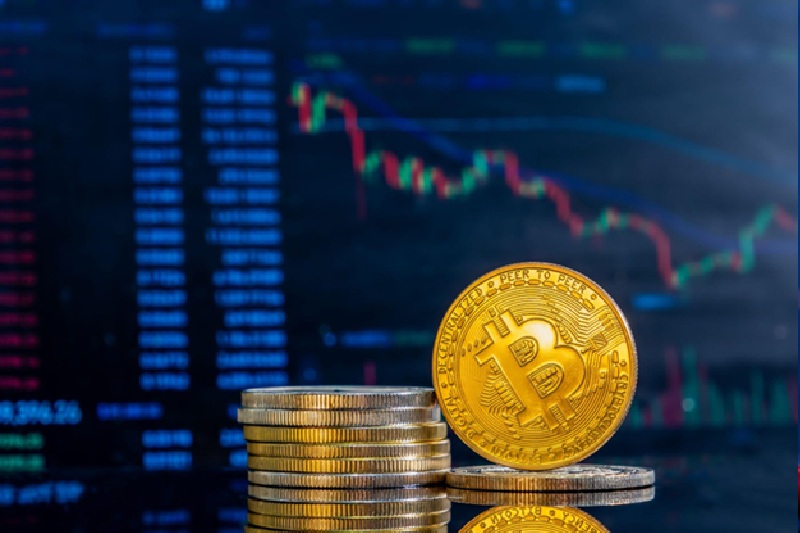
The geopolitical shift had an immediate impact on cryptocurrency markets. Bitcoin climbed above the $72,000 level, reaching a high of $72,734 before a slight decline. This rally comes after the crypto asset rebounded from the $66,000- $67,000 zone, which it has been trading in for days.

Prior to this development, the conflict had injected significant volatility into global markets. Concerns over disruptions to the Strait of Hormuz through which roughly 20% of the world’s oil supply passes had pushed investors toward safer assets. During this period, Bitcoin experienced choppy price action, briefly dipping below the $65,000 level as fears of escalation intensified.

However, the announcement of a ceasefire and the possibility of diplomatic talks in Islamabad reversed market sentiment. Ethereum rose by approximately 4% to reclaim the $3,400 level. Unlike volatile spikes, Ethereum’s move is showing controlled expansion, suggesting sustained demand and growing market confidence.

Also, Solana and XRP posted gains ranging between 5% and 8%. The total cryptocurrency market capitalization expanded by tens of billions of dollars, reflecting renewed investor confidence.

This market reaction underscores the growing sensitivity of digital assets to macroeconomic and geopolitical developments. The easing of immediate geopolitical risks removed a major source of uncertainty, enabling capital to rotate back into higher-risk assets. The rally, therefore, was driven less by internal crypto fundamentals and more by improving external conditions.

From a technical standpoint, Bitcoin has formed a higher high, reinforcing a bullish continuation pattern. Holding above the $70,000 psychological level strengthens the case for further upside momentum.

It has reclaimed its 50-day EMA around $70,500, turning it into support, while RSI near 58 shows buyers still in control. A breakout above $72.6K could open the path toward $74,800.

Outlook

In the near term, Bitcoin’s trajectory will remain closely tied to developments between Washington and Tehran. If negotiations progress toward a lasting agreement and stability returns to key oil routes like the Strait of Hormuz, risk appetite is likely to remain strong.

A sustained hold above $70,000 could pave the way for a move toward the $74,000–$76,000 range, with a breakout above $72,000 potentially accelerating gains. Conversely, a drop below $69,000 may signal short-term weakness and a possible retracement.

Additionally, declining oil prices—now easing below the $100 mark—provide further support for risk assets, including cryptocurrencies. While uncertainty remains, the ceasefire has introduced a window of optimism, and a push toward the $75,000 level and beyond cannot be ruled out if favorable conditions persist.

Google CEO Sundar Pichai Signals Major New Startup Investments as Early Bets on SpaceX and Anthropic Deliver Massive Returns

0

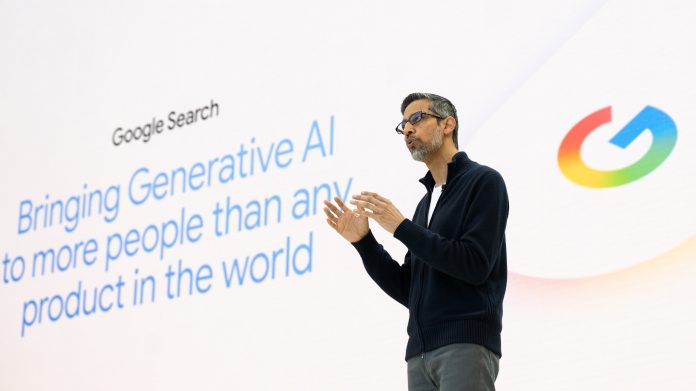
Alphabet stands to pocket potentially $100 billion or more from its 2015 investment in Elon Musk’s SpaceX, and Google CEO Sundar Pichai says the explosion of artificial intelligence is creating even more opportunities for the company to deploy capital directly into promising startups.

In a wide-ranging conversation with Stripe co-founder John Collison posted on Tuesday, Pichai made clear that Alphabet is moving beyond its traditional venture arms to make bigger, more direct bets as the capital demands of frontier AI companies continue to escalate.

“You know SpaceX, Anthropic and so on so, I think now with the AI shift, there are more opportunities on which we can deploy capital in a good way and so we are doing that,” Pichai said.

The remarks come as Alphabet joins other tech giants, including Nvidia, Microsoft, and Amazon, in writing large checks off the balance sheet rather than routing everything through its early-stage venture group GV or growth-stage arm CapitalG. The scale of today’s AI race often requires investments in the hundreds of millions or billions of dollars, far beyond what conventional venture funds typically provide.

Alphabet’s original $900 million investment in SpaceX in 2015 came at a valuation of roughly $12 billion. In February, SpaceX merged with Musk’s xAI in a transaction that valued the combined company at $1.25 trillion. Assuming Alphabet retained its full stake, that position is now worth around $100 billion — and could climb higher.

Reportedly, SpaceX confidentially filed for an IPO last week and is reportedly seeking a valuation as high as $1.75 trillion, which would rank among the largest offerings ever.

Anthropic has delivered similarly outsized returns. Google invested $300 million in the AI lab in 2023 for roughly a 10% stake, followed by another $2 billion infusion. The company has since put in additional capital, bringing its total investment above $3 billion. Anthropic’s valuation has soared to $380 billion as of its most recent round in February, and Google now reportedly owns about a 14% stake. The partnership also carries strategic weight: Anthropic has committed billions of dollars to Google’s tensor processing units and cloud infrastructure.

Pichai emphasized that Alphabet aims to be disciplined with its capital.

“To the extent you’re bullish on ROIC, you want to invest every last dollar you can there,” he said, referring to return on invested capital.

“We felt our investment in Stripe was being a good steward of our capital,” he added, noting the fintech company’s valuation has climbed more than 17-fold since GV participated in a $150 million round in 2016. Stripe was valued at $159 billion as of February.

Pichai also reflected on Alphabet’s autonomous vehicle unit, Waymo, which raised its first external round in 2020 at $2.25 billion. Earlier this year, Waymo closed a $16 billion funding round at a $126 billion valuation, with Alphabet participating alongside outside investors.

“I would have been glad to invest more capital in Waymo earlier, but we weren’t at the level of maturity to do that,” Pichai said.

The comments paint a picture of a company that has grown far more comfortable writing large checks as its core search and advertising businesses continue to generate enormous cash flow. With AI driving unprecedented capital needs across the industry, Pichai sees a chance for Alphabet to put that cash to work in high-conviction opportunities that can deliver both financial returns and strategic advantages — whether through direct ownership stakes or deep commercial partnerships like the one with Anthropic.

This marks a notable evolution for Alphabet. For years, the company channeled most of its startup investing through GV and CapitalG. Now, with the AI boom demanding ever-larger sums and longer time horizons, Alphabet is increasingly willing to step in directly from the parent company balance sheet.

The approach mirrors what other tech giants have done to secure access to cutting-edge technology and infrastructure while capturing meaningful upside.

Pichai’s conversation with Collison, whose own company, Stripe, has been a major winner for Alphabet, underscored a consistent theme: when the opportunity is right, and the potential return on invested capital is compelling, Alphabet is prepared to move aggressively.

As the early bets on SpaceX and Anthropic have already paid off handsomely, the question now is how much further the company will lean into similar large-scale investments as the AI race intensifies.