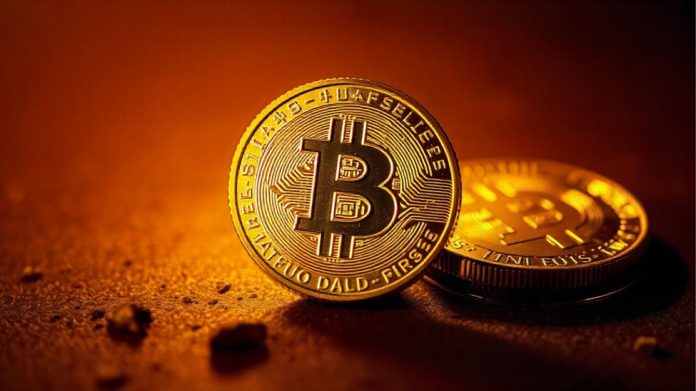
For years, Bitcoin was viewed as digital gold—a decentralized store of value designed to preserve wealth and resist inflation. NFTs, on the other hand, represented a different corner of the crypto world: speculative digital collectibles, cultural assets, and symbols of online communities.
Yet in recent years, the lines between these two narratives have begun to blur. An important question is emerging across the crypto industry: Is Bitcoin quietly becoming the new NFT?
At first glance, the idea seems absurd. Bitcoin and NFTs were built for entirely different purposes. Bitcoin was created as money, while NFTs gained popularity as unique digital assets representing art, gaming items, and online identity.
Market behavior increasingly suggests that Bitcoin is evolving beyond its original monetary function and adopting characteristics that resemble the NFT market.
One reason for this comparison is scarcity. NFTs derive much of their value from uniqueness and limited supply. Bitcoin also possesses scarcity through its hard cap of 21 million coins. As institutional adoption increases and large corporations accumulate significant amounts of BTC.
The amount of freely circulating Bitcoin continues to shrink. This creates an environment where ownership itself becomes a status symbol. Holding Bitcoin today increasingly resembles owning a rare collectible rather than using a currency. Very few people spend Bitcoin on everyday transactions.
Instead, they hold it, showcase it in portfolios, and treat it as a prestigious digital asset. Similar to high-value NFT collections, Bitcoin ownership has become associated with exclusivity and long-term cultural significance.
The emergence of Bitcoin Ordinals and inscriptions has further strengthened this comparison.
By enabling data, art, and collectibles to be permanently stored on Bitcoin’s blockchain, Ordinals effectively introduced NFTs directly into the Bitcoin ecosystem. Rare satoshis, historical inscriptions, and limited digital artifacts now command significant premiums, much like rare NFT collections during the boom years of 2021 and 2022.
Bitcoin increasingly benefits from a powerful social narrative. NFTs were driven largely by community, culture, and belief. Their value often depended less on utility and more on collective conviction. Bitcoin exhibits many of the same dynamics today.
The Bitcoin maximalist community treats BTC not merely as a financial instrument but as an ideological movement.
Ownership has become intertwined with identity, much like membership in elite NFT communities once was. Institutional participation is also changing Bitcoin’s role. The launch of spot Bitcoin ETFs has made BTC accessible to traditional investors who may have little interest in its payment utility.
For many institutions, Bitcoin is simply a scarce digital asset with a compelling story—a modern collectible with strong branding and increasing demand. This does not mean Bitcoin is destined to follow the boom-and-bust cycle that affected many NFT projects.
Unlike most NFTs, Bitcoin benefits from unparalleled network security, global liquidity, regulatory recognition, and a proven history spanning nearly two decades. Its monetary properties remain fundamentally stronger than those of speculative digital collectibles.
The comparison highlights an important shift. Bitcoin is increasingly valued not because people intend to spend it, but because they believe others will continue to desire and accumulate it in the future. This mirrors the psychological foundations that once drove NFT markets.
In this sense, Bitcoin may indeed be quietly becoming the new NFT—not in technology, but in narrative. It is evolving into the world’s most valuable digital collectible: scarce, culturally significant, highly desired, and increasingly treated as a symbol of status and belief rather than merely a form of money.