DD
MM
YYYY

PAGES

DD
MM
YYYY

spot_img

PAGES

Home Blog Page 7017

Central Bank of Nigeria Explains MTN, Bank Repatriation Fines with Timelines

0
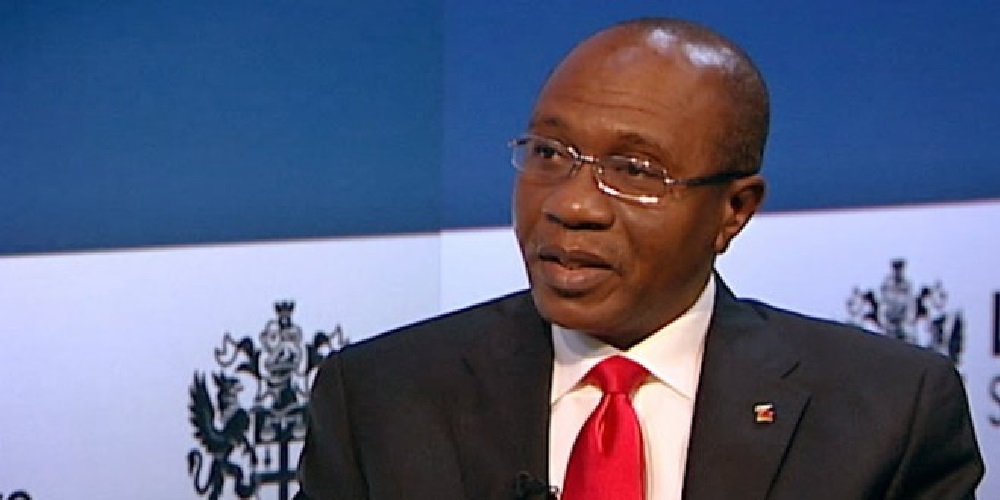
Godwin Emefiele (CBN governor)

We sincerely apologize to the Central Bank of Nigeria for our comments when the bank imposed fines on MTN and some banks over some foreign transfer transactions.

Yes, MTN Nigeria has another issue: now, it is coming from the Central Bank of Nigeria. The bank asked it yesterday to refund $8.13B (with B) which the apex bank said the mobile giant (allegedly) illegally repatriated. This is the CBN Letter to MTN (MTN-Letter-of-outcome-of-investigation).

Contrary to the statements from some of the entities, CBN actually gave them notices to defend themselves before going public.

He said a one-week deadline for MTN and the banks to reconcile their records and report back to the committee was not met. A fresh deadline also stretched to almost two months without the documents.

“At this point, we (CBN) could not wait endlessly for them. That is why we released the report to the public and imposed various sanctions totaling N5.87bn against the banks,” Mr Emefiele told PREMIUM TIMES.

“What CBN sought was a reversal of the transactions by MTN and return of the funds, because they were not finally authorised by the CBN, and follow due procedures in funds repatriation,” Mr Emefiele explained.

It is fake news to claim you woke up and read the fines on pages of newspapers when you had been given up to 2 months to come clean. I am truly disappointed that companies could manipulate words so devilishly.

From America to UK, everyone has been lambasting the CBN. But looking at the timelines, the banks and MTN had opportunities to have kept this saga private. But when they chose not, CBN went public. There was no malice on that as Nigeria is bigger than any company that operates in Nigeria. Personally, I apologize for accusing CBN of not showing tact to public companies.

Why 90% of African Job Applicants Are Struggling to Land Interviews

0

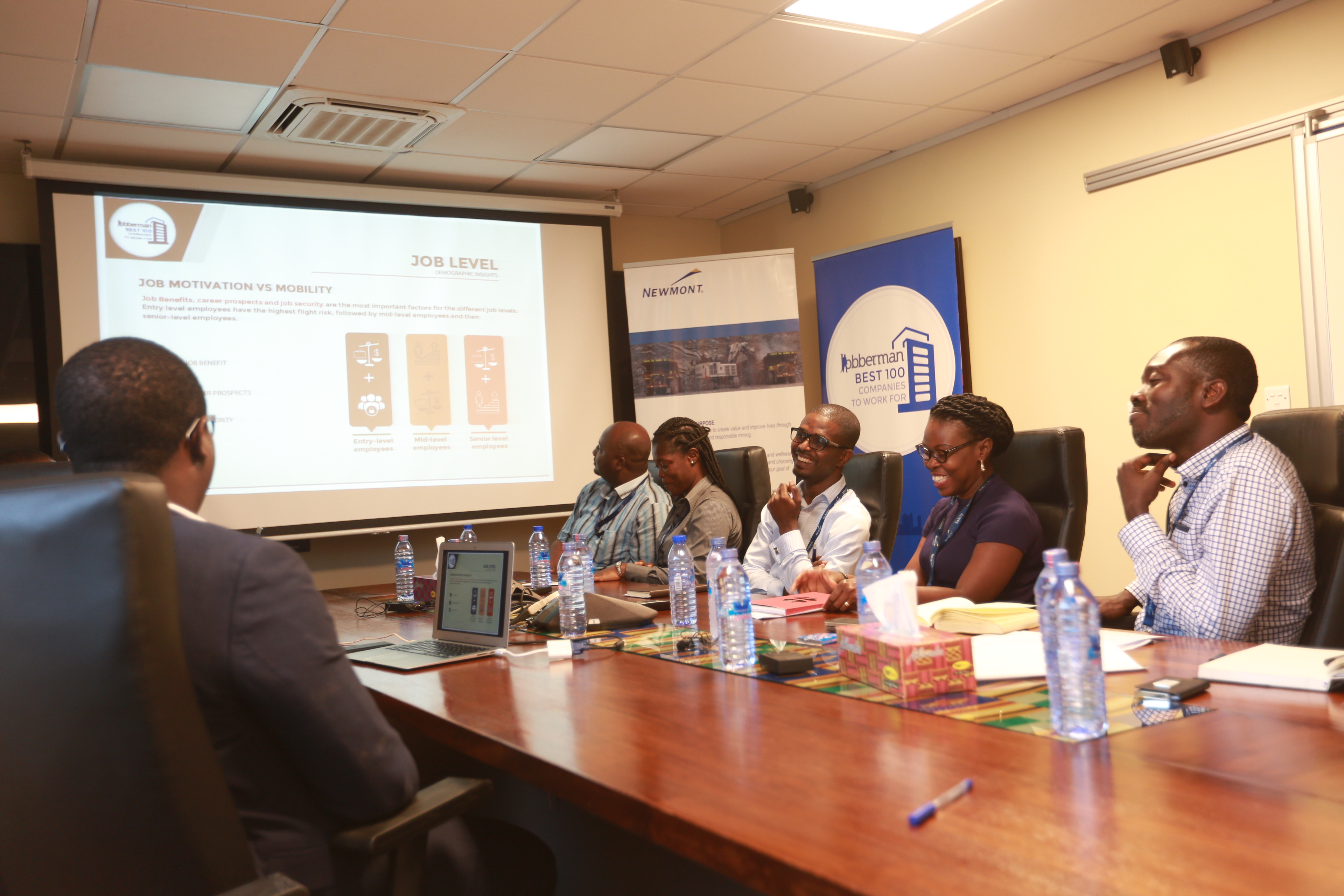
This says it all – close to 90% of applicants that apply to a job position are objectively not a match to the role advertised in Africa. This is caused less by a shortage of jobs, but a fundamental misunderstanding of job requirements, both from employers and candidates, ROAM research explains.

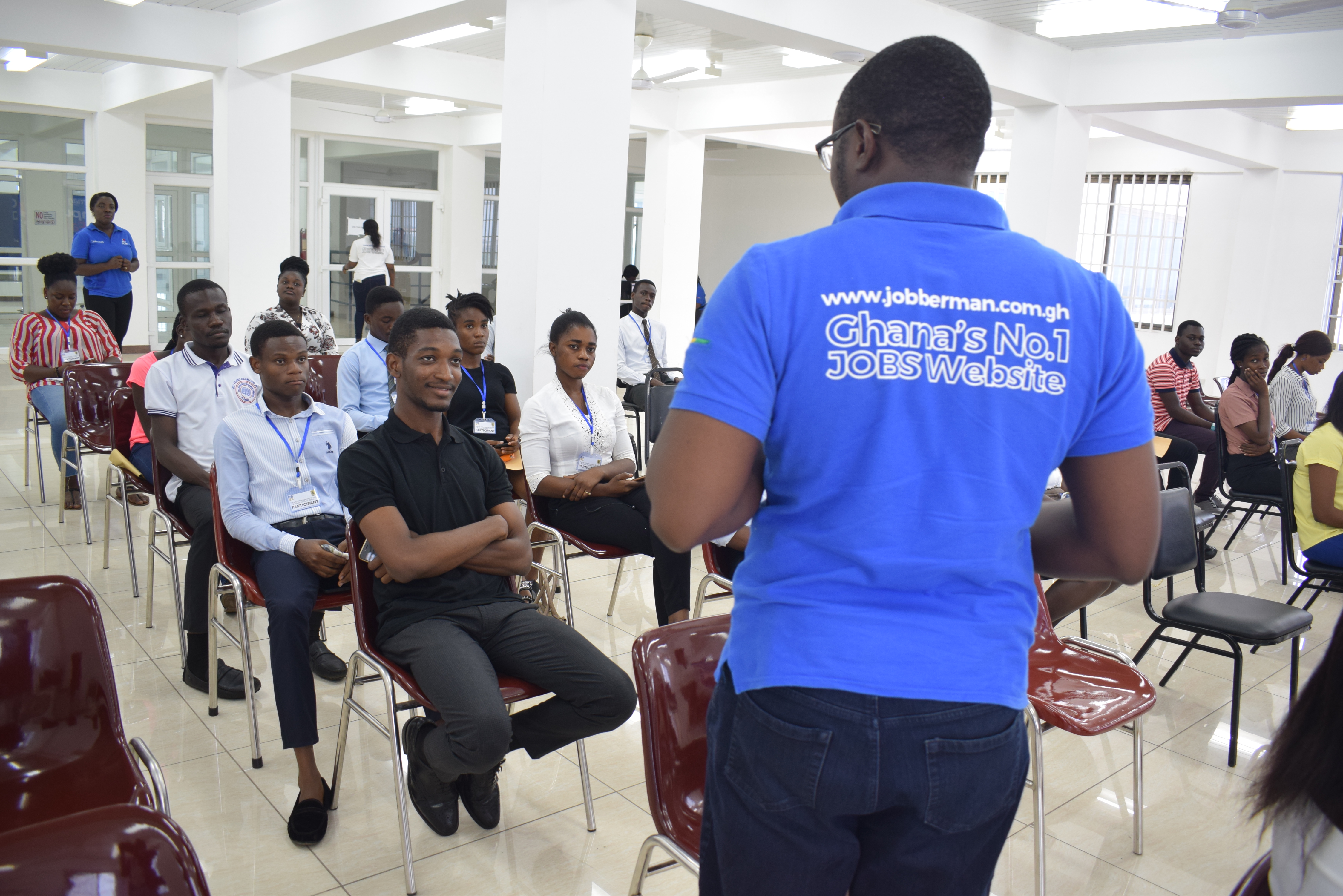
This has been uncovered by research conducted by ROAM (Ringier One Africa Media), who is encompassing the market-leading job portals in West Africa (Jobberman) and East Africa (Brightermonday), as well as Executive Recruitment and HR Solutions firm The African Talent Company. The company has analysed data sets from more than 12 million users, as well as from more than 100,000 employers, across Nigeria and Kenya active in the last two years.

Matthew Page, ROAM Head of Jobs, on the background of the research: “We have recently conducted a data review and were shocked by this huge gap. Our initial hypothesis was that this is due to a shortage of jobs, gaps in the labour markets, and desperation. However digging deeper into our database, our analysis found that many candidates were indeed qualified for other available jobs, but did not necessarily apply for these. African employers and our clients indeed face a challenge in hiring the right people.”

The company’s research further brought to light that an average job listing receives about 140 – 160 applications. This showcases that there are huge hiring efforts involved in the application and recruitment process, even before the interview. This is both on the candidate side, to launch this large number of wrong applications, as well as from the employer, to identify the 10% of right candidates, amidst a large number of unqualified requests.

“Hiring the right competency upfront typically returns 3x productivity for the employer. It also minimises the onboarding time required to get an employee up to speed. That is why we have launched smart employer products in the last months. These facilitate a smooth hiring experience for employers, through tech-enabled shortlisting and matching products that identify the best candidate for the best position”, adds Matthew Page.

Clemens Weitz, CEO of ROAM elaborates on the potential for economic growth: “Our research clearly shows that the education of the African job market has a long way to go – both on the seeker and employer side. Solving this challenge will unlock tremendous latent economic potential. Imagine an efficient economy, where all employees sit in the job that is a perfect, natural fit for their individual nature. Productivity and satisfaction would skyrocket. AI and machine learning have tremendous potential, and we plan to fundamentally solve this challenge in 2019.”

Google Releases 2018 Top Searches in Nigeria – Very Surprising Again

0
Google continues a push into Africa, unlocking opportunities and changing landscapes

Interesting insights here – Nigerians want to know the President of Croatia. Certainly, there is something going on in that country I did not know. Google has released the most-searched items from Nigeria for year 2018. The regulars are there: yes, footballers.

Simply, if you acted Hamlet with Lord Polonius’s “What do you read, my lord?” and Hamlet responding “Words, words, words” in secondary school, you are now free to substitute “Football, football, football” for a scene in Nigeria. European league footballers are gods in Nigeria – they are everywhere.

Oh yes, “How to dance Shaku Shaku” made the list again as was last time.

The roll call from Premium Times:

Osun elections, Alexis Sanchez and Black Panther have been named the top Google Searches in Nigeria in 2018.

Google’s Communications and Public Affairs Manager, Anglophone West Africa, Taiwo Kola-Ogunlade, said the trend offers a unique perspective on the year’s major moments and top trends based on searches conducted in Nigeria. …

“This year’s most searched news event was the Osun elections, which gripped national attention in September due to alleged incidents of voter intimidation and interference.

“Manchester United footballer Alexis Sanchez was both the most-searched person and the most searched sportsperson of 2018.

The top trending news searches for the year were Osun elections, Ekiti elections, PDP Presidential Primaries, ASUU Strike, NLC Strike/Minimum Wage and Offa Robbery.

Google Trends which was launched in May 2006, allows one to see how popular search terms and its demography have been over time on the search engine.

Others are Kaduna Crisis, Lagos APC primaries, Royal Wedding and Atiku Running Mate.

The top trending people listed by Google include Alexis Sanchez, Pierre-Emerick Aubameyang, Meghan Markle and Stan Lee.

Others are Philippe Coutinho, Atiku Abubakar, Tosyn Bucknor, Avicii, Aisha Abimbola and Sylvester Stallone.

The top trending questions are: How to check Jamb result, How to write a Business Plan, Who is leading in Osun Election, How to check BVN, Who is Prince Harry?, Who is the richest musician in Nigeria? and How to write a CV.

Others include How to dance Shaku Shaku, Who is Atiku’s running mate? and Who is the president of Croatia?

The Bitcoin’s Mindless Optimistic Exuberance in Nigeria

0

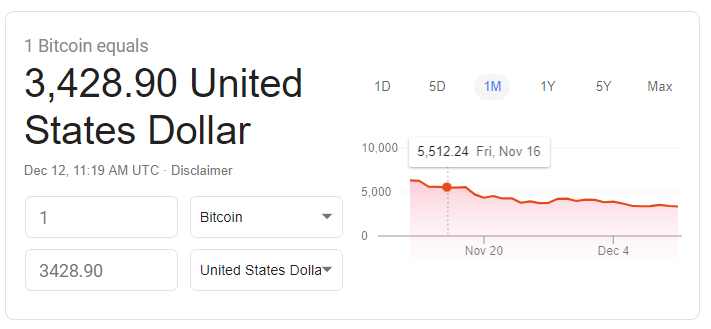
The liberator now needs liberation. Now, national parliaments should pass laws that would say “Bitcoin cannot go down but up”. Lol. Good people, let us show common sense: there is no way in this world where anyone can create his currency and yet everything would still work normal. Optimistic exuberance on your computer screen must not take away the reality that getting hard Naira is tough. MMM, Bitcoin… shine your eyes. Yet, blockchain remains an opportunity.

LinkedIn Comment on This Feed

The stock market is so volatile, even a smile or frown could add or wipe off couple of billions of dollars from your market value.

But the real issue with Bitcoin and its cousins is that the world is owned, and highly rigged as well. So it does not really make sense to believe that you can sit in front of your computer screen and live in your own world; those who control levers of power won’t allow you to enjoy such, of course anyone can grab power, but as for authority? Very few.

Just a year ago it looked like the next big thing, and now this…

It is not the despair that kills, but rather the hope.
Time to make peace with those who run the world, before extinction becomes imminent.

Nigeria’s Domestic Debt and Economic Recession – An SME’s View

0
Thank you Nigeria
Nigerian flag

By Austyne DURU

There is no perfect system in the world and so I assume that Nigeria is part of that imperfection. What I do not understand is how a country defies every known economic and social principles, sometimes by deliberately inflicting pains on itself. This is my sane interpretation of the economic recession that hit Nigeria, yet the lessons seem not to be learnt in any way.

Our domestic debts stands at N12 trillion (or $40 billion), as of June 2018, which is substantially high when compared to our GDP of $400 billion for the year 2017. There is a truth government bonds and bills are of less risk and high yield, reaching 18% per annum in the best case. There is also be a claim that mopping the economy of free funds could control inflation -15% as of November 2018 based on National Bureau of Statistics reports. Reality is that we are hurting these sharp practices are hurting Nigeria’s economic growth.

Firstly, the implication is that continued mopping of funds from the economy denies our economic drivers access to 10% of the asset needed for job/wealth/value creation. Small and medium scale businesses need to access credit for idea execution, business expansion, and contract execution. The unavailability (or scarcity) of fund is evident as commercial banks as well as government funded banks do not provide any respite to these movers of the economy. Monies meant for credit transaction are deliberately channeled to procurement of FGN bonds and bills thereby denying the economy of this much needed stimulus.

Secondly, investors who could have collaborated with ideators renege their commitments because there is a ‘safer’ haven in FGN bonds and bills. Speculation and short term gains become the primary objective of fund owners who do not believe in the economy. Indeed, the Debt Management Office (DMO) is promoting the same ‘laziness’ that the Federal Government of Nigeria ((FGN) preaches against. The first FGN Sukuk bond which closed in September 2018 was oversubscribed by about 5% to close at N105 billion. Hence, it confirms that domestic capital market players are avoiding the risk of business investments while embracing the lesser devil of bonds.

Thirdly, it becomes even difficult to access funds from Government sponsored facilities through its sector-dedicated instruments in Bank of Agriculture (BOA), Bank of Industry (BOI), and Development Bank of Nigeria (DBN). How do you explain the economics that Government borrows money from the people at 16% per annum (for example FGN Sovereign Sukuk currently open to the public) but gives out credit to businesses at 6% for agriculture, 9% for manufacturing, and 12% for infrastructure. When these economics don’t add up, the only feasible means to recoup earn the committed profit would be simple – pass the funds to Micro Finance banks who can charge interest up to 60% per annum for retail loan offerings. Such loans at targeted at salary earners, especially knowing the fact that many SMEs will default due to bad business environment.

It is evident that our economy will remain stagnant until we begin to reverse or correct these anomalies. CBN must regulate banks to the extent that loan profiling should show that SMEs are beneficiaries of at least 60% of credit sales. The policy on Cash Reserve Ratio (CRR) should be pushed into the economy must be pursued and verified that it get to the desired targets – SMEs. Commercial banks must work hard to earn interest and not being lazy by procuring FGN bonds for 16% pa. DBO should validate the impact of its bonds and bills that it controls inflation without hurting the economy. It will be nice to see what the projected GDP would be if such bonds where not offered to mop funds from the economy. The Government of Nigeria needs to come true in its bid to promote enabling environment for businesses to thrive by measuring and reporting the count of new businesses and capital raised by those. Economic stimulants from BOA, BOI, and DBN should be realistic to avoid the round-trip ping that we observe in our capital market. Small and Medium Enterprise Development Agency of Nigeria (SMEDAN) needs to report the ratio of beneficiary versus registered SMEs targeted by the various government incentives.

The inefficiencies caused by sharp practices continue to hampers our economic growth. I may be speaking for many SMEs who are suffering similar fate.