DD
MM
YYYY

PAGES

DD
MM
YYYY

spot_img

PAGES

Home Blog Page 7019

How to Adapt and Thrive in the Next Tech Invasion (Which is Pretty Soon)

0

by Demi Oye

Fighting change is like fighting the wave of tides. This situation is how it seemed about five years ago when tech was changing the world rapidly (well, it still is today).  Since it was good, there was no reason to fight it anymore. Who doesn’t enjoy being able to see the face of a loved one at a far end of the world with their smartphone? Who doesn’t enjoy being able to call up a car to pick them with their smartphones?

Again, change came and fighting it off wasn’t an option. Tech evolved over and over, and it began to feel confusing. From new phones to new apps, to several new gadgets, users couldn’t get just enough. It was nice to have a wide range of choices is cool, but the brands became somewhat confusing.

Brace yourselves; it’s going to get even more confusing, as tech companies are in constant competition. This article would teach you how to adapt and thrive in the next tech invasion, as you cannot run from it. It’s coming pretty soon, so the earlier you get informed on how best to embrace it, the better.

In the next tech invasion, buying devices or subscribing to tech might be a lot complicated than buying from a brand because it is known. As tech is evolving, the industry is becoming ungovernable and users must guard themselves.

Tips to help users adapt and thrive in the next tech invasion

Sticking to renowned brands vs. Going for the new ones

While this is a tip, it’s also a way to have users get their thinking caps on. Initially, the simple advice was to stick to well-known names; “Get your devices from Apple,” “services from Google are the best” and “Amazon is a name you can trust.” That advice could be boldly given some four to five years back, as you could get the best of these brands.

However, things have changed today, and even the government of the United States can hardly control the activities of these companies. This situation makes it dicey to bank on them. Since they are uncontrollable (and it would get worse with the next tech invasion), users want to avoid a brand that takes advantage of them.  While this is not an attempt to speak negatively of any company, it’s a call for users to watch out.

Look past the brand name

The first thing many users do is look at the gadget/product. For a phone, they look at the camera, the battery life and maybe the operating system. With the next tech invasion, there’s more to look out for. Look at the business model.  Gadgets, especially phones have become ubiquitous, and almost anything works for starters. This situation leaves users confused on the choices to make, and it’s about to get worse. It’s time to look past the products and look out for things that last like the ethics, business model, message, morals, and branding of the company. If you want to figure out a brand that carries dangers in this new age, you better look out for its trade.

Do not sell your “user’s choice” to the giants

Over the years, it’s been the same set of famous companies ruling the tech world. The known names have been Apple, Facebook, Microsoft, Amazon, and Google. It hasn’t changed all these years, and it is likely to remain with the next tech invasion. The fact that their stocks keep rising makes the voice of the consumer unheard and the industry uncurbed by the government.

The choice is that of every consumer now because tech companies are indispensable. A strategy to cope with the next tech invasion is to prevent these companies from taking advantage of you in subtle ways. Whenever you get a chance to avoid the giants, do so. Do not stick to a brand because its big; weigh its pros and cons. An example would be choosing Spotify over Apple Music. Spotify does better than Apple Music on every front. However, some users would stick to Apple Music (just because it’s from Apple). With the next tech invasion, consumers have to help spread the wealth even to smaller companies that give good value for money. There are several other examples, which include the use of Dropbox and not merely Google or Apple. 

Conclusion

Here’s the deal; before you adopt a brand for any reason, ensure you slow down and think. The government cannot seem to curb the excesses in the tech industry, but users can. No matter what happens, don’t jump at innovations, they could come back at you. Dear user, the message is clear; take it slow.
The Next 100 African Startup List – World Bank IFC

0

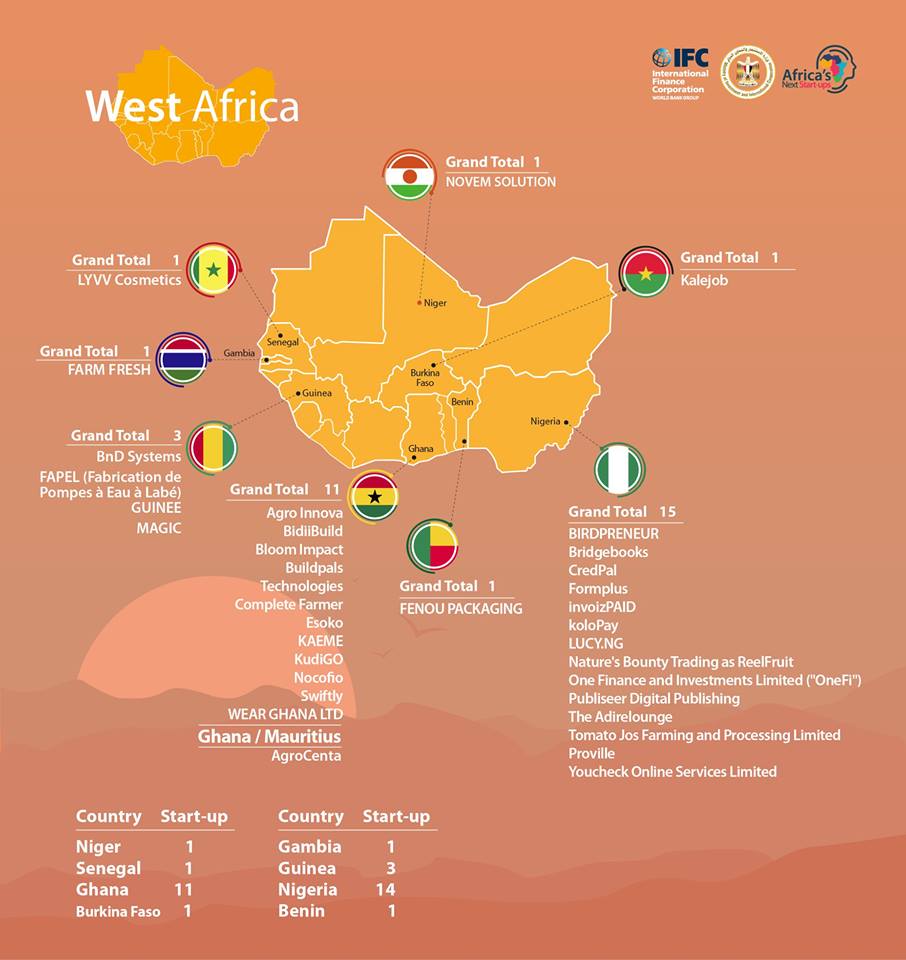
Yesterday, the World Bank private investing arm, International Finance Corporation (IFC), announced the winners of the Next 100 African Startup initiative. The entities were also invited to Africa 2018 Forum in Sharm El Sheikh, Egypt. Find below the West African reps (for other regions, click here).


Zenvus Speaks to UN Environment on Precision Farming

0

I just finished an interview with the United Nations Environment Programme, the division of the United Nations which focuses on protecting our environment. The interview would appear in coming days on UN-managed #SolveDifferent website.

To provide leadership and encourage partnership in caring for the environment by inspiring, informing, and enabling nations and peoples to improve their quality of life without compromising that of future generations.

Largely, even as the world unleashes technologies in agriculture, it is very important that our environment and biodiversity are protected. Simply, technologists must consider nature as they innovate.  Interestingly, there is no solution including the status quo (do nothing) that offers a better vista than precision farming on protecting the environment.

In Africa, specifically, we have seen two major challenges: reduction in land fallow periods and climate change as generation-shaping challenges. As population accelerates, fallow period has dropped from seven years to about three years making it harder for soil to replenish effectively, naturally. Combine that with paralysis from climate change, you get a double whammy for rural farmers.

But these issues can only be managed if they are measured: that is where precision farming comes in. As a pioneer of this sub-sector in Africa, Zenvus is making sure that our technologies and processes are designed with the best of nature in mind.

Zenvus is an intelligent solution for farms which uses proprietary electronic sensors to collect soil data like moisture, nutrients, pH, etc. It then sends the data to a cloud server via GSM, satellite or Wifi. Algorithms in the server analyze the data and advice farmers on farming processes. As the crops grow, the system deploys special cameras to build crop vegetative health index for detection of drought stress, pest and diseases. Our system has the capability to tell a farmer what, how, and when to farm. It has in-built GPS, compass and XL making it possible to map farm boundaries which could be useful during loan and insurance applications.

Find A Business Mentor, I have Mine.

8

Business is not a competition of the smartest guy in class. Yes, that you were academically talented means largely nothing. Business is simply figuring out what markets want and then offering those things at the most optimal points across value, pricing, timing, and service.

Interestingly, it takes the support of people who had experienced what you want to do to provide guidance to unlock great moments. This is where mentorship comes into play. No matter how brilliant you are, to thrive in business, you need a mentor. Without one, you would make mistakes which might have been avoided.

Think about it: Mark Zuckerberg dropped out; Bill Gates dropped out. Nonsense – they did not drop out. They dropped out from academic mentors (professors) into the hands of business mentors (venture capitalists).

No matter how you see those two – I would vote for the man that would give me $1 million, and still answers my phone calls, because he wants to help me ensure that everyone is richer. That is the venture capital industry! A critical part of that industry is mentorship: the best founders accept investing capital based on deals the investors would catalyze. Simply, sending money is not enough – you need to bring growth by introducing and linking the startups to new opportunities.

The other mentor – the professor – wants me to pay him to teach me. Both are valuable in the society but context is important: no American kid that has raised $500,000 has ever dropped out of college. Those kids simply left university halls and academic professors behind to start new “education” under the tutelage of legendary business professors called venture capitalists. The best among them are the finest professors in the world if you believe that education can come outside of people who might have been teaching the same thing for 20 years. The venture capitalists now pay those kids, give them money, and technically serve them as they pilot missions to make everyone richer!

I have my own business mentor – he has been kind to offer insights and perspectives whenever I need them. Yes, Mr. Tony Elumelu has supported in many ways. Without him, there would not be Zenvus.

Find your own mentor – he does not need to be your university professor unless the professor knows and understands business. It is always good to use active practicing professionals who are facing the challenges you are encountering at higher levels.

If you run a business, it does not make sense to pick a big corporation uncle (unless he founded a firm) as a mentor – he is guaranteed income at month end and may have never felt the stress of paying workers, and growing margins. There is urgency that comes when you meet people running their shops, a civil servant would not give you that.

Invest in finding a mentor in 2019 –it would help you a lot!

A Letter To The EVC Of NCC On 5G Trial in Nigeria

0
5G network, adaptable business model

by Olayinka Oduwole

The Executive Vice Chairman of NCC (Nigerian Communications Commission) recently reported  that Nigeria would be ready to roll out 5G networks in 2020 by making spectrum within the 26GHz, 38GHz and 42 GHz available. The EVC also noted that the Commission was working to address issues related to spectrum, infrastructural deficit and regulation to facilitate the roll out of 5G. In this piece, I would address these three issues raised by the Commission in preparing the country for the release of 5G.

The Nigerian Communications Commission (NCC) has said Nigeria would be ready to roll out 5G networks with the 26GHz, 38GHz and 42GHz spectrum bands by 2020.

The Executive Vice Chairman of NCC, Prof. Umar Danbatta, said this in Abuja Thursday during a collaborative meeting with GSMA for 5G rollout in Nigeria.

According to him, trial testing of the rollout plan has commenced in the country beginning with the Eko Atlantic Project, where broadband data will drive connectivity and allow humans to interact with connected devices to check their health status and remotely control home appliances without physical contact.

SPECTRUM

In my previous piece on 5G, I noted the vital role of spectrum availability in driving 5G penetration within any country. Whilst this is a positive step in the right direction, it’s equally important for the Commission to ensure that the new spectrum within the various bands are not offered at exorbitant prices. As noted by GSMA, spectrum pricing in developing countries, are on average more than three times higher than in developed countries, after taken into considering the income levels within the country. Making spectrum available at reasonable prices would encourage competition which would enable new market players as well as telcos to afford the new spectrum. Besides, 5G is expected to usher in new market players due to the various use cases within other industries. And the timely release of affordable spectrum would also help drive down the costs of data and other telecommunication services which would no doubt greatly benefit consumers within the country.

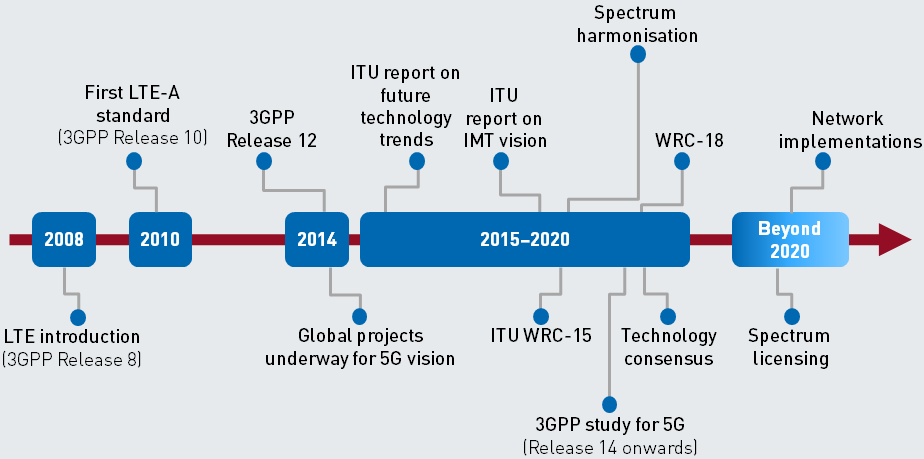
Timeline towards 5G [Source: Analysys Mason, 2014]

INFRASTRUCTURE

As I have noted, 5G requires huge investment to strengthen the capacity of the physical layer, virtualization of the core and for the high capacity backhaul networks needed to provide low latency, high speed connectivity and ubiquitous coverage promised for the various use cases. Besides, 5G may rely on the use of heterogeneous networks which would require network of different layers and of different technologies to work together in a seamless manner. Whilst the Commission has done right in pointing out the need to address infrastructural deficit, it also needs to understand that different players would need to work together to address this infrastructural challenge, hence facillating interoperability among players would be vital here.

REGULATION

I cannot over emphasize the importance of regulations in facillating the release and deployment of 5G. This is because regulations can either accelerate or hinder development within this ecosystem. The Commission mentioned that it would rely on existing policies and then develop new policies to address hiccups. I think this is a good strategy but it is important for the commission to begin to prepare to tear its existing rule book. This is because there are disruptions happening in every part of the 5G landscape that it would be hard to apply the previous rules. For example, in previous generations, it is very typical for a single Mobile Network Operator (MNO) to own and operate the entire network. With the advent of 5G, it is possible to have different operators (MNO or Mobile Virtual Network Operator MVNO) owning and operating different slices within the same network.

TRIAL

The commission also highlighted that trials will be performed using the Eko Atlantic project to demonstrate interaction between humans and machines for applications in smart home, health care etc., I think the Commission can achieve even greater results by partnering with local institutions within the country to develop innovation/research hubs as is the case in developed countries. Such hubs can allow startups within the country working on internet of things (iot) projects or machine to machine (m2m) applications etc. to test their projects. This would also drive entrepreneurial activity within this space, contribute greatly to the economic development of the country and foster collaboration between the academic community and industries.

Whilst I eagerly anticipate the release of 5G spectrum in Nigeria, I am of the opinion that deployment may take longer and predict around 2025 before it matures in Nigeria. I however may be wrong but will wait to find out.