DD
MM
YYYY

PAGES

DD
MM
YYYY

spot_img

PAGES

Home Blog Page 7022

The Indomie Noodles Strategy

1

I confess that I have used Indomie noodles in all strategy sessions my firm has run in Nigerian companies. My wife Ifeoma likes the stuff but I am not sure I have ever tasted more than a spoon. But Indomie does not need me to be a consumer to be a fan of the strategy. Simply, one of the finest companies you need to study in Nigeria is Dufil Prima Foods (the makers of Indomie).

If you do what they are doing, you would find glory. I have papers on this business; it is a very delightful company. They understand Nigeria and they are delivering at the highest level. You want reality check? They consumed Dangote Noodles, doing to Dangote Group what it has done to many companies in Nigeria.  Yes, Dangote Group was outcompeted and it sold to Dufil!.

Business legends of Naija – the Indomie Noodles Strategy.

In this videocast, I explain how the makers of Indomie noodles used the same strategy Dangote Group had deployed across industrial sectors to defeat Dangote Noodles. The  accumulation of capability which Dangote Group uses to crush competitors did not work because Dufil Prima Foods (makers of Indomie) did the same thing from electricity generation to production, for its noodles business. With their vertically integrated business, there was no left efficiency which Dangote could exploit to improve quality and reduce price. At the end, an established brand won and Dangote Noodles could not dislodge them. Dangote Group later sold its noodle business to Dufil Prima Foods. This shows a practical model anyone that wants to compete against Dangote Group can deploy. Beware: you need to be very solid!


The Google Fi Mobile Service Plan

0

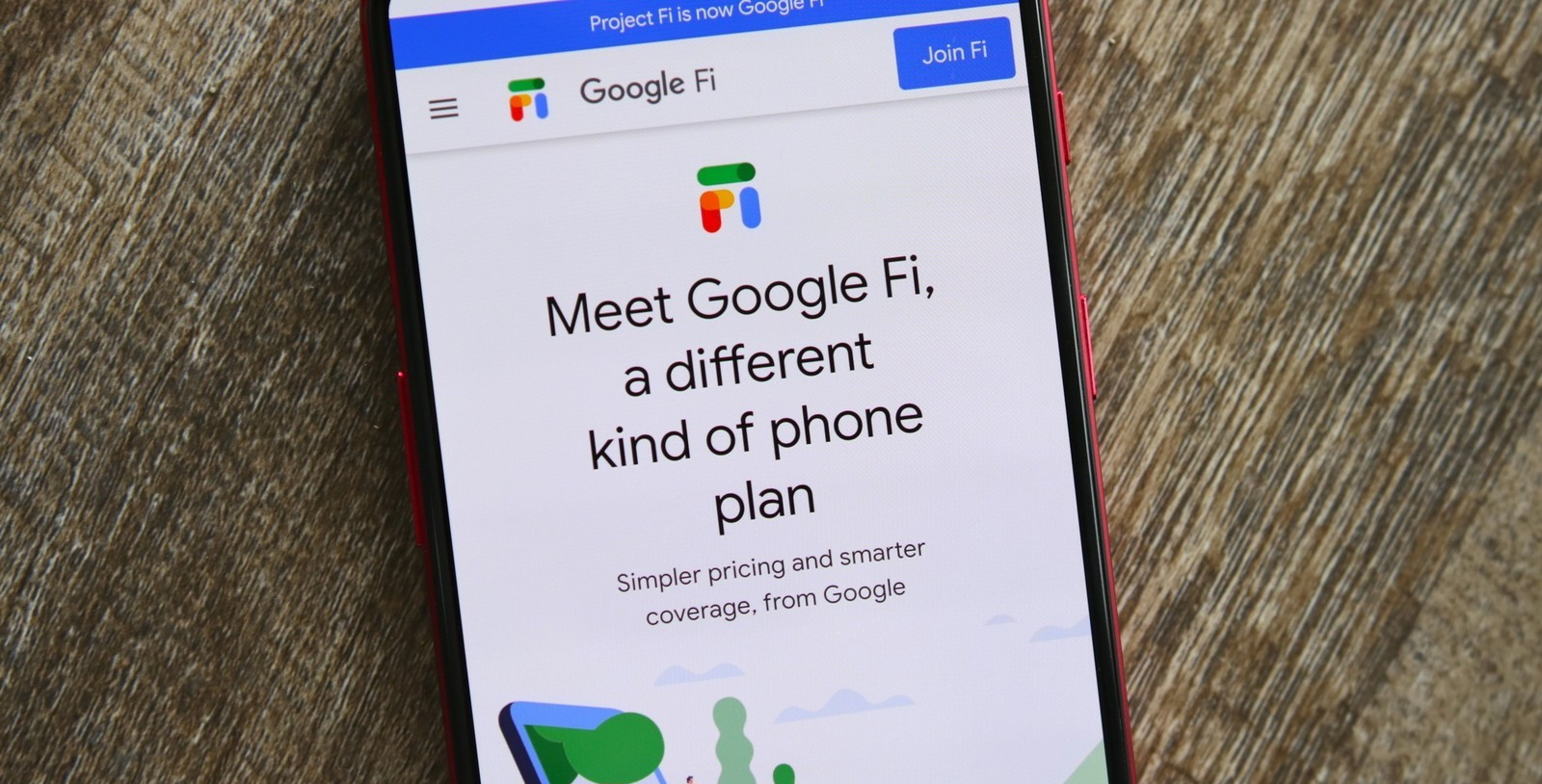
Google has a new unit that you can call a telecom company. Google Fi, the new name for Project Fi, is a mobile virtual network operator (MVNO) – “a wireless communications services provider that does not own the wireless network infrastructure over which it provides services to its customers”. In U.S., it offers subscribers a great deal when you consider what leading telecom companies charge.

Google’s wireless communications service Project Fi expanded its capabilities Wednesday, now offering its network to the majority of Androids and iPhones—a huge expansion considering the service was previously only available on Google’s own Nexus and Pixel phones, plus a handful of Android devices.

To make its growth official, the mobile virtual network operator (MVNO) service is rebranding as Google Fi. Under the new name, the three-year-old company will continue to offer subscribers unlimited talk and text for $20 per month with an additional $10 per gigabit of data used.

This deal is now available to phones running on Android 7.0 or higher with LTE bands 2 and 4, Venture Beat reports. For Apple, the device must have iOS 11 or higher, and it’s only available in beta through the Google Fi iOS app.

Nigeria is many years before MVNO but when that moment finally comes, you may be surprised that companies like Google may be interested. It would not hurt the real players like MTN and Glo since their infrastructures would still power whatever Google has in mind; Google will surely compensate them.

Data connectivity

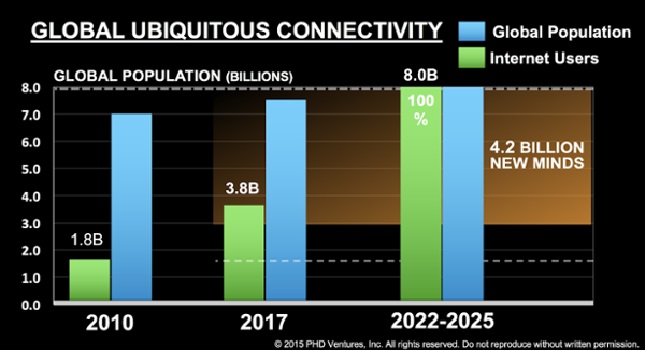
No matter how you look at it, immersive connectivity is on the way. I had predicted 2022 and it is looking real. This explains why you should be building internet-based businesses despite the present state of things. Yes, our digital sector will grow at exponential pace when that moment arrives.

The Implications

I predict that Google Fi mobile service plan would be the most promising service plan in Africa, helping telecom operators to move from prepaid services to contract-based services [that would make them more profitable removing the OTT challenges]. Because in near future, feature phones would fade and smartphones would take over, providing opportunity for Google Fi. Yes, it is possible that your mobile service can be infused into Android – the Google-owned mobile operating system – making it easier to sync phone software and billing for wireless services.

Simply, if your mobile operator is Google, your Android could as well collect the monthly plan payments. Besides, it is going to be possible to be phone-bill free if you activate a feature in Android which would enable Google to send adverts to you. There is no reason why you should not be building on the web – immersive connectivity is just around the corner.

Indigenous Knowledge in Africa and when Egyptians and Ethiopians were Category-King Innovators

0

When the piece on “top-grade education” ran, many expressed interests on understanding at deeper level some historical elements on indigenous knowledge and technology in Africa. Prof Gloria Emeagwali left a comment which seeded a debate on how a continent with a pragmatic scientific paradigm lost its ways.

Speaking about ancient Egypt, Homer, in the Odyssey iv. p.231 (circa 850BCE) points out that Egyptian doctors ‘are the first scientists of the world.’ Pythagoras, born around 558BCE, studied for 22 years in Egypt.The Hippocratic classification of head wounds was derived from the Edwin Smith papyrus – 2,500 years after it was first written by the ancient Africans – by Hippocrates (460 – 377BCE). Hippocrates was inspired by the books in the library of the Temple of Imhotep.

Isocrates (436-338BCE) testified on the Egyptian influence on Pythagoras. For Aristotle, Egypt was the cradle of maths. See his Metaphysics.

A great deal of Plato’s references were of Egyptian origin. See Plato’s, Timaeus. Plato also studied in Egypt in the era before the occupation of Egypt by the Macedonian, Alexander the Great. For three thousand years before that, Egypt built up its Indigenous Knowledge base.

Many asked questions on LinkedIn on the early virtuoso scientific advancements Africans had recorded. Prof has shared a document (Herodotus, PDF) that could help for deeper insights on this. I have extracted some parts below. Largely, Egyptians and Ethiopians were category-king inventors and innovators before they all went into paralyses where people that created scientific wonders are now struggling on how to purify water for drinking.

. So that if there were snow in that part of the world, there would necessarily be rain too; thirdly, the natives are black because of the hot climate.  Again, hawks and swallows remain throughout the year, and cranes migrate thither in winter to escape the cold weather of Scythia.

That, at least, is how I should explain the obvious impossibility of a dove using the language of men. As to the bird being black, they merely signify by this that the woman was an Egyptian. It is certainly true that the oracles at Thebes and Dodona are similar in character. Another form of divination – by the inspection of sacrificial victims – also came from Egypt.

The Egyptians did, how­ ever, say that they thought the original Colchians were men from Sesostris’ army. My own idea on the subject was based first on the fact that they have black skins and woolly hair (not that that amounts to much, as other nations have the same), and secondly, and more especially, on the fact that the Colchians, the Egyptians, and the Ethiopians are the only races which from ancient times have practised circumcision.”


Great Britain du

Goodbye GSM

0

I recently attended a conference on 5G and there was an interesting concern raised about the impact of re-farming older technologies like GSM on consumers who may be unwilling to switch onto newer generations. Yet in developing countries like Nigeria, majority of the consumers still rely on the 2G network, especially in the rural areas. If the global re-farming continues, what would then be the fate of these consumers who still depend on legacy phones with the capability of making and receiving voice calls only? As mentioned in my previous piece, affordability of smartphones remains a huge barrier limiting the adoption of 3G and 4G services in these countries. In sub-Saharan Africa, basic phones account for about 74% of the total handsets while smart phones represent 22% of mobile devices, according to a GSMA study in 2015. Would bodies like ITU advocate for the global re-farming of 2G within a time frame as they did for the 700MHz band?

The real motivation behind re-farming older technologies like GSM is to free up spectrum for the newer technologies like 4G and 5G. Prior to the deployment of 4G, voice calls were made using the traditional GSM network but that seems to be changing with the emergence of VoLTE. In this piece, I give a summary of the quiet revolution happening within various parts of the globe regarding the re-farming of older technologies.

In countries in East Asia like Japan, Singapore, South Korea, there is no 2G available presently and where available, it is of limited service. This move is intended to free up spectrum and provide capacity for the majority of the consumers who depend on 3G and 4G services. In these countries, it makes business sense to axe the 2G network.

In North America, it has been anticipated that as of 2020, all 2G networks will be phased out. In-fact, as of 1st Jan 2017, AT&T reportedly shut down its legacy 2G network while Verizon and Tmobile plan to shut their 2G network by 2019 and 2020 respectively.

It’s no different in Australia where three operators (Vodafone, Telstra and Optus) have reportedly made plans to shut their 2G networks. Also, in order to position Australia as a leader within the 5G industry, the Australia Communications and Media Authority (ACMA) has responded by anticipating the reframing of the 900MHz for 4G services.

Mobile Economy – Sub Saharan Africa (source: GSMA)

Whereas in Europe, it is a bit of a mixed bag there, with some operators making plans to shut down 3G network whilst some prefer to axe the 2G network instead. For instance, Telenor Norway plan to shut down its 3G network by 2020 because of the dependence of machine to machine devices on the 2G network. Whereas, in the UK, EE, for instance, has announced plans to axe the 3G and some part of the 2G network to upgrade the 4G network. However, EE is not re-farming all of its 2G network in order to cater to the needs of consumers still reliant on such services. In contrast, Sunrise, a Swiss operator has noted plans to shut down its 2G network by the end of this year.

In Africa, 2G accounts for approximately half of all the mobile connections. For instance, in Nigeria, GSM still represents 99.7% of the market share in comparison with other cellular technologies. This means that a large number of subscribers are still heavily dependent on the legacy network.

We see that different markets require different strategies in dealing with the demand for spectrum for the newer technologies. Whereas, in places like East Asia, North America and Australia, it makes perfect sense and seems straightforward to switch off their 2G networks. In places like Africa, from the limited information available to me, I have not heard of any attempt to switch off 2G networks. As mentioned previously, a large number of the customer base in the continent still rely on the legacy network and own basic phones.

As mobile operators continue to deploy their 4G network within Africa, re-farming GSM may soon become the cost saving option left for telcos seeking spectrum for advanced technologies. When this becomes the case, I hope that a long term strategy would be adopted to encourage subscribers to transit from 2G onto advanced generations. The possibility of attractive upgrade offers marketed using the right advertising channels may help persuade some subscribers to make the much needed transition. Education would also prove vital here, in persuading senior subscribers due to their conservative nature in adopting technology as well as in addressing digital illiteracy regarding the use of smartphones. Affordability also needs to be addressed in this instance to address the ownership of smart phones.

According to Mckinsey and GSMA, the rural population in developing countries account for 58% of the un-connected global population. And Africa seems to record the widest digital divide in the world. The wave of global re-farming is happening and may soon hit the continent of Africa. I hope that authorities take note and prepare for this silent revolution so that the already wide digital divide would not become even more widened.

Realities of Digital Monopolies: One Facebook is Better than 5 Different Facebooks

0

I wrote recently in Harvard Business Review that the age of winner-takes-all has made it nearly impossible for most emerging companies to have any chance against the ICT utilities like Google, Facebook and Amazon. Because of the inherent platform benefits in which a key feature is having many users, winning against these entities could be extremely challenging locally since they have the users already. So, even after cloning or making a better Facebook (technically), you have not done anything of value if there is no person there.

In a piece in Quartz newsletter, Allison Shrager explains how the dominant digital monopolies have produced different results for consumers: yes, Facebook is not charging us “more” (financially) if it ever charged despite being the category-king in its sector. Google has not taken the power of its search dominance to demand that everyone pays before we can hit that search button. Simply, it may not really hurt, to a large extent, if we have these digital entities despite them being monopolies!

Of course, there are many other impacts but on pure consumer money in the wallets, the impacts of digital monopolies are different from the traditional industrial monopolies that dominated markets and increased prices to the chagrin of regulators.

The specter of monopolies and the threat of concentrated market power are getting renewed attention in the age of Amazon and once-unthinkable massive corporate mergers. Market concentration is being blamed for almost everything that is wrong today, from stagnating wages to the rise of fascism.

There are now fewer firms in the US economy since the 1980s, and they are big. The Council of Economic Advisors estimates market concentration has increased in 75% of industries since the 1990s. The dominance of a few firms conjures images of robber barons from the gilded age, squeezing everyone from consumers to workers. But this is a new gilded age, powered by a more interconnected and global economy. As markets change, so might the ideal structure of companies. With that change comes a new understanding of monopoly power, and a reappraisal of its costs, and even possible benefits.

Traditionally, the problem with monopolies is they stick it to consumers. While market concentration has increased since the 1980s, prices on many goods have not. There are fewer airlines, but the prices of flights (after we adjust for inflation) have fallen. Prices on many consumer goods, like washing machines, food, TVs, and electronics (once you control for quality), have also become more affordable, even as there are fewer manufacturers.

Big firms can also limit competition. It’s true that there are now fewer startups and less entrepreneurship, a trend that started in the 1980s and accelerated after 2000. But if the economy were less competitive, you’d expect firms would become less productive, and the opposite is true. One study estimates that the most concentrated industries are the ones where productivity increased the most. It could be the rewards of success: The firms that innovated may have become more productive and taken a large share of the market.

Market concentration may cause new problems, however. We need the right regulations to solve these new problems, but old solutions could make them worse by undermining how firms innovate and compete in the global market. If the issue is a few big companies, the solution isn’t necessarily more smaller companies. After all, it is not clear the economy, or consumers, would be any better off with five different Facebooks. —Allison Shrager

Simply, for the fact that having many people in Facebook makes it better, and Facebook has not increased prices, there is a good argument that having one Facebook is far better than having 5 different Facebooks. That is the reality of digital monopolies for users – concentration of power may not necessarily be extremely harmful to user experiences and wallets!

The question then is thus: which country would produce the winner per category since largely one winner typical exists. And when that winner triumphs, sucking all the financial benefits from all, how could nations handle the imbalance (South Africa has some ideas). For all purposes, global economy has been redesigned by modern digital technologies: Africa needs to update its economic tools to capture the new realities.