I just finished an hour-long interview with the International Monetary Fund’s quarterly magazine Finance & Development. This particular interview focused on talent and Africa and how corporations and governments are deepening human capital capabilities. Get the next issue of IMF’s Finance & Development.
Before electronics engineering, we were bankers (really good one). And before doctoral in engineering, I had one in Finance! My research had focused on labour, trade and currency. I wrote the lead paper for African Union single currency for the AU Congress. It was magical as I presented before the AU Congress few days after I defended a PhD dissertation on electronics; currency-welfare modeling in the night, electronics in the day.
My thesis is that Africa would be better served by having prior-convergence of regional economies before a continental-level economic integration with single currency. This is necessary to avoid trade shocks which would trigger severe welfare losses across African countries. Since the structural natures of our economies are heterogeneous [Nigeria is oil, Rwanda is something else], it would be challenging to have any supranational central bank that can manage deficits effectively.
Today, our national central banks have the leverage to devalue currencies at will but under an integrated continent, that power moves to a supranational bank which means that if Nigeria is experiencing crude oil shocks, all countries in West Africa would immediately feel the pain because the economy of Nigeria is a big component of the region’s.
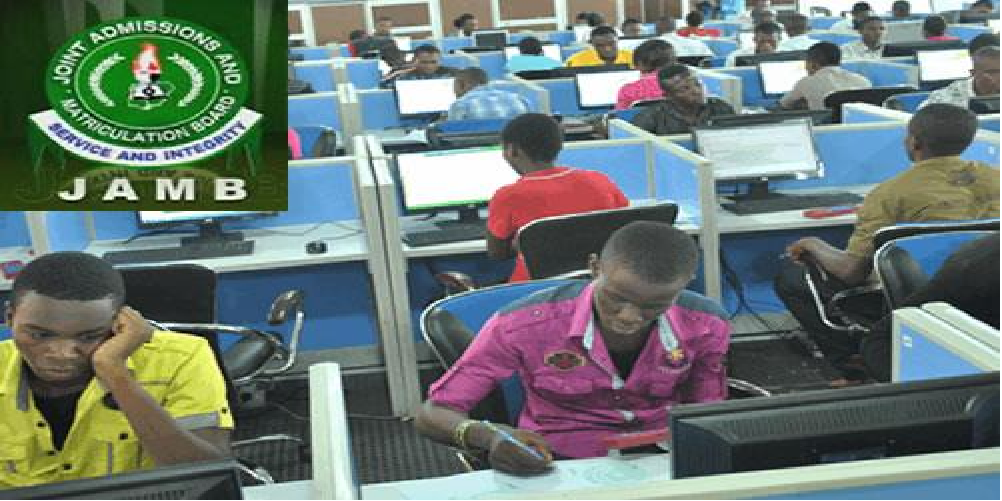
The Nigerian Government has done well – it approved the downward review of examination registration fees. This is victory for us as I was the first person that pushed that Nigeria was making a mistake of over-invoicing its future by making these exams inaccessible to its poorest citizens. Yes, while many cheered that JAMB was working, by sending “profit” money to the national treasury, I saw it differently and asked government to freeze that. Sure, we commend the current registrar of JAMB for improving productivity to have saved operational costs. Notwithstanding, his brilliance should reward our young people and not the central bank.
Mixed reactions have trailed the Federal Government’s review of fees for the Unified Tertiary Matriculation Examination (UTME), Senior Secondary Certificate Examination(SSCE), and Basic Education Certificate Examination (BECE).
Some stakeholders, who spoke to the News Agency of Nigeria (NAN) in Abuja on Thursday, commended the gesture and urged the government to overhaul the education sector.
NAN reports that the Federal Executive Council (FEC) on Wednesday approved the downward review of the examination registration fees which will take effect from January 2019.
The Minister of Education, Adamu Adamu, who announced the reduction after the FEC’s meeting said the ?Joint Admission Matriculation Board (JAMB) fees for UTME had been reduced from N5,000 to N3,500
Specifically on JAMB, I wrote in September 2017 and followed on other posts. I made it clear that JAMB remitting money to the Federal Government was unethical and should be reversed. Education remains the only gift Nigeria gives its poorer citizens with the extensive public subsidization. If we take it away, social mobility would stall for generations. As we waged this campaign, a member of the National Assembly reached out to us and we provided some insights as Brief. This week, the rest is history: government has reduced many of the exam fees.
Nigerians cheered. JAMB (Joint Admissions and Matriculation Board) had remitted N5 billion to the federal government. We saw it as government working. Glory, even JAMB can remit money to CBN for the good of the Nigerian people.
The agency also said it had so far remitted more than N5 billion to government, the highest ever in the 40 years of its existence.
A statement signed by JAMB’s Head of Public Relations, Fabian Benjamin, said in Abuja on Sunday.
Unfortunately, that does not make it right. When JAMB charges more than it needs to run its exams into our tertiary institutions in Nigeria, it hurts the future of Nigeria. I do not understand the basis for JAMB to be remitting money to the federal government.
Simply, let the exams charge what they need; they cannot be profit-making entities. Nigeria needs its young people to have access to our highly subsidized public tertiary institutions; the exams should not become obstacles. Many of us benefited from this generosity of the Nigerian nation: my undergraduate tuition in 1998 in FUTO was N50 (less than a dollar). So, if you can get in, you would likely get out. Making getting in easier (financially) opens doors for poorer families.
As Boko Haram now deploys sophisticated drones to fight Nigerian military, I am calling the Service Chiefs (Army, Navy and Air Force) to seek help from the Nigerian technology community. For men who despise education to have adopted drones indicates a new parallel challenge has arisen. The Army needs to convene immediately a military-tech focused conference with local elements where our technologists would come to strategize how to win this war. This is a pivotal moment now that the Army has confirmed what many had mooted that Boko Haram has above-optimal intelligence, after looking at the precision it has battled our warriors recently.
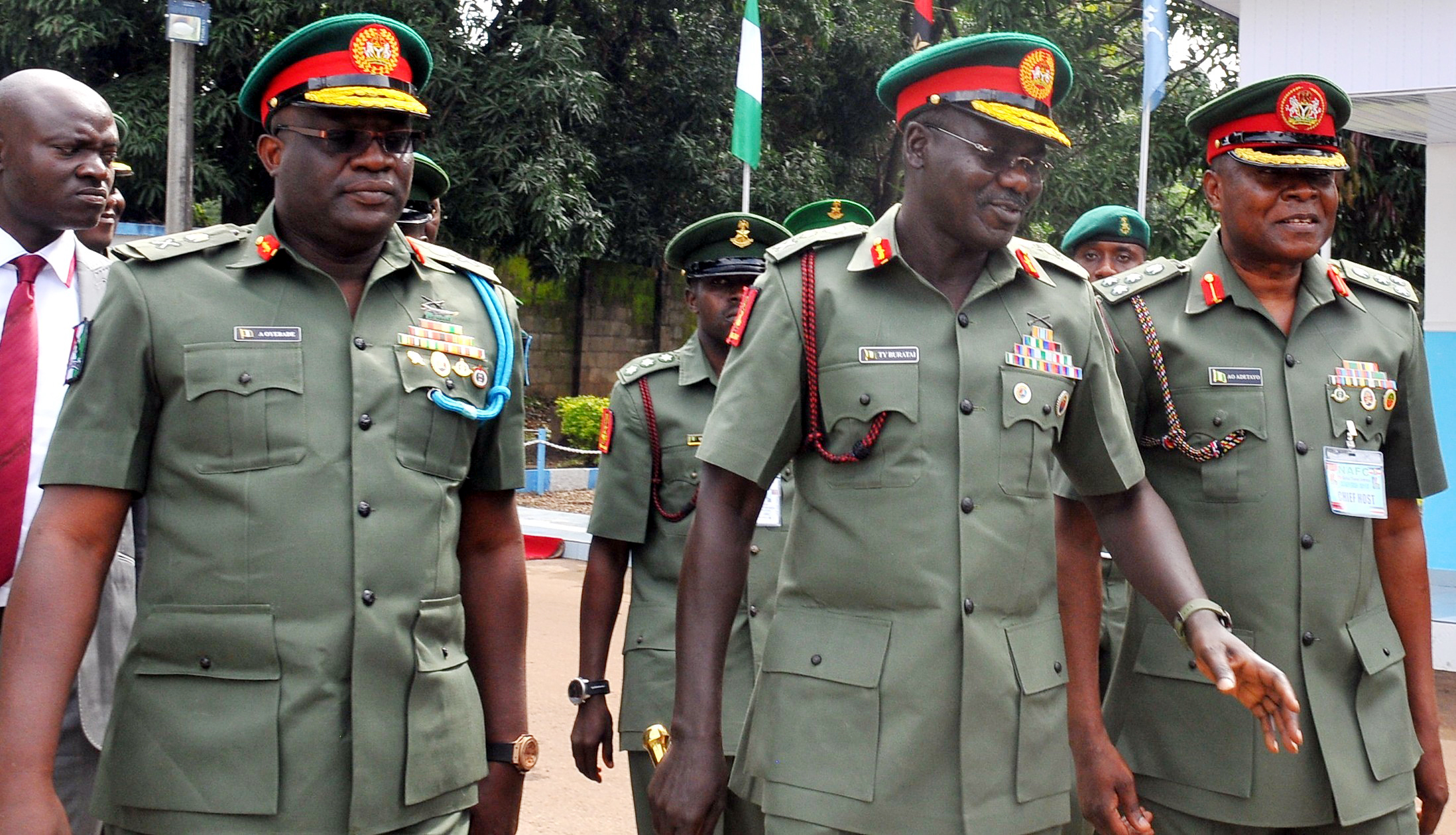
A sudden rise in Boko Haram attacks over the last three months has forced the Nigerian military to fine-tune its counter-insurgency operations in the war-ravaged North-east, Nigeria’s Chief of Army Staff, Tukur Buratai said on Wednesday.
The army chief also said the terrorists now use drones and foreign fighters in their operations.
Mr Buratai described the exploits of the jihadists as “daring,” saying it threatened to erode the previously recorded achievements in the counter-terrorism efforts.
Boko Haram has carried out successful, back-to-back attacks on Nigerian military bases since July, leaving heavy personnel and equipment losses in their wake.
Mr Buratai lamented the recent attack on Nigerian Army 157 Task Force Battalion in Metele, Borno State, on November 18. At least 118 soldiers, includingthe battalion’s commander, were killed in the attack, PREMIUM TIMES learnt from top military sources, who also confirmed at least 153 missing in action. Mr Buratai, however, says only 23 soldiers were killed in the Metele attack.
The army chief said the attacks have put the military’s resolve to test, but assured the insurgency would be uprooted before long.
We need to improve our intelligence – the tech community in the nation can assist our military on making that possible. Yes, this is now transitioning into a tech war with Boko Haram using drones. The Army needs to seek help from the tech community which has truly advanced in many ways, and can provide local capabilities necessary to help the nation overcome the challenge.
Update:Let me quote this post where Microsoft just won a major contract from the U.S. military to help soldiers in battle.
Microsoft is readying its HoloLens augmented reality tech for combat. The company just won a $480 million military contract with the U.S. government to bring AR headset tech into the weapons repertoire of American soldiers.
The two-year contract may result in follow-on orders of more than 100,000 headsets according to documentation describing the bidding process. One of the contract’s tag lines for the AR tech seems to be its ability to enable “25 bloodless battles before the 1st battle,” suggesting that actual combat training is going to be an essential aspect of the AR headset capabilities.
Microsoft HoloLens
[Please do not see this post as political: I know many see all from politics. This is simply an intellectual conversation on a very serious national issue.]
Many things about the war against Boko Haram in the north east remain fuzzy; but what is now clear is that those terrorists aren’t depleting; they are very much alive, as potent and deadly as you can imagine.
And we cannot live in denials forever, or wishing the war away; a change in strategy is needed, and not the normal, traditional military strategizing and re-strategezing, an infusion and incorporation of something unconventional this time.
If Boko Haram whose training regiment is questionable could deploy technology, with the level of sophistication and precision on the intended targets; I do not expect anything less from the Nigerian military and its allies.
Again, it’s difficult to discuss the successes and failures of this prolonged war campaign without dabbling into politics; of course there are many things that cannot be said here, and some of them remain unexplained.
There are conflicting issues and competing interests here and there, but we can no longer run this campaign like a secret cult, a national buy in and ownership is not negotiable anymore.
The casualties are too many, both the accounted and unaccounted ones; time to bring in everyone who has something to contribute, in order to end this carnage.
How do you move from where you are and move into the next level? In this speech, I explain. It is about accumulating capabilities and executing at scale. If you have not listened to this video, do so now. It encapsulates many elements on how to transition in careers.
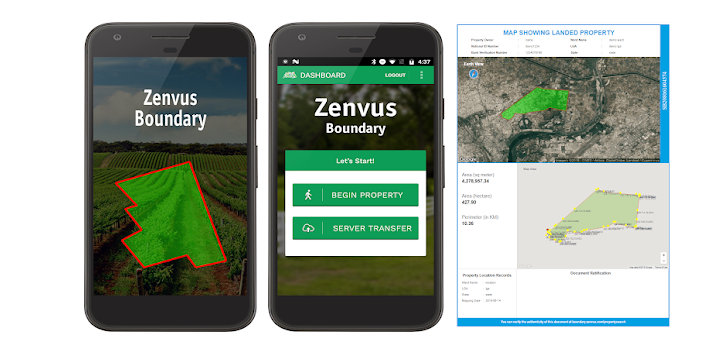
We met a critical metric last week on Zenvus Boundary. Our Enterprise partners (sign up here) are doing great jobs. To motivate them to continue to invest on growth, we are boosting Enterprise partner upkeeps from 70% to 90% starting immediately. This means that partners will keep 90% of all revenues from Zenvus Boundary while only 10% (instead of the previous 30%) would be remitted to Zenvus Boundary for providing the technology and storage. This change takes effect immediately.
We are happy to share with our partners. As we continue to scale this service across Africa, we can reach a level where we would consider even lesser percentage. We hope that continues quicker.
For more on how to join and become a Zenvus Boundary partner, click this link. You can also email zenvus@fasmicro.com .