DD
MM
YYYY

PAGES

DD
MM
YYYY

spot_img

PAGES

Home Blog Page 7034

Prof Ndubuisi Ekekwe Joins Kobo360 As An Independent Director

2

Ndubuisi Ekekwe had since resigned from Kobo360 board.

World Bank IFC announced $6 million equity investment in Kobo360 few hours ago. It is a great party here for KoboSquad, the best logistics team yet. Kobo is building a Global Logistics Operating system (G-LOS) to transform the logistics sector beginning from Africa. Personally, it is also a special moment for me as I join Kobo360 as an Independent Director and (…).

To Kobo Founders, World Bank IFC, Y Combinator, Other Investors, Fellow Kobo Board Members, Staff and Partners, thank you.

Kobo360 is a tech-enabled digital logistics platform that aggregates end-to-end haulage operations to help cargo owners, truck owners and drivers, and cargo recipients to achieve an efficient supply chain framework. Through an all-in-one robust logistics ecosystem, Kobo uses big data and technology to reduce logistics frictions, empowering rural farmers to earn more by reducing farm wastages and helping manufacturers of all sizes to find new markets. Kobo enables unprecedented efficiency and cost reduction in the supply chain, providing 360-visibility while delivering products of all sizes safely, on time and in full. The Kobo mission is to build the Global Logistics Operating System that will power trade and commerce across Africa and Emerging Markets.

To my fans here, I also invite you to the Kobo360 community. If you own a truck, OR you know someone that owns one or many, OR someone that has money to invest in a truck (and just relax for guaranteed monthly profit), reach out to my community manager. Kobo has something that would deliver great Christmas and Sallah every day. Yes, see our KoboWIN prospectus before you make that other investment.

Kobo: Think Logistics. Think Kobo.

Nigeria e-Logistics Pioneer Kobo360 Raises $6Million Equity from World Bank IFC

0

Ndubuisi Ekekwe had since resigned from Kobo360 board.

IFC, a member of the World Bank Group, today announced a $6 million equity investment in Kobo360 Inc, a tech-enabled e-logistics platform that connects the supply of trucks with the demand for transportation services by cargo owners in Nigeria. The investment was led by the IFC with participation from others including Silicon Valley investors WTI, YCombinator , and African institutional investors Cardinal Stone Partners, Chandaria Capital, and TLcom.

The company improves access to long-haul road freight services for large and small enterprises in the rapidly growing agribusiness, fast moving consumer goods, and manufacturing sectors. The company currently has 5,000 trucks empaneled on its platform, from over 600 small fleet owners, serving some of the largest enterprises in Nigeria.
.
“IFC is committed to supporting the digital economy and young entrepreneurs in Nigeria and across Africa. IFC’s investment in Kobo demonstrates how disruptive technologies can enhance the development of key sectors and contribute to Nigeria’s economic diversification. This is an innovative startup that is making company operations more efficient and lowering transport costs,” said Philippe Le Houérou, CEO of IFC.

Efficient logistics is a core component to growth, transportation and mobility feeds into levels of output, employment and income within a national economy accounting for 6-25 percent of GDP in developed countries. Nigerian road freight accounts for 99 percent of long-haul transportation, a sector plagued by inefficiencies including low utilization of truck assets, low visibility on truck movement, lack of pricing transparency, and insufficient supply of trucks. Trips can take more than three times as long and cost twice the price in Nigeria compared with similar distance routes in the US. Kobo app solves these challenges and inefficiencies.

Obi Ozor, CEO and Founder of Kobo said “We are excited to have our new investors to support us in redesigning transportation and logistics in Africa, and across Emerging Markets, by building a Global Logistics Operating System (G-LOS) to power new frontiers in trade and commerce. Our motivation remains to aggressively reduce logistics frictions for large enterprises and SMEs, and connect new markets, and in the process unlock better wellbeing and opportunities across communities”

The transaction was announced today by Le Houérou and Ozor on the eve of the opening of the Next 100 African Starups Initiative. The program, launched in partnership with the Egyptian Ministry of Investment and International Cooperation and IFC, spotlights more than 100 promising African start-ups that will participate in the Africa 2018 Forum being held in Sharm El-Sheikh, Egypt from December 8-10. Kobo is among the successful startups sharing its experiences with even earlier stage startups, alongside international investors and financial institutions, government officials, and policymakers from the African continent.

Kobo is the latest addition to IFC’s growing venture capital portfolio of e-mobility startups in frontier markets including BlackBuck (India), Full Truck Alliance (China), Loggi (Brazil), Mandae (Brazil), PickMe (Sri Lanka). IFC supports the mobile technology sector to help promote social inclusion and business growth. Over the past three years, IFC has invested over $1.5 billion in telecommunication, technology, and startup companies globally.

About IFC
IFC—a sister organization of the World Bank and member of the World Bank Group—is the largest global development institution focused on the private sector in emerging markets. We work with more than 2,000 businesses worldwide, using our capital, expertise, and influence to create markets and opportunities in the toughest areas of the world. In fiscal year 2018, we delivered more than $23 billion in long-term financing for developing countries, leveraging the power of the private sector to end extreme poverty and boost shared prosperity. For more information, visit www.ifc.org

Kobo360
Kobo360 is a tech-enabled digital logistics platform that aggregates end-to-end haulage operations to help cargo owners, truck owners and drivers, and cargo recipients to achieve an efficient supply chain framework. Through an all-in-one robust logistics ecosystem, Kobo uses big data and technology to reduce logistics frictions, empowering rural farmers to earn more by reducing farm wastages and helping manufacturers of all sizes to find new markets. Kobo enables unprecedented efficiency and cost reduction in the supply chain, providing 360-visibility while delivering products of all sizes safely, on time and in full. The Kobo mission is to build the Global Logistics Operating System that will power trade and commerce across Africa and Emerging Markets.

Source: IFC

How to Adapt and Thrive in the Next Tech Invasion (Which is Pretty Soon)

0

by Demi Oye

Fighting change is like fighting the wave of tides. This situation is how it seemed about five years ago when tech was changing the world rapidly (well, it still is today).  Since it was good, there was no reason to fight it anymore. Who doesn’t enjoy being able to see the face of a loved one at a far end of the world with their smartphone? Who doesn’t enjoy being able to call up a car to pick them with their smartphones?

Again, change came and fighting it off wasn’t an option. Tech evolved over and over, and it began to feel confusing. From new phones to new apps, to several new gadgets, users couldn’t get just enough. It was nice to have a wide range of choices is cool, but the brands became somewhat confusing.

Brace yourselves; it’s going to get even more confusing, as tech companies are in constant competition. This article would teach you how to adapt and thrive in the next tech invasion, as you cannot run from it. It’s coming pretty soon, so the earlier you get informed on how best to embrace it, the better.

In the next tech invasion, buying devices or subscribing to tech might be a lot complicated than buying from a brand because it is known. As tech is evolving, the industry is becoming ungovernable and users must guard themselves.

Tips to help users adapt and thrive in the next tech invasion

Sticking to renowned brands vs. Going for the new ones

While this is a tip, it’s also a way to have users get their thinking caps on. Initially, the simple advice was to stick to well-known names; “Get your devices from Apple,” “services from Google are the best” and “Amazon is a name you can trust.” That advice could be boldly given some four to five years back, as you could get the best of these brands.

However, things have changed today, and even the government of the United States can hardly control the activities of these companies. This situation makes it dicey to bank on them. Since they are uncontrollable (and it would get worse with the next tech invasion), users want to avoid a brand that takes advantage of them.  While this is not an attempt to speak negatively of any company, it’s a call for users to watch out.

Look past the brand name

The first thing many users do is look at the gadget/product. For a phone, they look at the camera, the battery life and maybe the operating system. With the next tech invasion, there’s more to look out for. Look at the business model.  Gadgets, especially phones have become ubiquitous, and almost anything works for starters. This situation leaves users confused on the choices to make, and it’s about to get worse. It’s time to look past the products and look out for things that last like the ethics, business model, message, morals, and branding of the company. If you want to figure out a brand that carries dangers in this new age, you better look out for its trade.

Do not sell your “user’s choice” to the giants

Over the years, it’s been the same set of famous companies ruling the tech world. The known names have been Apple, Facebook, Microsoft, Amazon, and Google. It hasn’t changed all these years, and it is likely to remain with the next tech invasion. The fact that their stocks keep rising makes the voice of the consumer unheard and the industry uncurbed by the government.

The choice is that of every consumer now because tech companies are indispensable. A strategy to cope with the next tech invasion is to prevent these companies from taking advantage of you in subtle ways. Whenever you get a chance to avoid the giants, do so. Do not stick to a brand because its big; weigh its pros and cons. An example would be choosing Spotify over Apple Music. Spotify does better than Apple Music on every front. However, some users would stick to Apple Music (just because it’s from Apple). With the next tech invasion, consumers have to help spread the wealth even to smaller companies that give good value for money. There are several other examples, which include the use of Dropbox and not merely Google or Apple. 

Conclusion

Here’s the deal; before you adopt a brand for any reason, ensure you slow down and think. The government cannot seem to curb the excesses in the tech industry, but users can. No matter what happens, don’t jump at innovations, they could come back at you. Dear user, the message is clear; take it slow.

The Next 100 African Startup List – World Bank IFC

0

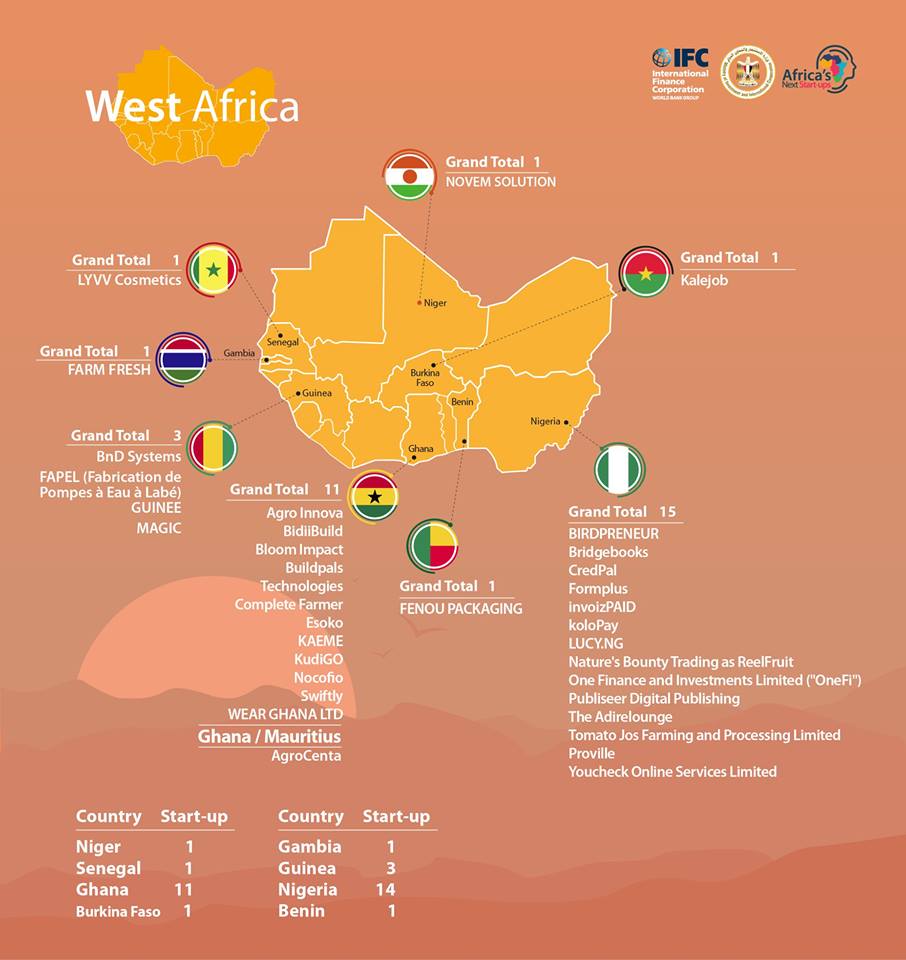
Yesterday, the World Bank private investing arm, International Finance Corporation (IFC), announced the winners of the Next 100 African Startup initiative. The entities were also invited to Africa 2018 Forum in Sharm El Sheikh, Egypt. Find below the West African reps (for other regions, click here).


Zenvus Speaks to UN Environment on Precision Farming

0

I just finished an interview with the United Nations Environment Programme, the division of the United Nations which focuses on protecting our environment. The interview would appear in coming days on UN-managed #SolveDifferent website.

To provide leadership and encourage partnership in caring for the environment by inspiring, informing, and enabling nations and peoples to improve their quality of life without compromising that of future generations.

Largely, even as the world unleashes technologies in agriculture, it is very important that our environment and biodiversity are protected. Simply, technologists must consider nature as they innovate.  Interestingly, there is no solution including the status quo (do nothing) that offers a better vista than precision farming on protecting the environment.

In Africa, specifically, we have seen two major challenges: reduction in land fallow periods and climate change as generation-shaping challenges. As population accelerates, fallow period has dropped from seven years to about three years making it harder for soil to replenish effectively, naturally. Combine that with paralysis from climate change, you get a double whammy for rural farmers.

But these issues can only be managed if they are measured: that is where precision farming comes in. As a pioneer of this sub-sector in Africa, Zenvus is making sure that our technologies and processes are designed with the best of nature in mind.

Zenvus is an intelligent solution for farms which uses proprietary electronic sensors to collect soil data like moisture, nutrients, pH, etc. It then sends the data to a cloud server via GSM, satellite or Wifi. Algorithms in the server analyze the data and advice farmers on farming processes. As the crops grow, the system deploys special cameras to build crop vegetative health index for detection of drought stress, pest and diseases. Our system has the capability to tell a farmer what, how, and when to farm. It has in-built GPS, compass and XL making it possible to map farm boundaries which could be useful during loan and insurance applications.