DD
MM
YYYY

PAGES

DD
MM
YYYY

spot_img

PAGES

Home Blog Page 7041

Gokada’s On-Demand Bike Hailing Service is Riding Lagosians Over Traffic

0

Lagos traffic congestion is legendary in its capacity to break people’s hearts. Few weeks ago, I had to ride a motorbike to avoid missing an important meeting in Victoria Island. A client had flown from Tokyo and I was to make a presentation. I had left Mainland on time but as usual, Lagos was trying to make me a non-dependable partner. But thank goodness, a bike saved the day. Interestingly, some young people in Nigeria have figured out that in the midst of the traffic paralysis, motorbikes could deliver value to Lagosians at scale: welcome Gokada.

Gokada is revolutionizing the way we move around in lagos making it possible to move safely without worries of traffic or exorbitant prices.

Gokada is an on-demand motorbike hailing service which makes it easy to move from one location in Lagos to another, cutting out traffic. It works with verified and trained professionals to provide repeatable and predictable customer experiences to riders. In other words, with Gokada, you know what you are getting unlike the okada bikers who are largely untrained and unpredictable on service delivery.
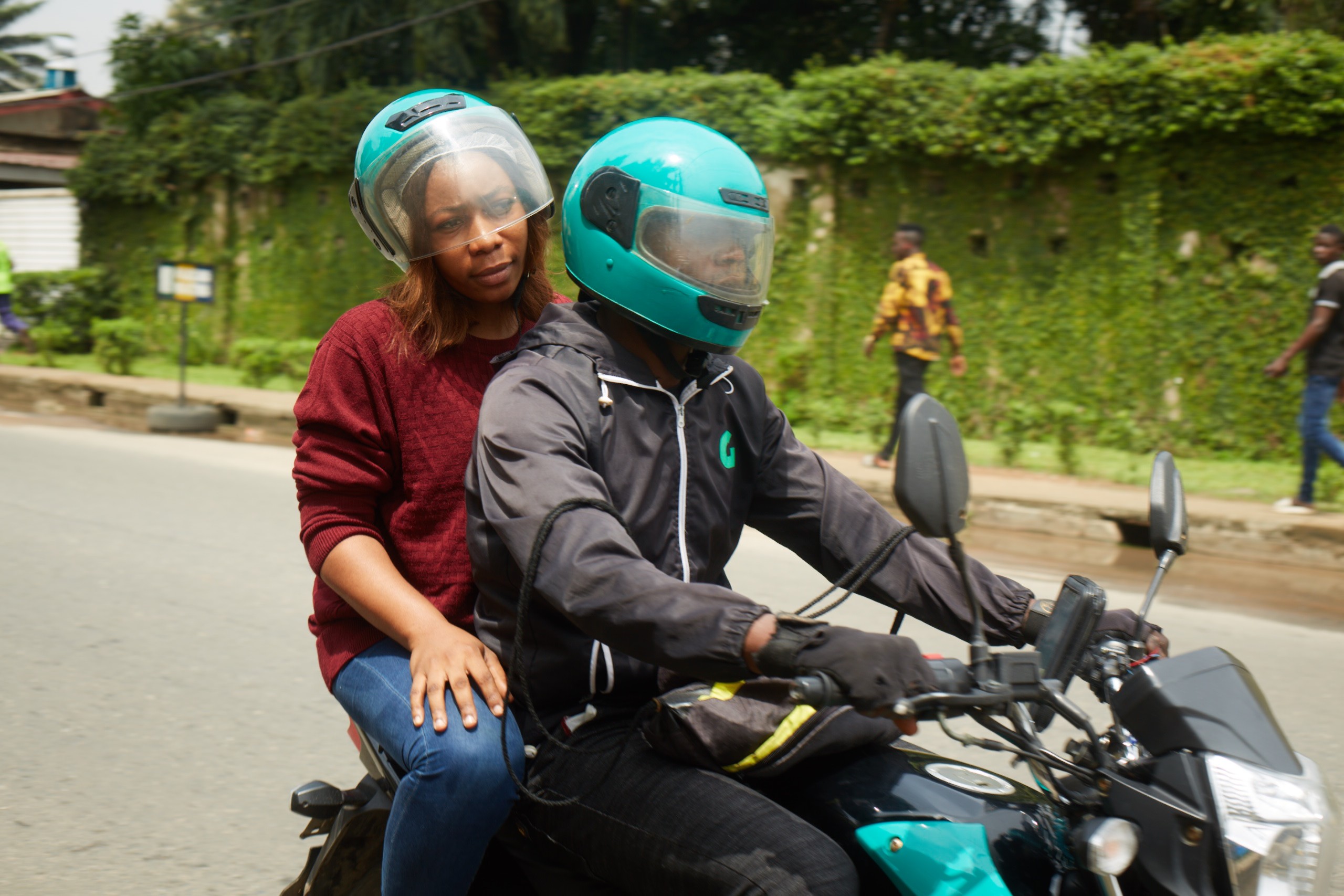
Gokada bike with a customer (source: Techcabal)

The Beginning

Okada is now a verb in Nigeria. With deteriorating transportation system, unable to cope with expanding population, okadas have mushroomed across many Nigerian cities. And Nigerians have joined the parties, as users, as they explore ways to fix transportation frictions in absence of any reliable public transportation system.

But as mobile telephony advances in Nigeria, with increasing penetration in the use of smartphones, opportunities are emerging to use technology to organize information more efficiently, reducing operational costs. That is where Gokada is playing a role: aggregating data to deliver superior experiences over what the unbranded okada riders could possibly offer. Yes, with a smartphone, one can use a phone to summon a modern okada for a journey. This is Uber-for-bike except here most of the bikes are wholly or partly owned, and maintained (or better controlled logistically) by one company. The business model in play here is aggregation construct.

Gokada Lite Cocktail Launch (source: Whazupnaija)

The trajectory of moving from cars (Uber) to bikes (Gokada) makes a lot of sense in major metropolis as technically it does not make sense to carry one person in a car, and move around town, few blocks away. Even in major American cities, companies like Uber are investing in scooters to avoid the traffic paralysis and cost of using cars. Gokada is a solid trajectory to deal with the inefficiencies of car-based hailing service especially over short distances in Nigeria. Nigerian roads are not made for scooters: our scooters are motorbikes.

Why Gokada Appeals

There are many reasons a service like Gokada will increasingly appeal to Lagosians. As it becomes obvious that Lagos will continue to entice graduates looking for greener pastures, and nothing drastic is currently on play to fix public transportation challenges, the traffic problem is expected to worsen in coming years. Gokada will have an opportunity to play a major role to manage the exacerbation of the traffic frictions. The company has the following as some reasons to use its services:

  • Beat Traffic – Spend more time doing the things you love and spend less time in traffic by requesting a Gokada ride to take you to your destination in minutes.

  • Awesome Drivers – Only a few drivers who apply make it through our world-class training programme and end up being Gokada drivers. 

  • Safety is our pride – Our drivers are verified, handpicked, tracked in real-time and specially trained to get you to your destination fast and safe. 

  • Move Around In Style – Request a ride, hop on our super cool Gokada motorbikes, put on your helmet and enjoy your ride. Pay easily with cash after your ride, no haggle.

  • Real Time Support – We are here for you, always. Our safety and support team is available to give you fast responses to your inquiries or complaints round the clock.

The Challenge Before Gokada

Gokada has a massive opportunity ahead of it but it would need to deal with building a platform business, to drive network effects. Yes, the more bikers it has in its platform, the more valuable the service would be. It is a positive continuum as the service it offers can only be useful if people do not need to wait for long to have access to a bike, to move them around. By having many bikes in the system, users will not have to wait for long.

But doing this would involve finding ways to scale on-boarding more bikes. The typical model of allowing unbranded bikes to join may be challenging since Gokada may want to control the quality of bikes in its platform at deeper level. Yes, opening it up to any biker like Uber does for drivers may be challenging.

To fix this problem, Gokada has essentially imposed a coverage area in order to manage its marginal cost (yes, that is accepted as this is a bike, not a car, and rides should be expected to be short). Sure, it does not make sense to send a bike from Oshodi to go to Lekki to pick someone and then bring that person to Jibowu. This constraint would not have been necessary if any bike, unbranded with Gokada logo, can be boarded into the platform. It then becomes possible to have many bikes across town instead of waiting for Gokada to organically grow the fleet internally.

Marginal cost is transaction and distribution cost combined. The more users and bikers the platform has, the better, as that will reduce the marginal cost for all partners in the platform. So, as this company expands, it needs to examine key enablers for its scalable advantage as it needs to have them to scale, not just in Lagos but other major towns like Abuja, Port Harcourt, Kaduna and Ibadan.

How To Install Gokada App

To use Gokada, you would need to download the app on Google Play Android or Apple iOS, and then follow the instructions.

  • – Simply open the app, enter your destination to see your fare estimate
  • – Reload the list of drivers closest to you and call the nearest driver to you.
  • – Your driver arrives in minutes and starts your trip.
  • – Your driver gets you to your destination safely and ends the trip.
  • – Pay cash to your driver. Happy riding!

They largely operate in Lagos at the moment.

Gokada continues to add areas in its coverage area

All Together

As Lagos remains the center of attraction for young graduates, the traffic problem is not going away anytime soon. Fixing that friction which affects any Lagosian is a business opportunity. At population in excess of 24 million people, Lagos has the numbers to test many business hypotheses before massive expansion to other locations in Nigeria. Deji Oduntan, the CEO of Gokada, understands that clearly when he spoke to newsmen recently, “In 5 years, Gokada will be the one-stop shop for the Nigerian consumer. Because we will be solving multiple problems once we have thousands of bikes on the road. With that kind of reach, we will be able to fix delivery and logistics, and of course transportation.” Making that happen would depend on how he manages the growth of the platform: allowing unbranded non-Gokada bikes may be challenging, but necessarily, for a big country like Nigeria, if he wants to scale.

Yet, if Gokada can access cheaper funds, from governments, financial institutions, and broad institutional investors, it can scale efficiently its present model. Focusing on the present branded model offers a huge advantage to guarantee repeatable and predictable experiences to users. To execute such a model would require capital. I am sure the company will go for any it can get.
New Business Model Powers Airtel Nigeria over Glo to Second Mobile Operator

4
Glo

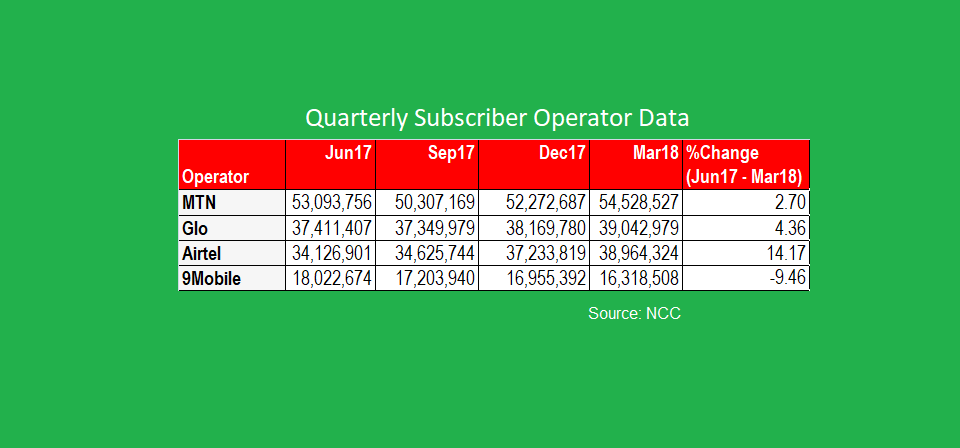
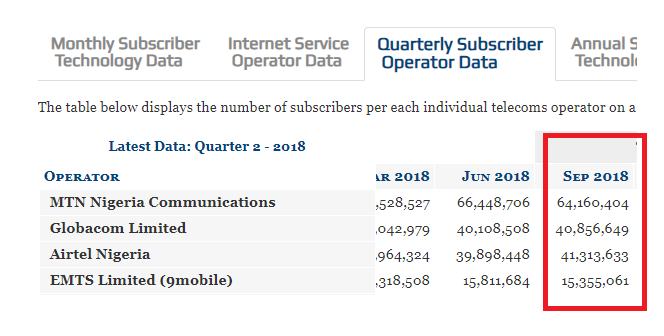
As expected, Airtel moves ahead of Glo, to become the second largest mobile operator in Nigeria, behind MTN. Besides its record margins, Airtel is also growing at the fastest rate. In the last quarter, Airtel Nigeria grew 3.55%, Glo 1.87% while MTN shrank by 3.50%, according to Nigerian Communications Commission (NCC) data.

About 2.34 million subscribers have been added to the telecommunications network, according to figures released yesterday by the Nigerian Communications Commission (NCC).

[…]

The statistics also showed an increase in Internet penetration from 104 million users in August to 105.9 million in September.Further analysis of the report showed a fierce battle between Globacom and Airtel. Globacom, which had maintained the number two spot after MTN, appeared to have been displaced.

Airtel, the statistics added, currently controls 25.6 per cent market share with 41.3 million subscribers, after MTN, which is still the biggest operator in Nigeria with 64.2 million users and 39.9 per cent market share.

Globacom within this period has 40.9 million users with 25.3 per cent market share. 9Mobile, formerly Etisalat trading as Emerging Markets Telecommunication Services Limited (EMTS) in Nigeria, which celebrates 10 years of operations in Nigeria has 15.4 million subscribers amounting to 9.5 per cent market share.

NCC data

Why Airtel Nigeria is Growing

In May 2018, I explained why Airtel Nigeria would continue to grow: asset-light business model where outsourced partners do the core infrastructure works while Airtel stays ahead running the customer experiences. Doing that means it can grow faster because it can deploy dozens of partners (who get paid only when they deliver services) working across Nigeria at the same time. It is a very risky business model as the weakest link is now the weakest delivery partner. But it has a solid positive: Airtel Nigeria can largely leave Nigeria with a briefcase, largely unhurt by any turmoil. The only thing it has is the mobile license and the logo: others carry the risks!

Many quarters ago, Airtel was seen as a company that would abandon Nigeria. In the depth of the recession, the company struggled: it had so many underperforming assets. As the nation exited recession, Airtel upgraded its business model. Today, Airtel is leaving the infrastructure business, outsourcing all to partners across Nigeria. Typically, such enables companies to conserve cash. The impact is now visible in the subscriber numbers. Provided Airtel continues to find partners, it would continue to grow at a faster rate than its peers.

[…]

The future of rural telephone and broadband services will move faster for Airtel in Nigeria since doing such will just require signing contracts with partners. The gestation period between investment and revenue is largely out because it does not have to worry about community negotiations, fees and other issues which make simple things hard in Nigeria. Airtel partners would have to deal with many of those issues.

Why Airtel Nigeria is Growing

Airtel is the most positioned brand for the 5G deployment in Nigeria. Yes, it will write the spec on what it wants; others will find money to join the party. Business model is as strategic as technology – Airtel is a real case study in Nigeria. The same company that nearly left during recession is now winning big!

Possibly, the Most Important Investment Opportunity in Northern Nigeria

0

I have travelled extensively in Northern Nigeria, and have colleagues who are deep-rooted in the local communities. As the year comes to a close, we have one conclusion: the biggest investment opportunity in Northern Nigeria over the next decade would be water resources and water related projects.

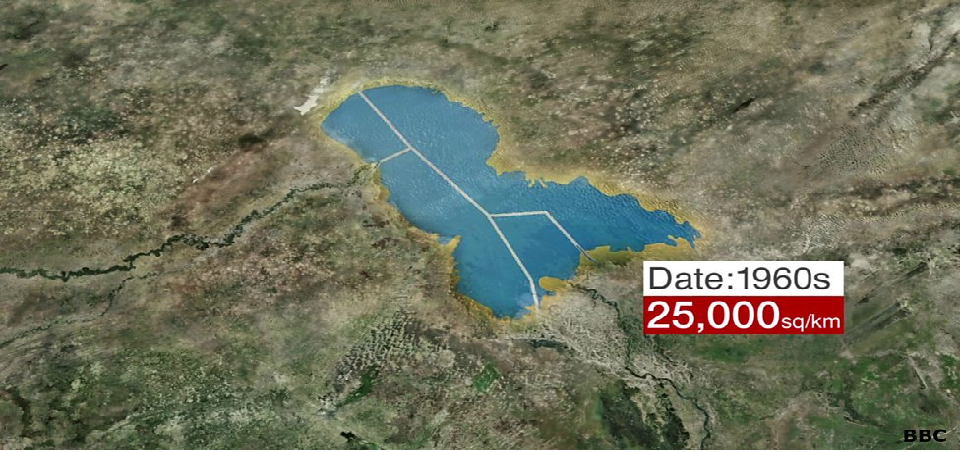
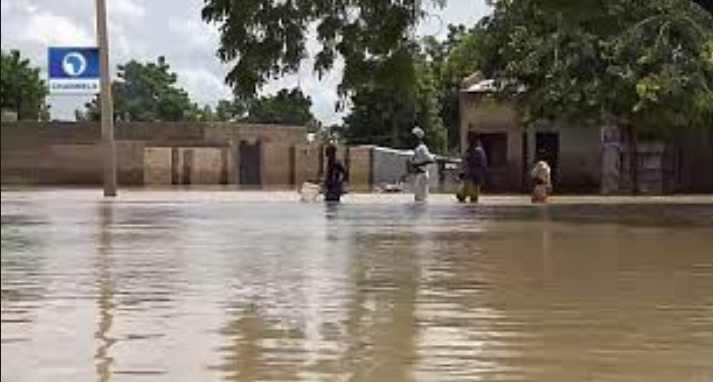
I was in Jigawa State few weeks ago when flood took over communities. Simply, the northern part of Nigeria is going through a structural redesign. Climate change is real; communities are displaced because things happen. The biggest challenge is Lake Chad which is now just 10% of its initial size. With no water, cattle are ravaged and young men are running away from the lands to Europe.

Flood in Jigawa has killed many (source: Channels)

Special Adviser to the President on Media and Publicity, Mr. Femi Adesina, said the president listed countries which benefitted immensely from the lake in its productive years as Chad, Cameroon, Niger and Nigeria.

The president, according to the statement, also noted that Lake Chad  had now shrunk to 10 per cent of its initial size as a result of the huge impact of climate change.

He was quoted as saying, “People who depended on the Lake for fishing, farming, animal husbandry, and many others, have been thrown into dire straits.

“That is one of the reasons youths now dare the Sahara Desert and the Mediterranean Sea, to seek greener pastures in Europe. But helping to recharge Lake Chad will help a great deal in curbing irregular migration.”

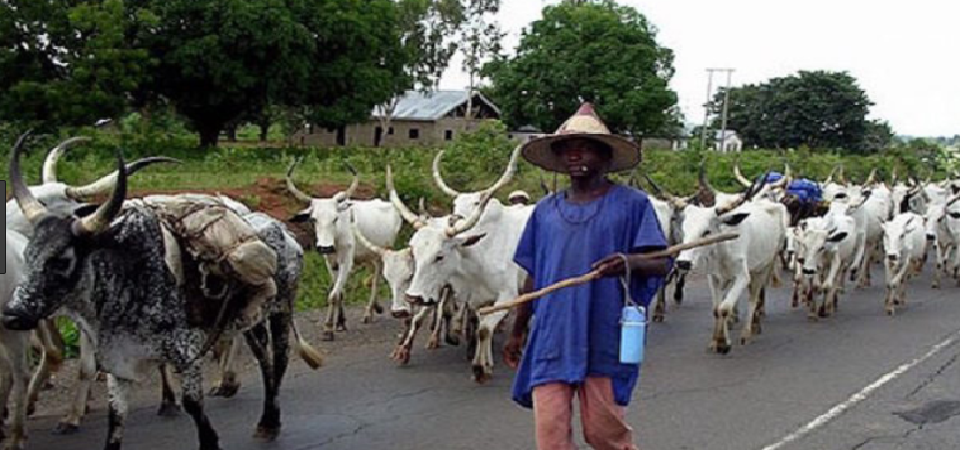
The 2031 Presidential election in Nigeria will be won (in that region) by any contestant with vision to offer what can be done in that corridor. The migration from Sub-Saharan Africa to Europe across the Mediterranean Sea is just starting. And the herdsmen crisis cannot be talked out because before the native herdsmen near the Chad, there is only one option: move South and try to survive since staying in the North is extinction. I have provided some roadmaps (certainly not perfect) on how government can deal with the herdsmen-farmers classes here.

Fixing Nigeriaâ??s Herdsmen Crises

I believe that the only way to fix this problem would be to address the root cause. These are some of the suggestions I would offer publicly here [others are bolder but may be misinterpreted without context]:

Afforestation of Northern Nigeria: The government has to invest resources to fight the desertification that is happening in northern Nigeria. That way, herdsmen can stay in their ancestral lands and graze. As they look hopelessly watching grasslands become deserts, they would make choices. And without directions, they are coming southwards to battle for their trades. The failure here is government which has not planned for this day despite the signs.

Modernization: Farmers do not need to be nomadic in this age. Yet, for decades, Nigeria has failed to develop any policy to redesign the business. Of course, there is no industry government has done anything of value. With lack of formalization in the nomadic business, you do not expect them to transmute into modernized farms. Can government turn nomadic farming into settled farming in a modern way? There are many ways this can be handled with great results. Technically, make these farmers ranchers.

Lease Partnership: The federal government at the interim can map out a huge sum of money for a temporary fix. It can use that money to lease lands in some southern states from state governments mainly in areas farmers are not using. The goal here is to lease the land, compensate (and keep paying) the original owners of the lands and then work with the herdsmen to graze there. To do that, government would devise a structure in this enclave where all sold cows would be taxed and a part of the profits going to pay for the lease. Yes, the herdsmen would pay for the lease through the government. Government can use this model to manage the crises over the next fifteen years while it finds a permanent solution to handle the deforestation issue in the north. Once that is done, it can relocate the herdsmen back to their ancestral lands. This lease arrangement should be structured to be renewal every five years.

Yet, for the private sector, these challenges provide opportunities because a major dislocation is coming in the land. Conservation, water usage efficiency, precision agriculture, recycling, etc, are going to be impactful in coming years as these paralyses scale. Nigerian government can help by encouraging private sector participations in fixing these emerging huge market frictions. If they do not fix Lake Chad, Central Africa would experience huge problems in coming years.

All Together

The capacities of the governments of Nigeria, Chad, Cameroon and Niger to find solutions to Lake Chad would anchor the stability of the region. Lake Chad is now 10% of its initial size, and the natives who have depended on it have one option: move out as hanging around will lead to extinction! From migrating to Europe by crossing the Mediterranean Sea to moving South with cattle, triggering crises with farmers, what we are experiencing today cannot be compared when Lake Chad becomes pure grassland.

People, we like to talk of oil wells in Niger Delta. Watch out, we would be talking of water reservoir rights in 20 years in Northern Nigeria and those could be huge for holders!

To preserve, conserve, manage and renew water, government has to innovate. The present model where water is largely a free resource must evolve, and if government does not have resources to manage it, it is time to move it from government to private sector. Tough choices ahead!

Simplifying Agro Empowerment Programs with Technology

0

How do you support largely smallholder farmers making sure the marginal cost makes sense? How do you make them to see farming as a business over just a way of life?

Zenvus Services solves your marginal cost problem with technology, making sure that your gain factor is multiples higher than what you give to farmers as subsidies or inputs. We deliver symphonic innovative service to governments and their agencies to enable delivery of government empowerment programs to farmers.

Using the Zenvus Services, we would track the last Kobo or input you have given that farmer and what he/she did with it. And if they record using zManager, we will predict the farm profit months before harvest as we integrate pricing via zPrices into the model.


Africa Needs New Ideas, AI Will Disintermediate China and India Industrialization Models

3

This morning I made a remote presentation to a Presidential Committee on innovation in an East African nation: any industrialization policy based solely on China and India models will struggle in the age of AI (artificial intelligence). The country has an evolving strategy to mirror China and to a large extent India in its industrialization policy. In an extensive brief, I made it clear that we have a major dislocation which would make it challenging for any country to replicate China and to a small extent India on the path to industrialization. The issue is AI which will create a massive shift in how products and services of the 21st century are developed, manufactured and distributed. A farm in England has no single farmer, from planting the crops to harvesting them.

Just after sunset on Sept. 6, 2017, celebrations erupted on a farm in the quiet county of Shropshire, England. After a year of hard labor and careful planning, researchers achieved the previously impossible: the world’s first fully automated harvest — from barren land to flourishing crops — had been successfully completed. The “Hands Free Hectare” used nothing but robots, and was yet another step forward in revolutionizing how we feed the world.

About 35 years ago, during the arising of China, labour was a major cost element in manufacturing (that remains today though knowledge is evidently the most important factor of production now), China did all necessary to use its massive population to offer competitive and comparative advantages for companies to outsource manufacturing to them. China manufactures the world and that position cannot easily be taken away from it, even as labour cost rises in the nation.

India has been the world capital of lower end software services. India’s gifted English-trained graduates continue to play major roles in software solutions around the world. English is the language of commerce and software is “eating” the world. India has played major roles, largely at the tactical and operational levels of building and distributing software. Yet, to a large extent, the core strategic level remains only to America as the best software companies are Americans, even though India has contributed extensively to what those companies do. AI is the next frontier, and to a large extent, America and China will own this AI future.

  • Artificial intelligence (AI) can transform the productivity and GDP potential of the global economy. Strategic investment in different types of AI technology is needed to make that happen.

  • Labour productivity improvements will drive initial GDP gains as firms seek to “augment” the productivity of their labour force with AI technologies and to automate some tasks and roles.
  • Our research also shows that 45% of total economic gains by 2030 will come from product enhancements, stimulating consumer demand. This is because AI will drive greater product variety, with increased personalisation, attractiveness and affordability over time.
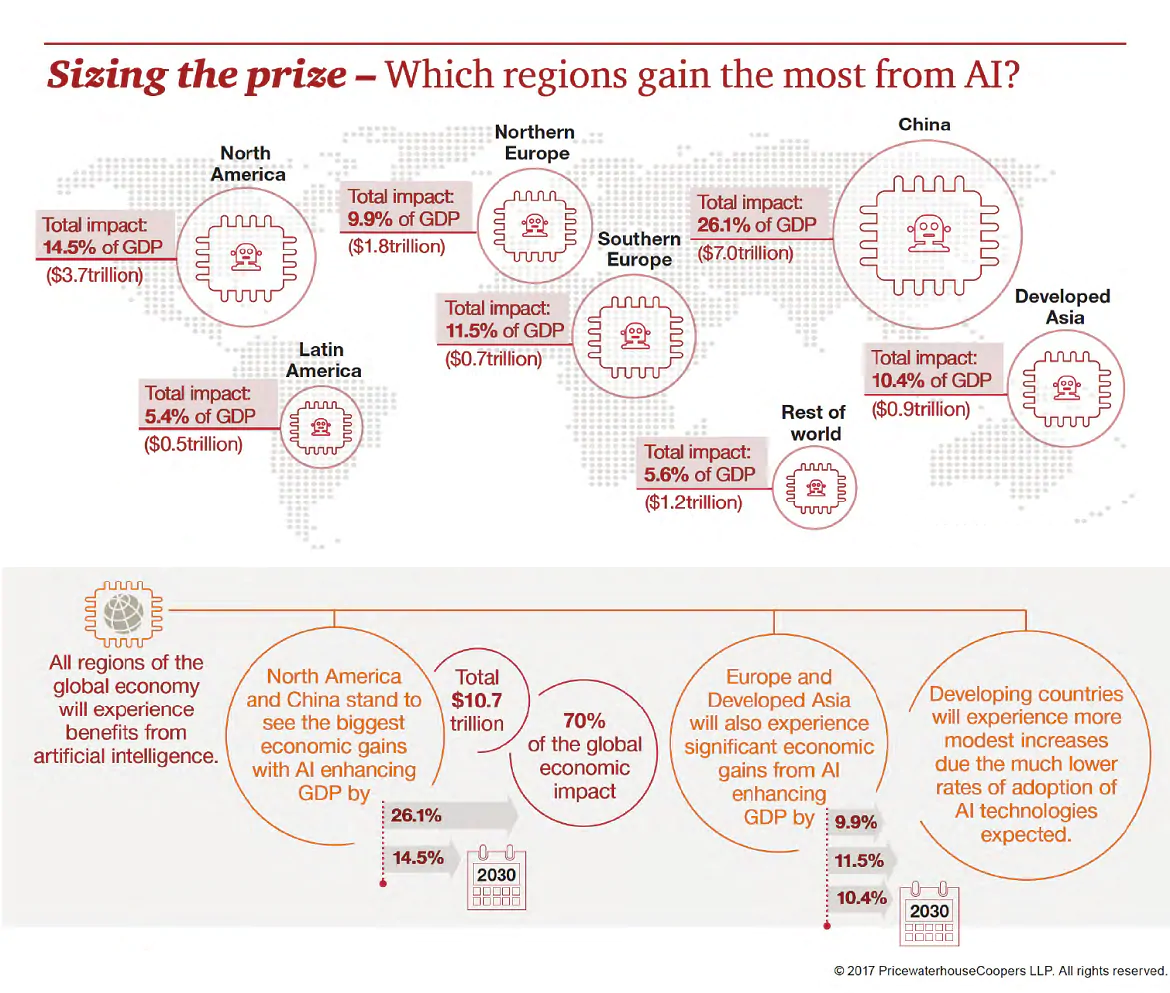
  • The greatest economic gains from AI will be in China (26% boost to GDP in 2030) and North America (14.5% boost), equivalent to a total of $10.7 trillion and accounting for almost 70% of the global economic impact.

For both China and India, the AI world will bring major shifts as AI will do most of the things Indian software testers, telemarketers, etc do today. In China, AI is going to power many elements of manufacturing in coming years. So, by 2030, I expect many of the outsourced jobs which have moved to India and China to return back to the Western world.

But China is lucky – it is a continent of itself. India is also lucky, it is huge itself. Separately, they have smart tax policies which will help them keep what they have today. Try to import ICT equipment into India and see the duties. Do the same in China, you will cry. In these nations, they are wired to allow you to import from them but not to export to them. With massive population (each more than the combined population of Africa), they have the numbers for their native companies to thrive at scale.

For Africa, the challenge is to find a way to leapfrog what China did on cheap labour. But that would be challenging as most factory works will be done by AI in coming years. So, I do expect even China to lose most of those factory jobs as Western companies bring them back home where AI will do them. So, for Africa, factory jobs will not be the path for us to win the opportunities of the future. We need a new game plan because AI is providing better competitiveness more than any nation can offer to global multinationals.

Yes, great educational system on mathematics, physics, engineering and broad science will be required. So, instead of thinking you can be fine with the largely (poorly educated) cheap labour, you must be thinking how to have top-grade graduates who can compete against the best. Competition is now global because Internet scales any idea without any constraint.

China has understood this redesign and is already working – it is winning with brain power and capabilities. As former Google Chairman, Eric Schmidt, noted, Internet could be divided into two: one dominated by U.S. and another by China. These are the world’s premier AI empires of today. Africa needs to find space at that top level because the old easy hanging fruit will be “eaten” by AI in coming years.

Eric Schmidt, who has been the CEO of Google and executive chairman of its parent company, Alphabet, predicts that within the next decade there will be two distinct internets: one led by the U.S. and the other by China.

Schmidt shared his thoughts at a private event in San Francisco on Wednesday night convened by investment firm Village Global VC. The firm enlists tech luminaries — including Schmidt, Jeff Bezos, Bill Gates and Diane Green — as limited partners, then invests their money into early-stage tech ventures.

Pushing Ahead

Africa cannot just wait to do the easy jobs as it marches towards industrialization. Most things would be automated and AI would add intelligence, making them better. Out driving force from the developing world must be to leapfrog the more developed economies, and take the heat to them (think of MPESA evolution in Kenya). Because what worked for China and India will likely be disintermediated by AI, our only developmental paradigm in Africa is to move upward where higher values are usually created. Africa will find massive opportunities at the upstream.

AI could contribute up to $15.7 trillion1 to the global economy in 2030, more than the current output of China and India combined. Of this, $6.6 trillion is likely to come from increased productivity and $9.1 trillion is likely to come from consumption-side effects.

While some markets, sectors and individual businesses are more advanced than others, AI is still at a very early stage of development overall. From a macroeconomic point of view, there are therefore opportunities for emerging markets to leapfrog more developed counterparts. And within your business sector, one of today’s start-ups or a business that hasn’t even been founded yet could be the market leader in ten years’ time.

The factory jobs of the future will not cement our future. We have to position, and to innovate at our own levels, and build local capabilities. By innovating, we create new basis of competition, making even some Western World systems and processes obsolete, as MPESA made every digital payment system in the world. There is a huge opportunity across industrial sectors to pioneer new ways. We can only do those by pushing higher because if we just think cheap labour will take us where China and India are seated, AI, our biggest competitor today, may make that difficult.