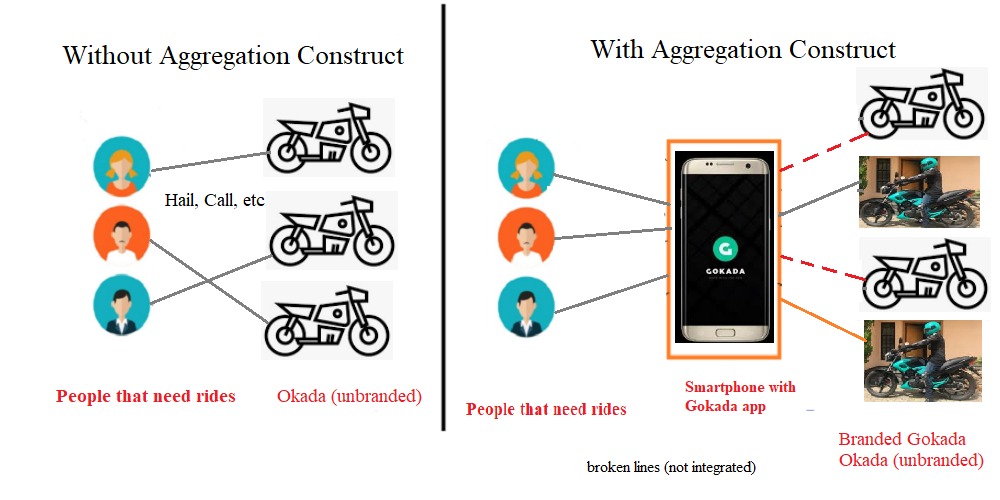
I wrote about Gokada, a pioneering on-demand motorbike hailing service which makes it easier to move from one location in Lagos to another, and the creativities the young people working therein are bringing to help in fixing our intra-city transportation friction. In this piece, I explain the business model which is anchoring what the company is doing. The company is using the enablers of mobile internet, mobile apps, and other digital systems to orchestrate near-zero marginal cost linkages between riders and trained bikers, at scale. The outcome is outsmarting Lagos traffic when the moments call for it! For many people, in Lagos, the moments are nearly daily.
As Lagos remains the center of attraction for young graduates, the traffic problem is not going away anytime soon. Fixing that friction which affects any Lagosian is a business opportunity. At population in excess of 24 million people, Lagos has the numbers to test many business hypotheses before massive expansion to other locations in Nigeria. Deji Oduntan, the CEO of Gokada, understands that clearly when he spoke to newsmen recently, “In 5 years, Gokada will be the one-stop shop for the Nigerian consumer. Because we will be solving multiple problems once we have thousands of bikes on the road. With that kind of reach, we will be able to fix delivery and logistics, and of course transportation.” Making that happen would depend on how he manages the growth of the platform: allowing unbranded non-Gokada bikes may be challenging, but necessarily, for a big country like Nigeria, if he wants to scale.
To use Gokada, you would need to download the app on Google Play Android or Apple iOS, and then follow the instructions.
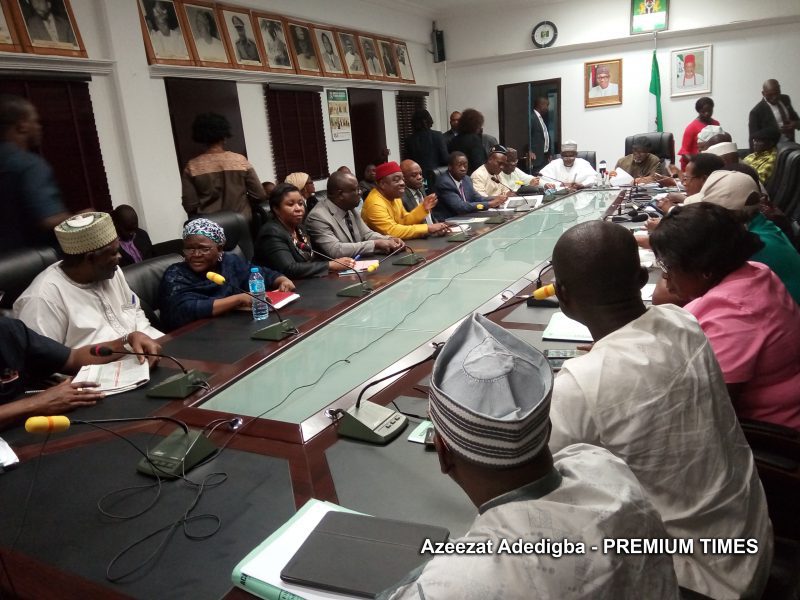
The Academic Staff Union Of Universities (ASUU) has started an indefinite strike across Nigeria. Simply, universities will now be closed.
The Academic Staff Union Of Universities (ASUU) has commenced an indefinite strike.
An official of the union, Ben Ugwoke from the University of Abuja, confirmed the development to PREMIUM TIMES Sunday night.
When contacted, the chairman of ASUU at Obafemi Awolowo University, Adeola Egbedokun, said the strike is total and indefinite until the union’s needs are met.
The strike is to protest the poor funding of Nigerian universities and alleged plan by the federal government to increase students fees and introduce an education bank.
Led by its National President, Biodun Ogunyemi, ASUU declared the strike at the end of its National Executive Council (NEC) meeting late on Sunday.
I have noted some of the key issues which must be resolved before universities in Nigeria could be expected to function.
Nigeria needs a conference on how to fund education in the 21st century. Our students deserve better. For more than 30 years since ASUU was established, it has been making this argument from military governments to civilian ones and nothing seems to be working.
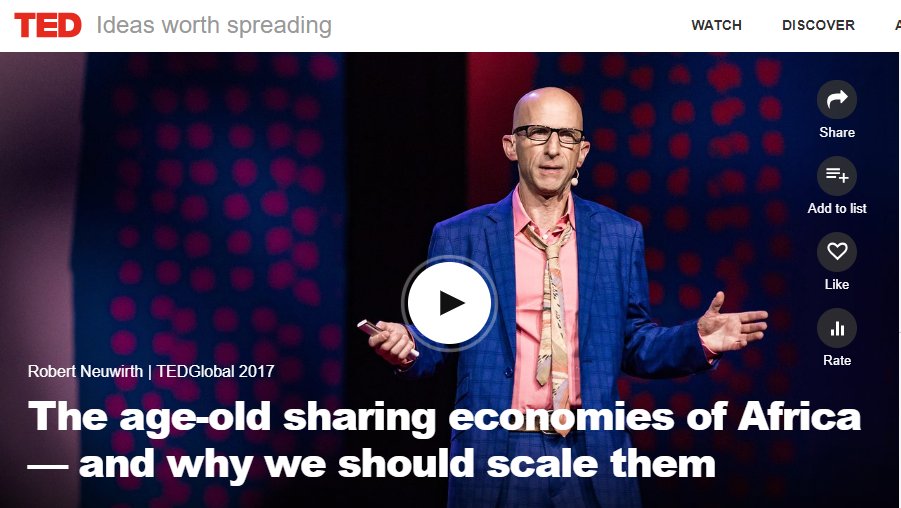
This is the full video of the TED talk on Igbo apprenticeship system which I wrote here. The TED Speaker, Robert Neuwirth, made a strong case and concluded thus: “And I can say with almost certainty that the Igbo apprenticeship system that governs Alaba International Market is the largest business incubator platform in the world.” The full transcript of the section of interest is below for those saving mobile credit.
It is not news that Nigerian Igbos run one of the oldest venture capital industries in the world. It is also not breaking news that Igbos have one of the most advanced business incubation systems in the world. And these things happen without anyone thinking about them. A kinsman is a merchant – he goes to China and imports containers. When I talk to him about bank supports, he laughs: “Bro, we have better banks without CBN wahala”, he reminds me.
Simply, under the Igbo apprenticeship system, the strength and measure of a man is based on how he has made those that worked under him better. In some villages in Ohafia (Abia State), you cannot speak in the village square if your “boys” are not progressing. In some communities in Arochukwu (Abia State), before elders can permit you to talk, you must begin by naming sons you made men.
Alaba market (Lagos State, Nigeria)
In my practice, I have worked with some moguls and observed reverence. Yes, you have made money more than your master. But till grave, he remains a demi-god to you. That is why a boy who did not enter university can run the largest (indigenous) car manufacturing company in Africa. That is why if another closes his fuel depot, Nigeria will experience fuel scarcity within days – but that guy dropped out in JS2.
I have asked the Nigerian government to work on the formalization of the Igbo apprenticeship system. We have a great system, and certainly do not need to invent many new things. Interestingly, in this TED Talk, that Igbo apprenticeship, using Alaba market, was celebrated
The Igboland incubation system does not take equity. It does not require raising huge capital. It is driven by human-platform and it works. Nigeria needs to deepen this system even as we celebrate the modern forms of incubation. If government can find human-platforms to work with the youth, we can comfortably fix unemployment. With minor checks and balances, we will provide opportunities to young people.
The TED video expands that message (I could not upload the TED video because of copyright issues. But if you click, you will listen to the audio). The speaker used the Alaba market as a case study.
Update: I have just tracked the video (embedded below on this post) on TED. This is the transcript of the section to focus.
This is the video I made before connecting the original TED, trying to avoid copyright issues from the portion someone sent me.
The Nnewi has a tradition there also, as shared by an indigene here.
An interesting take, Ndubuisi. But as an indigene of Nnewi, I will argue that government should actually not get involved or in anyway interfere in the Nnewi apprentice model. It has worked for decades and we really do not need government to come tell us how to run it. If it’s not broken don’t fix it, they say.
Innoson, Cocharis, Ibeto, Chikason, Ekenedilichukwu, are all from our great city of Nnewi. None of these may ventured anywhere near the gates of a secondary school, some didn’t even finish primary school, but control multi billion dollar empires. It’s starts with an apprentice system where a master takes a young boy of about 10 years, the boy serves his master for about 7 years. At the end of the 7 years, the master settles the boy with some capital. Most times depending on their relationship, the boy remains in the master’s house even though he is now free, eats there and sleeps there for the next 2 years or so, to save money. In addition to the capital, the master also extends credit facilities to the boy and gives him goods on credit to sell.
The interesting thing is that nothing is in writing, it’s all done on trust and credibility. The boy’s family would usually come together and meet with the master at the commencement of the arrangement. And at the end of the apprentice period, the master will also bring the boy home and settle him in the presence of his family. Government can not replicate that. They can only complicate it.
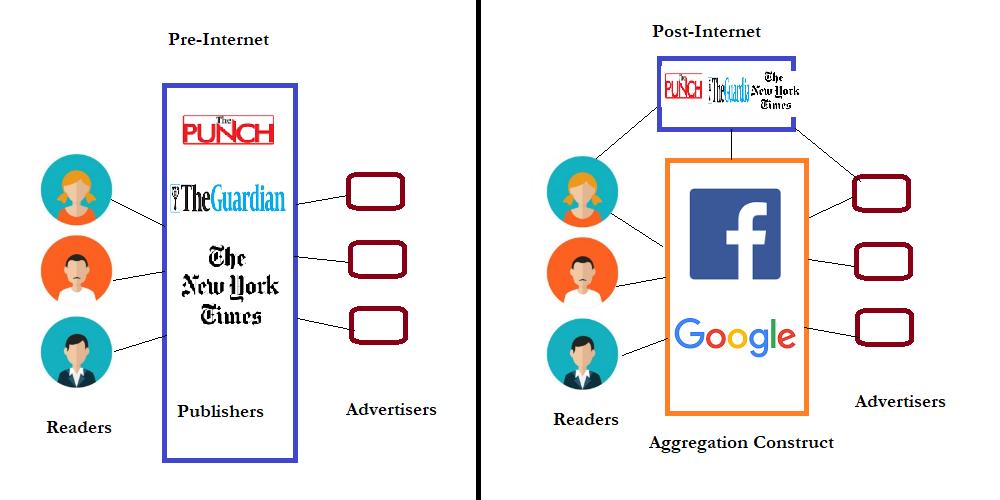
In the past, moguls built business empires by controlling Supply. By controlling supply, they were able to move the price equilibrium points to their advantages. Demand (the users) just went along. So, in the grand scheme of competition, rivalries evolved out of the needs to control Supply. If you control the supply of rice into Nigeria, you would make tons of money, as you can fix the price. If you control the supply of cement, the same happens. That same applied across markets and industrial sectors, from banking to real estate.
Today, in the digitizing internet world, the game plan is to control Demand (not Supply). It is assumed that Supply is already unlimited and there is no need to build capabilities to control it. If you want to control Supply, you would break in the Internet because you are absolutely going to fail. Yes, how could you control supply of all news posted on the web, from Twitter to Punch to Facebook? You have no chance – only aggregators are positioned for such.
Facebook and Google control demand
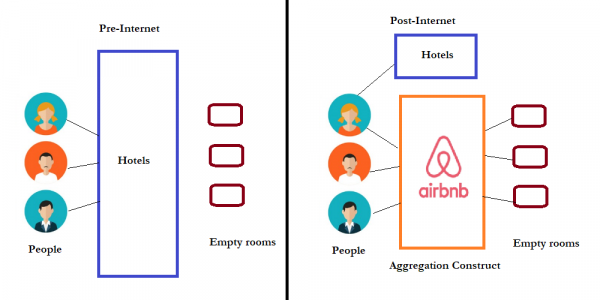
Airbnb controls Demand
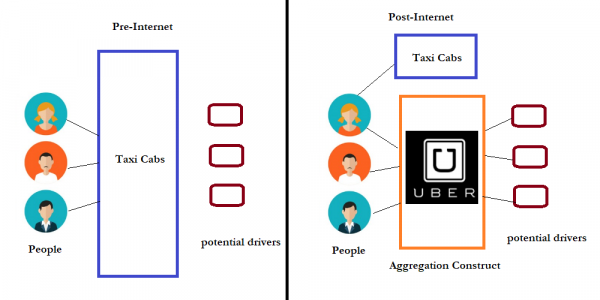
Uber controls demand
But in that web economy, there is a smarter strategy: control Demand. Simply, in a market that is unbounded by distribution mechanism and unconstrained by geography, the only remaining opportunity is controlling how all the supplies reach Demand (the users).
Magically, companies like Facebook, Twitter and Google focus on just that. They provide platforms that control Demand leaving the unlimited suppliers to provide the goods. Yes, you have the news (the contents), but if Google does not help to deliver them to the readers, you are in trouble. When Facebook revoked access to some websites after the debacle of Cambridge Analytica, many went bankrupt in days. Those firms had supply but they have been cut-off from Demand.
Facebook is going through a redesign with its privacy policy and strategy. The social media giant has started to significantly limit data access to Facebook’s Events, Groups and Pages APIs. It has also shut down part of the Instagram API. This is expected as the company battles scandals with the mess it found itself with the Cambridge Analytica related privacy violations.
Now, you can see why that your old book may not be helping your strategy as what worked in the industrial age economy might crash in the web economy. Sure, you can call Facebook and Google the modern supplies. But you must know they have no factories to produce the items you consume on their platforms. Google depends on all open global sites in the world to do that “supply”; Facebook feeds on stuffs we post. So, it is clearly not the type of supplies which used to break banks to execute. If you can “supply” their types of supplies, you are in control of Demand!
In this era of abundance on the supply side, the game has shifted to demand, turning entities with capabilities to control demands into the newest emperors. The digital supply chain even supports this model, where your superiority and differentiation is on your ability to stimulate demand, and also going ahead to decide who gets what.
It’s a radical shift, because for centuries, many things have been rigged from the supply side: just create artificial scarcity, and suddenly – more billions in your bank account! Times have changed, inventories are managed better, with less losses, meaning that you can technically stimulate demand, control the levers, without having ‘leftovers’ anyway.
With the way many things have been democratized, aided greatly by internet and web, tearing geographic boundaries along the way; households are turning themselves into mini factories, schools, markets, consulting firms, etc, without needing to break banks just to manage assets.
Human capital remains the most valuable asset in this knowledge economy, everything else is just a supporting cast.
This is the greatest time to be alive, if you are not living now; I am sorry!