DD
MM
YYYY

PAGES

DD
MM
YYYY

spot_img

PAGES

Home Blog Page 7091

How New Technologies Could Transform Africa’s Health Care System -Ndubuisi Ekekwe – Harvard Business Review

0

My Harvard Business Review piece on how AI and emerging technologies would transform Africa’s healthcare sector is published.

The solution is called CareAi: an AI-powered computing system anchored on blockchain that can diagnose infectious diseases, such as malaria, typhoid fever, and tuberculosis, within seconds. The platform is engineered to serve the invisible demographic of migrants, ethnic minorities, and those unregistered within traditional healthcare systems. By bringing AI and blockchain together, CareAi uses an anonymous distributed healthcare architecture to deliver health services to patients anonymously.  This makes it possible for these invisible cohorts to get access to basic healthcare, and useful contextual information without compromising their identities, for fear of deportation. This is important, as without access to health services, these communities might pose health risks to the wider population.

Patenting AI Models

0

The men who invented mathematics made them free. But that has not stopped companies who largely apply mathematics in patenting their works. The idea which has been reported on how IBM plans to patent AI (artificial intelligence) models is fascinating: they want to fudge and confuse others.

In an effort to protect intellectual property associated with AI model development, IBM is researching methods of watermarking using Deep Neural Networks (or DNNs). To embed the watermark, the team has developed three algorithms so far which either embed meaningful content, irrelevant data samples, or noise in the into the training data sets. So far these have been successful at delivering an “unexpected but controlled response,” validating ownership without the need to access the parameters of the model directly. (source: Diamadis newsletter)

It is still the same model: it takes efforts to move from an inventive society into an innovative one. And if they go ahead and patent these technologies, the next phase of human development will be set even before it starts. Africa needs to work harder because the exponential impact of AI will redesign industrial sectors and systems at a greater level than what we have ever experienced.

9Mobile – How Not To Sell A Company

0

Two elements on the marathon race of selling 9Mobile, a Nigerian telecom company which was originally Etisalat Nigeria:

Extension

The Board of 9mobile has announced the extension of the timeline for closure of the acquisition process.

In a statement signed by Boye Olusanya, CEO of 9mobile, the company said the timeline extension was considered necessary to enable parties involved in the sale process to finalise the requisite transaction documentation to facilitate a smooth closure and transition to the new investor.

The statement read: “The Board of 9mobile is pleased with the progress made thus far and expects the acquisition process to be completed as soon as possible. Further updates in this regard will be provided in due course.

Regulation

The Nigerian Communications Commission (NCC) has assured that the process to sell 9mobile to its preferred bidder, Teleology Nigeria Ltd, would be concluded soon.

Executive Vice Chairman/CEO of the Commission, Prof. Garba Danbatta gave the assurance in Abuja …said a meeting would be held next week among all the stakeholders, especially Teleology promoters, the NCC and the Central Bank of Nigeria (CBN) and other parties.

This deal is certainly unprecedented in the way it has played out. The good news is that 9Mobile is “strong’ enough that it has sustained this thus far. Technically, as they keep postponing this closure, the company could dig itself out of any hole organically. I cannot imagine why it should take thing long to close a deal. From the regulator to the parties, they need to get this done. Let it not be on records that selling a telco in Nigeria could be the toughest deal in Africa.

Nigeria’s Most Difficult Business Sector to Crack

0

There is no confusion – the most difficult sector in Nigeria to find opportunities is the insurance sector. It is one industry where great ideas have failed to bring value. The progress in the sector remains marginal as about 87 million Nigerians have no form of insurance and only 1.3 million can boast of something including the nearly useless auto insurance 3rd party insurance policy.

Insurance business remains unviable and its products hard to sell in the Nigerian market place. This unpalatable news raised worries for the captains of industry, who gathered at just concluded 2018 Insurance Industry Consultative Council (IICC) in Abuja, few weeks ago.They described the challenge as “bad message” in the ears of insurance companies and allied stakeholders, given the fact that the industry has been in existence in the country for nearly a century.

… “More Nigerians won’t and don’t intend to take up any form of insurance cover if given the choice.”
Outcome of new study

The available records in the industry indicate that 86.6 million Nigerians have no form of insurance, while 1.3 million adults, representing 1.5 per cent of the entire Nigerian adult population, maintain some category of formal insurance cover.

Numbers do not lie: the sector is growing at anemic rate and that is a problem. But there is an opportunity if government can reform the sector, especially on how the business is done, and allow technology to play more significant roles.

The volume of businesses written by insurance companies in the country grew from N315.96 billion in 2016 to about N363 billion in 2017, representing an increase of about 15 per cent over 2016 figure.

Nigeria – “The national grid is now our second backup”

0
generators Nigeria

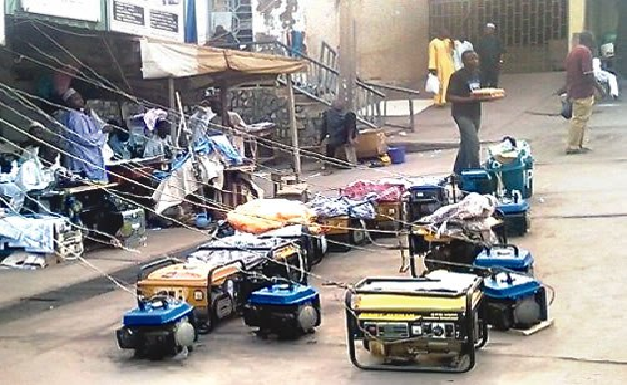
I just finished reviewing monthly updates on our business. One line was humbling from one of our offices: “The national grid is now our second backup”. That is from my Owerri (Nigeria) office. They added a second generator as it was evident that national grid had gone. I looked at the fuel cost; I sobbed.

Mr. President: you need to give Nigeria, Nigerians and Nigerian businesses constant electricity. We cannot continue this way. It is not your fault but you promised to get this done. Mr. President, declare a state of emergency on electricity and do all necessary to provide power to our economy. Power is a catalyst Nigeria needs. If you just get it done, you will see an exponential impact in whatever policy the nation is working upon.

Yes, farmers will move into farming some crops knowing that they have cold rooms to preserve produce. Bricklayers will work in the day instead of praying for light to come. Mechanics, shoemakers, engineers, doctors, accountants, etc will be working for Nigeria and you (our President).

The problems are huge because the paralysis has taken years to morph. I have explained some of the components but we can only write. You knew about these issues, and you did promise to get the job done. Please do. We desperately need your help. I do not want to see generator as an asset in my financials!

The SMEs need power to run the economy. But discos would need the help of some of the big manufacturers who typically are the cheapest to serve and usually most profitable to link into the network. But for this to happen, those major players would expect the discos to demonstrate reliability before they commit to national grid. If we do not manage this interface, what would happen is to expect discos to become profitable by serving the masses (typically expensive due to higher marginal cost). Most times, that does not happen. The business of power utilities is hard: only two utilities are profitable in Africa.

Yes, market forces can re-balance this when other companies that can tap into a reliable national grid to offer competitive products which are obviously cheaper due to lower power costs arise. When that happens, the companies which generate their own power may be challenged to abandon that practice and then connect to national grid. They would make those decisions based on market forces and nothing more.