One of my Abuja clients is scaling across Africa. The firm, in financial services, will need a Chief Financial Officer (CFO) and Head, Human Resources. The request came to our practice few days ago and team is finalizing the elements. By Monday, the application link will go live.
For those in the community looking for job, this could be a good one. Update your profile and resume. Besides, there are some entry level jobs (full time) in business development and marketing.
For the CFO, we would be looking for accountants with demonstrated capabilities in understanding the elemental components of commerce that can affect forex. My client has currency exposure via international trade especially in Asia.
How can a decision made today help you save money in six months? This is not going to be a bookkeeping job! We want accounting engineers with awareness of political economy and international market dynamics which move currency at scale. If you cannot model the future and create it, it is evident you cannot predict it. That is why I prefer Accounting Engineers: people that can predict the future of firms by financially modeling and creating that future.
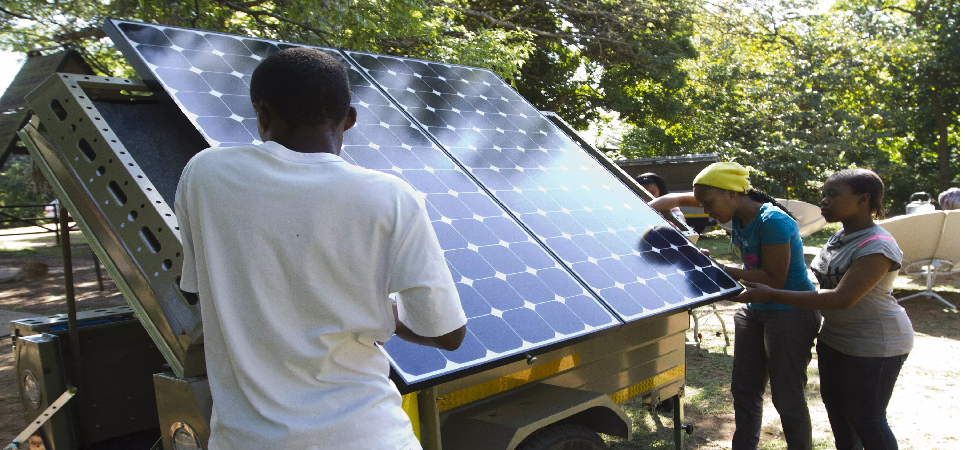
Mass-distributed solar energy business has a promising future in Nigeria. I want to let our readers understand that the MAP (Meter Asset Provider) policy of the Federal Government is a big deal in accelerating investment opportunities in that space. By allowing mini-entrepreneurs to have access to the metering component of energy distribution, government has fixed one of the biggest challenges in scaling solar business. Possibly, startups can power Nigeria in near future!
For many quarters, I have noted that agriculture is a very solid investment opportunity in Nigeria. It remains because our farming systems are still at infancy. I provided 30 solid business ideas to readers of my daily blog Tekedia here with a video that explained how they could unlock some of the opportunities. But agriculture needs a break even as we need more investments in that sector.
There are many opportunities in the Nigerian (and indeed African) agriculture sector for entrepreneurs to unlock, starting from the traditional agro-businesses to the evolving agricultural technology (agtech) businesses. We have listed some of the ideas in this piece where we noted that agriculture could be on its way to $1 trillion cumulative revenue in Africa within seven years. Agriculture employs more than 65% of Africa’s working population, making it a very important part of our economy. It presents immense opportunities because the sector is still at infancy, and can only grow looking at the renewed efforts by investors, entrepreneurs, farmers and governments to deepen African competitiveness through agricultural production and processing.
I have also noted that the biggest idea in telecom right now in Nigeria is pioneering contract-based billing at scale to deal with the challenges of revenue loss and erosion. It is going to be very hard in a country with limited data, but good for the telcos, they have the biometric records of mobile subscribers. Anyone that can create that system in the age of Skype, WhatsApp and Google Station will have a great business with many telecom companies across Africa.
In a piece yesterday, I wrote that Nigerian telcos should build contract- subscription-based billing system to overcome the challenges of WhatsApp and other OTT solutions. Simply, if the user had paid a fee, under a monthly plan, the telco would become ambivalent to whatever the user is doing with his or her phone. That way, the telco would preserve its ARPU (average revenue per user). This is the idea as noted, and I do think entrepreneurs can make it happen, not the telcos themselves.
Today, I am calling that solar energy, distributed for the mass market, is entering a new phase. The government has removed one of the biggest hurdles in the industry: metering paralysis. Yes, the installation of meters is no more the exclusivity of distribution companies (DISCOs). This means that any solar entrepreneur can power a village or community without having anything to do with DISCO. In the past, that was not possible because after the generation of power, the entrepreneur must still find a way to negotiate contract with the local DISCO. Of course no entrepreneur has any chance of coming out of that contract well because DISCOs know that they have all the aces. That has changed, for good.
The DISCOs are concerned because if these entrepreneurs have access to meters, DISCOs as we know them have been completely disintermediated. The reason DISCOs are relevant today in some places is because third parties cannot install meters. But with MAP, that has been fixed, making it easier that anyone can produce, transmit and distribute power in communities. And by the time the entrepreneurs are done, DISCOs will have no business.
The energy sector is a $6 trillion per year business. Over the last four decades, the cost of solar panel materials has dropped 250x as a result of innovations in materials science, according to Singularity University. Shell predicts that peak oil demand will arrive sometime between 2021 and 2029. Simply, we will still have fossil but photons and electrons will be the future of energy.
Solar installation
Current Solar Business Models
The following are the major models for solar power business which you can adopt. I have also provided practical cases if you click.
Sell solar product to customers: Here, the customers buy the products, and own them. This scares some customers because despite not having to find money to buy the solutions, they have to handle the maintenance element which includes seasonal change of batteries, solar panels etc. Owing to that decision inertia, many have not become solar believers. In this model, the customer is investing in the equipment. Two cost elements are noticeable
Initial equipment cost
Maintenance cost throughout product life
Hire purchase: In this model, customers receive the solar equipment with options to make payments via installment plan. At the end of the installment plan, the customer owns the solution. The entrepreneur may increase the product cost to cover the extended payment plan. One challenge with this model is that the customer is investing in the equipment and not just focusing on getting the electricity. Two cost elements are noticeable
Installment payment for equipment
Product maintenance cost post-payment (usually the maintenance happens after the payment plan has been completed)
Lease 1: Here, customers are never given the option to ever own the equipment. The solution is leased to them and the cost of the electricity consumed is also charged to them.
The customer pays for the equipment but with no intention of ever using it (this is similar to a U.S. home broadband company renting the modem which the customer pays monthly. But the day the service is cancelled, the customer must return the equipment to avoid being billed the product full price)
The cost of electricity consumed is charged to the customer.
Lease 2: Here, customers are never given the option to ever own the equipment. The solution is leased to them but no cost of the electricity consumed is charged to them. The cost of electricity is included in the equipment lease amount
The customer pays for the equipment but with no intention of ever using it (this is similar to a U.S. home broadband company renting the modem which the customer pays monthly. But the day the service is cancelled, the customer must return the equipment to avoid being billed the product full price)
Energy-as-a-Service: A potential winning model that can scale massively could be delivering electricity to customers, with no requirements for them to buy equipment. They pay for what they have consumed and the company owns all its equipment. You may need to get a contract where the customer must commit to use the solution under defined Key Performance Indicators. Once the customer signs, you take your equipment and install in the customer residence, at no cost to the customer. You make money by billing for electricity consumed. With this, the customer does not have to invest in any equipment. Also, risks move to the entrepreneur who is now incentivized to make sure the equipment works, as without it working, there will not be any electricity to bill the customer. Yes, all maintenance costs are not concerns of the customers.
I sent this email to a commissioner of agriculture in a Nigerian state. Please forward it to your state commissioner or better His Excellency. If you do, please get back to us: we have something really exciting for you. The contact came from a present client.
Dear Sir,
Greetings! I am writing to explain that we have a comprehensive agro-solution which provides services in all the key areas of crop farming. Our solutions are designed to support farmers to improve farm productivity and most importantly become business-people. Here are some features:
Zenvus Boundary: Zenvus Boundary enables the mapping of farms while helping governments to easily verify ownership of farms and farmlands via search. With Zenvus Boundary, if two people register one land as belonging to them, the system will automatically trigger a flag. With our technology, your state can easily search owners of farmlands on our public search which helps banks, insurers, governments etc to ascertain farmland control. This helps banks make loans to farmers as they can authenticate control fast.
Zenvus Services: Zenvus Services provide farm diary, digital platforms to sell items, farm insurance solutions, farm capital, city-level pricing information and even the ability for farmers to raise money from neighbors in exchange for produce in farms. We would help your state farmers and businesspeople expand markets, deepen services and advance the state.
Zenvus sensors: We have the most advanced small-scale precision sensors in African agriculture, making it easier for farmers to make decisions based on farm needs.
Zenvus Fusion: This solution is designed to help governments map soil nutrition across farmlands and make that information freely available to farmers. The goal is to make it possible to apply the right fertilizers. Your state can build the soil geography of the state just as U.S. has. That will help farmers advance the state’s agricultural mission.
We would be honored for the opportunity to work with the state. Our solutions provide jobs for the youth even when improving local economy and general wellbeing. We would treasure an opportunity to present before you and His Excellency.
As always, on behalf of your fellow citizens, we thank you for serving our Nation.
African Fintech entrepreneurs and banks, the heat is coming: Alibaba’s Ant Financial is in partnerships with the United Nations Economic Commission for Africa (ECA) and the International Financial Corporation (IFC) as it enters Africa. ECA expects Ant Financial to power the African Continental Free Trade Area (AfCFTA), the largest free-trade agreement since the creation of the World Trade Organization. This is the real China-storm with WeChat already home.
Ant Financial, the payments and financial services arm of Chinese e-commerce giant Alibaba, is expanding to Africa.
In a partnership with the United Nations Economic Commission for Africa (ECA) along with the International Financial Corporation, the firm says it will promote digital financial inclusion in the continent through investments and technical assistance. The offering will target smaller businesses and would look to cater to largely unserved consumers, including displaced people and refugees with no official documents or identity papers.
The deal, announced in Addis Ababa last week, is pegged to both the 2030 global sustainable development goals and the African Union’s Agenda 2060, which seeks to end poverty and improve lives through economic, social, and technological progress. The ECA said the agreement will help more people benefit from the recently signed African Continental Free Trade Area (AfCFTA), the largest free-trade agreement since the creation of the World Trade Organization.
Get it from me: by 2022, payment friction in Africa will be massively fixed. I can hear the sound in the horizon. If Ant can replicate its feats in India and China, consumers will win. Ant Financial, spurn from Alibaba Group, controls Alipay, a leading online payment platform. Its arrival in Africa will redesign payment competition, reduce friction and challenge local fintech companies and banking institutions.
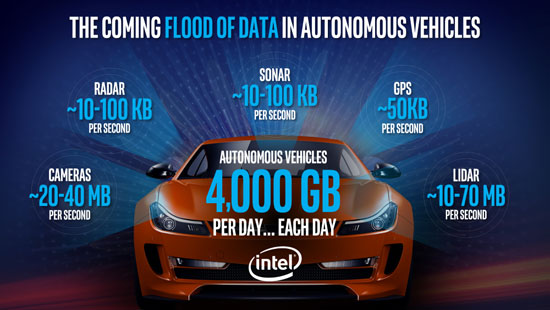
One of the anticipated use – case for 5G, which in fact presents a larger opportunity than the traditional consumer applications, has been for ultra-reliable and low latency application like Autonomous Cars. This vertical represent a new revenue stream and a brand differentiator for both the automobile and telecommunication industries. This has resulted in the integration of these industries as well as the formation of cross industry groups like the 5G Automotive Association (5GAA) etc.
In the automotive sector, 5G present opportunities for improved connectivity in connected cars, full control in autonomous cars, tele-operated remote driving for use in remote or harsh environments, vehicle platooning for trucks etc. Here, I will focus on autonomous cars only and discuss some of the benefits associated with this use case and highlight some of the issues that need to be addressed before successful deployment.
I would like to mention first that automation could vary from 0 (manual automation) through partial/conditional automation up to 5, in full automation.
Source: EE Catalog
Now, some of the proposed benefits of Autonomous cars for consumers include the reduction of commute time, accident, traffic congestion, emissions etc. It is also anticipated that commuters can concentrate on other tasks rather than driving. Cars can also be made to perform other tasks e.g. order groceries rather than parking them in a garage. This would also present car sharing business models and could reduce the income spent on cars.
Some of the key issues to be addressed include high connectivity for these cars as well as their ability to interact with other cars and the environment. The use of edge computing solutions as well as C-V2X technology is anticipated here. C-V2X will allow for in the first instance, direct communication between vehicles, vehicles-infrastructures, vehicles-users and in the second instance, network communication using mobile network. For telcos seeking revenue from this vertical, several business models have been proposed such as the Connectivity model which involves payment for the provision of low-latency, high connectivity etc. to vehicle companies, the platform model which involves working with a third party (e.g. automaker) to develop a platform and then taking a share of the platform services and the Infrastructure model, which could involve selling slices of MNO controlled network.
As highlighted in one of my pieces on 5G, the communication industry is seeing a shift from hardware to software. This presents opportunities for cyber-security vulnerabilities. And unlike hardware for cars, it’s very hard to secure very line of code.
Also, User acceptance and Public Trust need to be strong and positive for successful deployment of Autonomous Cars. A good example is the case of Uber self-driving car which killed a pedestrian in self-driving mode. This incident has no doubt negatively affected the public’s perception of the safety of autonomous cars.
Besides, transparency concerns are also critical to understand the decision making process of the autonomous system. For example, in the case of an accident, accident investigators should be able to understand the logic behind the decision made by the autonomous system. In this same scenario, law suits become inevitable and it’s important for the legal mind to gather evidences as to the state of the autonomous system before such incidents.
As technologies should be developed to serve humans, ethical concerns need to be addressed. For instance, should self-driving cars be held to a higher standard than humans? Who should be held accountable when an accident occurs between a self-driving car and an individual? Should the user or the car manufacturer be held responsible for the accident?
Furthermore, Regulations and laws also need to keep in pace with the development of these technologies. For example, previous road regulations were based on cars being driven by humans; with the advent of self-driving cars, criminal offences and charges will no doubt change.
There is also the issue of social implication of the development of autonomous cars. It is anticipated that some self-driving trucks could replace professional truck drivers; in the US, this would lead to the job loss of around 3.5 million truck drivers. To address this, taxes have been mentioned as a way of addressing this issue.
In order to address these issues and more, a multi-disciplinary approach need to be adopted and would involve collaborative effort among Government, Industry, Academia, Civil Society Organisation etc. ‘A scientist/technologist build it all’ approach would not work; as highlighted in this piece, there are security, social, ethical and regulatory implications associated with the development and deployment of this technology.