DD
MM
YYYY

PAGES

DD
MM
YYYY

spot_img

PAGES

Home Blog Page 7102

Arrival of Alipay and WeChat will Challenge MPESA in Kenya

0
Kenya WeChat Alipay

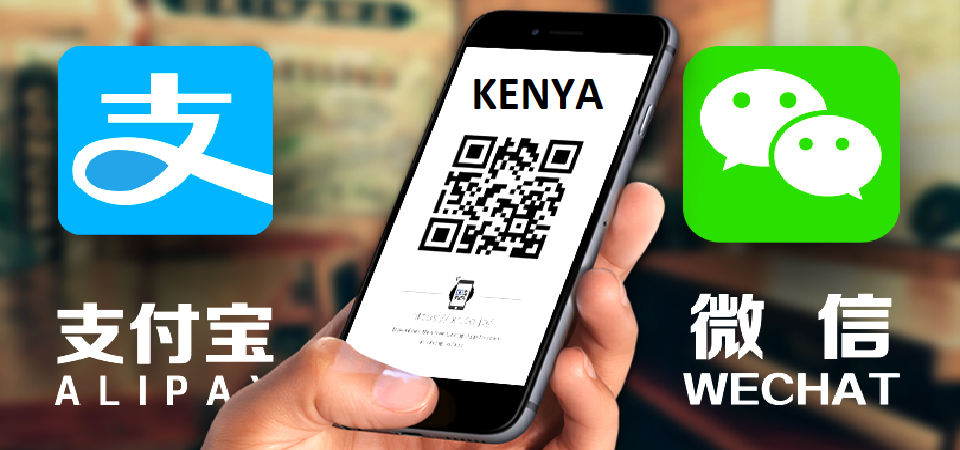
China funds a project. Many Chinese come to town. They have tons of money to spend. Then local companies begin to look for payment systems which can support them. From New York City where AliPay has been implemented (to support Chinese tourists) to Kenya, there are many elements to the New Silk Road. In Kenya, the Chinese expatriates like Alipay and WeChat, and to meet their needs, Kenya needs to have those two solutions which continue to track wherever Chinese go. In a partnership between Equitel and Red Dot Payments, Alipay and WeChat would be available in Kenya.

According to Finserve’s Managing Director, Jack Ngare, the partnership will see Kenyan businesses benefit from having one more option of accepting payment, which is meant to encourage an increase in international trade. “The key purpose of Equity is to empower businesses. We still believe there’s a lot of room for more payment options to come into this market,” he said.

Alipay founder, Jack Ma, was in Kenya a few months back and hinted at Alipay looking for a partner to do business within the country, we are not sure if this is the result of that hint but the inclusion of WeChat Pay could be pointing us to a different direction.

Once the service goes live, anyone with an Alipay or WeChat Pay account will be able to make seamless payments to Kenyan businesses that will have signed up for the service, through their respective platforms. The long-term plan, according to Equitel, is to allow Kenyans to be able to hold Alipay and WeChat Pay accounts through them and thus facilitate international payments.

MPESA Challenge

This is certainly not good news for MPESA. I do predict that MPESA will lose market share because MPESA is a mobile money solution while WeChat is a living ecosystem with capabilities to do anything you can do online, from shopping to gaming. Yes, MPESA is a payment system; WeChat is an internet operating system (WhatsApp, Facebook, Twitter, and Instagram, all in one).

That feature is why the more the users the better, and that means the best in technology will re-grow even when broken apart provided it has enough users to seed that moment. Over time, there will be convergence. WeChat is the Internet first operating system which practically does everything: WhatsApp, Facebook, Twitter, Instagram, all in one. It is a seed that will keep growing, and breaking it will have minimal impacts, unless you want another name, not WeChat, to do the same thing tomorrow in China.

All Together

The Kenyan banking regulator has run a regulatory regime where market forces are allowed to play. Allowing WeChat and Alipay in Kenya would certainly have real challenges to the Kenyan banking system. Even in China, WeChat has become so popular that local banks are having liquidity problems as what users do is to move their monies from their bank accounts into WeChat, and from there spend as they want. The banks have become pipelines into and out of WeChat and nothing more.

For the banks, this is a very huge test because if WeChat warehouses lots of cash in its platform, some banks may fold. Interestingly, that is what Alipay and WeChat plan to do in Kenya as noted in the quoted piece above: “Kenyans to be able to hold Alipay and WeChat Pay accounts through them and thus facilitate international payments”. Yes, they could enable even remittance and international payments cutting out the banks further. This would be huge and as usual Kenya is testing the limits of what ICT utilities can do in Africa, a key point I noted in a recent Harvard Business Review article.

The interesting thing in WeChat and AliPay is that they are making it easier for users to stay longer in their ecosystems through different solutions, services and products they offer to customers. And if they do just that, the need for the typical banking fades. This is already causing major problems with some small Chinese banks where liquidity has become a challenge.

Specifically on that, the Chinese banking regulator has to request that the BAT( Baidu, Alibaba and Tencent) move funds from their wallets to their bank accounts within 72 hours as local banks were having liquidity issues [yes, that does not help local banks. It only helps the banks where the BAT bank]


Innovation Clusters in Nigeria

0
innovation clusters Nigeria

I am not sure if you read this ebook – The Geography of Science &Technology Innovation Clusters in Nigeria. It was a project my non-profit, African Institution of Technology, conducted on innovation clusters in Nigeria. The Tony Elumelu Foundation funded it, generously.

Sponsored by the Tony Elumelu Foundation, the Nigeria Innovation Cluster Mapping project is poised to uncover the pockets of industry clusters where companies with similar attributes co-exist in Nigeria. The research will provide government and business community with data and tools for understanding what drives clustering, in every region of Nigeria, and how policy can boost its efficiency. This project will help take guesswork out of innovation policymaking by assisting government to know where innovations are occurring, their forms, and how to nurture them.

Globally, data shows that clusters play major roles in regional job growth, wages and formation of new companies. It is now strategic to develop ways to support clusters because of their impacts on sustainable economic growth. This project will help find an objective, quantitative measure to understand the critical drivers of regional competitiveness with consistently based statistical methods that will help improve the welfare of Nigerians.

After this project, I developed a higher level of confidence on Nigerians. I saw across cities and communities that Nigerians are just as inventive as any other group of people I have met. We met engineers who refined crude oil by building local refineries. We noticed that the “refineries” were usually built between high elevations to prevent the Nigerian Navy in seeing the production smokes.

We met artisans with the minds of Thomas Edison in Aba, Kano and Lagos. We meet Nigerians at different levels of making things. We accumulated data of more than 8,500 entities. It was comprehensive and detailed. But one thing was evident – Nigeria is simply an inventive society. We saw inventions – many of them– but minimal innovations.

It is innovation that brings prosperity; invention is largely an idea, innovation is commercialized idea.

The Geography of S&T Innovation Clusters in Nigeria. The Nigerian Innovative Clusters Project aims to uncover the pockets of industry clusters where companies with similar attributes (structure, location, interest, sector) in Nigeria co-exist. The African Institution of Technology (AFRIT) headed by Dr. Ndubuisi Ekekwe developed and conducted the research for the Clusters Project.


In this cast, I discuss some of the big challenges of inventive societies characterized by so many ideas but little products and services to show for them. I explain why nations must transition into innovative societies where solutions are provided and where human welfare accelerates.

The Path to Great Startup Idea – The What and Why

2
business idea, startup idea

Continuing our Startup Series, once you have decided to go on the startup journey, the next thing that follows is the startup idea that would anchor that excursion. Because this is not a vacation, it is very important you question the hypothesis of that decision making, since the idea you would pursue would determine how successful you would become, as a business founder.

The biggest mistake in the world is to see the opportunity pass by when you believe you can change a market and earn great returns for doing so. After all, most of these opportunities do not always repeat. That means if you miss them, by starting the company at the moment, you may never get the chance again.

Interestingly, unlike what some technology hubs, incubators or accelerators would tell you, the best startup ideas are not typically discovered via a formal process. In other words, you do not go to a camp with the sole purpose to graduate with a startup idea. Do not waste your money on those useless rituals – they deliver only marginal, tangential and derivative ideas. For the catalytic and sector-changing business ideas, setting up new basis of competition, look around!

Yes, since you live on this earth, and interact with businesses and people, many things do annoy you either because no one is doing them yet or those doing them are not doing them great enough. If you have the awareness, to notice the vacuum in the market, you have a startup idea before you.

Now, once you have observed the market friction which remains unfixed, the next process would be if you have the energy to pursue the mission. That energy encapsulates your capabilities in the specific domains. Yes, that you do not have electricity in Nigeria does not mean you should start an electricity generating company when it is evident you have not accumulated capabilities to do it even better than the incumbents. Simply, you have to know something in the area of business you want to run or where you have no technical capabilities, you must have the resources to hire those with the skills to help you. This brings you to order to examine problems with the capabilities you have to solve them.

Companies must develop and accumulate capabilities in order to compete in the market place. In this video, I explain how any firm can do that and why accumulating capability is very strategic. From Google to Dangote Group, when companies accumulate capabilities, they see themselves operating in the segments of markets with higher value (usually upstream) compared with where their competitors operate (usually downstream). Dangote Group can deploy massive assets and technical know-how in cement production, making it harder for new entrants and rivals.

In this video, I explain the What and Why that drive the discovery of Business Ideas. You need to combine great awareness with understanding of technological shifts to have the capacity to envision great startup ideas.


Why Google is Investing $550M in JD, Chinese e-commerce Powerhouse

0
JD
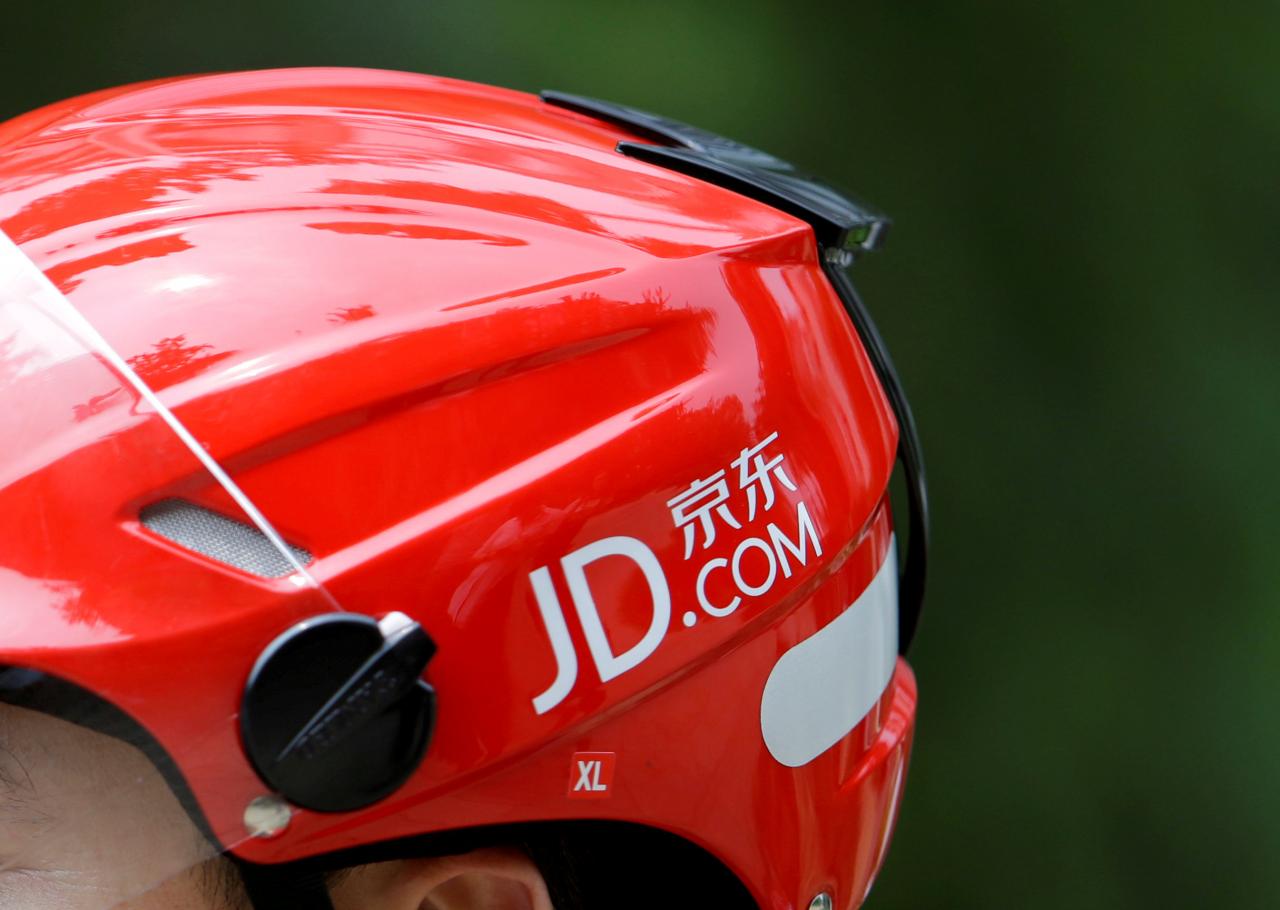
FILE PHOTO: A logo of JD.com is seen on a helmet of a delivery man in Beijing, China June 16, 2014. Picture taken June 16, 2014. REUTERS/Jason Lee/File Photo

Google is investing $550 million in JD, a Chinese e-commerce powerhouse. With this investment, Google will reach new Asian markets where JD does business. But this investment goes beyond expanding territories to actually striving for re-positioning within the evolving dynamics of new retail. It is already evident that Amazon and Alibaba are now “search” companies where customers go straight and search for items they want to buy without going through Google first. Simply, they have disintermediated Google for shopping search, and if Google does not recognize that, it would be making a big mistake.

Google will invest $550 million in Chinese e-commerce powerhouse JD.com, part of the U.S. internet giant’s efforts to expand its presence in fast-growing Asian markets and battle rivals including Amazon.com.

The two companies described the investment as one piece of a broader partnership that will include the promotion of JD.com products on Google’s shopping service. This could help JD.com expand beyond its base in China and Southeast Asia and establish a meaningful presence in U.S. and European markets.

Yet, Google, to remain appealing to users continues to take its search users to Amazon.com, at least when they search on Google.com, as Amazon remains one of the best destinations where people can buy things online.  If Google does not do that, it means it is sacrificing its product quality over unnecessary competitive warfare, in as much as Amazon remains the best ecommerce portal in America. So, Google does deliver traffic to Amazon but Amazon customers searching right at Amazon.com have nothing to do with Google. As Amazon expands into more territories and businesses, that is expected to deepen and broaden with Google losing more “shopping search”. Without a solid ecommerce business, Google may be losing market share. (In the past, Amazon used to buy traffic from Google; my understanding is that has ended or massively curtailed.)

Furthermore, Amazon now generates a huge revenue through advertisement, at more than $2 billion per quarter. In other words, if merchants know that Amazon has the customers, typical with portals and their network effects, they are better off advertising in Amazon over Google. Google takes them to their websites when they advertise on Google. Those businesses could be small with trust factors that conversion rate may be low. But when they spend advert money on Amazon, Amazon takes them to their storefronts where active buying customers can easily purchase items with the security and trust of Amazon irrespective of their business sizes.

I was on Amazon today working on gifting items when I noticed something: Amazon now runs a serious advertising business. And there are many companies putting money in that ecosystem. If companies think that advertising on Amazon is a better deal than promoting their websites on Google, it simply means that Google has a major problem in its hands.

Facebook has walled off the partying and events communities, and if Amazon takes care of the merchandise, I do not know what will remain for Google. Yes, we put adverts for two major things: events and products. If Google becomes a second-platform for both, there is a problem for Larry Page and his lieutenants in Alphabet, the parent to Google.

For small businesses, Amazon advertisement is a better deal than spending money on Google. When you shop on Amazon, the trust factor is high despite possibly buying from a 3rd-party brand [Amazon has many protections for buyers]. Yes, Amazon takes you to a place where you spend money peacefully. Google takes you to a website where you need to do another level of risk processing before you spend money. That is why Amazon advertisement is appealing to merchants, and Google is worried.

For most merchants, Google gives page views, Amazon sends money to bank accounts. The future of the web would be fought on purses and ecommerce would be at the heart. Google through JD wants to get into that game because Amazon and Alibaba are circling.

All Together

This JD partnership will help Google to increase its share of the ecommerce domain. As noted in the partnership announcement, if JD expands in U.S. and European markets, Google would benefit. Anything JD could give Google to reduce the clear dominance of Amazon on shopping (and associated shopping search) would be a boost in U.S. and Europe. The Google shopping service is many years behind Amazon; JD could help it improve on that product and relevance in North America. And doing that could help Google to sell its physical products like Home, Pixel etc which need a solid ecommerce platform.

Leaving the market to Amazon uncontested means Google cannot be sure how some of those physical items would be sold especially now that more device sales are moving online as malls collapse across America [Google may like to reduce its presence on Amazon portal]. There is a clear convergence on ecommerce, and Google wants to be part of the game. Investing in JD would help it to fight the presence battle with Alibaba and Amazon. But it would be a long one as Amazon and Alibaba are category-kings already.

The Beginning of Starting a Startup

0

Starting a startup is not a vacation journey. It is a very high intensity call that requires many sacrifices. Before you decide to embark on this journey, you need to be prepared. It is far easier to join a mature company and earn wages than risk starting something new.

But yet, if you have a top-grade skill, there is no irreversible risk. The fact is this: if you are good and run a startup and fail, there are many entities that would absorb you. In short, having started something becomes an experience and differentiator, if indeed you tried hard enough before the failure!

The biggest mistake in the world is to see the opportunity pass by when you believe you can change a market and earn great returns for doing so. After all, most of these opportunities do not always repeat. That means if you miss them, by starting the company at the moment, you may never get the chance again.

NB: Startup in this content means going to create something of value with transformational impacts in the market. It is different from small business which could be barbing salon, selling corn along the roads, etc that rarely scales. You do not build such firms without focus.

“A company five years old can still be a startup,” writes Y Combinator accelerator head Paul Graham via email. “Ten [years old] would start to be a stretch.”…

One thing we can all agree on: the key attribute of a startup is its ability to grow. As Graham explains, a startup is a company designed to scale very quickly. It is this focus on growth unconstrained by geography which differentiates startups from small businesses. A restaurant in one town is not a startup, nor is a franchise a startup.

Yes, while you can start a bank in Nigeria today, the reality is that those that started in 1990s had it easier, at least the regulations, were not matured then. The same applies to university licenses. There used to be a time when government was begging proprietors to come and pick free university licenses. Today, you need to have built a campus before government would even consider your application.

The same goes for starting a telecom operator in Nigeria. Compared with 2002, it is far tougher now as most of the profitable customers have already been absorbed by the incumbents. Now is the time for fintech but say in 10 years, it may be harder as platforms would have locked the best customers. The same analogy plays across markets and industries.

In this video, I explain the beginning phase of starting a startup by examining the existence of friction in the market and the preparations required to have a great company.


This is part of a series which I will be expanding.