Nigeria’s Kobo360, accepted into YC’s 2018, has raised $1.2 million. The logistics startup built on the aggregation construct will use the capital to expand its business and introduce a new product – Kobo Wealth Investment Network (KoboWIN). KoboWIN is a crowd-invest, vehicle financing program which will make it possible for drivers to finance new trucks through citizen investors.
Kobo360 was accepted into YC’s 2018 class and gained some working capital in the form of $1.2M in pre-seed funding round led by Western Technology Investment announced this week. Lagos based Verod Capital Management also joined to support Kobo360.
The startup — with an Uber -like app that connects Nigerian truckers to companies with freight needs — will use the funds to pay drivers online immediately after successful hauls.
Kobo360 is also launching the Kobo Wealth Investment Network, or KoboWIN—a crowd-invest, vehicle financing program. Through it Kobo drivers can finance new trucks through citizen investors and pay them back directly (with interest) over a 60 month period.
I wrote about this company last year calling it ‘Nigeria’s best logistic company”. Its business model is asset-light (if not asset-free) and is engineered to use customer service to deepen competitive advantage. This news has simply validated the points I made about its vision.
Kobo operates under the principle of Aggregation Construct which depends on network orchestration where it works as an arbiter for many partners and customers. With this model, the customer experience becomes a key part of its business. It does not have ships, planes and trucks delivering services from U.S. to Nigeria and beyond. But it has a technology to simplify trade and commerce. It has got happy customers who do think its services are even better than firms like DHL. Interestingly, companies like DHL make it possible for Kobo to serve those customers.
This company is doing great – innovation always wins: “Kobo360 has served 324 businesses, aggregated a fleet of 5480 drivers, and moved 37.6M kilograms of cargo since 2017, per company stats. Top clients include Honeywell, Olam, Unilever, and DHL.” Congrats to Obi and Ife.
I have noted many times that the Nigerian ecommerce sector needs to fix its marginal cost challenge. That challenge is not digital but physical, and that means that ecommerce in Nigeria is largely a meatspace (offline) business. Anyone that fixes that marginal cost on distribution will pioneer a new dawn in the sector.
There are three major marginal costs which are consequential in the broad ecommerce business: cost of goods sold (COGS), distribution cost and transaction cost.The distribution cost is the most challenging in Africa because that is the cost that turns an ecommerce operation into a traditional physical business. The first, COGS, is incurred irrespective of the nature of the business. It is the cost of production, i.e. the cost of producing the product which is being sold. The last, transaction cost, is mainly the fees incurred as part of the commercial transaction activity. This can include a merchant fee for accepting credit/debit card from the payment processor. Here, I explain how the distribution cost can be handled.
In a piece in Harvard Business Review, I made a case that logistics remains a big issue. That logistics is the driver of that marginal cost paralysis. Until someone has a clear solution to logistics, it would be hard to make money in this sector since we do not have a functioning postal system. When we fix logistics, we would become unbounded by geography, distributing items not just in major cities but across the nation.
Amazon Human-Logistics
Amazon has just invented a clever way to handle this logistics issue: build an aggregation anchored on human systems at scale. Yes, Amazon wants people to become small business owners to deliver packages for it across America. That means registered people would come to its distribution centers, and collect items which they would take to shoppers’ homes and offices. Imagine armies of postal staff across American communities.
The company wants to help launch small businesses in the United States dedicated to taking its packages on the last step of their journey: from local Amazon sorting centers to the customers who ordered them.
It’s the latest attempt by Amazon to gain greater control of the delivery network at the core of its Prime business, which ships 5 billion packages a year globally.
{…}
Amazon’s new “Delivery Service Partners” and their staff members won’t be employed by the tech company. The initial $10,000 costs will go to helping them start an independent business that has to begin with at least five delivery vans and ramp up to 20 vans over an undisclosed period of time.
Amazon has negotiated discounts for approved entrepreneurs, including lower rates on insurance, fuel and leases for Amazon branded vans that have been customized inside for package delivery. People have to apply at logistics.amazon.com and be approved by Amazon. It’s also setting aside $1 million to specifically recruit and help military veterans become partners.
This works because it is America where trust is huge and Amazon can easily vet them effectively. We may not be as lucky in Nigeria. Yet, this is a model one has to consider. Can you get trusted people to become quasi partners to move items? They do not have to be part-timers but people that do this for a living.
All Together
We may not be as lucky as Amazon to have a system where people can be vetted at scale. Yet, there is something to learn from this model. If we have the ecommerce companies working together, the possibility of having critical volume will emerge. This will save them the burden of owning the employees and fleet. The vans for Amazon could be motorbikes in Nigeria. Those okada riders may make more money through this than riding bikes as transporters. But they would need volume to make this work. Bringing all the ecommerce into a logistics operating system will unlock value for many players.
Have independent business owners with bikes move items in Nigeria (source: Alamy)
Can someone make okada riders to be logistics and independent players? Sure, it is challenging to get many you can trust. The goal would be to make this very exciting that they see the distribution business as a good job.
The Nigeria ecommerce will see extensive growth when the challenge of marginal cost of distribution is fixed. I have suggested the hybrid model which the new Konga is built upon. But that model is very expensive and can only be executed by companies with deep capital: it involves running physical and digital stores.
Few years ago in the heat of the recent Nigerian recession, I stood to begin a presentation in a Lagos bank Board meeting on technology-enabled business re-engineering with specific focus on cost. After a very generous introduction from the Executive Director who anchored my presence, one of the Board members asked me: “My son, why have none of you Nigerians in America created Google or Facebook in Lagos…?”
The business leader went on to explain how Apple had enough cash at hand to curtail our severe (dollar) forex paralysis then. He concluded, if one of you has created Apple in Lagos, this forex issue would have been dealt with. Simply, the Central Bank of Nigeria would get dollars from the Nigeria Apple [that Apple will have tons of dollars outside Nigeria].
Sure – it is not that easy to create Apple. But the business leader has a point. And I do not want to make excuses on what has not been done. The fact is that we have NOT done it despite the obvious reasons anyone can put forward on the near impossibility of creating Apple in present Lagos and Nigeria in general. But for today, the simple fact is this: we have not done it. Period.
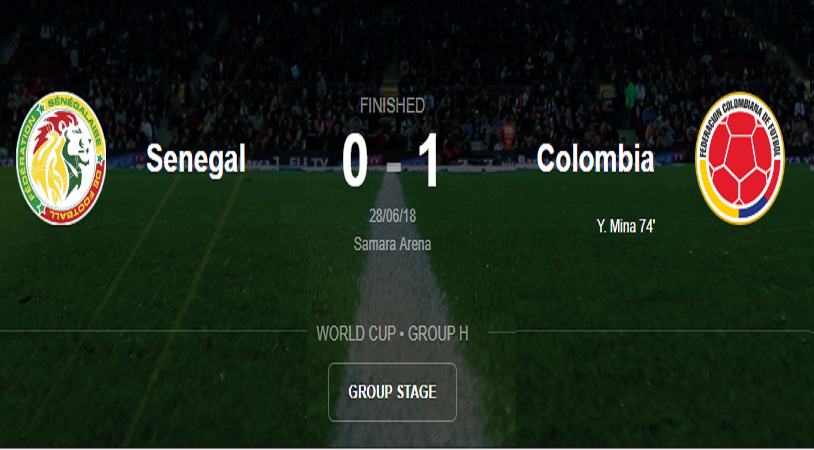
As Senegal descended into exit with no African country making it into the knock-out phase, my mind flashed back to that Lagos encounter. As Africans, we rise as others: good academic grades, success in youth global football events, excellent youthful musical vibes, etc. But that is all – we exit the stage despite our bravadoes at the youthful phases. Yes, our Western compatriots would extend their youthful excellence into late ages while we fizzle. This is very shameful because there is no exception here, across most sectors. You can argue that we are not well prepared to World Cup events. But you cannot neglect the fact that we have won youth FIFIA tournaments! So, I do not agree on that preparation nexus. There is something fundamentally wrong somewhere researchers must dig out.
Nigeria has been winning youth football events since 1985. Yet, we have not made any impact in the World Cup. Ghana has done the same; yet nothing significant in the main event that matters. It is the same thing – we do well in MIT, Harvard, etc but upon graduation, the very people we actually did better in classes shape the industries for us. I have no answers but you can blame whatever you want to blame. But the fact is the fact.
I am not a social scientist but this is troubling – how can you get five countries to World Cup and none makes into the knockout stage. Yet, some of these countries excel in the junior tournaments. What is the issue?
When you pay for adverts on Guardian, NTA and billboards in Lagos, you would be charged VAT (value added tax). But when you pay for Facebook and Google adverts, especially if you use the self-serve service, no VAT is assessed on you. It is not clear if there is a mandatory online collection of taxes like VAT by corporations especially when the companies are foreign with local domains. The implication is that governments do not earn taxes on adverts shown to their citizens, and paid by their citizens and corporations. In coming years, governments have to find a way out: Egypt is pursuing that roadmap to improve its capacity on online tax collection.
Egypt’s parliament is evaluating an option to tax people and organizations that advertize on platforms like Facebook and Google. This, according to some of Egypt’s parliamentarians, will help the country “protect the Egyptian advertising market.”
Egypt is about to reach a strategy allowing the government to implement advertisement taxes on social media websites, especially Facebook and Google. According to Parliament statements, imposing these taxes on the advertising companies will protect the Egyptian advertising market, and adjust its mechanisms.
As companies like Facebook deepen products like WhatsApp as portals for commerce, governments have to develop new tools on tax collection because there is a possibility that countries may become dead pipes: their citizens and firms do the commerce but the country gets no tax benefit. Yes, everything would be warehoused offshore through some special tax arrangements in tax havens.
“It’s clear those companies will probably jump directly to WhatsApp to connect to their prospective customers and get their businesses discovered.It’s unclear if they’ll advertise on Facebook’s Newsfeed.” Decot was speaking to me on-stage at the MEST Africa Summit in Cape Town last week.
But that doesn’t mean Facebook thinks African or Asian businesses will never advertise, it’s just taking a different approach. The first move has been to create a WhatsApp Business app for millions of small businesses to reach their customers. The next step has been to “fix the plumbing” with key services like payments and discovery and identify the “underlying business model”, Decot explains. “If we connect many millions of consumers with many millions of businesses at some point the businesses will pay us to get in front of more customers. We don’t have to reinvent the wheel.” (QZ Newsletter)
Inability to effectively collect online tax may not look like a threat today but as more business systems move online, new models for tax collection including online tax would become critical. Whenever you pay that Guardian Newspaper advert, you have to send that VAT money. But since you have been paying for the Facebook and Google adverts, nothing like that has happened. It should be a concern because even though we do most things online, we still exist in the physical world where government needs resources to provide social services.
Certainly, we need a new model on tax collection and that would require new tools and processes. We cannot allow the web to destroy the value associated with tax even as it continues to redesign the structures of many other areas. Nigeria desperately needs innovation on online tax collection.
As the wise man Solomon wrote many years ago, there is time for everything. You must know when to invest in your career and when to monetize your skills. Getting an extra degree is not a distraction. Getting a certification is not a distraction. Learning something new should never be a distraction. Always make sure you have a strategy with resilience to decouple your future from the decision of any man/woman.
Fresh graduates, planning for the deep future may make you look stupid before peers who may not see beyond tomorrow. That first job is not for buying cars and expensive jewelry. It is to re-invest and INSURE your career with skills.
Accumulation of capabilities is a continuum and catalytic in modern career planning. The nature of labour is changing (I discussed that extensively in the European Commission two weeks ago); you must adjust. If you have not noticed it, know that more than 80% of non-public workers in Nigeria see dwindling wages after 15 years. The banking sector, oil & gas and increasingly telecoms are brutal on this: they cut workers and those workers never recover to earn as much as their old wages.
Ask yourself: what would happen if after 15 years, this bank does not want me? If you pay attention, if 600 people join our banking sector in a set, via entry level, less than 30 would remain from that cohort after 15 years. The other 570 people are out in a pyramid-like topology with 40% gone within 5 years, another 30% within 10 years, etc.
Fresh graduates, there is time for everything – PLAN that Career. And accumulate capabilities right now to insure those careers. Nigeria’s economy is relatively small with minimal space for labour mobility. You need to be strategic to manage the situation, and it begins today. Have options – there is always something if you plan it well.
I have come to see that what matters, in career advancement, is pursuit of excellence in what you do. Sure, there are areas that make finding opportunities easier, in our modern global economy. But the fact remains that anybody can be anything. Your life tenacity matters more than what degree you have in the bag. It is dangerous to have self-pity because of your degree or the school you attended. Looking into the future and finding energy to advance your life is what will drive you into abundance in your career.
There is abundance in Africa, across our cities with their hidden acres of diamonds. You will not notice if you are always looking up. Sometimes, careers advance when you look a little bit downward. Good luck.
Never make your career management a game of chess especially in Nigeria!