DD
MM
YYYY

PAGES

DD
MM
YYYY

spot_img

PAGES

Home Blog Page 7110

Lessons from Blockchain Hair Dryer

1
blockchain hair dryer
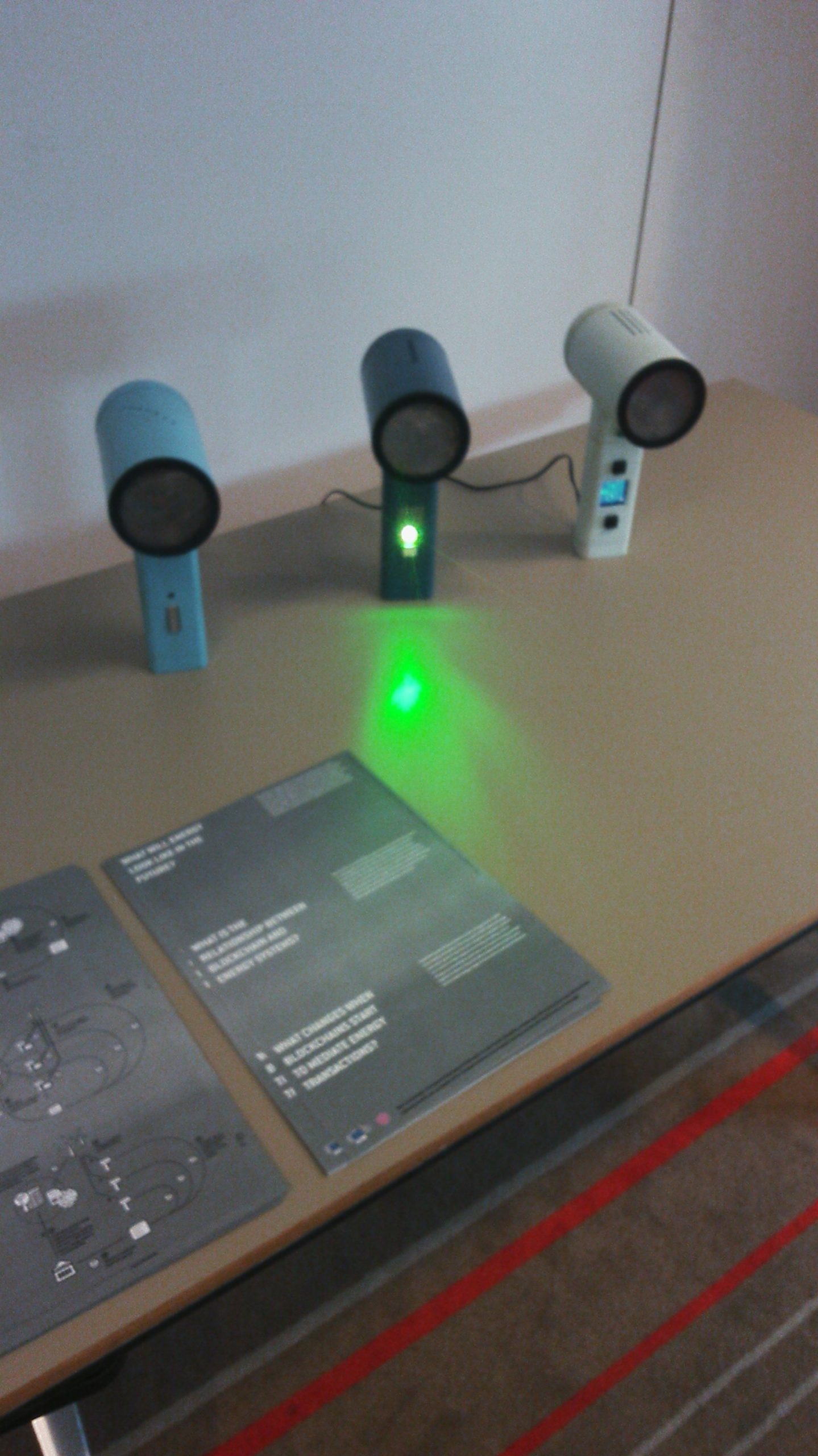
blockchain hand hair dryer (source: EC)

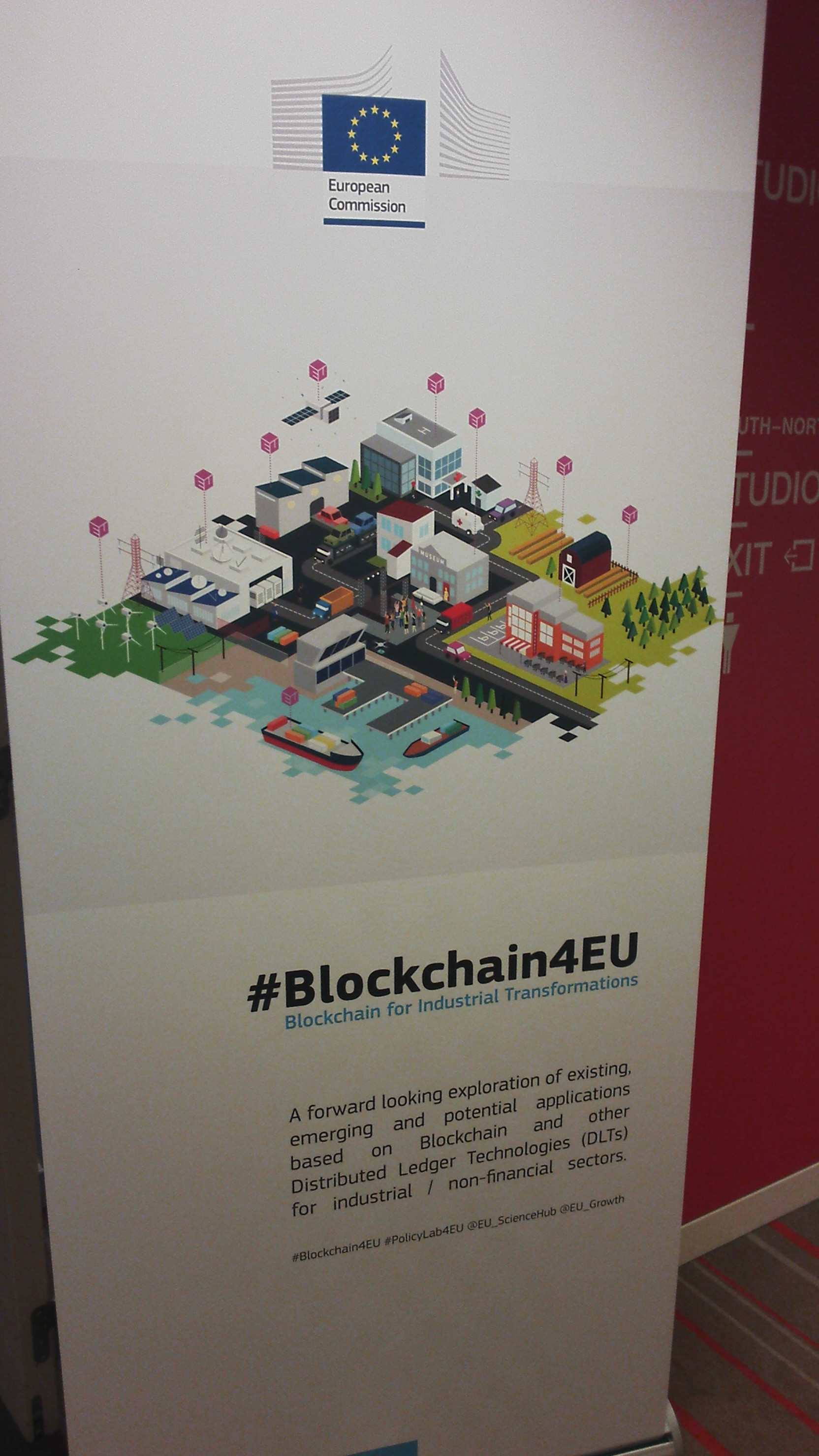
In Europe today, I received a guided tour: the blockchain unit of the European Commission took me through new technologies it is funding and creating. I was stunned because I did not know that EC has many technical PhDs warehoused in some labs, pushing and researching for the future of Europe. Yes, I know of the PhD Economics but blockchain and AI experts? Not really.

Blockchain has been heralded as one of the most exciting new technologies with capabilities to redesign industrial sectors over the next few years. It is “a digital ledger in which transactions made in bitcoin or another cryptocurrency are recorded chronologically and publicly.” Wikipedia explains it as “a continuously growing list of records, called blocks, which are linked and secured using cryptography”.

As we went through the tour, one of the items got my brain firing. They have built this hand hair dryer that could buy the cheapest electricity using blockchain. In the dryer is a blockchain node via Internet connection which links it into an ecosystem. As you use the dryer, it would be combing the world, looking for the cheapest electricity. Once it finds, an AI bargains, and closes the deal. You would not even know. Yes, you would continue to dry your hair while the agents of bits and bytes do their jobs!
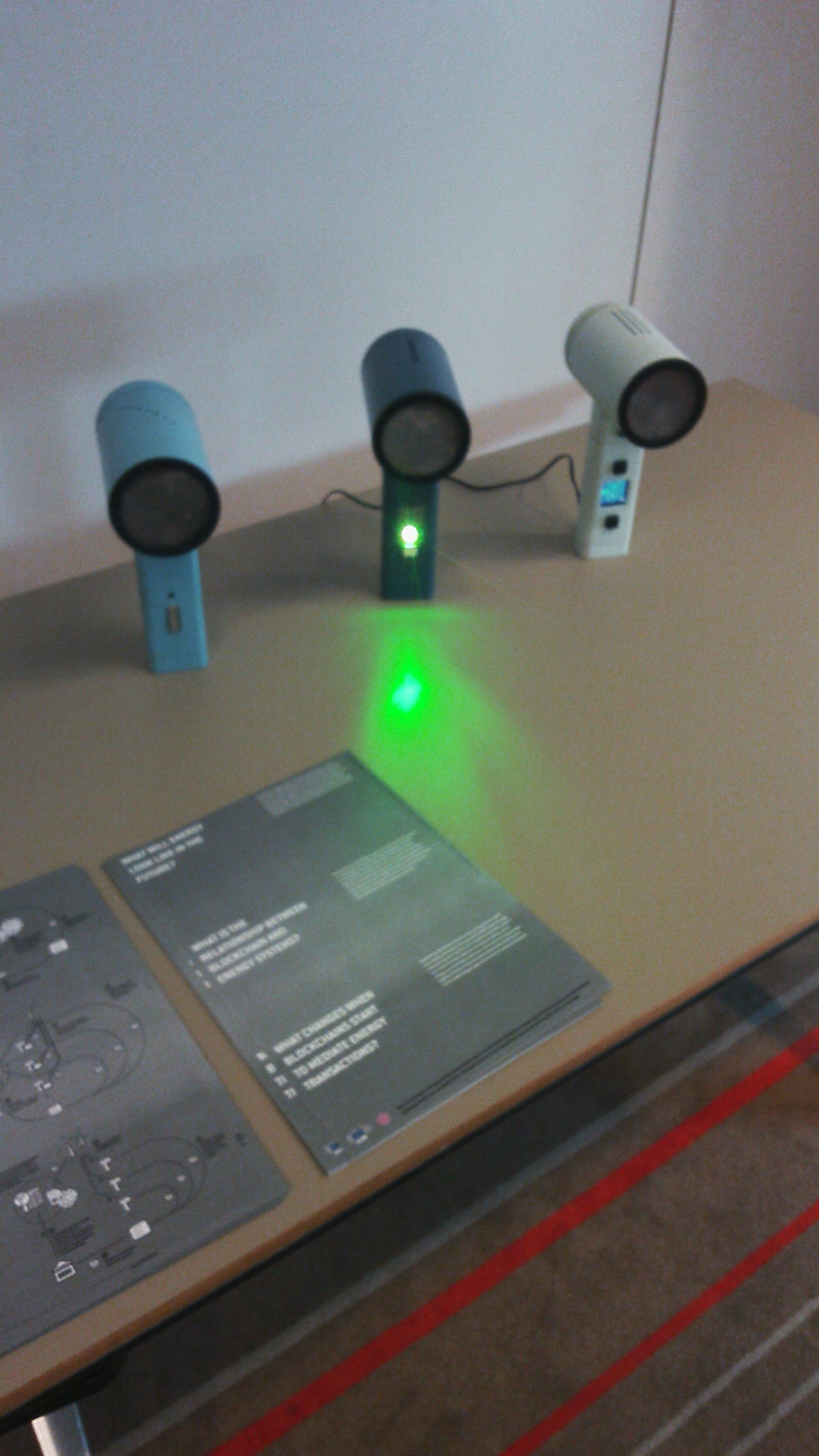
Blockchain hand hair dryer (source: EC)

The thinking is this: in the near future, electricity would be truly unbundled with the amalgam of renewal & alternative energy (solar, wind, geothermal, etc) entrepreneurs participating in big ways. Out of nowhere would be energy aggregators who would become brokers of electric power. They would acquire distribution lines and then push energy producers to compete for access into homes and offices. Think of Google AdWord where advertisers bid for the opportunities for Google to show their adverts on AdSense-supported websites. The bidders play with amount they are ready to pay. If the price is very low, Google would not show the ads even though the person is running an ad campaign. Yes, it is possible if your bidding is low, you would be on a campaign and none of your ads would show.

So, for electricity, the energy producers have to set their prices. They have incentives to make them low to win the bids. The distributors would pay based on the amount consumed through their networks. The implication is that every energy producer would be forced to have very competitive price since without a good price, the users, through blockchain, would likely not use power from that firm,

For this hand dryer, the local Belgium utilities company has a base price but there are brokers who have bought power at scale to resale at small margins. Even though the local utilities company is physically piping the electricity to the dryer, the money matters are being handled by other companies (energy traders, futures and speculators). And there are many of such companies that before a woman finishes drying her hair, the dryer had bought electricity from three companies, autonomously, with no help from the user.

Nigerian Disco Scenario

The Nigerian Disco (distribution companies) issue is unique because our problem is that we have not gotten the electricity to homes. Also, there are issues with smart metering and payments. But looking at what they are doing in the EC, it seems the problems we are trying to solve are already stale! Simply, you do not need any meter because blockchain can do the metering [of course we do not have decent Internet access, but that would change]. The payment issue is handled automatically as the bidding, buying, payment, and settlement are done autonomously meaning that the issue of non-payment is not a possibility.

Of course, besides a reliable Internet access, we need to have a credible way to execute the payment. According to the EC, they are working on something. Because it was shared in confidence, I will not discuss it here as it could be misinterpreted.

Nigeria would need a digital currency tied to the Nigerian naira to enable efficient conversion on what is happening in the blockchain and the real world. This is imperative as blockchain has many applications for Africa as I noted in my book. We cannot just wait without dealing with that currency conversion paralysis with an indigenous solution.

Virtual Energy Operators

With blockchain, this is where we are going on electricity: Virtual Energy Operators. These entities would be similar to Mobile Virtual Network Operators. Simply, the technical company that provides the electric line to your house, is not necessarily going to be the company you would be paying.

A mobile virtual network operator (MVNO), virtual network operator (VNO), or mobile other licensed operator (MOLO), is a wireless communications services provider that does not own the wireless network infrastructure over which it provides services to its customers. An MVNO enters into a business agreement with a mobile network operator to obtain bulk access to network services at wholesale rates, then sets retail prices independently. An MVNO may use its own customer service, billing support systems, marketing, and sales personnel, or it could employ the services of a mobile virtual network enabler (MVNE).

This implies that if a distributor connects a line to your house or office, using blockchain, three or more energy producers may be competing and bidding for you to use energy from them. And depending on the prices, the blockchain AI in your device would take the best offer, and while you are still in the middle of the activity, it could still switch to another producer to take advantage of the current best offer.

Inhale and exhale, we are still far from this, in Nigeria. But this is the future Europe is planning for. They do believe that with renewal and alternative energies, it would not be long for this new redesign to become the norm.
Template for Solar-Powered Minigrids Emerges in Nigeria

0

In a developing country with a population of 186 million people, only a lucky few who live in central locations throughout Nigeria have access to power. Most of the population live in small rural communities that have no access to power in any way. However, that all looks set to change as a handful of solar-powered minigrids are being trialed across some of the most poverty affected areas. The future of sustainable, energy living is looking bright for Nigeria. From better insulation, to solar energy, there are a number of improvements being made thoughout the nation.

Lack of power in Nigeria

Nigeria’s power grid simply isn’t big enough to support the size and population of the country. As the majority of the population lives in small, somewhat isolated villages, this means that a huge proportion of the country’s residents live without power. Extending the grid to cover all of the country is too costly, and because these small communities are so poor, there is no possible way for investors to earn back any money by extending the power grid. Javier Betancourt, the chief of party for the Renewable Energy and Energy Efficiency Project (REEEP) in Nigeria, explained that funding this development would actually cause investors to lose money: ‘There are many communities – most, actually – where extending the grid is a net present value-losing proposition. You will never get enough money out of these communities to justify doing this.’

This means that without looking for another solution, the remainder of the country would remain powerless for the foreseeable future. The introduction of minigrids could be the ideal solution. 

The trialed minigrid 

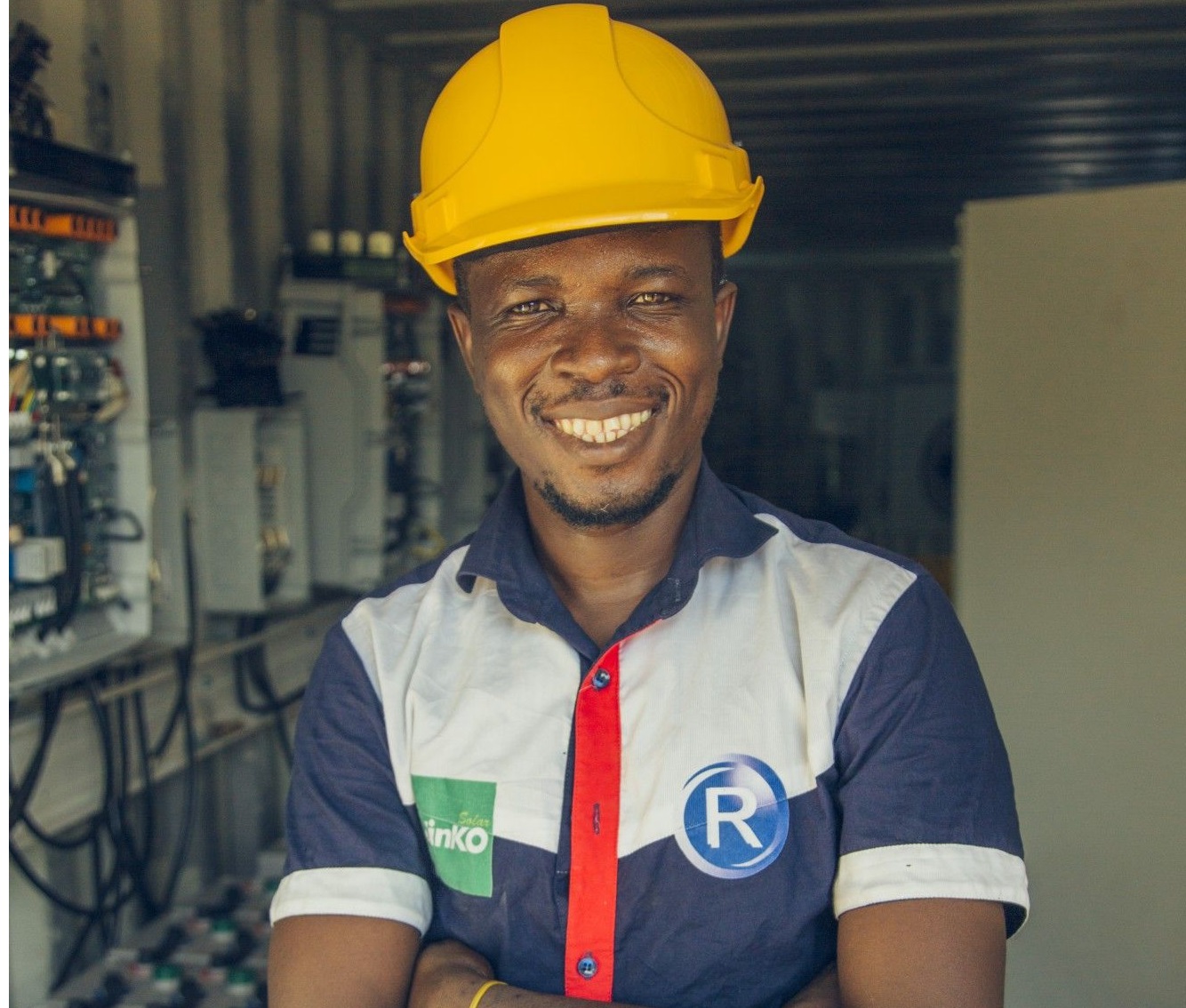
A mingrid is currently being trialed in the rural town of Gbamu Gbamu, population of 3,000. The minigrid is solar-powered and installed with 30 kilowatt solar panels, as well as backup batteries and a generator to ensure the town never has to go without power again. The minigrid is thought to be much more secure than the main grid currently in place to support Nigeria. Even towns and cities in Nigeria that are on the grid may only get enough power for a few hours a day, or have to put up with frequent power outages. The lucky residents of Gbamu Gbamu could actually end up with a more reliable source of power than the rest of the country.

Financial backing

Of course, finding funding for minigrids is not much easier than finding funding to extend the main grid, but it is hoped that by breaking the supply of power down into smaller chunks will attract investors who have less to lose if the venture should prove unprofitable. The initial trial has been supported by government grants and charitable givings, as well as support from crowdfunding campaigns. It is hoped that the trial of this minigid will successfully show that once these forgotten communities have a power source, they have the ability to turn their communities around and be more profitable, thus making the venture more appealing to energy companies and likely investors. 

Moving forward with minigrids 

The future of Nigeria looks a little brighter with the help of solar-power minigrids. Bolade Soremekun, the CEO of Rubitec Solar and the investor behind the Gbamu Gbamu minigrid, has already planned to construct between five and 10 more trial minigrids over the next two years. He firmly believes that once investors see the success of a few minigrids, they will see the scalability in the project and want to build hundreds across the country. This will mean a profitable venture for the investors and a better quality of life for the Nigerian population.

by Ada Scott contributed this piece.

Nigeria Must Advance the Production, Dissemination and Usage of Knowledge

2
EU Knowledge Week

Good people, I was jealous today in the positive sense of it: Europe is collecting ideas to map a future. They are simply harvesting ideas from around the world, challenging and testing their own hypotheses. Everything was programmed.

Some of European Commission leaders who manage billions of Euros just look ordinary. They took notes, asked questions and followed up. There were no endless greetings and protocols [that irritating part of events in Nigeria]. It was all business. They do this every two years but this year’s one is blowing my mind.  I mean, there is big innovation in how future conferences would be run.

Yes, besides panels and plenary they added gaming. A team from Holland built this remarkable game to model the EU countries in 2050 with possibilities and scenarios. Predict your world, they would design it in real-time. The market and political forces become the competition vectors, translating into jobs, wages, healthcare and more.

Nigeria is losing grounds. We are not thinking. We are just eating eba, amala and wasting hours.  We desperately need to have debates (especially at presidential and governorship levels) for our politicians for 2019 elections. Someone has to sponsor a Bill to make this a law. Possibly, that process will improve the quality of the system.

Sure, debate may not be the key element for determining leadership capabilities. But at least it forces the person to think about issues as he/she prepares. We need to elevate the production, dissemination and usage of knowledge in the process of governance in Nigeria if we hope to make progress, at scale.

There is no problem in electricity, road construction, transportation or agriculture that someone has not thought about in Africa. From our universities to our research institutes, we have inventions (yes, ideas) for most of the challenges. But despite these inventions, we do not have the products as we continue to experience poor electricity supply, poor roads, poor transportation networks, etc. If you visit food and drinking joints across most African cities, you will be amazed on ideas emanating from people on how to fix our challenges. Indeed, our continent is rich in invention. We are creative.


I am attending the European Commission Knowledge Week in Brussels

EU Knowledge Week

Liberate Your Mindset

1
Liberate your mindset

Liberate your mindset and think abundance. Your vision cannot be impactful if you dwell on scarcity. The best energies are released when optimism triumphs over scarcity. Have a shift of your mindset and begin to like the world you live. To thrive in a class, it is always good to like the teacher. To get the best from the world, it makes sense to imagine a hopeful world.

To unlock breakthrough in Nigeria, you must see the nation as having the capacity to offer one. If you think nothing can happen, you would experience a stunted mission. And without the certainty of the mission, the result is likely an uncertainty of the vision.

Only you can do this shift. As you walk on the streets of Lagos, Kano and Aba, depending on your mindset, you may feel lost. But in those cities, people are experiencing their moments. The cities would not change to accommodate you: you would have to change to align.

An abundant mindset activates awareness: you see opportunities where people just complain. And because of your optimistic mission, you can go out to pursue them. It takes a man who believes there would be tomorrow to start a company in Yola, Uyo and Lokoja. For many others, Nigeria was unborn tomorrow, but buried yesterday!

Still in Brussels attending the EC Knowledge Week.

Fasmicro Selects Abuja and Aba for Zenvus Demo Farms

0
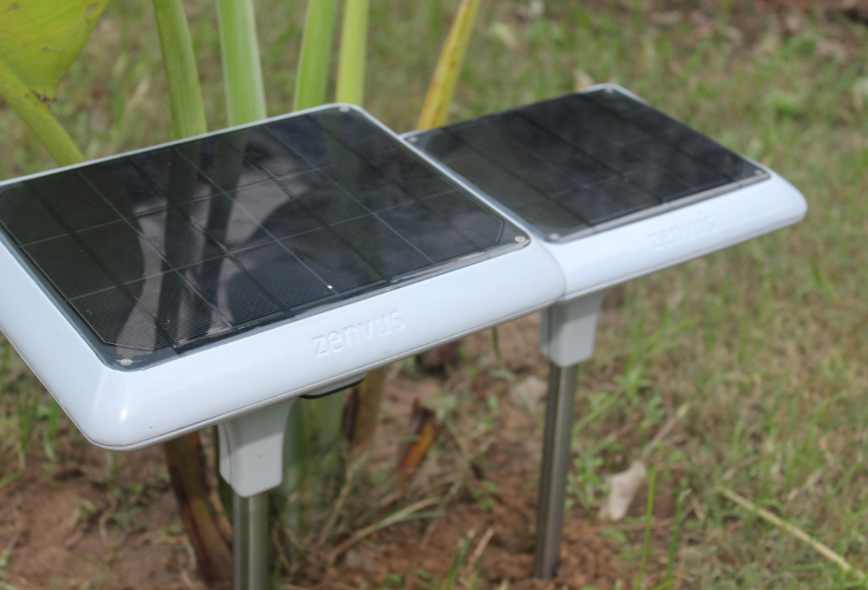
Zenvus

Today, Fasmicro Group finalized the processes to establish Zenvus Demo Farms in two Nigerian cities – Aba and Abuja. These demo farms would help governments and cooperatives [our major focus at the moment] experience deeper engagements in our award-winning technologies. We would plant rice in Abuja demo farm. Aba demo farm will be for maize. Through these farms, we would showcase our innovations in live sessions for clients.

Fasmicro Group completed the acquisitions of the lands which we will also use to demonstrate the best practices in modern technology-driven agriculture in Nigeria.

Similar farms are planned for Zambia and Zimbabwe. Our vision is to anchor a new framework for Africa’s agriculture and we are working towards just that.

The farms would be launched in 2019 during the wet farming season.