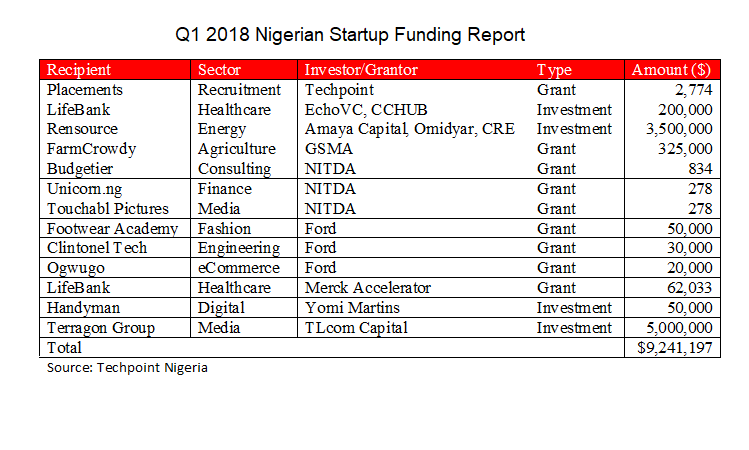
Techpoint has put together the Q1 2018 funding universe of Nigerian startups. The total is about $9.3 million. Q2 which covers April – June would certainly do better as many companies raised money in April.
The major purpose of this report is to make valuable data available to concerned stakeholders. The report, which is meant to serve as a quarterly overview, will be a buildup to an annual report and would help understand what is happening in such a vibrant and dynamic space. We believe these reports will provide a basis for stakeholders’ analysis and decision making with respect to Nigerian startups. We will try not to bore you with just numbers. The report will look into funding by types, industries, quarter-on-quarter growth rate (which will not be in the maiden edition) and more.
During the quarter under review, 14 startups got funding, more than 60% of which were grants. The total fund that got injected into the startup space for the quarter is $9,241,196 with Equity Investment accounting for more than half of that figure.
Certainly, this is not the full picture since many companies do not publicly disclose fund-raise success. Nevertheless, you have to work with what you have.
Beginning this weekend, I will be working in Brussels, spending time in the European Commission all through next week. During this period, I will be giving talks, speaking in panels and also telling people about Africa and the great nation – Nigeria.
On Monday at 11.30am, I will be on panel on the future of work with some policy experts from Oxford University, EU etc. On Tuesday, I will have my floor to speak on technology bringing the mix of academic, entrepreneurial capitalism and visioning capabilities.
By 2030, tech-savvy, hyper-connected millennials will represent 75% of the workforce, and older generations will work longer. Advancements in technology and automation are increasingly substituting both routine and cognitive tasks, while increasing the need for new skills and creating unprecedented opportunities.
They would tape it but most times, they do not share. I do not typically use slides or notes to give major speeches. I just start talking and as a Nigerian, it is only when NEPA takes light that I stop! Yes, no slide to share because I do not make any!
If you are in Brussels, InMail or contact my team via Contact Us, and we could connect.
We want to thank companies and entrepreneurs who have registered for my upcoming workshop in Lagos. Also, we have listened that you want a major address on the state of technology in Nigeria during the workshop. So, for the Innovation for Growth Workshop, we have updated the second day, adding in the morning a new activity – State of the Tech Nation address. In this speech which is planned to last 90-120 minutes, I will examine the state of technology, opportunities and how one can unlock wealth in Nigeria. It would be a presentation that brings the fusion of business, innovation and academic rigor together.
This September, I will bring an innovation workshop to Nigeria. I always come to Nigeria to lead programs for banks, insurers, technology companies, governments and more. The cost is above industry pricing, making it very hard for some firms to afford to host me solely.
We would like to welcome you to this workshop, register here.
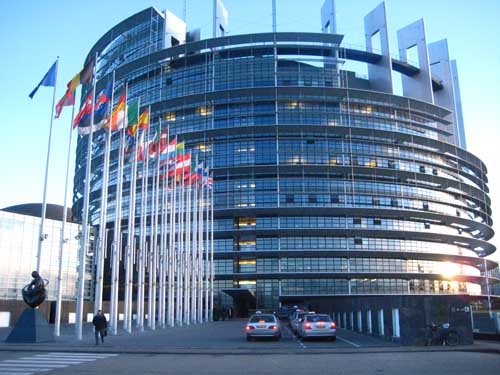
Brussels, European Commission
On Tuesday in Brussels, I will deliver a global version of this talk in the EC headquarters. I will also be speaking on Monday 11.30 am in the Headquarters, in a panel on the future of work and innovation (visit link here), and how nations could prepare.
In the next five years, blockchain will have real plays in Nigerian businesses and building native blockchain applications would be huge opportunities. We would have themes, packages, developer-primitives etc that would make it possible for people to build blockchain-compatible websites and mobile apps. WordPress would need to make plugins to enable blockchain-related applications to interface with the current WordPress framework. I also think browsers like Chrome, Internet Explorer and Firefox would evolve. As those happen, there would be new opportunities in Nigeria, for entrepreneurs and startups. The key is making sure one is prepared and ready to help in fixing this emerging business friction.
People, we have a huge opportunity ahead of us right now in the world. And Nigeria can play a major role. Yes, we lost in the Internet 1.0 and the present Internet 2.0 where we are mere participants. The next one, Internet 3.0, should not pass us by. In my upcoming innovation workshop, we would look at this during my State of the Tech Nation address.
(source: economist)
Internet 1.0 and Internet 2.0
Internet 1.0 could be likened to the dialup era (using wired phone lines to get Internet). Internet 2.0 is the mobile broadband of today. You can put Yahoo and AOL as the faces of Internet 1.0 while Facebook, Tencent and Google match well for internet 2.0. For Internet 3.0, there is no dominant player now (the phase is still at Irruption & Frenzy phases, see plot). Most of the current companies may not evolve to get there.
Internet 3.0
That Internet 3.0 will be distributed and I expect most frameworks to break down in the way we have organized firms to fix frictions in markets. If commerce becomes distributed, the concept of firms in most sectors would struggle because massive disintermediation will happen. How can you be a bank if customers can do banking directly and effectively with no intermediary?
What is Blockchain?
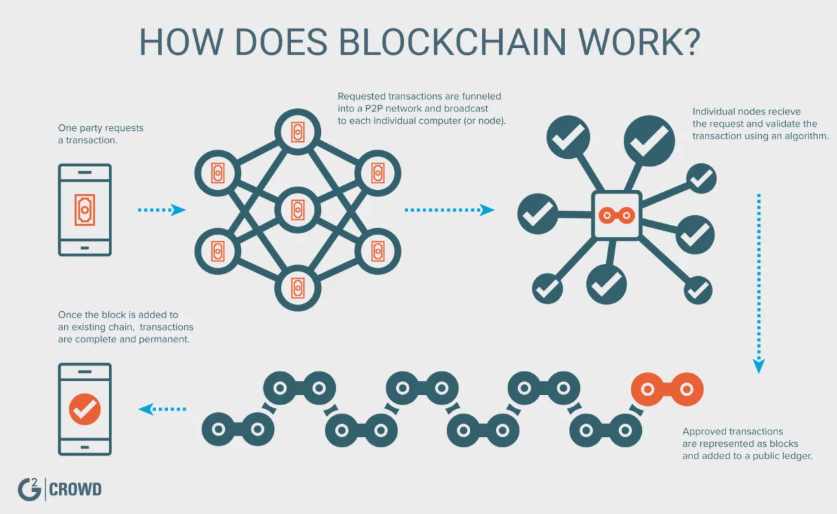
Blockchain has been heralded as one of the most exciting new technologies with capabilities to redesign industrial sectors over the next few years. It is “a digital ledger in which transactions made in bitcoin or another cryptocurrency are recorded chronologically and publicly.” Wikipedia explains it as “a continuously growing list of records, called blocks, which are linked and secured using cryptography”.
Industry Blockchain technology can be applied to a wide range of industries and applications, but not all of them. Common use cases include financial, logistics, real estate, health care, and retail sectors. Industries relying heavily on payment processing and financial transactions have the most common uses for blockchain technology. The public ledger helps streamline processes, increase documentation, and reduce fraud. Logistics companies can benefit from increased documentation of costs, labor, fleets, and shipments. Health care providers and other companies holding large amounts of sensitive information can improve data security using blockchain technology. Other industries can utilize blockchain technology as well, but consider finding examples before committing.
The Nigerian Opportunity
Nigeria operates on a distributed system; we have minimal govt impacts (centralization is only on sharing money, not services). Communities build themselves in distributed ways through town unions. That natural element should spur models for us to be creators in Internet 3.0 as technology accelerates what we have been doing for decades.
Internet 3.0 is going to be massive because from central banks to stock exchanges, under a perfect internet, all frictions would be gone and the existence of entities would be imperiled. When marginal cost becomes absolute zero in a perfect distributed Internet, it would be a new world. We must prepare because if Internet collapses power, Africa would benefit, provided we are ready.
How to Prepare
The most exciting skill coming up in the next few years would be building digital technology solutions on blockchain. That would be integrated and fused with AI (artificial intelligence). But while AI may take longer, in Nigeria, because of the data availability issues, blockchain will advance due to the cost savings most of the participants will enjoy.
I do expect in the next two years a top-grade training institution that would prepare people on building on blockchain to emerge in Lagos [Think of NIIT, ApTech etc which helped on Oracle in Lagos]. I also expect unification in the nation on non-major-currency-tied tokens which can be used for Nigeria-domiciled blockchain contracts.
Internet 3.0 is going to be very exciting. Developing capabilities in that domain would be extremely rewarding. When companies see they can cut intermediaries to serve customers, keeping all the money in-house, they would adopt. And to make that happen, they would need help. That is the main reason why this would be huge. You need to prepare for this future.
The MAIN factor that matters when raising money is building a good company. Other things like the slides, the suits, the no-suits, the pitch style, etc do not account more than 15% of the cumulative impact on success. Success has relations, vanquish is an orphan, they say.
If Nairaland wants to raise $200k today, many will invest. But Seun Osewa is not interested. He has no staff but runs the most popular indigenous African website [he is the only key staff; he has volunteers and minimized seasonal part-timers]. He owns it 100% [yes, he uses “Owner” as his title] and he ignores the world: does not attend conferences, events, ceremonies or anything.
I discuss Seun Osewa, the visionary young founder of Nairaland. Nairaland is Nigeria’s most popular indigenous digital property. His method is unique and by studying him, we can learn how we can build successful digital companies in Africa. Everything we know about scale, product innovation, and team has been challenged by Osewa’s Way. Because of his success*, I do think we need to pay attention. For example, he believes that Nigeria is his market, he does not care about Africa. Also, he does not see the need for outside investment because he does not understand what extra money will do for his business. Furthermore, he avoids publicity even when running a truly successful digital platform. The list goes on….This is Seun.
But monthly, he brings in millions of Naira with largely zero expense. Interestingly, when he has time, he puts rules to discourage engagements on Nairaland. He does not seem to like any social connection. But he runs the most popular indigenous social media website in Africa.
So, with everything you know about Seun, if he wants to raise money before investors who care in the area he works, nothing would really matter than the fact that Nairaland is a tree that produces cash. Many believe that Nairaland can do better but Seun has not changed it since 2005! For example, in-feed advertisement would improve the revenue base.
I am told that Seun has rejected many acquisition offers. He may just have Nairaland as an insurance to his retirement provided the hosting is working! Yes, if that site is up, money will continue to flow into his bank account every month. Many investors understand that opportunity.
So, as you plan to raise that cash, put more efforts on building a GREAT company over the mechanics and process of raising money. People that invest in companies may not even need any special drama when they see a great firm. They may not even need you to talk. Business plan is a waste of time under those circumstances. Yes, they would be asking you to provide your bank account, very fast. It happened in China when Sequoia Capital sued Binance.
Sequoia Capital, a venture capital firm headquartered in Menlo Park, California is suing the Chinese founder of the cryptocurrency exchange Binance, Changpeng Zhao (better known as CZ). The American VC fund reportedly accuses CZ of allegedly negotiating with another firm while he signed an exclusivity agreement with Sequoia.
According to Hong Kong court filings from March 26 and April 24, CZ and Sequoia started talking about terms for a possible investment by the fund in Binance in August 2017. And that the investment would have bought Sequoia almost an 11% stake in the exchange at a valuation of a mere $80 million. Unsurprisingly, as the prices of bitcoin and many other cryptocurrencies continued to rally, the deal seemed unattractive to CZ and the talks collapsed by the middle of December 2017.
Yes, the investor sued the founder for not collecting his money. That is the power of a great company. A great business makes one a great presenter because investors like good metrics and numbers. Sure, you need to work on your story telling and presentation but most times, those things do not matter if you do not have a great company.
But as you go through the process, even if that is not working, it does not mean your company is really bad. Sometimes, the company may need to move to the next level to unlock that value for investors to see. Many great companies like Mint.com struggled to raise money at the beginning. But when they picked up, money flew in. And that is a lesson: do not raise money when your firm is not in the “best” possible position. You would waste your trust-bank credit and come out empty-handed.
And most importantly, try to have a Plan B which means if that VC money does not come through, the company would not have to go extinct.