DD
MM
YYYY

PAGES

DD
MM
YYYY

spot_img

PAGES

Home Blog Page 7117

Different Revenue Models for your Business

0
Different Revenue Models for your Business

Business is really about margins, and revenue models anchor margins. You need to bring in revenue if you plan to be in existence for long. It is from revenue that profit would come. Without revenue, over an extended period, your mission would stall and the vision lost. In this table, I present some revenue models for your consideration. Your business strategy would drive the one to adopt and it is not cast on stone. Yes, you may pivot from one model to another until you hit the sweet spot where customers are happy: paying, spreading the message, and enjoying the value you have created.

Largely, we are in business for profit margin. It may not be obvious because there are many companies which operate for years without profitability, by raising tons of money, in successions. But even with that, over time, the companies will be expected to make money.

Always remember that when most startups talk of execution, they really mean revenue. Yes, sooner or later, all executions would be linked to revenue.

When you execute, you enable growth. Growth fixes all problems. Growth makes you a good presenter before the Board. Growth makes your grammar to become flawless. Growth brings respect as you stand before the investors. Growth makes legends. When you grow, you are moving. It means you have momentum. The bigger your size, and the rate of that growth, the more is the momentum [In Physics, momentum = mass x velocity; velocity is speed with direction]
Different Revenue Models for your Business
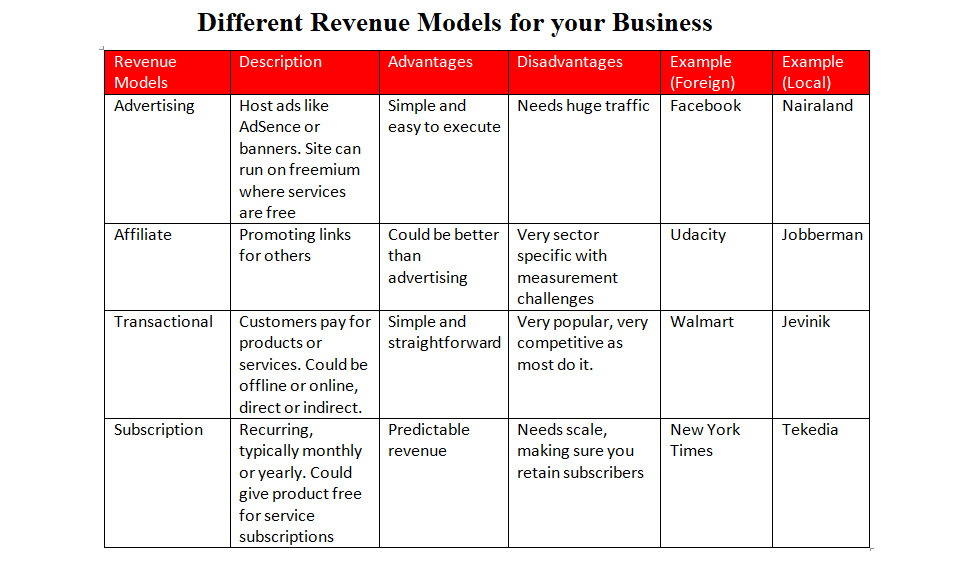
I have created this table from a piece on Founders Institute. There, they explained the revenue system, and how business model connects with revenue stream and revenue model.
  • A revenue stream is a company’s single source of revenue. A company can have zero or many revenue streams, depending on its size.

  • A revenue model is the strategy of managing a company’s revenue streams and the resources required for each revenue stream.

  • A business model is the structure comprised of all aspects of a company, including revenue model and revenue streams, and describes how they all work together.


Revenue Models Description Advantages Disadvantages Example (Foreign) Example

(Local)

Advertising Host ads like AdSence or banners. Site can run on freemium where services are free Simple and easy to execute Needs huge traffic Facebook


Nairaland
Affiliate Promoting links for others Could be better than advertising Very sector specific with measurement challenges Udacity Jobberman
Transactional Customers pay for products or services. Could be offline or online, direct or indirect. Simple and straightforward Very popular, very competitive as most do it. Walmart Jevinik
Subscription Recurring, typically monthly or yearly. Could give product free for service subscriptions Predictable revenue Needs scale, making sure you retain subscribers New York Times Tekedia

Nigerian Graduates, Go and Find a Job First!

0
Go and Find a Job!, Nigerian Graduates

Dear Nigerian Graduates,

Congratulations for your graduation; you have done well.

Today, I have some words for some of you on entrepreneurship. Yes, I have been getting some notes on one idea or another. You want to start a company and move to the mountain-top, immediately upon graduation. In America, they even drop out. But here, you have at least graduated. There is nothing that should stop you [you think].

As I have maintained, it is pure illusion to think you could find success as a fresh graduate in Nigeria in the entrepreneurial world [sure, that does not mean it cannot happen]. It is not really about you. It has to do with our system. Nigeria is not America where there are VCs that could mold young entrepreneurs into elite operators. Most of those founders you read have executive coaches who are like private teachers. Also, there is a different culture which makes execution easier when compared with Nigeria.

While you can hire people as you grow, it is very likely you would do most things at the beginning. So, it makes sense to learn how to do those things while working for another person.

Entrepreneurship is a high intensity call – it is not a vacation. Do not be deceived by Americans that dropped out of college to build empires. No one would tell you that most have “mini-teachers” or executive coaches helping them. And the VCs that pump those millions into them are super-mentors which could be like teachers. We do not have these elements yet in Nigeria. That is why working for at least 3 years would help your vision

Do not get me wrong. I understand that government wants everyone to go into entrepreneurship. It is the buzz thing around the world. But I can assure you that if you have the discipline to work for someone for say 2-3 years, you would find higher success.

Of course, where there is no job, my recommendation breaks. Here, I am assuming that you could actually find a job. To have top-grade skills, with confidence to open your shop, upon graduation, implies you have something people would pay for in Nigeria.

Being an entrepreneur is different from being a small business owner. While you can operate easily as a small business owner without prior work experience, becoming an entrepreneur would be challenging.

Today, I responded to a graduate who wanted suggestions with a simple answer that ended with “Go and Find a Job First!”. My point was driven from my personal experience. Profitability does not come easily in Nigeria – it has a long gestation period. During the period, if you have not carefully planned the voyage into business, you could have serious problems. Being a fresh Nigerian graduate complicates that process further. Besides, there are very few VCs and angel investors across Nigeria that would support any vision when the executor has zero working experience.

My Talk on America’s “New Byte Road” at Brussels Centre

0
New Byte Road

Yesterday, in Brussels, I spoke before founders/owners of mainly small and medium scale businesses, from across continental Europe, connecting what I have called America’s New Byte Road with African business opportunities.  My job was to present the evolving opportunities and challenges of doing business in Africa. During the talk, I examined the emerging growth sectors, and delved into how firms could unlock opportunities in them.

These businesses are small, by European standards, as they averaged about 10 million Euros on revenue. They see Africa as a growth region but are also concerned with the shifting policies, cyclical developmental indicators and our heterogeneous market structures which make scaling business visions more challenging.

Of course, the emerging backward regulations like penalizing bloggers and imposing excessive financial burdens, to use social media portals, in some countries like Zambia and Tanzania, are issues. From the breaking news on CNN to the commentaries on BBC, you have elements.

I handled those elements and presented key pillars and enablers which could help them, with specific insights per sector. When I gave a similar talk in 2016, in Brussels, there were 17 business-owners. So, it was progress that 79 came this year. Who knows we may need to run this as a TV show in 10 years! Go figure, good people.

Certainly, I was not there to be campaigning blindly to do business in Africa. I was there to call it the way it is. But in the midst of the paralysis, I offered roadmaps for opportunities. I believe that Africa is a frontier. Yes, the future can only get better in Africa.

Deepening my talk, I presented to them that despite the historical connection Europe has with Africa, Africa may be pulling away. I noted two key forces which are emerging – China’s New Silk Road and America’s New Byte Road; I made up the latter.

The New Silk Road is China’s commitment to broaden Africa as a major trading partner. The New Byte Road is America’s efforts to own Africa’s digital space through its world leading digital empires. I referred my audience to a recent piece I wrote in the Harvard Business Review. As it stands now, America is winning the bytes; China is running the show on atoms. Europe needs a strategy, for a space.

The unbounded and unconstrained nature of the internet has made it possible for competition to become global. Online, geography does not protect a company from competition. That unbounded competition is a challenge for local entrepreneurs. African consumers know about the best global products, and local ones are expected to match them on price and quality. The elite global technology firms typically offer better solutions at zero cost.

That is the paralysis we are seeing in telecommunications, in e-commerce, and across the broad ICT sector. When WhatsApp makes texting and calls free (in some cases with better quality), local telecom giants bleed cash. When Instagram provides an amazing gallery to display products, local newspapers struggle.

During the Questions & Answers section, the business-owners zeroed in on the digital trajectory in Africa. They certainly understand the power of the Internet. I used that moment to also explain that China and U.S. are ferociously fighting a “new war” I have called the New Knowledge War. The results are already out; the top 20 digital firms belong to either U.S. or China. These are empires upon which future digital systems would be anchored upon.

2018 Internet Trends – Top 20 Global Internet Firms; US 11, China 9

I spoke for 2 hours including the Q&A; the venue was Square Brussels Meeting Centre.

Meanwhile, I will be running a workshop in Lagos later this year on innovation. I would like to have you as a participant; register here.

Gani Fawehinmi, GCON

0
Gani Fawehinmi

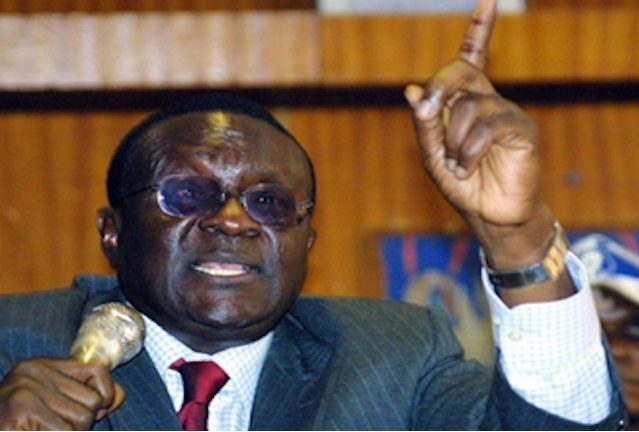
The Buhari government has honored MKO Abiola, the presumed winner of the June 12 1993 election, conferring him with the nation’s highest honour, the Grand Commander of the Federal Republic, GCFR. The honour is typically reserved for presidents and former presidents.

The government also honored Babagana Kingibe, Abiola’s running mate, with the second highest honour of the Grand Commander of the Niger, GCON.

But for me, the best thing the government did was honoring one of Nigeria’s finest leaders – the peerless pro-democracy and human rights activist, Gani Fawehinmi. He was conferred with GCON. Gani was ahead of his generation. He served his country and we should celebrate him.

Part of Buhari’s Letter.

“For the past 18 years, Nigerians have been celebrating May 29th, as Democracy Day. That was the date when for the second time in our history, an elected civilian administration took over from a military government. The first time this happened was on October 21st, 1979. But in the view of Nigerians, as shared by this Administration, June 12th, 1993, was far more symbolic of Democracy in the Nigerian context than May 29th or even the October 1st,” a statement by the presidency said Wednesday.

“June 12th, 1993 was the day when Nigerians in millions expressed their democratic will in what was undisputedly the freest, fairest and most peaceful elections since our Independence. The fact that the outcome of that election was not upheld by the then military Government does not distract from the democratic credentials of that process.

“Accordingly, after due consultations, the Federal government has decided that henceforth, June 12th will be celebrated as Democracy Day. Therefore, Government has decided to award posthumously the highest honour of the land, GCFR, to late Chief MKO Abiola, the presumed winner of the June 12th 1993 cancelled elections. His running mate as Vice President, Ambassador Baba Gana Kingibe, is also to be invested with a GCON. Furthermore, the tireless fighter for human rights and the actualization of the June 12th elections and indeed for Democracy in general, the late Chief Gani Fawehinmi SAN is to be awarded the GCON.

“The investiture will take place on Tuesday June 12th, 2018, a date which in future years will replace May 29th as a National Public Holiday in celebration of Nigeria Democracy Day.”

President Buhari's letter
President Buhari’s letter

Nigeria Reforms – Scraps Polytechnics’ HND Certificates

24
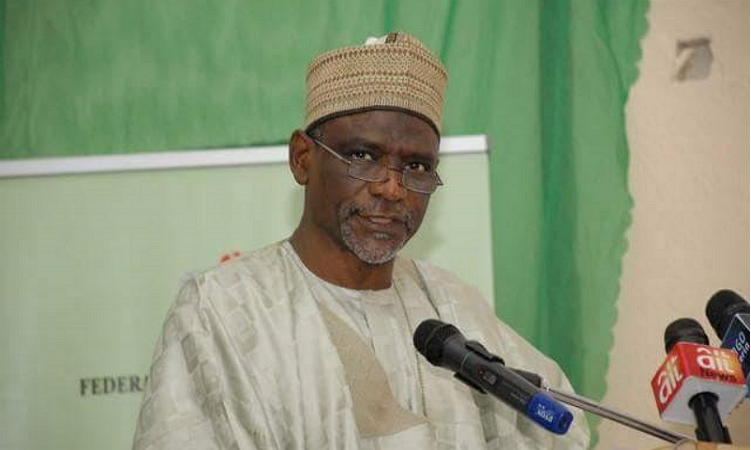
Adamu Adamu

The worst certificate any graduate could hold in Nigeria is HND. It is an extremely confusing document in any way you look at it. It brings pains and agonies to most of the holders as soon as they graduate from our polytechnics. Across industrial sectors and civil service units, the holders are completely discriminated against, putting them below their bachelor’s degree counterparts. For years, government has worked on reforms, pushing companies to recognize HND on parity with bachelor’s degree. But that has not happened, and it would never happen in Nigeria. So, it was good news that the federal government has decided to kill HND in Nigeria. That is certainly a good thing. Without an option of HND, our young people would be saved the HND troubles in workplaces.

Nigerian Government has scrapped Award of HND Certificates by Polytechnics.

The decision was reached at the Federal Executive Council, FEC, on Wednesday where the approval of a comprehensive reform of Nigeria’s tertiary education system was made.

In effect, the award of HND will be limited to only the students currently admitted for the programmes.

Also, all the programmes currently being run by polytechnics, which are not technology-based, and which are about 70 per cent, will be scrapped.

Under the new rule, the polytechnics will now become campuses of the proximate universities with the Vice Chancellors of those universities appointing provosts for the polytechnics, subject to the ratification of the Universities Councils.

The polytechnics will now be limited to award of the National Diploma (ND) while those desirous of further education will be awarded the Bachelor of Technology (B. Tech) by the proximate university.

All state polytechnics should collapse into state universities with non-technical programs in state polytechnics scrapped for HND. There is no need of having this institution of discrimination. Our young people deserve better. I commend the Honourable Minister of Education, Adamu Adamu, for his vision on this unlike the one they suggested before.

He has put forward a solid roadmap by scraping HND certificates even when keeping OND certificates. Also, refocusing polytechnics to focus on technical areas is a welcome development. Possibly, with more funding and planning, our polytechnics would become vehicles to deepen our technical (vocational) capabilities which would be critical for building our industries.