Your business plan is not enough to anchor your business execution. Most times you need a Roadmap Document especially if your business is in a state of flux [changing market, changing model, startup, etc]. To avoid pursuing many windy paths or dead ends, it is always good to have a roadmap. That roadmap encapsulates the path to the vision with pillars and enablers which team members can understand.
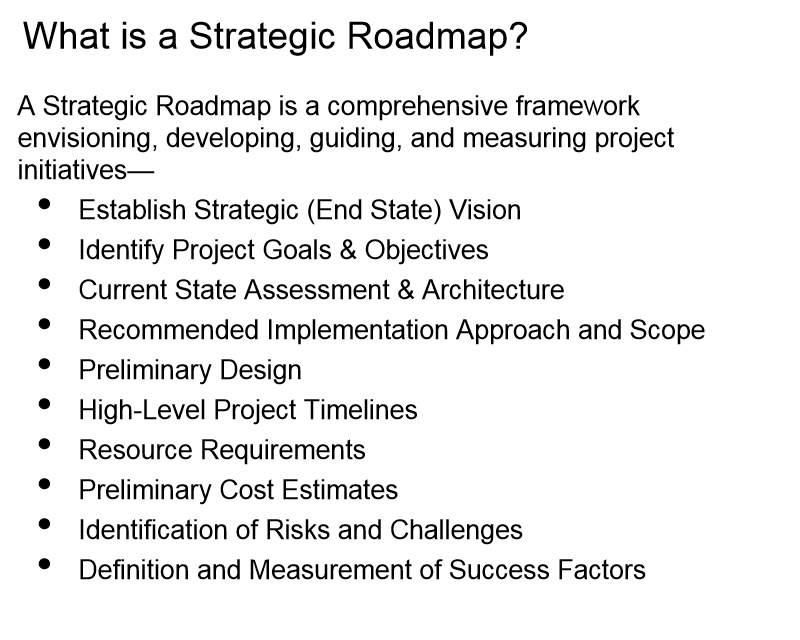
Business leaders and practitioners need a framework for guiding the mobilization of an organization around its strategic plan. Such a roadmap enables business leaders and members to clearly understand each element for rolling out a strategy. It details what decisions need to be made, who needs to make them and when.
{…}
A “roadmap” enables everyone in the business to clearly understand each action and what decisions need to be made, who needs to make them and when.
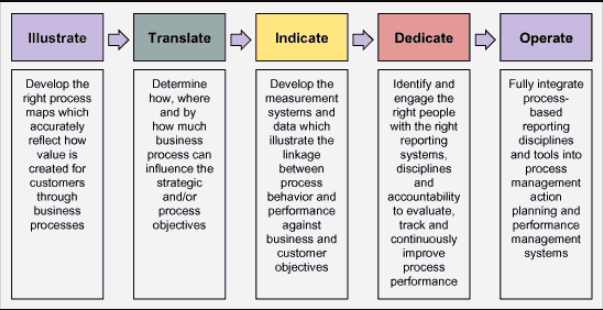
The reason why things are not working is simple: all the ideas and visions are in your head. But your team members have no way to pull them out. So, at the end, no one can help you build the business. The figure below offers a methodological way to execute a roadmap.
In a piece where I noted that opportunities abound in the technology industry even for those who do not code, someone commented on LinkedIn thus:
“Not everyone must code” I’m taking that with me. I’m a Sage Software Consultant, many a times my friends when I’m with friends, they’re always saying “Guy, develop your own business management software” but they don’t understand it’s not just developing, you need to sell too. Make money from it, that’s when it makes sense.
The point made in that comment is huge. Most times, the greatest value is not created in the technology but in the services which the technology powers. As I noted in the earlier piece which was actually from an old piece in the Harvard Business Review, you can have a great career if you excel in the other elements besides coding.
Before “Intel Inside”, Intel chips were just like other microprocessors in the world. In a world of slow dot matrix printers, someone coined HP LaserJet, giving that illusion that printing could be fast.
As you pursue your career, always remember that not everyone needs to be a techie. The guy that coined “Intel Inside” transformed Intel and made it the undisputed leader because people actually wanted the PCs and laptops with Intel inside. The world of microprocessor became Intel’s. HP became the printer company.
I will explain that point by using the smiling curve. Accenture derives more value from digital technology than most companies that make computers [check the revenues and gross margins]. Accenture is playing at the edges of the smiling curve. If you use farming for illustration, the best farmers are not those in the farms but the commodity traders who are waging billions of dollars in Wall Street with commissions that can buy any farm they want. Yes, they are not farmers but they are getting the best out of farming. The same applies in technology. That you do not code does not mean there is no opportunity [sure, if you code, you have an edge at the entry level].
In this videocast, I make a case why Nigeria must look beyond the center as it works to develop a homegrown manufacturing plan. Manufacturing is critical for job creation but using the Smiling Curves, there are many other elements in commerce that must be enabled for a strong economic system. If you neglect those elements, you just keep being busy while other countries get all the values. We use cases of banking and publishing to support our thesis for a new plan that is wholistic, beyond the ability to make just pencils and toothpicks in Nigeria. We need to build brands and create original ideas.
All together, the key is to find something you can do better than many. If you passionately elevate the game, your world will discover you and you will find success.
SpaceX has a green light from the FCC to launch a network of thousands of satellites blanketing the globe with broadband. And you won’t have too long to wait — on a cosmic scale, anyway. Part of the agreement is that SpaceX launch half of its proposed satellites within six years.
The approval of SpaceX’s application was not seriously in doubt after last month’s memo from FCC Chairman Ajit Pai, who was excited at the prospect of the first U.S.-based company being authorized to launch a constellation like this.
I expect SpaceX to offer a new level of competition against companies like MTN, Glo and Airtel in Nigeria. Though NCC (Nigerian Communications Commission) would like to regulate the use of satellite connectivity in Nigeria, it could be a tough challenge. While WhatsApp is complementary [you need to pay for data to use WhatsApp with say MTN], satellite is a product displacement threat [you have nothing to do with terrestrial mobile operators]. Companies like MTN would see massive threats in coming years from satellite providers.
The biggest threat will come from satellite companies like ConnectAfrica which will reach communities at cost model that can keep the terrestrial players looking for cover. Elon Musk, not Glo or Airtel or Etisalat, may be the biggest competitor to all telecom operators in Africa in 5-10 years, with satellite broadband. He can crash broadband cost by 90% and suddenly GSM will be recorded only in museums. But that will happen if MTN Nigeria and others do not take action today.
At the end of this emerging rivalry, I expect customers to benefit. The fact is this: providing Internet services in Africa would become increasingly satellite-based to overcome most of the legal [right of passage] and infrastructural challenges operators face today. If SpaceX takes this up, it could change the ecosystem.
As privacy takes center stage, I expect Facebook and Google to take heat. Unlike Apple which makes most of its money selling its own services and products, Facebook and Google depend largely on advertisers or marketing others for revenue.
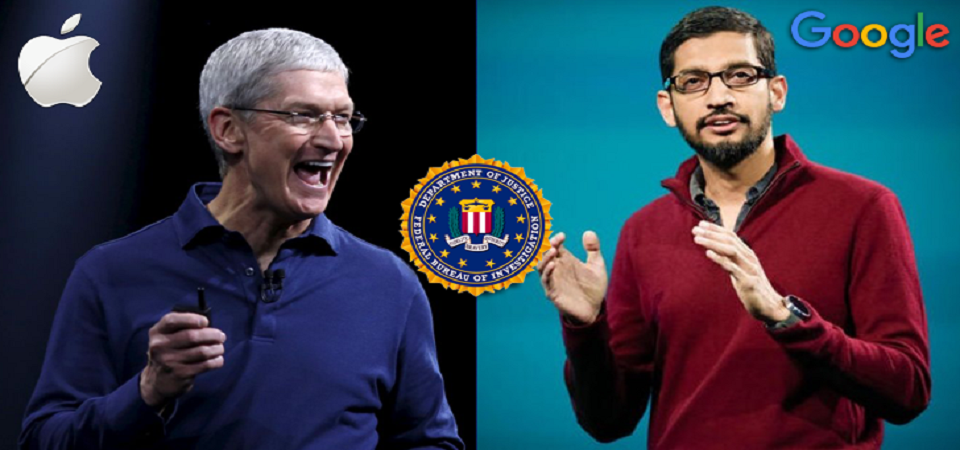
Tim Cook, Apple leader, is hitting Facebook on its privacy issues. Sure, he can afford to do that. The issue is not that Facebook and Google cannot have Apple-grade privacy. The problem is that if they do, they have no business.
A Google engineer noted last year that if they should make all Gmail users to use two-factor authentication, they would lose most users. Yes, people enjoy the convenience of great usability. Unfortunately, bank-level security is always going against convenience.
I do not use Nigerian debit cards online because it is too complex to use. It is the only place on earth where you combine PIN, 3 digits at back of card, and (sometimes) password at the same time concurrently to spend your money online.
So, when lawmakers are berating Google on privacy asking questions “Why is that hard to do?”, they miss the point. Facebook and Google can give us CIA or FBI-level security, but if they do such, they have no business. They are aggregators and they need to make money. They just need to have a balance. But if you are worried on privacy, get out of social media. Do not expect any there anytime soon because the business model will not change overnight.
Have you used Starbuck app before? It practically has no security. You can wake up and someone has cleaned up all the money in your wallet. Call Starbucks why they cannot make it tougher for bad guys. You get no clear response. Nonetheless, within minutes, they would return the money in your wallet.
Starbucks knows what it is doing: you can lose $1m per year on digital theft but that loose security makes it easier to earn billions on revenue. If you fight hard to stop that $1m, you can fall from billions to hundreds of millions.
Yes, a Chief Information Security Officer that joins from FBI to a retail shop would be extremely surprised that on the poor security in the retail sector. And if he wants to implement FBI-grade, the CEO will ask him to forget it. The shop must sell things despite the risks of security. (These firms need just about enough security to get the business going. You expect them to have the best, they would never.)
A well-known ring of cybercriminals has obtained more than five million credit and debit card numbers from customers of Saks Fifth Avenue and Lord & Taylor, according to a cybersecurity research firm that specializes in tracking stolen financial data. The data, the firm said, appears to have been stolen using software that was implanted into the cash register systems at the stores and that siphoned card numbers until last month.
The Hudson’s Bay Company, the Canadian corporation that owns both retail chains, confirmed on Sunday that a breach had occurred.
That is how to understand security and privacy. It is not about tech. It is a business model. So, you would continue to read hacking of Target, Walmart, Saks Fifth Avenue, etc. That would not stop because retailers see that as cost of doing business.
Hackers have obtained more than five million credit and debit card numbers from customers of Saks Fifth Avenue and Lord & Taylor in a breach confirmed on Sunday by corporate owner Hudson’s Bay. It’s one of the largest known breaches of a retailer and follows similar incidents for Equifax in 2017, Home Depot in 2014, and Target in 2013 (Fortune Newsletter)
In microprocessor design, we engineer built-in redundancies. They waste transistors and silicon real estate. But you need them just in case. In finance, they have a different name: risk management. The world of commerce is driven by market forces for the dynamic equilibrium point. If you cannot manage risk, you have no future.
Yes, it has been 10 years since Bear Stearns collapsed. On a fire-sale to JP Morgan, it went for less than 7% of its market value from two days prior. As I noted in my First Day in America & Kindness of Diamond Bank, it was a turbulent period.
Then I started buying stocks in New York Stock Exchange and NASDAQ. One day I lost $26,700 when they nationalized Freddie Mac and Fannie Mae. I had cut-off all stock research to finish my dissertation and was not following market news. I felt bad and learnt a huge lesson – the professionals deserve their wages!
Remember this: if you have not identified 3 risks that could cause severe dislocation in your business, abandon everything this week and find them. Then, once discovered, find mitigation strategies.
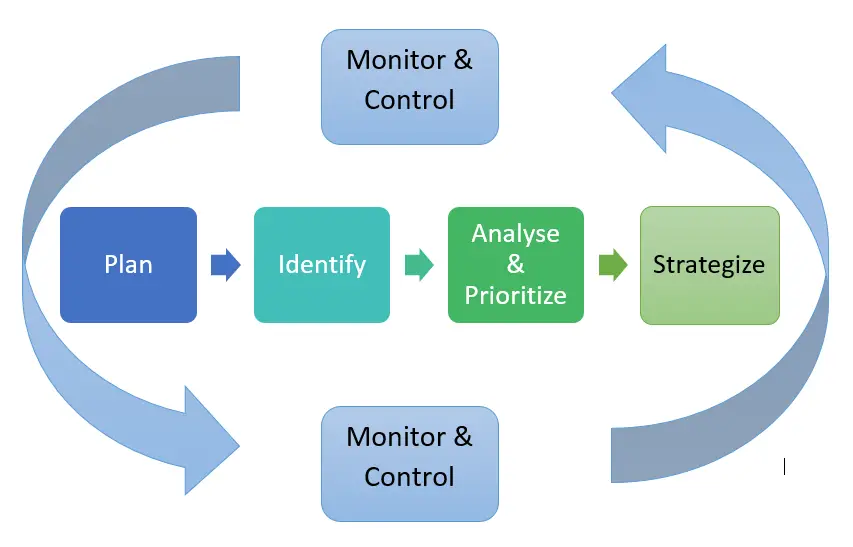
Risk Management Process (Source: PIN)
Risk is good because without risk, there would not be business. Every business exists to fix frictions in markets. Those frictions are anchored on risks – endogenous and exogenous to the participants. Fixing them demands capabilities, the very reason customers look for those, with abilities, they can pay to help them.
Discover your risks, fix them.
Another presentation of a Risk Management Process (source: PM by PM)