DD
MM
YYYY

PAGES

DD
MM
YYYY

spot_img

PAGES

Home Blog Page 7214

Nigeria’s Gray Lizard; America’s Black Swan

0

We have a big problem in Nigeria right now. Unemployment is destroying the promises of a generation of young people. With extremely limited decent labor entry points, our young people would lag their peers in career developments within years.

In America, they talk of black swans: ” high-impact risks that are highly improbable and therefore almost impossible to predict”. Yes, “an unpredictable or unforeseen event, typically one with extreme consequences.” That is it: “something extremely rare”. So, because it is rare, you do not (usually) plan for it. Arab Spring was a black swan as the leaders of North Africa could not have modeled that risk.

In Nigeria, we do not just have black swan. We have gray lizard. It is a high impact risk, that is highly probable and evidently visible but totally, widely and irresponsibly ignored. The massive youth unemployment in Nigeria is a gray lizard. Governments see it daily but it is totally ignored.

My case remains: the Nigerian government must stimulate the economy through extended and massive injection of loan guarantees to help small businesses grow to absorb these young people.

I project the following as impacts:  Each of the 50,000 benefiting companies would add 10 employees within a year for a total capacity of 500,000 (direct) new jobs. The boom in the economy as result of this expansion (the new workers would spend money, the banks would expand, the firms doing business with these 50,000 companies would expand, etc) would result to additional 1 million jobs.

So, within a year of the initiative, government would have created very good 1.5 million jobs. And it can do this without losing a dime if the loans perform well.

We need to prevent this gray lizard from blowing up. Do not think it is impossible for the young people to wake up one morning, out of frustration, and cause mayhem. Yes, we need to create jobs through the private sector.  And I challenge the government to declare emergency on youth unemployment in Nigeria.
The Evolution of Double Aggregation Construct

0

I have written extensively on the brilliance of aggregation construct where companies make money on raw materials generated and created by users. For example, Facebook feeds on our photos while Google depends on our websites, to run their businesses.  The assumption has been that these IT utilities would remain gatekeepers making it harder for others to break in.

Under the aggregation construct, the companies that control the value are not usually the ones that created them. Google News and Facebook control news distribution in Nigeria than Guardian, ThisDay and others. Because the MNCs tech firms “own” the audience and the customers, the advertisers focus on them, hoping to reach the readers through them. Just like that, the news creators have been systematically sidelined as they earn lesser and lesser from their works. But the aggregators like Facebook and Google smile to the bank. The reason why this happens is because of the abundance which Internet makes possible. Everyone has access to more users but that does not correlate to more revenue because the money goes to people that can help simplify the experiences to the users who will not prefer to be visiting all the news site to get any information they want. They go to Google and search and then Google takes them to the website in Nigeria with the information. Advertisers understand the value created is now with Google which simplifies that process.

But Google’s 2017 fourth quarter results do show that while Google could technically use all contents on our websites for free, it would need to put money on the table to have access to other aggregators. Last quarter, Google spent approximately $6.5 billion to pay such aggregators for traffic.

Even without the one-time tax charge, Alphabet’s adjusted earnings came in at $9.70 per share in the fourth quarter, which still fell short of the $9.98 per share that Wall Street expected. The disappointing earnings came as Google’s traffic acquisition costs, the amount it pays to partner websites, continued to rise in the most recent quarter, jumping to $6.45 billion (or 24% of Google’s ad revenues) from $4.8 billion in the same period a year earlier. The company has said that its traffic acquisition costs will likely continue to rise as it shifts more of its ad business to mobile search. Google’s aggregate paid clicks also increased by 43% year-over-year in the fourth quarter

LinkedIn is one of the aggregators selling aggregated contents to Google. If you type any name, not a celebrity on Google, the first search result is usually from LinkedIn. Google pays LinkedIn for that information. Another is Twitter whose feeds or tweets are now part of Google search results. Something new is happening here: these large aggregators can find revenue beyond advertisers; they can make money from companies like Google, Bing and Baidu by commanding hefty amounts on data they have aggregated from users in their ecosystems. I call this Double Aggregation Construct: aggregating data which has already been aggregated from users who originally created them.


Certainly, this has implications to Google business: if these companies have this strong market positioning, Google’s margin would be weakened over time. Twitter has the best real-time data than any ecosystem within the free open web at the moment (Facebook is largely closed). LinkedIn has the best human business diary which is also valuable to Google. These firms can see themselves as movie production companies, producing contents, which are then licensed to search engine platforms in bulk. The only difference is that the produced contents are our data which we give out for free.


Investors did not like the results. The fear is that if Google continues to pay this money, nothing would stop the companies from asking for more. That is the reason the stock fell 4% after the earnings call. You may wonder why it is even necessary for Google to pay in the first place. It is paying because it wants to keep Google Search extremely valuable to users since it is the oasis in the Alphabet empire. If it does not, and Microsoft Bing takes over the agreements especially for Twitter, it could see a massive loss of market share.

Naspers Still Searching for Tencent in Africa: Mocality, Konga, Kalahari

0
Naspers

Africa’s largest company by market capitalization which is so big that the whole of the Nigerian Stock Exchange is not up to 40% of its value is still searching for another winner. It saw alpha when it hit glory with investments in China’s Tencent. Naspers has seen many disappointments in its broad internet (ecommerce) investments in Africa. It shuttered Mocality, a digital business directory, and also killed Kalahari, one of Africa’s foremost ecommerce companies. In all these entities it closed, it complained of one thing: lack of profitability.

Naspers chief executive officer Bob Van Dijk said Africa’s largest company will consider “structural options” if the value gap with its stake in Tencent Holdings persists.

Naspers has a 33% stake in Shenzhen, China-based internet giant Tencent, valued at about $158 billion, while Naspers itself has a market value of about $112 billion. The discount is “too high,” and has been accelerating in the past 20 months, Van Dijk said on Tuesday in New York. Leaving aside Tencent, analysts place Naspers’ asset value at more than $180 billion, said chief financial officer Basil Sgourdos.

The deal with Tencent was extremely good for the South African company. It has continued to look for another moment like that. Despite exiting many ecommerce companies, it got back few years ago with investment in Konga for 50% equity.

Naspers, South African media giant has acquired a 50 percent holding in Konga.com, the leading Nigerian online general merchandise store, for an undisclosed amount.

Meloy Horn, Naspers’ group information relations officer confirmed the acquisition adding that the media giant was “anticipating favourable collaborations involving both parties in the near future.”

“Nigeria will possibly soon be the largest economy on the African continent, therefore as an investor we are keen to participate in the growth of a promising African market,” Horn said.

Naspers loves Nigeria with MultiChoice, DStv, GoTv , etc all doing just fine in the country. Yet, its ecommerce investments have not turned out well. It tried Kalahari and Mocality in Nigeria before it gave up. It has at least one major ecommerce business in Nigeria through OLX, a digital classified business. OLX early this year started running adverts in its platform to help boost revenue, and it is now within the crosshairs of Facebook Marketplace which is now the second ecommerce platform in Africa, behind Jumia..

Yes, Facebook has a marketplace; the very business companies like OLX and Jiji depend upon. With nearly everyone on Facebook, these companies would have real challenges ahead to get people to get out of Facebook. After all, the same users OLX and Jiji target are the same people selling and buying on Facebook.

Facebook would scale Marketplace across Africa in coming months. That would be bad for OLX which just introduced advertising in its ecosystems to make extra revenue. The future with Facebook, WhatsApp and Instagram evolving into SME and business ecosystems could be devastating to African startups working in the ecommerce space.

Konga was sold to Zinox Group this weekend.  That is certainly not the exit Naspers was expecting. The story of Naspers’ foray into ecommerce tells us clearly that ecommerce in Nigeria would be hard to figure out. This company has essentially burnt tens of millions of dollars as it continues to look for a working model. Sure, one day, someone would figure it out. It could be that the solution is not just the money, but the right business model. That “right business model” remains elusive.

You can always read my Harvard Business Review piece that captures some of the challenges which most ecommerce platforms cannot control, unfortunately.

Zinox Buys Konga

4

Konga has been bought by Zinox Group. I had suggested that Konga should sell itself because it had no business anymore. It lagged vision and the operational execution was extremely poor. I am happy that it listened. Sure, this is not good news because many Nigerians would certainly lose their jobs as Mr. Leo Ekeh (owner of Zinox) integrates Konga into the Yudala brand. Yet, at least, selling now would offer Konga more value to compensate those workers.

Going for pure play marketplace in Nigeria was desperation because the only outcome would have been massive value destruction in coming months. When they went that path, I knew that Konga was done. In Internet business, there are things which cannot work, as I noted many years in the Harvard Business Review.

I commend the Board & Management of Konga for doing the right thing..

Konga has been severely wounded for any further fight to make sense. I do think the best for Konga is to sell itself now that it can generate higher value. To win in this market, it needs not just revenue but manpower since it is running a logistics business, despite the pivot to subscription classified model. By constantly cutting down manpower, it means it is not taking the fight to the traditional stores like Shoprite and supermarkets. That is weakness that will further erode its capacity to generate more value to shareholders. It can save itself from these challenges by selling to Jumia.

[…]

According to details of the deal, Zinox Group, one of Africa’s biggest technology group would assume ownership of the e-commerce platform, Konga.com which remains as one of the biggest players in the sector; KOS-Express, the world class logistics arm of the business and KongaPay, the company’s integrated mobile money payment channel with over 100,000 subscribers.

I made the call. I do not do such without deep insights. That is what we sell to clients. I just did it FREE for Konga. Happy they can focus on something else.

Interestingly, Konga as a brand will emerge as a serious competitor using the Yudala hybrid ecommerce model. Yudala has struggled behind Jumia and Konga. Now both are together, we would see the best of Konga. Watch out, Konga would pivot, and return to the original core mission: helping families celebrate moments by simplifying commerce where merchants are partners, and shoppers fans. I expect Konga to blossom in coming months, relying on the physical element of Leo Stah empire. Konga would double within a year and expand into more cities.


Finished Design of Zenvus Engineered to Support Universities

2

Last year, I was in the peerless Federal University of Technology Owerri Nigeria (the very best university in Africa; forget the ranking by whoever), some deans and HODs suggested that we find a way to bring current students to our work. The dons are right; we like technical graduates from Nigeria’s federal universities.

I may be biased since I went to FUTO; we hire largely from the federal universities of technology. We like the school curricula where you can enter and get out with three degrees in one. I graduated with Electrical Electronics Engineering with Option in Electronics Computer Engineering. Depending on how you look at it, those are 3 degrees for the work of one. Unlike schools that offer Electrical Engineering, Electronics Engineering, and Computer Engineering as single degree programs, the way FUTO does it helps its graduates: you can look for work in more places, and you seem to know more things without that over specialization at the bachelor level.

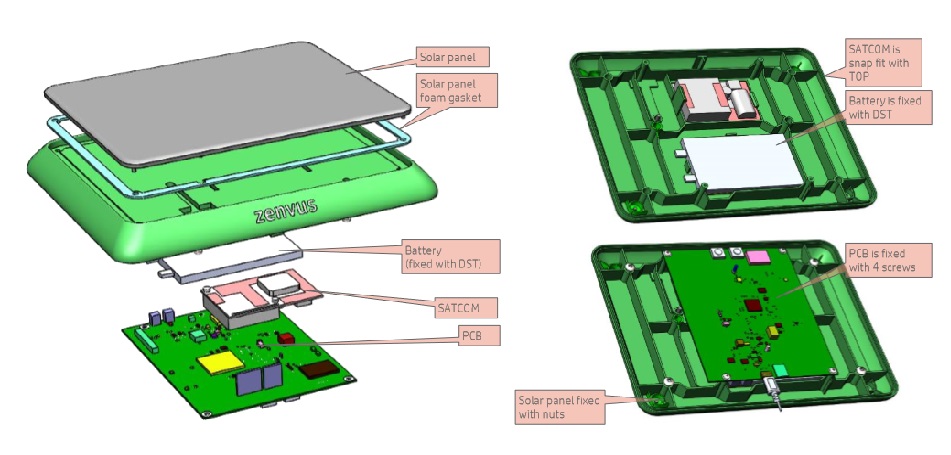
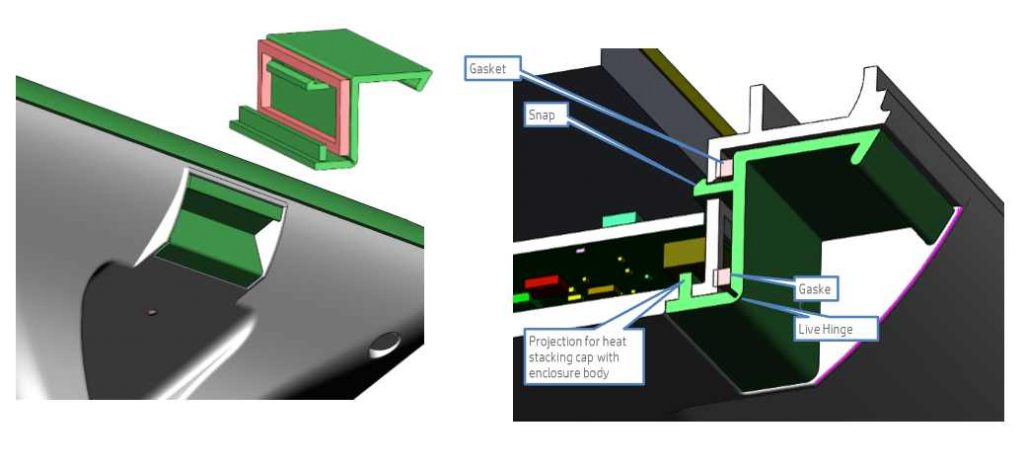
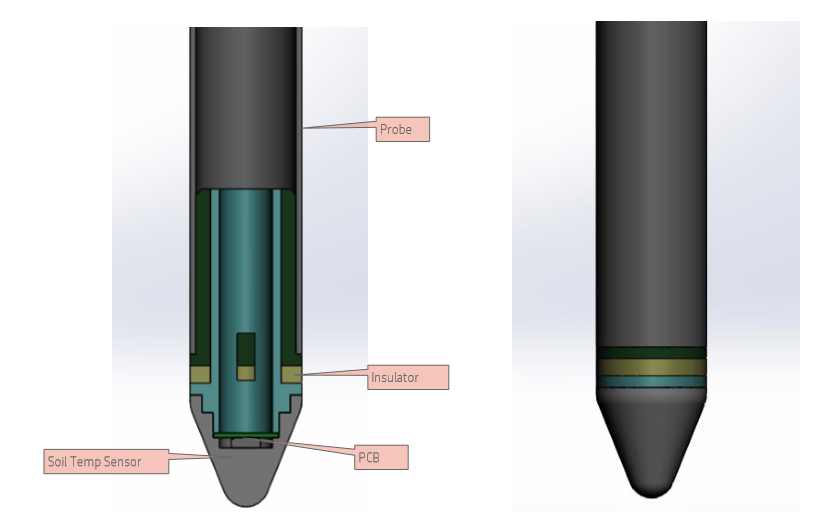
Last week, we design-completed an educational version of Zenvus with APIs structured for research institutions like universities. It is going into production and if all works well, we would then find ways to connect schools. With this education version, students can do a lot including modeling their own crop growth models, examining database and testing new algorithms. It comes with batteries designed for 7 years but guaranteed for 4 years. And it has a satellite module in case there is no GSM or WIFI connectivity in the farms.