DD
MM
YYYY

PAGES

DD
MM
YYYY

spot_img

PAGES

Home Blog Page 7221

Samsung’s Fragile Mobile Business

0

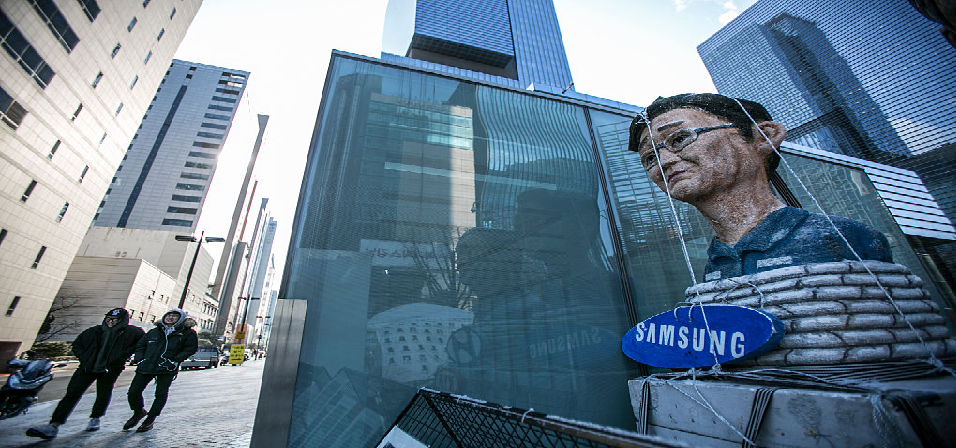
Samsung sells products. That is a bad thing. In the 21st century, no consumer technology company finds great success selling products. To find glory, the products must evolve to platforms. Samsung has no platform, unfortunately.

The latest news is that Samsung has dropped from the 2nd position to the 3rd position, by market share, for tablets. Yes, Amazon now sells more tablets than Samsung. That is very fascinating that if you count the world’s biggest tablet vendors, Amazon takes the second. That is possible because Amazon has a platform – even better, an operating system, named Alexa. People want to connect into that ecosystem and they are congregating within Amazon platforms. It is come over, buy one product, and you need to get others because we have all in-house. Yes, Prime members can listen to music, watch videos, and order anything online easily, if they have the Amazon tablets. As they do just that, Samsung Galaxy is relegated to the distant memory.

Apple maintained a solid lead in the holiday quarter driving growth both through its lower-priced 9.7-inch iPad as well as its newly refreshed iPad Pro products.

Amazon.com was able to steal the second position from rival Samsung as the online giant offered steep discounts during the holiday season. The low-cost tablets have been quite effective as shopping catalogs for Amazon’s online storefront and in recent quarters the company has taken things a step further by including its voice assistant, Alexa, in the latest tablets and by expanding to new markets around the world.

Samsung dropped to the third position behind Amazon.

Huawei‘s half-hearted approach to the growing detachable segment does not offer a promising outlook for the company. However, the company’s strong brand, aggressive channel strategy, and inclusion of cellular connectivity in its slate tablets has helped cement its rank in the top 5.

Lenovo’s ability to leverage its strength from the traditional PC business is starting to pay off as the company’s detachable tablet business has grown in the past year. However, the bulk of Lenovo’s tablets are still comprised of slates that offer great value at low prices.

Top Five Tablet Companies (Detachable + Slate), Worldwide Shipments, Market Share, and Growth, Fourth Quarter 2017(preliminary results, shipments in millions)
Vendor 4Q17 Unit Shipments 4Q17 Market Share 4Q16 Unit Shipments 4Q16 Market Share Year-Over-Year Growth
1. Apple 13.2 26.6% 13.1 24.3% 0.6%
2. Amazon.com 7.7 15.6% 5.2 9.6% 50.3%
3. Samsung 7.0 14.1% 8.0 14.9% -13.0%
4. Huawei 3.5 7.1% 3.2 5.9% 11.9%
4. Lenovo 3.1 6.2% 3.5 6.6% -13.1%
Others 15.1 30.4% 20.8 38.7% -27.7%
Total 49.6 100.0% 53.8 100.0% -7.9%
Source: IDC Worldwide Quarterly PCD Tracker, February 5, 2018

But do not weep for Samsung. It would be fine. It has the world’s largest semiconductor business, eclipsing even the almighty Intel. And because everyone buys from Samsung, it has circled competitors and opponents. So, go and make great phones and tablets, Samsung would supply the chipsets and displays. That is the only hope it has for the future: it has a peerless semiconductor business which remains its oasis. And if you open Amazon Fire tablets, you would find many Samsung components. The mobile business may be imperiled and fragile, but the semiconductor business has amazing melodies.

Discover Your Business With My Advisory Services

0

We have just days remaining in Nigeria before we move to Abidjan; we would like to visit your firm in Lagos and Abuja. Let’s drive growth through innovation. Experience great ideas, and embrace your business by understanding it better. At Fasmicro Group, we do not recite numbers and tell you what you already know: we deliver unparalleled insights through uncommon perspectives shaped by our experiences as entrepreneurs in the markets. Our moments are unique because things we share with clients are shaped by our direct exposures to the markets. We have served bank CEOs, founders, military generals, government ministers, and a President. We would like to serve you. Connect or use email below.

Our Advisory Services solutions are structured as follows:

  • Discovery Innovation Presentation: This is a two-hour presentation where I will present what is happening in your market, customized for your company, and then offer insights on how you can plot your strategies to win. This goes beyond industry statistics and typical SWOT analysis. We work to help clients see their markets in new ways, providing roadmaps on how they can unlock opportunities. It is an intense talk, combining technology, finance, political economy and strategy. As technology redesigns markets, I break the implications in short, medium and long-terms.
    • Case: How can a (mall) real estate developer understand that ecommerce is a tangential threat since malls can be disrupted by digital commerce in future? My client now considers triple-play designs where malls can be converted into offices or homes, in case the moment comes.
  • Discovery Innovation Workshop: This could take up to a day, but minimum of four hours is required. Besides the two-hour State of the Industry presentation, we work with clients to discover unique ways they can look at their businesses.
    • Case: We have a framework, engineered internally, that helps our clients go through the process of innovation discovery. Our synthesis is to see how technology can run and transform firms, even as we recommend business models that will survive disruptions.
  • Advisory Services: Most times, after our presentations and workshops, clients usually engage us for Advisory Services. This is totally decoupled from the first two. In other words, you can engage us for either the presentation or workshop without the advisory services. Yet, we always welcome the moments when clients ask us to come and lead the talk. Because we are already practitioners, making things happen is always the most exciting part of our works.

contact: tekedia@fasmicro.com

The Problem with Career “Workers”

0

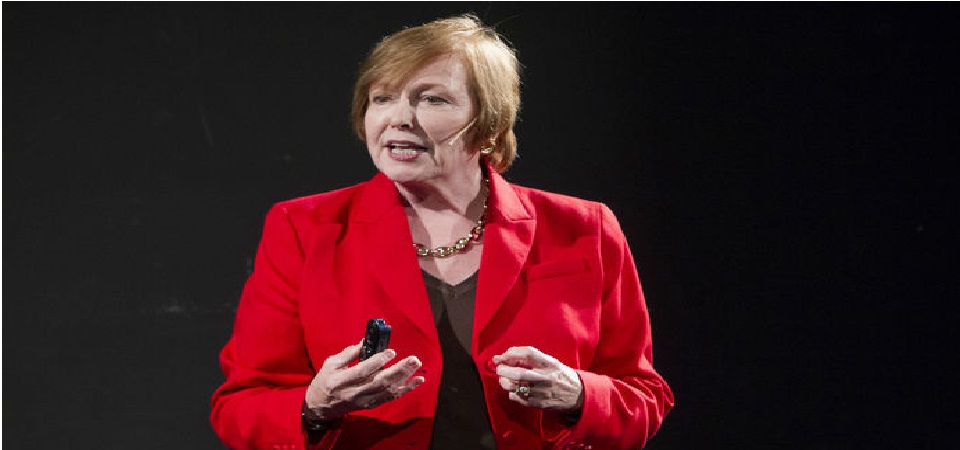
A woman resigned from her work, but this particular resignation was not typical. She was someone the world looks unto her agency to control and prevent diseases. Brenda Fitzgerald was the director of one of the most important agencies in the world: U.S. Centers for Disease Control and Prevention (CDC). Nearly every country derives its disease control and prevention frameworks from this U.S. entity.

But Brenda was a worker. Yes, just a worker – the people that go to work and leave values at home. All they care for is put 40 hours per week and wait for the glory in the bank account. Brenda bought stocks of tobacco companies. The woman whose main job was to battle tobacco was funding Tobacco.

Brenda Fitzgerald, director of the U.S. Centers for Disease Control and Prevention (CDC), resigned abruptly today. She stepped down on the heels of a report from Politico that she had purchased stock in a large tobacco company 1 month into her tenure leading the nation’s top public health agency, which devotes itself to persuading smokers to quit and warning kids not to take up the habit.

“On August 9, one day after purchasing [between $1000 and $15,000 of] stock in global giant Japan Tobacco, she toured the CDC’s Tobacco Laboratory, which researches how the chemicals in tobacco harm human health,” Politico reported.

The purchase preceded Fitzgerald’s 7 September 2017 signing of an ethics agreement promising to recuse herself from any activity that could pose a financial conflict, Politico reported. Fitzgerald, a former commissioner of public health in Georgia who took the reins at CDC’s Atlanta headquarters last July, did not sell the tobacco stock until 26 October 2017

I see her action as extremely repulsive not just for buying tobacco but even thinking that such could be normal. Thousands of CDC staff work daily to eliminate tobacco products in cities and communities, and yet we had someone as head of CDC so disconnected that she found favor with Tobacco. Her actions were unbelievably shameful. The good news is that she is gone, to possibly continue parking Tobacco. Yes, to make money. But thank Politico that she would not be near where decisions affecting the health of millions would be made.

From politics to healthcare administration, we have people like Brenda. They are workers, only connected to work, just for the money. They have no core values. They are paid to fight death but in the night they produce weapons for warfare. They see numbers instead of sons, daughters, fathers and mothers when they make decisions. We do not need them in public services.

Design Data on Sensors to Classify Quality of Farm Produce

0

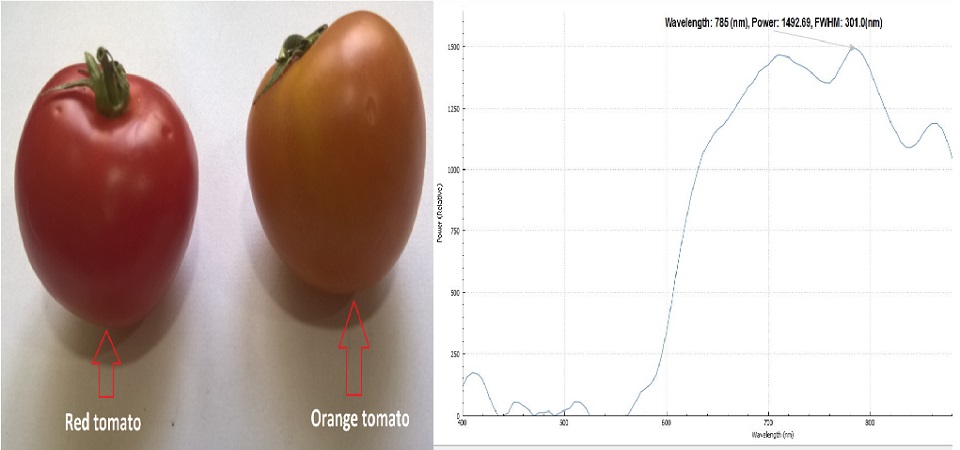
We waste a lot of farm produce in Africa, and knowing the quality of each produce remains hard. Due to quality asymmetry, the buyer and seller cannot close deals without physical inspections. Most times, things happen because a good orange for you may be average for me depending on prior oranges I have seen. For some, it may even be a poor orange. How do you make this science with the taste of Africa’s unique situations?

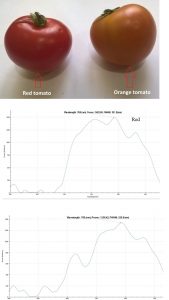
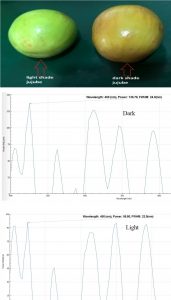
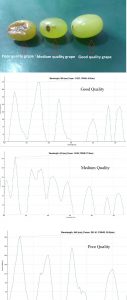
We have an idea: build a sensor which when you attach it to a smartphone, a farmer can make that process a science. That way, a merchant can pay for produce even when not in that vicinity. Instead of sending images in extremely challenging low networks, we send data points which can be reconstructed at the other end, explaining the state and quality of that produce.

I want farmers to focus on their works. I want merchants to help them find new markets. I want them to come into contracts largely based on science, not speculation.

That is what I am working on, to provide common sense tools that would help African farmers communicate with merchants, restaurants, families, etc on state of the produce. I want to remove the huge marginal cost where you expect merchants to inspect before they buy. Technology can do the inspection, providing reliable data on quality to make trade happen.

Of course, you can use our sensor when you go grocery shopping. It becomes your eyes and helps you make better decisions. You can eliminate non organic food because our sensors would tell you chemicals in that produce.

We are in the lab, designing, testing, validating and examining crops. We are getting close to this. The promise: advance new architecture in African agriculture.

The Indigenization of Buhari

0

President Buhari signed Executive Order 5 today. It was not a typical one: this one has meat and bone. Simply, the order is designed to give local companies preference in public procurement of science, engineering and technology components. In other words, governments would be required to choose local companies like ATB Techsoft, SystemSpecs, and CWG over foreign behemoths like Microsoft and Oracle provided the local companies have competitive products that could match the foreign ones.

The Executive Order is expected to promote the application of science, technology and innovation towards achieving the nation’s development goals across all sectors of the economy.

The president, pursuant to the authority vested in him by the constitution, ordered that all ‘‘procuring authorities shall give preference to Nigerian companies and firms in the award of contracts, in line with the Public Procurement Act 2007.’’

[…]

In the proclamation entitled ‘‘Presidential executive order 5 for planning and execution of projects, promotion of Nigerian content in contracts and science, engineering and technology,’’ the president also directed Ministries, Departments and Agencies to engage indigenous professionals in the planning, design and execution of national security projects.

This is a real deal, and in a way Mr. President is challenging local companies. Yet, there is really nothing new in this Order if you read the Public Procurement Act 2007 where MDAs (ministries, departments and agencies) are expected to be biased to local companies. Unfortunately, we are not necessarily there. And without the capabilities, MDAs have loopholes and waivers to award contracts to foreign companies.

Former president Obasanjo tried the same strategy on laptops and computers, mandating government units to buy from Omatek, Zinox and others. Within months, the MDAs revolted. Just like that, waivers emanated on issues of quality. Yes, they became liberated to spend our money on HP, Dell and Lenovo.

Would this time be different? Possibly, if Mr. President has followed up with at least $250 million commitment to R&D funding specifically structured for growing private technology companies but administered by commercial banks. That is how he can make the Orders stronger, by having a clear roadmap to nurture local kings that would take advantages of them. I am very confident that if Mr. President promises that Nigeria would shop local, and provides that support, our entrepreneurs would be encouraged to meet the needs.

It is slam dunk: government is the largest customer any sector can have in Nigeria. If it commits to buy say local software, most local  software companies would blossom through revenue growth. That would create a virtuoso circle as they become better by having resources to improve their products.

Executive Order is great; you have ceremonies. But they do not move electrons and atoms, or how they are arranged to make great technology products. The great Order for Nigeria is funding the pipelines to make the innovations happen. Why? Markets decide the best value and even governments want better deals. If Nigerian companies cannot deliver, any policy would fail. But where we do deliver, governments would congregate. We need to fund science, engineering and technology: yes, Executive Order would not fix the abysmal state of our university system.

Make a great Order: provide 24/7 electricity in all university labs. And within five years, we would see greatness out of Nigeria. That should be the Executive Order 6. I am confident Mr. President would pursue that.