DD
MM
YYYY

PAGES

DD
MM
YYYY

spot_img

PAGES

Home Blog Page 7227

What Is the Django Framework and Can I Use Shared Hosting for It?

0

The Django Framework

Django is a free and open-source server-side web framework, which was created with the primary goal of easing web development. It is written in Python and is developed by the Django Software Foundation.

The framework can be especially useful when dealing with user authentication, content administration, site maps and many other things, as it provides a full development stack. Some of Django’s best advantages are its speed, scalability, versatility and let’s not forget – security.

Being an open-source project, Django has great support and its community has grown greatly in the past decade. Furthermore, with Python being one of the most popular programming languages in the world, there are a lot of tutorials and resources available on the Internet.

Django can be viewed as an MVC architecture. Its main features are the ORM (Object-Relational Mapper) that serves as the connection between the Model (realized as Python data models), the View and the Controller (regular-expression-based URL dispatcher).

A serialization system that can read and produce XML or JSON formats is also implemented, which is a perfect feature for database operations.

The core principle of Django’s logic is DRY: Don’t Repeat Yourself, meaning trying to write cleaner and easier to read code. Therefore, one key approach when working with Django is the reusability of components. One should try to write code with numerous small methods with as clean logic as possible. The benefits of this method are improved testability and readability of the code.

Another vital feature of the framework is the possibility to extend the code with the great variety of packages available. A regular project can be enlarged quite rapidly in terms for authentication, authorization, error handling and many others types of services.

Shared Hosting

Shared Hosting is one of the most common web hosting services nowadays, as it allows more than one website to go through only one web server that is connected to the Internet.

The principle behind this type of web hosting is simple: several users share the server and each receive their own partition, consisting of specific amount of disk space, bandwidth and processing power.

The websites that are connected to the server share all relevant resources, which affects performance but on the other hand the server is already managed for you. The need for special knowledge in web and server administration becomes irrelevant, since the host provider manages all the maintenance of the server.

A downside of this configuration is the fact that there are more security issues in comparison to dedicated web servers. When more than one websites share the same server and one of them is affected by malicious activity, it affects the rest of them too.

This is usually the cheapest variant in comparison to other types of hosting and is a good option when it comes to handling websites that don’t have a large amount of web traffic going on. It is the perfect solution for websites that are used for personal needs or small businesses.

Are the Two of Them Compatible?

Django is a great framework for building web applications quickly and efficiently and being written in Python is a great plus. The language is easy to learn and is quite popular worldwide, because it vastly reduces the amount of code that needs to be written in compared to languages like Java. Some examples of the many major organizations that use Python in their IT infrastructures are Google, NASA, Yahoo!, Nokia, Disney and Mozilla.

If one decides to realize a Python project with shared hosting, a quick search for shared hosting services is needed. There are numerous hosting companies out there, but unfortunately not all of them support Python.

Maybe one of the main advantages in choosing Django for shared web hosting is its good security against attacks like SQL injections, XSS and CSRF attacks and clickjacking. Additionally, the source code of the website is hidden, which is a plus in the security aspect.

In the main Django distribution, there is already a package that allows for one Django project to run multiple websites, each with its own content and applications, so the application of shared hosting in combination with Django is possible.

Additionally, the creation of a virtual environment to install custom modules might be beneficial for more refined project development.

In conclusion, Django is the perfect framework that enables rapid development of rather maintainable websites and has many advantages for quick and clean web development. Combination of Django and shared hosting can be the perfect choice for everyone on a budget.

Nigerian Stock Exchange Should Adopt Pure Direct Listing for IPOs

0

Across Nigeria, promising companies are emerging. Nonetheless, some may not necessarily end up as Nigerian companies, as American investors, while not losing confidence in Nigeria, do not trust the legal ecosystems to keep their monies in Nigeria. So, to invest, they now require most firms to re-incorporate in U.S. Yet, the market opportunity remains Nigeria. It is legal and that is part of capitalism. I have proposed how government could redesign our venture capital sector to make it attractive to these investors to keep the companies in Nigeria. Without these emerging companies as Nigerian firms, we would not have future GTBank, Diamond Bank, SystemSpecs, CWG, etc.

Today, there is another way we can even get these investors to keep our companies in Nigeria or take them public in the Nigerian bourse. One way is to move into pure direct listing in the Nigerian Stock Exchange (NSE) [Please note that the Direct Listing as currently done in NSE is not equivalent to a direct-listed IPO in my context. The NSE one is largely for dual-listing where a company can directly list if it is already listed somewhere else. To differentiate, I have called the one designed for IPOs and new companies Pure Direct Listing.]

In the past, I have listed ways to deepen the Nigerian Stock Exchange liquidity paralysis especially in the technology sector.

Pure Direct Listing is simply doing IPO without underwriters. With this process, the companies list and sell directly to investors without any need for underwriters. That will remove the burden of sourcing underwriters which complicate the whole process. While there is risk to retail investors, I am confident that in this Internet Age, we can push these companies to disclose in ways that analysts and investors can independently verify their fundamentals. Spotify is taking that path and is going to save massive amount of money in the process.

Spotify, the music streaming company, has filed to do a “direct listing” in which it will sell its shares directly to the retail-investing public, without going through the usual process of using underwriters who round up institutional investors. As a result, The Wall Street Journal reports, the company’s three financial advisers—Goldman Sachs, Morgan Stanley , and Allen & Co.—stand to collect only $30 million in fees—less than 1% of the total take, and well below the $100 million, or 2.5%, that Snap paid for a similarly sized IPO last year, or the $300 million record paid by Alibaba in 2014. Bankers fear that if the Spotify issue goes well, other unicorns lined up to go public may follow a similar path. About time. (Fortune Newsletter)


All Together

The Nigerian Stock Exchange can make it easier for startups to list in the exchange. That is innovation it has to find a way to execute. I propose, among others, for direct listing where any requirement for underwriting is completely waived. The startups, especially technology-enabled ones, will not have to go through the painful process of underwriting new shares, but post-listed, can sell equity to private investors. I want to see PayLater, OgaVenue, and Iroko Partners in the NSE as quickly as possible. We need to innovate to get companies cash they need at optimal risk balance to the economy and investors. While NSE could keep its underwriting requirement, it needs to also offer pure direct listing as an option.

Washington Post Profiles My Precision Agriculture Company

8

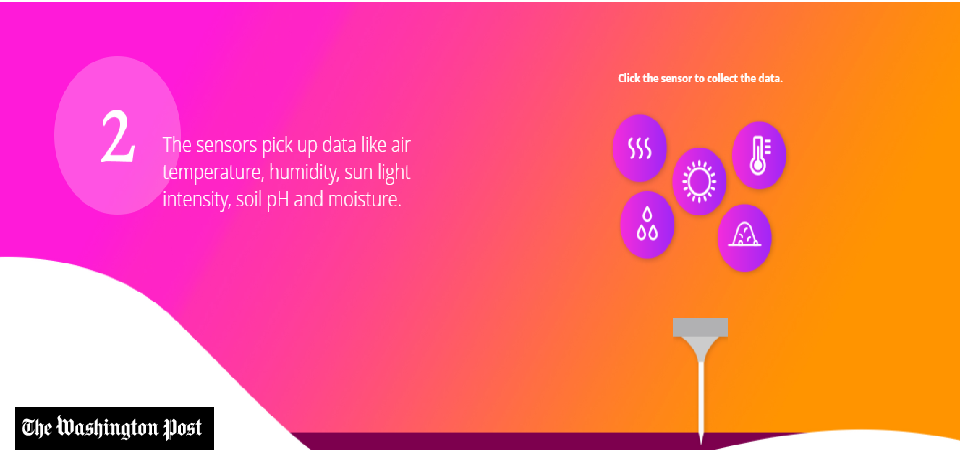
One of the world’s leading newspapers, the Washington Post, did a nice profile of Zenvus, my agriculture technology (agtech) business. They also interviewed me. Besides, they have a great animation which perfectly explains our technology solution. You can read the piece here.

Next month, Zenvus will lead Africa agriculture technology sector as I keynote the Argus Africa Fertilizer 2018 in Addis Ababa, Ethiopia. Leaders from 63 countries would attend. Please contact my team; Zenvus needs to serve farmers in your country or state. We can cure extreme hunger in our generation.

Zenvus is a pioneering precision farming technology company that uses computational algorithm and electronics to transform farms. Zenvus collects soil fertility and crop vegetative health data to deliver precision agriculture at scale. It also uses the aggregated and anonymized data to deliver financial services to farmers.

3.4 – Network Vulnerabilities & Types of Attacks

0

In simple definition, vulnerability is a weakness in any security flaw which allows an attacker to attack an infrastructure and reduce the information security assurance. In the current era of technology, people and organizations use more technology in order to amplify their businesses and relationships with clients and social users. In order to do that, most […]

This post is only available to members.

3.3 – DNS & DHCP Server

0

Domain Name Server (DNS) provides a name lookup facility that is similar to a standard telephone directory. In telephone directory, the telephone number is bound with the customer name, so whenever I want to find a phone number for a particular person, I have to find the name in the telephone directory, and by this […]

This post is only available to members.