DD
MM
YYYY

PAGES

DD
MM
YYYY

spot_img

PAGES

Home Blog Page 7237

Duality Element: Move from Making Products to Platforms

3
Duality Element

Construction workers build platforms. Those platforms can serve bricklayers, carpenters, painters and anyone working in the project. In internet business,  great companies engineer products with duality: products which are also platforms. Facebook is a product and also a platform. The most valued top 10 tech companies in the world have products with platform duality.

In this piece, I explain why you must make 2018 a year to create platforms and not products. Just like construction platforms, platforms enable you to rewire your business logic with ease. Products are hard-wired and fixed. Platforms create digital customers while products make consumers; customers are better.


Two definitions:

“A product is anything that can be offered to a market that might satisfy a want or need. In retailing, products are called merchandise. In manufacturing, products are bought as raw materials and sold as finished goods. A service is another common product type” Wikipedia


“Platforms are structures that allow multiple products to be built within the same technical framework. Companies invest in platforms in the hope that future products can be developed faster and cheaper, than if they built them stand-alone. Today it is much more important to think of a platform as a business framework. By this I mean a framework that allows multiple business models to be built and supported. For instance, Amazon is an online retail framework. Amazon started by selling books. Over time they have expanded to selling all sorts of other things. Apple iTunes started by selling tracks and now uses the same framework to sell videos.” J. Clarks

The best modern technology businesses are platform-anchored, not product-driven. Facebook is a platform. Apple has a platform. Google runs as a platform. These are among the most valuable companies on earth. As marginal cost goes lower in the internet age, platforms will rise because of the positive continuum of network effects. From aggregation construct to one oasis strategy, businesses with consumer focused frameworks are wired to succeed if they are platform-oriented.

Because of this inherent platform-element, these great companies have duality in their natures: they are both products and platforms at the same time. Facebook has an app (web and mobile) which is a product. That app is also a platform which enables other applications (including 3rd party apps like WordPress plugin) to be built upon. The transition of Facebook app from a mere product to a platform was the reason it won over Myspace which was a product with no platform capability. As Clarks noted above, Amazon can keep adding more to its platform because it can grow its logic, unbounded. Facebook has extended its ecosystem to do more including messaging, video chat etc from the original text feeds. From the beginning of Facebook, the founders saw a platform in the business and not just a product.

The Key Design Difference: Duality

Product applications are wired with predefined logic which means they do only what you want them to do and nothing more. Myspace built a social connection app and nothing more. But in platforms, you do not have “hard-wired” logic states making it easier to reconfigure the ecosystems for different uses. Here, Facebook engineered a platform which makes it possible that it can do whatever comes in future. Once that happens, you see amazing scalability driven by network effects: a virtuoso circle where as more people use a digital product, the product gets more data which is used to improve the customer experience, and that improved quality attracts more users.

Any digital product that does not have the duality element will struggle especially in consumer market: you need the product and the platform as one to make progress these days. You need to build platforms because they have the elasticity to evolve with your business logic. Products are static and fade quickly as markets change. Platforms can grow without bounds, anchoring new opportunities on top. The business logic of integration, process and decision making are best handled on platforms over products in the internet space. With platforms, you have CUSTOMERS; products deliver consumers.

The Facebook Platform is an umbrella term used to describe the set of services, tools, and products provided by the social networking service Facebook for third-party developers to create their own applications and services that access data in Facebook.

The current Facebook Platform was launched in .The platform offers a set of programming interfaces and tools which enable developers to integrate with the open “social graph” of personal relations and other things like songs, places, and Facebook pages. Applications on facebook.com, external websites, and devices are all allowed to access the graph. (Wikipedia)

Because of Facebook platform, we see Like buttons and Comment sections to like, share and comment using Facebook on this blog. Just like we use construction platforms when building houses, when you mount them, you never know everyone who will use them. But you know that no matter who, the platform will help in the house construction. The platform supports the bricklayers, carpenters, painters and plumbers. Simply, it makes it possible for you to build on top of one project phase to another; from bricklaying to plastering to painting. Digital platforms do similar works: you begin with texts but over time, you have messaging, video, etc as products all integrated as one.

Comment on LinkedIn

This is an excellent comment, and we think it offers additional insight to the piece.

Digital platforms, be they transaction, innovation, integrated, or investment platforms have revolutionized how contemporary products and services are built and delivered. It moved the decision-making for products and services from inside to outside, which gave birth to “inverse processes’. With platform, customers become integral part in product development cycle, rather than mere consumers of whatever the business managers deem fit for them. Amazon’s Reddit, which technically gives everyone the opportunity to become an author and possibly the bestseller, even before the book is published. This is possible, because the potential readers are the ones to do the ranking, in place of relying on the judgment of gatekeepers (editors and traditional publishers), which sometimes might not be popular. Due to Facebook’s platform nature, it’s now a multi-sided platform, comprising the users, advertisers, developers and publishers; that’s what platform brings. Every business model is capable of engineering a platform, with proper governance structure, you do not just have customers, but fans. The Internet has reduced the entire globe to a single village, platform brings that to manifestation. Nice insights.

 

Seven Ways to Start a New Business in 2018

5

The year 2017 is about gone, and I know that someone is thinking how he/she could start a new business in 2018. Sure, running a business is not for everyone. It is tough because the attributes that make good entrepreneurs in Nigeria (and Africa) are not in typical business school playbooks. By the time you wait for a bank CEO for six hours, and when he emerges, you smile and thank him for the opportunity to be waiting. Repeat similar episodes in government offices and you will know that nothing could have prepared you for that patience.

You crossed the gate at 9am for a meeting scheduled at 9.30am and by 4pm you are still waiting. But you are lucky as you have not been informed to go, and that is huge as “hope dey”. It is irrelevant what degrees you have, and what you think you are.  That element of humility with high morals opens opportunities.

Yes, being an entrepreneur is not a vacation job: get into it; you lose the construct of time because it is a constant contact sports that demands 24/7 attention. But where you think you are open for business, I have some ideas for you on how to start in the new year. You can make it happen through any of the following new business/market entering models:

Representative: You can become a manufacturer representative in Nigeria for a foreign brand. You use your local knowledge and contacts to find business opportunities for that foreign company. They pay you commission. It could be lucrative if you have great contacts locally. Companies like Dell, HP and IBM have representatives in Nigeria who help to deliver sales and support to clients that want their solutions. Chinese firms are also opening opportunities looking for local representatives. There are many of them on LinkedIn looking for people to anchor their businesses locally in Nigeria. One of the best examples of a representative in Nigeria is MBM (Modern Business Machine), a technology integrator, which worked as an IBM representative for years.

Licensing:  Licensing requires a heavy dose of technological capability from you to make it work. It means you are able to license a technology from another entity and then use it locally to address a market need. Licensing is not very common in the Nigerian digital tech space but it happens in other sectors. Some of the pharmaceutical companies in Nigeria are on licensing agreements with foreign partners. They are allowed the rights to use the core technology to make products in their own brands or labels. In the technology space, white labeling is also possible. There are many American companies that license payment infrastructure to help startups run payment fintech as though those startups developed the technologies.  Customers see your brand and identity. But behind that your product is a full technology core provided by another company. No other person will know but you and the supplier. For the privileges to use these technologies, you pay fees. Coca Cola (yes Nigeria Bottling Co) is on license with the global Coca Cola brand to use the secret sauce of coke.

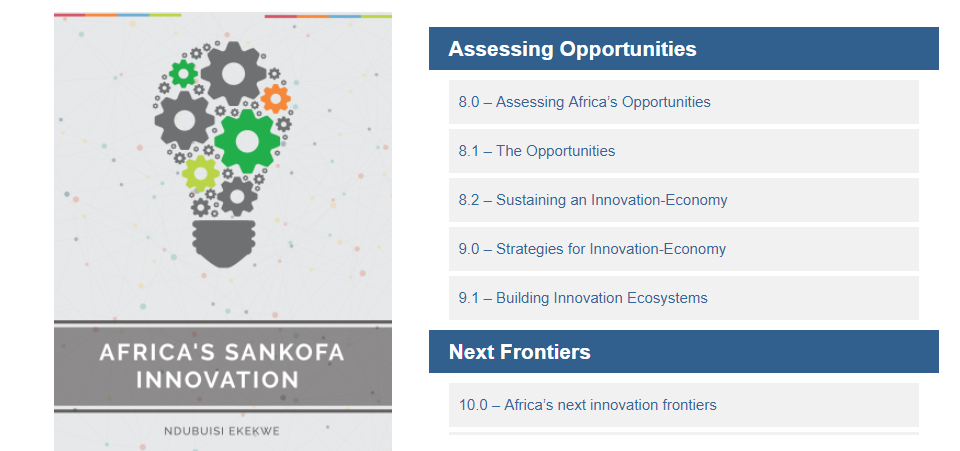
A section of my book, Africa’s Sankofa Innovation, with ideas for new businesses


Franchising: There is a big franchising opportunity which is available right now in Nigeria: we do not have McDonald’s, the iconic American fast food burger chain. KFC is here already in Lagos; KFC Nigeria is a franchise. Companies allow you to buy rights to run a business using their business processes and intellectual properties to create products in your local market. Most times, you are tapping into the brand equity of the franchisor which controls the trademark and all copyrights associated with the brand. As noted, KFC Nigeria is a franchise of the Yum! Brands which owns KFC in U.S.

Partnership: In partnership, you find someone you can work with. You bring something and that company brings something also. That fusion makes both better. It is the typical business maths that 1 + 1 must be greater than 2 to make sense. In the renewal energy, security, education, and across industrial sectors, there are opportunities for partnerships not with international brands but also local players. For example, in my company, we partner with local companies in Northern Nigeria with staff that speak Hausa on Zenvus. We provide the technology; they work with farmers because they understand the culture and the language. That improves our speed and allows us to focus on things we know best: technology. Partnership can be loosely connected with representative when done across national or regional boundaries.

Joint Ventures: Partnerships can morph into joint ventures where two or more entities decide to bring resources together to create a new entity. And everyone works through that new entity. This is very common in Nigeria during major contracting tenders where consortiums emerge to meet stringent tender requirements. For example, in a major construction project, you may need financiers, construction companies, etc as a team. No single company may meet all the requirements and one has to be created to meet whatever the tender requires. That is where you need a Joint Venture: the JV relying on the individual firms will magically meet the requirements. You can also use JV for research & development where companies co-invest money to develop new technologies and innovations. Julius Berger uses JV in some projects; it works with foreign financing partners as it did on Second Niger Bridge where a South African financier was in the fray.

Acquisition: If you have the money, you can buy another company and then become the owner of that company. It comes via different forms like buy-out and acqui-hire. The latter is a method where you buy a new company purely for the talent and not the company itself. I have used acqui-hire in Nigeria where I buy local companies mainly for the team and not necessarily for their products and companies. The advantage here is that you have seen what the team did and you can channel them to use the experiences to build your business. Buy-out happens all the time in Nigeria: MTN bought Visafone and Visafone itself bought Bourdex Telecoms Aba.

Greenfield Investments/Startup: This is starting from scratch and the typical model for startups to enter new markets. You start from $0 revenue and climb up. You add customers one by one. Unless you have change from daddy, mommy or uncle, this is the typical way it happens: you need to cut your teeth and build things from ground to up with savings, selling of equity or taking debts. I have shared many ideas on how you can make this happen in my new book. This chapter is a most-read if you have to play in the digital space. You can also see greenfield investments as moving into a new location to start something, even if you are operating somewhere else. Yet, even with that, you have to start from scratch in that new location. Of course, you enjoy some advantages over real startup that will have to build teams, technologies, business models, etc from real scratch.

Full List of Federal Board Chairmen, Members appointed by President Buhari, Nigeria (PDF)

0

This is the full statement from the Federal Government of Nigeria on appointment of Federal Board members and chairmen.

FEDERAL GOVERNMENT APPOINTS GOVERNING BOARDS FOR PARASTATALS AND AGENCIES

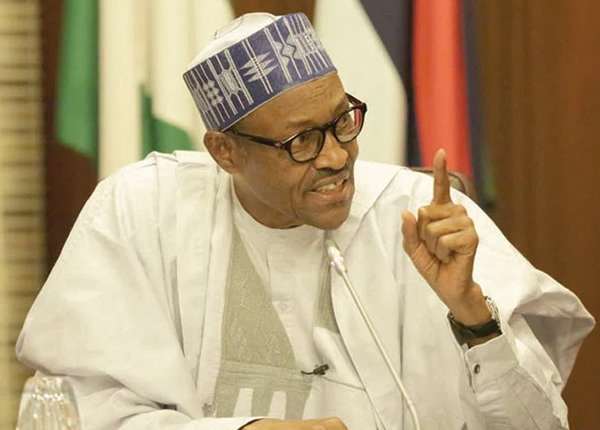
The President and Commander in Chief of the Armed Forces of the Federal Republic of Nigeria, His Excellency, Muhammadu Buhari, GCFR, has approved the constitution of the Governing Boards of Agencies and Parastatals, under some Ministries, as well as the appointment of eminently qualified Nigerians to fill the Board positions, numbering 209 Chairmen and 1258 members.

2. Mr. President considered the approval for the constitution of the Boards as well as the appointments, very necessary, so as to provide a proper Governance and oversight structure for Government Agencies and Parastatals. The constitution of the boards with the appointments, is a demonstration of this Government’s efforts aimed at building strong institutions of Governance, and by extension, improving the quality of Policy formulation and supervision.

3. While these appointments represent a substantial number of hitherto pending board appointments, some more appointments are still being processed and will be released in due course.

4. The appointments take immediate effect and Honourable Ministers are advised to inaugurate the boards after letters of appointment have been issued.

Download the names here courtesy of Premium Times.

Dead Board Member

This list will change as the Chairman of Nigeria Press Council was already dead before he was appointed. Now, it seems government does not interview these people before they are appointed.

A former member of the Board of Trustees of the All Progressives Congress, late Senator Francis Okpozo, was on Friday named among the 1,467 chairmen and members of the Federal Government Boards approved by President Muhammadu Buhari.

[…]

Okpozo died on December 26, 2016, with Buhari issuing a statement of commiseration on December 27, 2016 [the quoted source used 2017 which I think is an error].

In the statement by presidential spokesman, Femi Adesina, the President commiserated with “the family and friends of the late senator, whose championing of social justice in the Niger Delta, during his long history of service to the people, endeared him to many”.

.

The Joseph Boakai Speech

0

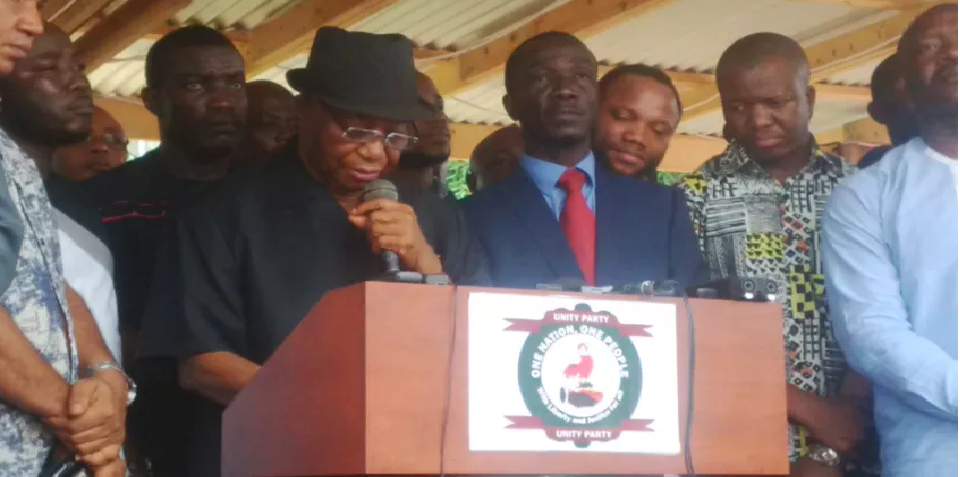
The Vice President of Liberia, Joseph Boakai, who conceded to former football star, George Weah, even before all the votes were officially tallied, has spoken publicly on a national television. He wanted to make it clear to everyone that he lost and he had congratulated George Weah. This speech will go down in history as one of the greatest in the Liberian nation. Congratulations Mr. Boakai, you have made your continent proud.

I refuse to subject our nation to such an experience. I reject any temptation of imposing pain, hardship, agony, and uncertainty upon our people. My name will not be used as an excuse for one drop of human blood to be spilled in this country.

My worth and ambition to serve will never push me to stoop low to violence. The truth of the matter is that what I was seeking was not power or title, but instead an opportunity to serve. My love for country is more profound and intrinsic than my desire for the presidency.

[…]

I, Joseph Nyuma Boakai, a man of peace, humility and a Liberian patriot with deep faith in God, hereby accept the results of the elections as announced by the National Elections Commission.


Read his full speech below.

Fellow Liberians;

My Great Partisans;

Auxiliary and other Support Groups;

Executives and Members of Collaborating Political Parties;

Well Wishers and People of Goodwill;

Members of the Press:

Let me start off by thanking all of you. I express my deepest gratitude to the peace-loving people of Liberia for their determination to quench their thirst for the consolidation of our democratic entitlements.

My deep appreciation and affection go to my Wife, Mrs. Kartumu Yarta Boakai, my children and relatives for enduring this tedious but worthy undertaking to the end. Indeed, I remain proud of you.

To all Liberians who supported us, I say thank you. And to those who did not support us, I also say thank you.

We all are passengers on this big Ship called Liberia; even though I will not be the Captain of this Ship, it is my fervent desire that this Ship of State always sails smoothly.

More than a year ago, the Unity Party (UP) elected me as Standard Bearer in our national political contest.

This was in addition to nearly 12 years of service as Vice President and several years in public and private service characterized by untainted stewardship to our nation.

On December 26, in the midst of the joyful tides of Christmas and the celebration of the birth of our Lord, Liberians went to the polls in obedience to their civic responsibility. We note with great pride the peaceful nature of the free expression of their will for national leadership.

At this historic crossroad, let us remain cognizant of the extent to which elections are conflict-prone and have the potential to destroy nations, disintegrate families and undermine the sanctity of a nation. We are also quite aware of our nation’s current economic challenges.

At this historic crossroad, let us remain cognizant of the extent to which elections are conflict-prone and have the potential to destroy nations, disintegrate families and undermine the sanctity of a nation. We are also quite aware of our nation’s current economic challenges.

The history of our nation is characterized by some disturbing episodes of fraudulent electoral processes and the attendant consequences. Notable among them are the presidential elections of 1927 and 1985, the outcomes of which were rejected, thereby engendering conflict which occasioned the loss of lives and a protracted fratricidal national conflict.

I refuse to subject our nation to such an experience. I reject any temptation of imposing pain, hardship, agony, and uncertainty upon our people. My name will not be used as an excuse for one drop of human blood to be spilled in this country.

My worth and ambition to serve will never push me to stoop low to violence. The truth of the matter is that what I was seeking was not power or title, but instead an opportunity to serve. My love for country is more profound and intrinsic than my desire for the presidency.

As such, a while ago, I called Ambassador George Manneh Weah of the Coalition for Democratic Change (CDC), to congratulate him on emerging as the winner in the presidential contest. I also availed myself to help him in any way he may find me useful to advance the good of our country.

My Compatriots, Friends;

I have seen the good of our country and learned that there are many good people, and that ultimately good triumphs. Although we worked so assiduously for a different outcome than what the results show, my faith, value and principles dictate that l respect the will of our people as announced by the National Elections Commission.

I accordingly call on all of our supporters and well-wishers, from this day forward, to support peace and collectively join hands to continue to build our country, heal our wounds and serve our people with honesty as well as a renewed dedication and commitment.

Let us put the election and the acrimony occasioned by it behind us and close ranks to push this nation to its rightful place within the comity of nations. I value all of you and hereby urge you to demonstrate that Liberia can be a better country. As I have so frequently urged, we must subordinate our personal ambition and interests to the good of all and love for our country.

After years of serving as your Vice President, I appreciate the privilege of serving with utmost dedication and integrity. I so dearly cherish my service to this country and for that let me express my gratitude to the people of Liberia for according me that noble opportunity to serve my country.

We know that our supporters in and out of Liberia are disappointed by the result of the elections. Let us however be consoled by the fact that we did collectively fight a good fight. We made personal sacrifices and demonstrated full commitment to the values we espoused.

Speaker James Emmanuel Nuquay and I are grateful to all of you who gave your best, and your all to this campaign. We make particular mention to the Chairman and members of the Unity Party, the National Campaign Team, Honourable Benoni Wilfred Urey and all heads and members of collaborating political parties, our auxiliaries, and our youth, women, elders, and thousands of supporters and well-wishers. It was a campaign for Liberia and you fought it so very hard.

Our gratitude also goes to all our international partners who stood by Liberia during this long and arduous electoral process.

Many of you traversed this country to let our people sell our agenda to fix our roads, produce food to feed ourselves, heal the wounds inflicted over the years, unite us and develop our country.

Our campaign was characterized by many tangible projects to communities. We did our best and each of you deserve my personal gratitude. Let us continue to work even harder to promote reconciliation and integrity in government. All of you are the Liberian heroes.

I, Joseph Nyuma Boakai, a man of peace, humility and a Liberian patriot with deep faith in God, hereby accept the results of the elections as announced by the National Elections Commission.

I congratulate the winner, Ambassador George Manneh Weah, and pray that God will guide and guard him as he embarks upon the onerous responsibility of steering the affairs of our nation. In congratulating our incoming President, I do offer a hand of goodwill, friendship and gratitude for a historic contest, conscious of the great need for country to be reconciled and nudged on the track of transformation.

To my Unity Party Partisans, I urge you to embrace all who stood with us. We will together make (UP) a great Party for a great country.

In so doing, let me again avail myself to help in whatever positive way I can to move this nation forward. I thank all of you for believing in me, putting faith in yourselves and loving our country. You have every reason to raise your heads high and celebrate the maturing of the democracy we have so greatly fought for this country.

We need to join hands and work together to move our country forward. As I said throughout this campaign, it has never been about me. It has always been and should always be about Liberia.

This is about our country’s cause defending. We must work to unite our people because Liberia is greater than any one of us.

I want to thank all of you for providing me an opportunity and I appreciate all that our country has given me. Let us resist the temptation of harbouring malice towards anyone. We should only wish everyone God’s blessings.

And so, I urge you my supporters to go forth, showing love to others, forgiving those who have done us wrong, offering kind words to our neighbours, praying to God for His divine mercy upon our nation and working every day for our nation to be prosperous.

And in everything that we do and say, let us always THINK LIBERIA, LOVE LIBERIA AND BUILD LIBERIA for all!

“IN UNION STRONG SUCCESS IS SURE”

God bless our beloved Liberia!

Bitcoin’s Marijuana Equilibrium Principle

0

I wrote in the Forum that the South Korean government is entering a makosa party with Bitcoin: it wants to tax cryptocurrency trading while technically regulating it through cessation of anonymous accounts, and closure of virtual coin exchanges (as necessary). This will possibly usher order, at least in South Korea, in the whole cryptocurrency nexus. I noted the move as beneficial to Bitcoin because an optimal government intervention would likely help the legitimacy of the currency. However, my point is ironic since once governments around the world begin to regulate the digital currency, the most important feature of Bitcoin [out of government control] would be gone. Sure, things evolve in life; it is very possible the fans of Bitcoin and other cryptocurrencies would fall in line.

There is good news for Bitcoin: governments are getting interested in the cryptocurrency. That is the best thing for Bitcoin, ever. The government of South Korea has noted that it would impose new curbs on cryptocurrency trading. And regulators will now have the power to close virtual coin exchanges if needed. It does not stop there: government will monitor and track accounts, banning opening of anonymous cryptocurrency accounts . To even make it better, government has a tax structure for all cryptocurrency trading

Yes, Bitcoin was invented to provide a new means of exchange that runs outside government in a world where the purveyors are living under governments. That absolute lack of legality that comes from government has been the weakest element of the cryptocurrency. But as governments begin to regulate it, the acceptability will strengthen over time. While it is already in some leading bourses like Chicago, the absolute lack of legality means some institutional investors cannot put money in Bitcoin. Nonetheless, the more governments recognize and accept Bitcoin, it will experience a “negative effect” on the trading value: price will stabilize (not growing, uncorrelated) and Bitcoin will begin to behave like typical global currencies. For most, that would be a bad thing, even though it may be good!

Here are some ways government regulations could affect Bitcoin:

  • Defeat of the Original Purpose: Government regulations will defeat the purpose why the currency existed in the first place. Sure, a government intervention will bring many new players into the cryptocurrency world but it would also stabilize the value of the currency. When that happens, Bitcoin would track typical currencies like US dollars, Euro and Pounds Sterling.
  • Core Advocates may exit: With regulation, Bitcoin value will stabilize. Some people may lose interest as the value will not be growing. Most are not there for 2% quarterly appreciation; they want double digit growths.
  • Stringent Rules: As government moves in, buying and selling Bitcoin would be harmonized. Channels would be streamlined and new trading classes could be created. Brokers could decide which investor categories can buy Bitcoin without guidance. The possibility may be that retail investors earning a certain wage level may be excluded [think of the Startup Act which prevents non-qualified investors to buy equities in startups in U.S.]. Government will put these rules to protect the small guy [it reasons] which unfortunately hikes the frictions for trading cryptocurrency.

Marijuana Equilibrium Principle

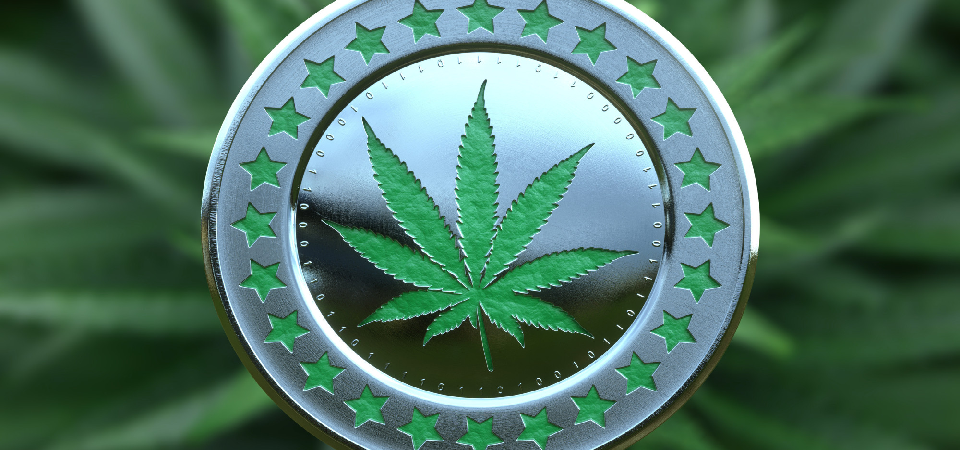
Bitcoin has many intrinsic similarities with Marijuana on scarcity, illegality and “highness” for owners. Marijuana is scarce especially when non-obviously legal; Bitcoin has that feature. People that take them go into the Mars as they become “high”; buying a coin at $120 and seeing it jump to $20,000 few years later must be a high experience. Just as for Marijuana, the law is here and there on Bitcoin.

But that was before American states began work [unbelievable that someone can legalize goof]. Yes, marijuana was legalized in some states in U.S. for medicinal purposes. There were obvious effects and those affected the equilibrium points of marijuana in many ways.

Before most U.S. states legalized marijuana, most “actors” found it largely easier to acquire; it was even cheaper even though the buying/selling was riskier. But after the regulation, government imposed stringent conditions [doctor prescription] making it more difficult to acquire, despite the larger supply pool since it became a legal business. For the actors in goof, there was more supply but getting it was harder because any player must meet a doctor first. The dynamics created a new price equilibrium, and made marijuana to behave like a typical elastic product with push and pull mechanisms where price has marginal impact on demand.

This could happen in Bitcoin, post-regulations. We would have more Bitcoin exchanges but the conditions to acquire the coins would become more stringent. Also, just as the price of marijuana has normalized wherever it is legalized, Bitcoin price will mimic that trajectory. It will attain an equilibrium point and then stabilize there. Just like that, it will track the behavior of typical currencies like U.S. dollars and Euro.

All Together

In summary, the end goal is that once governments begin to regulate Bitcoin, it would be price-normalized. With that, it joins other currencies and the game is over. The growth will be predictable, taking out speculators. That will make it less appealing to some people even though it would attract new classes of players. While South Korea will not drive this game, it can serve as a live experiment into the future. The world is waiting for U.S. to take action and once it does, that will become the golden regulation guiding Bitcoin and other cryptocurrencies. I believe no matter what happens, the Marijuana Equilibrium Principle will follow Bitcoin once it is regulated. Yes, by looking at what happened to marijuana (yes, goof), one can predict Bitcoin, post-regulation.

NB: I am building a cryptocurrency investment thesis for a client and needs a framework. In my firm, we are studying marijuana business to see how we can provide long-term guidance to my client.