
DD
MM
YYYY

PAGES

DD
MM
YYYY

spot_img

PAGES

Home Blog Page 7250

The Message from South Africa

6

In a piece by a South African professor, he challenged the Finance Minister of South Africa, Malusi Gigaba, to look into Nigeria for ideas. Yours truly was mentioned as one of the innovators he can get inspiration as he works to redesign the economy of the nation.

SA’s finance minister is at a crucial crossroads. He can decide to preside over a failing economy, which is dying not only because of state capture by powerful private interests, but also because it hasn’t been able to alter those structural conditions that have made it so dramatically unequal in the first place.

[…]

I would introduce Gigaba to my colleague Ndubuisi Ekekwe, who has developed digital sensors that analyse soil data to help farmers apply the right fertiliser and optimally irrigate their farmlands. Across Nigeria, the process is already improving productivity by using analytics to facilitate data-driven farming practices for small-scale farmers.

I will be traveling to South Africa this Thursday and will be working there for eight days. I like South Africa; it has been nice to my business for years.  My Intel FPGA (formerly Altera) business which my company is one of the two partners to Intel Corp in Continental Africa has gotten 90% of its revenue from South Africa.

Of course, every part of Africa has something we can all learn from one another to develop the continent. Nigeria has more to learn from South Africa especially in education and public health. Our focus should be developing and strengthening institutions in the continent. Mr Minister, hope you got the introduction! Lol.

Meanwhile, pricing-innovation is shaking the world. From Fortune Newsletter.

Reliance Communications, once the biggest mobile operator in India, is skidding towards bankruptcy after Anil Ambani’s business was hollowed out by competition from his own brother at Reliance Jio. The company posted a fourth straight quarterly loss and missed payments on various debentures Monday, including non-convertible ones. RCom’s latest plan to cut debt by selling infrastructure and real estate to Brookfield came to nothing

Reliance Jio has crashed the prices of data in India. This shows that anyone with money can move customers. What has happened in India could be a big lesson in Nigeria: if you can buy 9Mobile and have deep pockets, you can acquire customers because brand loyalty is minimal. People with move for deals. That #1 carrier in India, few years ago, is now possibly going bankrupt tells you the power of having money to wage price wars. But this one is unfortunate: an elder brother’s company is destroying the value of his young brother’s empire.
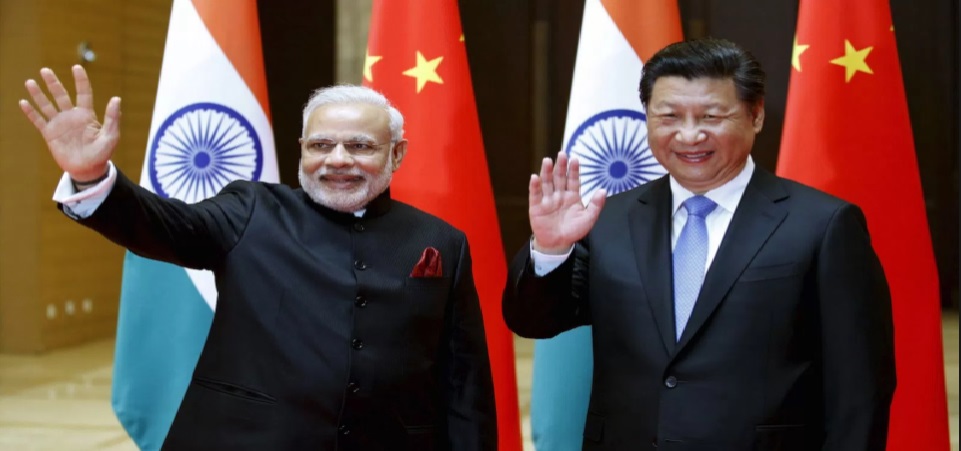

China’s Surprising Tech Leap Over India

5

In the technology space these days, it is safe to note that China has held its grounds very well. When you discuss great technology companies, you are simply talking of Chinese and American companies. India has since been muted. Talk of Tencent, Alibaba, Mobike, and Ant Financial (all Chinese) in the community of Apple, Facebook and others. (Pardon the exaggeration of comparing Apple with anything, but you get the point.) I am not sure any Indian firm comes close. Just look at the numbers reported by Tencent this week.

Chinese Internet giant Tencent reported revenue increased 61% in its most recent quarter, the fastest rate of growth in seven years, to almost $10 billion. Net income at the owner of popular messaging app WeChat jumped 69% to $2.7 billion. WeChat reached 980 million monthly active users, meaning by year-end it will likely surpass the 1 billion mark.

In the world of AI, China is giving America a really great challenge. In payment, I can say that China may even be ahead. WeChat leads the global messaging app. Alibaba has brought many new ideas that Amazon has been copying. It was operating supermarkets years before Amazon bought one.

China is not a den of copy-cats, anymore. The nation’s technology has evolved. Yes, while India has the high-octane mathematicians and technical minds, they are largely employees of American companies. They are paid labor as the world does not have any (new) major tech firm from India at the top level, with the global bravado as we see in Chinese tech firms. Yes, India, through its citizens, is playing a major role in what is happening in U.S., but India as a nation is left out.

Yes, India provides the brainpower that drives most elements of Silicon Valley. For all the accusations of copy-cats against China, you will be biased if you do not see that Facebook Messenger is copying WeChat, Amazon is ripping off Alibaba, and Tencent has built a solution that combines Facebook+Twitter+Instagram+[add more] in one ecosystem.

That calls into question: is there something wrong with British education that makes us excellent engineers, and mathematicians, but sub-par entrepreneurs? India shares British education with Nigeria. What is happening in China today is what I would have expected to be emanating from India because they create these excellent tech minds. But it seems, being great innovators goes beyond being brilliant in calculus.

I close this piece with this quote from Fortune Newsletter:

I had dinner this week with Dr. Kai-Fu Lee, who may have the most comprehensive view of the global technology scene of any living person, having earned a Ph.D. at Carnegie Mellon and worked at Apple, Microsoft, and Google , before moving back to China and devoting himself to venture investing there. Lee’s specialty is artificial intelligence, and he is quick to acknowledge that the U.S. has the lead in that technology. But he also is firmly convinced that China will quickly catch up, and surpass.

“The copy-cat era is behind us,” he says.

As I mentioned in a post earlier this week, the Chinese change is especially evident in the realm of mobile payments, where Chinese companies have leap-frogged the credit card business and now have 600 million consumers using sophisticated mobile payments systems.

All those payments spew out massive amounts of data, which feed the development of AI. “Data drives AI,” Lee says. While Google clearly leads the global development of AI technology, he believes Tencent—whose WeChat platform is a leader in online payments—is in second place and rising: “China will become a challenger, if not a leader.”

One huge advantage Chinese companies have is a supportive government, at a time when U.S. giants increasingly face regulatory threats. Attacks against the big tech companies in the U.S. and Europe will be “a big advantage for China,” he believes. In an area like autonomous vehicles, China is “two years behind the U.S. companies,” but every regulatory action against those companies “will help China catch up.”

Separately, I was visited yesterday by Christian Hogg, CEO of Hutchinson China Meditech, which is about to win FDA approval for a lung cancer drug that will be the first synthetic drug ever created in China to make it through the U.S. regulatory process. He expects many more to come. And he, too, credits the Chinese government for the strong support it provides to innovative companies. “China is leap-frogging the way industries have developed in the past,” he says. “China is going to catch up very quickly.”

Asked why government involvement doesn’t stifle innovation in China, as they argue it does in the U.S., both Lee and Hogg have similar answers. The Chinese government is clearly focused on encouraging innovation, and takes a relentless trial-and-error approach to ensuring their success.

Yes, China gets help. But I can tell you that if the entrepreneurs are not ready, the help will not translate into anything of value. I give the Chinese entrepreneurs credit, and we need to emulate them across African cities: China is working.

Norway is Divorcing Big Oil

0

It is very interesting that Norway is now having a painful relationship with oil. It now wants to divorce oil. Yes, Norway wants to dump its oil and gas stocks. The nation with $1 trillion wealth fund, built mainly on oil wealth, plans to sell about $35 billion in equities, including Royal Dutch Shell Plc and Exxon Mobil Corp., to help make it less vulnerable to energy shocks, Bloomberg reports.

Norway’s proposal to sell off $35 billion in oil and natural gas stocks brings sudden and unparalleled heft to a once-grassroots movement to enlist investors in the fight against climate change.

The Nordic nation’s $1 trillion sovereign wealth fund said Thursday that it’s considering unloading its shares of Exxon Mobil Corp., Royal Dutch Shell Plc and other oil giants to diversify its holdings and guard against drops in crude prices. European oil stocks fell.

Take this from me: in the next ten years, the activists in the society will put oil in the same bucket as cigarettes. I am not here to decide if that is good or bad; I am simply making an observation. Once that happens, the global pension funds will run away from ALL oil stocks. With that, the fate of oil price will be permanently low, because investors have moved. Sure, you can argue that cigarette maker, Philips Morris, is not bankrupt. That is correct, but it is also obvious that the cigarette maker would be doing better if not for the global efforts to take cigarettes, rightfully, out of this earth (that one I support 100%).

The trajectory is evident on big oil, and over time, other funds will join. At the end, buying oil stocks like Royal Dutch Shell Plc and Exxon Mobil Corp. will be seen as a dirty way of accumulating wealth. Most activist brokers may not even offer them, so you may be unable to buy the stocks when you want!

As the Big Oil struggles to find big time investors in their stocks, they will experience massive erosion of values. Besides whatever Elon Musk and other renewal innovators are doing, this morality angle will be extremely fatal to Big Oil. Forget that Norway has framed this as a way to mitigate the cyclical boom and bust in oil, this is a morality play, anchored on climate change, as the piece below noted.

Norges Bank Investment Management would not be the first institutional investor to back away from fossil fuels. But until now, most have been state pension funds, universities and other smaller players that have limited their divestments to coal, tar sands or some of the other dirtiest fossil fuels. Norway’s fund is the world’s largest equity investor, controlling about 1.5 percent of global stocks. If it follows through on its proposal, it would be the first to abandon the sector altogether

And abandoning that sector means countries that depend on oil will see dislocations as I have noted in this long piece titled Nigeria in the Post-Petroleum Era. The world is changing, and Nigeria certainly needs to move fast in the diversification of the economy.

Amazon’s First Key Acquisition in Africa Will Be A Supermarket, Not An Ecommerce Startup

2

Many have asked me to project the best possible acquisition Amazon could make in Africa. Of course, no one knows the grand strategy of Amazon in Africa except that it runs a lackluster e-commerce operation in South Africa. I had noted that Amazon is not in South Africa to win in e-commerce, but to use the goodwill associated with its ecommerce operation to sell cloud computing services across Africa. So, Amazon is not thinking of profitability in South Africa’s ecommerce, provided its presence there makes it easy to corner all the startups to become customers to Amazon Web Services. That is the One Oasis Strategy.

But with Alibaba showing signs that it will play in Africa with recent visits by Jack Ma, Africa is now part of the big equation. The implication is that Amazon may like to play to win in our continent. Alibaba had noted that it would be investing billions of dollars to develop new businesses and markets. Africa is certainly part of that new market.

But while we discuss how these companies will enter, I do think none is coming to buy any ecommerce operator. Recent changes in the industry show that market is moving seriously and winning in ecommerce will depend on doing well in the physical space. I will explain what could happen, in Africa, by examining what Amazon is doing in India, which mirrors to a large extent the African market.

This is the Amazon strategy in India: forget big ecommerce acquisition, buy/develop and deepen the offline business. The company understands that having a website and listing items without how to move them will not drive growth. India does not have a great postal system that rivals what Amazon depends on in Europe and North America. So, there was no need of buying big ecommerce operators, especially if they do not solve the logistics problems. What did Amazon do?  It went into buying supermarkets and physical stores to improve its distribution and pickup locations. Yes, Amazon has been buying supermarket chains, focusing on the offline in India, even when developing its ecommerce operations, largely organically.

The African Strategy

I do think Amazon will execute the same strategy in Africa: it will be more strategic to acquire pockets of supermarkets and integrate them into one brand across major African cities than buying any ecommerce operator. There are few supermarket chains in Africa. Only South Africa with Shoprite and others like it has developed top-grade supermarket chains. In Nigeria, nothing like that exists: we have supermarkets but they are not chains.

In Nigeria, we are talking of supermarkets like H-Medics (Abuja) and others of its size. These shops will be integrated into one brand, and then linked to others across cities. By the time you have them in 30 cities, you have a solid chain. Those shops will reduce costs of distribution by serving as pickup and collection centers. Under one management, you will see massive benefits from economies of scale.

Offline is part of Amazon’s vision for the future of commerce. In U.S. where it is doing all to win in grocery, it has understood the limitations of online-only business model. Yes, for Amazon, having physical stores will be a huge offense. If Amazon does not develop the physical space, in most sectors like grocery where the money is still domiciled offline, and those offline competitors move online, any current advantage Amazon enjoys could be neutralized. You do not want the players you disrupted in books to disrupt you through grocery, the largest of sectors in consumer buying. With the money in the physical domain, Amazon going there makes sense. Its acquisition of Whole Foods is part of executing that offline strategy that strengthens the online business.

Even Alibaba has the same plan as I noted earlier today. Alibaba is investing in Sun Art, the largest retail chain in China; call it the China’s Walmart. In Africa, I expect these offline players to dominate how Alibaba and Amazon will compete in the continent. Largely, owing to the need to scale, with lower marginal cost, my prediction is that Amazon will be pursuing deals in physical stores, in Africa, even while growing its ecommerce operations organically, when it does decides to massively pursue African market.

All Together

This offline trajectory will play out in Africa. If Alibaba and Amazon come, they will focus on building supermarket chains, from the disparate small stores we have across our cities. They will integrate them into one brand. Using the one-brand operation and economies of scale associated with such integrations, they will reduce the distribution costs which will make their online products more price-competitive. Once they do that, they will improve their scalable advantages. The electronic (i.e. website customer acquisition and on-boarding) part of the business will be grown organically.

The Opportunities of H-Commerce in Africa

0

I think it is official now that the era of ecommerce is over. We have officially moved into hybrid-commerce (or h-commerce). Any talk of ecommerce is for history; the global business has changed the “e” with “h”. So, I want to begin that conversation in Africa by focusing on h-commerce. Today, we are reading that Alibaba is spending billions of dollars for a stake in Sun Art, the largest retail chain in China, call it China’s Walmart.

The fundamentals of this redesign are correct: it is the marginal cost and where the money is that must drive retail strategy. The money remains offline and you need an expanded strategy to meet the needs of customers in a business dominated by logistics cost (an offline component cost).

For Africa, the case for h-commerce is even stronger. We do not expect the total online retail market to move up to 1% over the next decade in Africa. Today, total online market is well below 0.1% and the players do not have the leverage to change that due to our open market system (four market days, etc in most parts of Africa), fragmented market (everywhere is market), poor distribution systems, and lack of tax advantage which helped U.S. e-tailers (Amazon enjoyed no sales tax burden collection for years, making its products cheaper than those sold in brick and mortar stores).

The path to profitability will pass through physical commerce. Why compete for 1% when 99% is out there? Amazon and Alibaba know that in 5 years as physical stores move online, their advantages will be neutralized. So, they are playing offense. If the world runs in the physical space. especially in grocery, you better go there to get the deals.

Simply, we need a hybrid commerce strategy in Africa if we want to be on the path to profitability. Marginal cost of ecommerce is dominated by atoms and not (direct) bits. (Sure, information is physical, but let us avoid that complexity here.) Hybrid commerce will require returning to offline partners, and we need to make that work for Africa. It may not be complex if our companies are open to work together and where possible merge.


*