DD
MM
YYYY

PAGES

DD
MM
YYYY

spot_img

PAGES

Home Blog Page 7263

Samsung’s Circular Profit on Apple

0

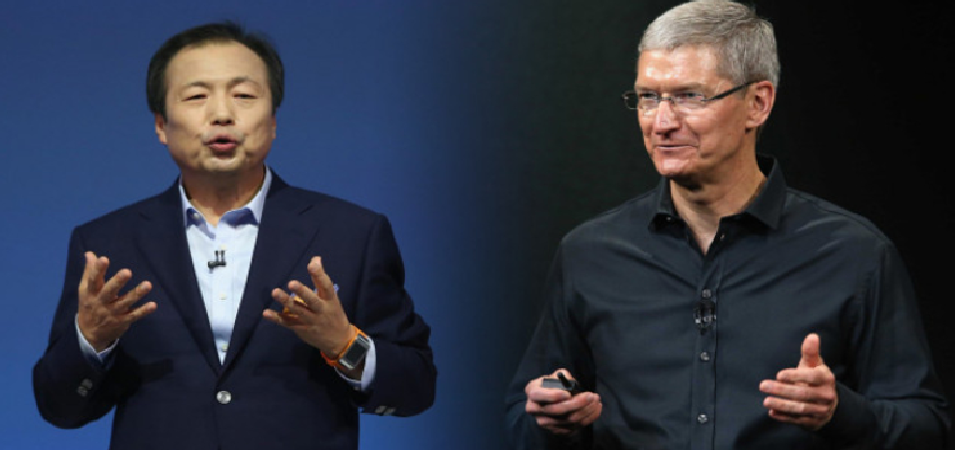
Apple has a clear arch-rival in the smartphone business: that is Samsung. Though Google Pixel is emerging along with Huawei, the company that keeps Apple awake in the night in the smartphone business is Samsung. Samsung delivers the best Android devices, at scale, which challenge Apple products across many indicators.

Between Apple and Samsung, Samsung is a better business in terms of re-positioning, but Apple is a fashionista brand which makes customers great fans. Samsung has better engineering, but Apple builds better customer perceptions on products. But when you look deeper, you will notice that without Samsung, there will not be any Apple iPhone in this world, at least at its quality level. Samsung will make about $110 from each iPhone X sold.

Samsung actually has a vested interest in the iPhone X being a huge success. According to The Wall Street Journal, the company stands to make around $110 from each phone sold, which all told could result in billions more than the company even made on its own most-recent flagship, the Galaxy S8.

To be clear, all that money will go to Samsung Group, the conglomerate, as opposed to specifically the mobile division of the company. Why the windfall? Samsung made the OLED display, NAND flash, and DRAM chips in the iPhone. It’s currently the only company capable of manufacturing these items at the volume that Apple needs, which means Apple has to buy the parts from Samsung.

If the iPhone X sells the way analysts think it will, that means Samsung stands to make billions of dollars off its competition. In fact, the Journal reports that one analyst thinks Samsung will likely earn $4 billion more from selling parts to Apple than it did from sales of its own phone.

Technically, Apple is equipping its main competitor. For Samsung, that iPhone X is selling very well is not really a bad thing, since that means Apple will need more display and memory chips from it. And should Apple struggle, Samsung can easily fill-up the gap since it has its own big smartphone business.

Personally, I do think that Apple will be having quarterly nightmares whenever it sees Samsung break sales records just as Apple is breaking sales records, especially when Samsung has shot itself in the leg. Apple was the primary reason why Samsung recovered easily from its burning phone scandal: the revenue coming from Apple to Samsung’s chip business was enough to make a huge scandal to fizzle.

So, no matter what Apple does, Samsung will win. If it does not do well in its products, Samsung technology will come after its customers. And when it does well in its products, Samsung components will be needed in huge numbers thereby helping Samsung. So, irrespective of the circumstances, Samsung will profit from or on Apple. I call this Circular Profit.

Simply, you have circled your competitor that no matter any action it takes, you will benefit. When the competitor is doing well, you are also doing very well. And when the competitor struggles, your product fills up the space in the market. Under both circumstances, you will profit from or on the competitor.

What Samsung is doing to Apple is also close to what Intuit has done to some partners with the major difference being that the partners built as parasites within the Intuit ecosystem. Apple is not doing so, as it has a clearly differentiated product despite the fact that it uses Samsung components.

One company that has done that very well is Intuit, an American company that is known for selling tax software. A key attribute of Intuit is giving most things free. You can accuse the firm that it hates revenue. You see competitors building products and solutions on its platforms. But there is a catch: after few years, the competitors become invisible. They become folded into Intuit business in the eyes of customers.

So, for decades Intuit continues to swallow competitors without buying them. I have called its model: Fish Bait Acquisition Construct. It is a model where you give things free to competitors. As they come to enjoy the freebies, you trap them, and over time, they become weak. The end game is that over time, they beg you to take over their assets.

All Together

The finest moment for a company or a nation is when you circle around your main competitor. When that happens, all actions the competitor takes will generate money for you. Head, you win; tail, you also win. Samsung has successfully circled Apple. Largely, if not for global regulations, Samsung can decide if Apple will have iPhone X in the market tomorrow. It can simply says “Apple, we cannot supply to you”, but that of course will not happen because Samsung wants to move products out of the factories.

At national level, colonizing states like France and Britain have circled most African countries, profiting from any action they take. If Cameroon grows its economy, France will have more markets to ship consumer products for the citizens since nothing of value is made in Cameroon. And when Cameroon struggles, France also fills up with loans which ensure that the nation is tethered to France. And if crises happen, be sure that France is going to supply the ammunition. Simply, under all permutations, France will profit from the conditions in Cameroon.

The relationship between Apple and Samsung is unprecedented. And I do think that there is an inherent risk element there as we expect the $1 trillion Apple valuation very soon. But of course, Wall Street does not see it that way, and for Apple that is all that matters. But whether it hurts Apple or not, I do suggest you never allow your main competitor to circle you. You must work to accumulate capabilities to mitigate such scenarios from happening.


A Commenter on LinkedIn Explained the Manufacturing Processes here

Apple’s business model is what i call *Design, Outsource, Assemble & Market* (DOAM) Model. They design what they want and it is usually sleek, custom made and can be perceived to be better than what is already available for example their System On Chip (SOC) and then outsource the fabrication. Taiwan Semiconductor Manufacturing Company (TSMC) manufactures Apple’s chips while Apple assembles, program and markets.

Samsung on the other hand uses a model i call *Design, Manufacture & Market* (DMM) Model. Apples DOAM Model has been profitable over they years that they stopped using Samsung chips and launched the A-series SOC. Then out of nowhere, Samsung made the first and only breakthrough in OLED Screen Technology. They are the only ones that can Mass produce OLED Screens on Planet Earth at this point in time.

Apple’s Marketing Strategy is to *WOW* their customers but their isn’t much about the iPhone X that would wow anyone up to the point of spending $1,000 to purchase an iPhone X if you take away the OLED Screen which is the latest innovation in Screen Technology and that is exactly where Samsung got them.

Jumia House Exit to ToLet Shows Why Nigeria’s Web Firms Need Trust to Flourish

2

Jumia House Nigeria has been acquired by ToLet.com.ng, a Nigeria-based online property classifieds portal. Jumia finds an exit as it continues to restructure its business after over-investing many years ago. Over the last few months, Jumia has streamlined its business, exiting from some web business categories. Gone were the days of the African Internet Holding (AIH) which Jumia parent company, Germany-based Rocket Internet, co-funded with MTN. The partners had expected to use the AIH vehicle to redesign Africa’s web business sectors, churning out companies that would become category-kings across many sectors. AIH made way for Jumia Group as Jumia consolidated all its properties into one brand: from Kaymu (a marketplace) to hellofood (a food delivery ecosystem).

ToLet.com.ng is the leading real estate property platform in Nigeria, focused on providing users with up-to-date information, guidance as well as the best real estate agent network, all of which are needed to make better-informed property decisions. They offer a range of services tailor made to suit the expectations of Landlords, prospective tenants, property agents and anyone involved in the real estate market. ToLet.com.ng has rapidly grown to become Nigeria’s leading online destination for property consumers to search for homes and the favoured online marketing partner for Nigeria’s landlords, estate agents, letting agents and property developers.

This is from the press announcing the acquisition:

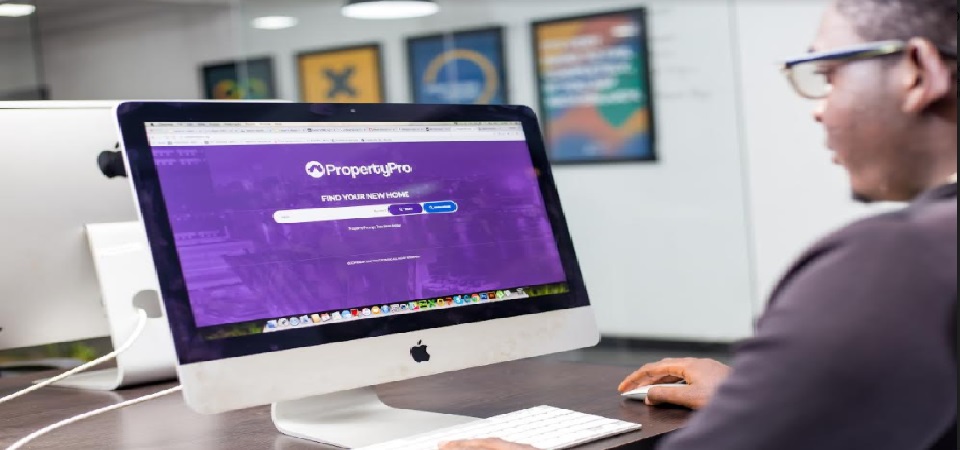
ToLet.com.ng, Nigeria’s leading online property classifieds portal, has in conjunction with their existing investors, Frontier Digital Ventures, acquired Jumia House Nigeria, a competing property portal, for an undisclosed sum. ToLet.com.ng will now merge the two platforms over the coming months, under the new name of PropertyPro.ng, creating Nigeria’s Number 1 property listings market leader in the online Property classifieds space, with 65% share of the Nigerian online real estate market.

ToLet.com.ng currently has around 60,000 listings on its platform, whilst Jumia House Nigeria has around 22,000, the vast majority of which are property listings for sale. In 2016, the company secured Series A investment of $1.2m, led by Frontier Digital Ventures [FDV], to expand its operations. Today’s announcement also sees FDV strengthening its portfolio in Angola and Ghana.

One thing that caught my attention is the number of listings in both platforms: ToLet has 60,000 while Jumia House has 22,000. If you combine these platforms, removing duplicate listings, you may have 75,000 unique listing in Nigeria. According to the statement, that is about 65% of the market share.

Jumia House Nigeria is an online destination for the widest range of lifestyle products and services. Jumia was founded in 2012 with a strong belief that internet can improve people’s lives by helping them overcome the challenges they face every day in terms of poor infrastructures, limited choice, limited information, expensive products and services. Jumia is led by top talented leaders offering a great mix of local and international talents and is backed by global investors, namely; MTN, Millicom, Rocket Internet, Axa, Orange, Goldman Sachs & CdC.

The numbers are very consistent with any number out there: from Konga’s 200,000 (active users) to Uber less than 300,000 (active riders). If not that this information is public, I would have expected Jumia House to have more than 22,000 listed properties in its platforms, considering the investments in advertisements, agents and promotions the firm has mounted in Nigeria for years. It does seem that web business is not that easy in Nigeria.

Exiting is Good for Jumia

This is not really an “exit” for Jumia, and ideally should not be captured as one. But since the press release said “acquisition”, Jumia House has exited. Jumia is not a company that allows local companies that have raised less than $1.5 million to acquire its properties. The fact is this: Jumia has given up on this web sector, and wants to get any money it can lay hand on to cover the cost of necessary filings and disclosures, associated with the sale. My estimate is that ToLet spent $440,000 for this acquisition at premium of $20 per listing.

Now that this slow moving category has gone, Jumia can focus on areas it thinks it can find growth. It needs to find the paths to profitability.

The Property Marketplace Business

The property marketplace business looks good on paper. It has a huge scalable advantage with near-zero marginal cost. The customers generate the raw materials (the listing) and the two-sided business makes money on those materials, serving demand and supply. It is a pure platform business and one that should succeed. In the web business, nothing can be described as being better in terms of asset-light.

However, in Nigeria, there is one major challenge to most digital businesses: lack of trust. That is the main element why Jumia has seen just 22,000 listing despite all the efforts. Nigerians struggle with trusting physical space commerce. Now, take it digital and the trust issues multiply.

That distrust is destroying value across categories and will continue to make it challenging for Nigeria to have great web businesses. Only few people will be happy to close a property deal just by seeing things online. Approaching business with distrust means that most Nigerians like to feel and touch products to be sure they are for real, before committing.

All Together

The execution of this deal is what I have been preaching for startups to do in Nigeria: find a way to come together to have scale. Our markets are very challenging. So, pooling resources will provide the opportunities to survive and grow. In short, the best thing for most of the startups will be to run as monopolies as their capital bases are largely small. Coming together can help them generate more market value and attain profitability faster. Sure, Jumia Home and ToLet are not merging, but the message remains the same: better to have a unified strong front than clusters of companies which will likely fade out due to size.

Nice Deal for My “Cybersecurity & Digital Forensics” Book, Kindle and Paperback Out Jan 2018

0

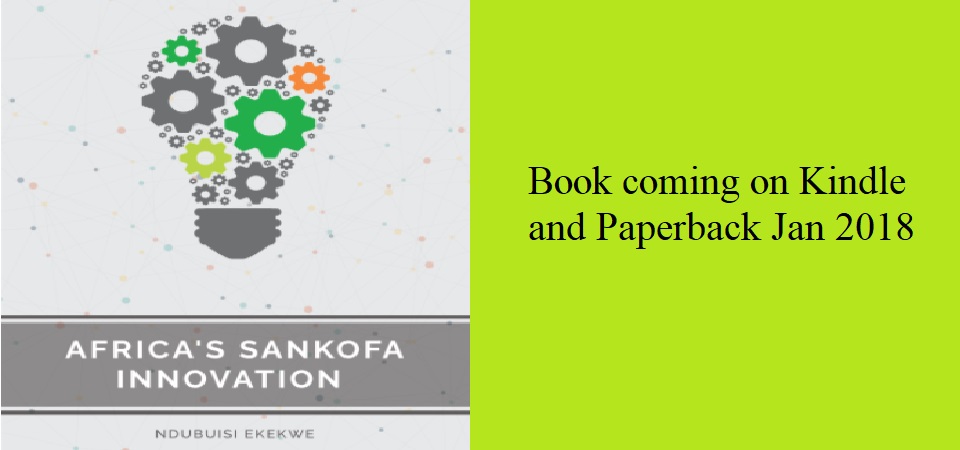
As I noted few minutes ago that we would be releasing Kindle and Paperback versions of Africa’s Sankofa Innovation, I am happy to share that our new book Cybersecurity & Digital Forensics: Policy, Management and Technology will also be in the same platforms.

Our data shows that most African subscribers are not fully engaged, on the Tekedia version of the book, unlike subscribers from Europe, Canada and U.S. We understand the challenges associated with metered internet in the continent. So, the new book will expand into paperback and Kindle.

As I write this. I note a partnership we closed for this book. One of West Africa’s largest guarding companies is covering the cost of the change in strategy. We remain in control of all editorial elements but we will put the company logo on the cover of the book. It is a win-win for the Nigerian entrepreneur named Ndubuisi. With this deal, the book will be available in more locations across the continent. Besides, we retain all revenues.

Lagos is always kind. I am very happy that finding a partner was not difficult. We closed a deal from the first company we explored. The experience from my undergraduate days in FUTO (Federal University of Technology Owerri) where I edited and published FUTO Bubbles, a campus monthly newsmagazine, was handy.

We will finalize the agreement next week and a proper notice will be put out. This book will still be published on tekedia and that is coming soon. The paperback and Kindle books will come out in January 2018 for the same reason I stated here.

Nigeria’s Evolving Fintech Connectivity Fees To Banks’ Platforms

0

I spent the early part of yesterday exploring Lagos. I had arrived from Owerri, after a speech in Federal University of Technology Owerri. Early yesterday, I paid a cab to drive me from Ajao Estate through Anthony to Jibowo. Then, from Jibowo to Idi Araba (LUTH area) and back to Ajao Estate via Oshodi. Later in the day, I had a meeting in Ogba (near Ikeja) and from there to Island. All through these trips, I was noting changes in our country, especially how infrastructures were emerging. Two weeks ago, when I visited Lekki, I saw a new city. That gave me perspectives on how Nigeria is rising. This is part of making sure one understands the city.

In Abuja, early in the week, I noticed something: most banks are closing their branches. Due to the nature of my business, I have awareness whenever I travel. If you walk from the Central Bank of Nigeria Abuja headquarters all the way to the Cadastral zone (at the back of the Nigerian Defence College, yes War College), you will notice that most banks have closed their branches on that road.

Skye Bank had closed. Sterling Bank has gone. And at the extreme of that road which used to have one of the largest Union Bank branches, that branch is no more. Increasingly, the number of branches is dropping in Abuja, just as ATM locations are increasing.

In Wuse 2, along Adetokumbo Ademola, you will see many ATMs. But bank branches are now scarce commodities. Do not expect this to change due to the following:

  • Abuja is the most educated city in Nigeria with practically anyone living there possessing at least a primary school education. It means they can do digital and mobile banking without the physical elements of banking. The banks are taking advantages of this solid educated citizen base to streamline their operations, and save cost
  • Banks do not need branches in Abuja – they just need few for some special customer needs. The customers can use their digital platforms and ecosystems to do banking. However, that is not possible in some locations in Nigeria due to literacy issues. In Lagos, that business model may backfire since Lagos has the educated and nearly uneducated all living together. What is happening in Abuja will happen in Port Harcourt where we also have a high pool of educated citizens. Owerri and Ibadan will not be far: banks will close most branches, moving operations to their digital platforms.

Emerging Asset-Light Sector

As the era of digital banking evolves, this trajectory will be evident in the banking sector. The model will help them improve cost-to-income ratio because customers will do the banking by themselves. When customers do their banking services on the digital platforms, it means banks will not need to hire many people. Also, they become asset-light as they do not need to invest in branches with the associated expenses needed to run them. The key implication is that over the next five years, many Nigerians will lose their jobs in the banking sector. Those branches many banks closed along the CBN road to Cadastral Zone exited with most of their workers and staff providing auxiliary services. Those services include security companies and guards. Those Nigerians are now in job markets.

Change is in the land. This calls for entrepreneurs to understand that markets are evolving. Nigerian banks are already adapting and very soon, most will close more branches, sell their real estate holdings and become pure-play asset-light institutions. SunTrust Bank, a new bank, is banking on that model, with its digital-only strategy.

My observation is that some of the banks are now becoming fintech companies. GTBank’s USSD banking would have been a huge fintech if not that it is under GTBank. Wema Bank’s ALAT is a top-grade fintech. Diamond Bank App with its millions of users would be discussed in the range of emerging Afro-unicorn if it is an entity with no bank affiliation. That these products are run by banks should not diminish them.  I truly like the pace most of the banks are redesigning their businesses: they will hold their grounds against most fintech companies.

Fintech Connectivity Fee

I predict that in coming years, the CBN will approve connectivity fees on fintechs (non-banking institutions), forcing companies like Paystack, Flutterwave and Paga to pay banks to connect into their ecosystems. So every transaction processed by fintechs will require a percentage of the earned revenues reserved for the banks. In a country where government takes N50 stamp duty for digital transactions, I do think fintech connectivity fee is just around the corner.

The same argument from Telcos on WhatsApp will be made, but banks are well ahead because they control their ecosystems far better than telcos. Unlike telcos which charge customers fees to have access to the web, and then turn around to complain that customers are using their services to deprive them more revenue, banks will not be dealing with customers. Rather, banks will take the fees to fintechs telling them that they would be required to pay a percentage of any fee the customers pay, for them to have the ability to connect to their platforms, automatically. So, if Paga charges say 1.99%, the bank may ask for 20% of that revenue. I call this Bank Tax imposed on fintech and this will begin in 2022, in my model.

Note that this Bank Tax is already in Nigeria. Remita pays it to commercial banks for them to work with it.

In a letter reportedly written to President Muhammadu Buhari by John Obaro, Founder and Managing Director of SystemSpecs, developers of the Remita application, the allegation that SystemSpecs pocketed 25 billion Naira was refuted. Obaro explained that the one per cent commission was negotiated prior to the signing of the contract; and the one per cent commission was shared by SystemSpecs, participating commercial banks and the Central Bank of Nigeria in the ratio of 50:40:10 respectively. According to findings by PremiumTimes,’Remita’ is not “an agency” but an application/software for executing payment instructions and collection of government revenue

It will be institutionalized with clear CBN support very soon. This will change most of the elements in fintech today, in Nigeria, unless the fintechs can lobby for such fees to be aborted, even before they are introduced.

Print and Kindle Versions of “Africa’s Sankofa Innovation” Book Out Jan 2018

0

Good People,

Due to popular demand and data we have collected after few weeks of publishing Africa’s Sankofa Innovation, we will be releasing both Kindle and paperback versions in Jan 2018. We have heard loud and clear from many Tekedia readers that you would need a hardcopy. Also, many have also noted they would like an electronic version via Kindle over reading on the site. Yet, some like the web version as they can comment and ask questions to me for explanations. We will make all options available.

While we continue to welcome subscribers who pay to have access to the subscription-only articles, besides the books, we will unveil paperback and Kindle. It will be in January to have 2018 (as the publication date) since it does not make sense to have a book published in November. It becomes an old book after a mere two months.

We are making this decision based on data. More than 85% of the subscriber engagements are coming from EU, Canada and U.S. We think that the cost of broadband (with metered Internet) is affecting those in Africa to engage, even after subscriptions. Since we do not want to have a PDF document, we will offer a paperback.

Amazon will handle the printing and all logistics. They currently sell my other books. This will be priced very affordably. We will let you know when the book goes on sale.

Thanks

Nd