DD
MM
YYYY

PAGES

DD
MM
YYYY

spot_img

PAGES

Home Blog Page 7264

Gloo. ng and Supermart. ng Should Merge

0

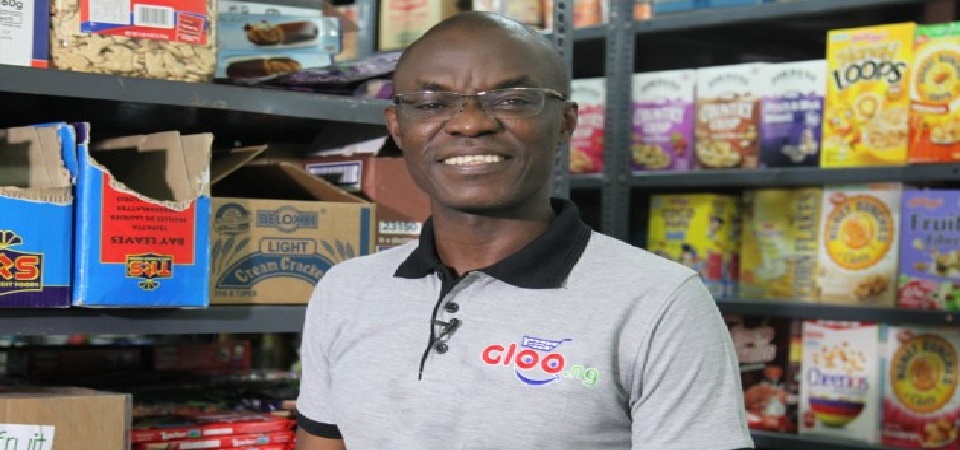
Gloo.ng and Supermart.ng are the two leading food-focused ecommerce companies in Nigeria. They are doing businesses in one of the most difficult sectors to execute any type of ecommerce operation. It is very hard to standardize grocery, and also the quality element is not a pure science. Yet, these two companies are accumulating capabilities to serve customers, find growth, and flourish.

Supermart is a grocery delivery service that enables shoppers to buy grocery from different supermarkets and stores, and then deliver the purchased items to the customers. This company essentially does not carry any inventory. It is an aggregator. The implication is that it can enjoy high scalable advantage digitally. However, since it runs a delivery company, in a nation with no postal service, it has a huge marginal cost in the physical part of the business. No wonder, it has a geographical boundary where its services are available. By this location restriction, Supermart cannot be considered a truly digital company since its marginal cost is largely in the meatspace: web business typically serves all locations, unconstrained by geography.

Gloo is largely similar. From its Crunchbase entry:

Gloo.ng is an electronic procurement engine dedicated to delivering direct to the doorsteps of her clients, on a same-day basis and at very affordable prices, a wide variety of high quality brands of supermarket goods. Gloo.ng provides her clients very convenient, very efficient and very affordable means of shopping for supermarket goods, saving them irreplaceable time, needless stress and valuable money, thereby enriching their lives with the happiness these savings facilitate.

These two companies are running a really brilliant business model: aggregation which could have made them asset-light companies. However, since Nigeria does not have a postal system, they are quickly flipped to become asset-heavy since investments in bikes, vehicles, and associated equipments, are necessary to run logistics in places with no postal services. The logistical arm is the weakest link of the business vision. As they grow, they have to increase capacity to serve more cities. As that happens, the inherent reduction in marginal cost which could have benefited them for scalability will not flatten rapidly. It means that both Gloo and Supermart cannot simply scale as digital companies because the marginal costs are dominated by the meatspace operations. I do expect them to remain in locations like Lagos, Port Harcourt and Abuja for years.  The challenge to cover all major Nigerian cities will be daunting.

I did note some of the major challenges of ecommerce in this Harvard Business Review piece.

Distrust: Rich Africans have yet to embrace online shopping, due to online fraud. In Nigeria, for example, where phishing is common, people are skeptical about putting their credentials online.

Cost of broadband: Africa enjoys tremendous growth in mobile internet which is the popular means for people to access the web.

Logistics: Amazon.com and eBay are great companies that depend on the U.S. postal system to serve their customers. I sell my own books online in U.S.; once a buyer makes payment, I drop the book off at the post office to close the transaction. In Africa, it’s more complicated with nonfunctioning postal systems. Online businesses operate delivery motorbikes, which increase the cost of doing business there.

African open market: In Africa, there are “markets” everywhere, starting with the security guards who run stores in front of their masters’ mansions. There are open markets, supermarkets, and even unemployed youth selling things at traffic stops in major cities.

Literacy rates: Even if all the infrastructure and integration issues are fixed, illiterate citizens may be unable to participate directly on e-commerce sites that require reading and writing skills. .

Every ecommerce firm in Africa (except South Africa) will deal with some of these challenges. Gloo and Supermart are experiencing some already. That is the main reason why they have bounded their geographical locations. And they are smart to do so. Providing grocery delivery services to someone in Opobo will not make good business sense.

Why They Need to Merge

It is always hard to ask Nigerian companies to merge. We are not good in that. But when you look at the operations of both Gloo and Supermart, you will quickly see where the bulk of the money is going: logistics. Since they do not really carry inventory, their main cost model goes to logistical operations to deliver very fast once clients buy the items. To do that, it means they have to keep expanding logistics as they expand. Scale will bring higher efficiency in asset utilization. And that is why I think both should merge. That will give them the opportunity to combine their resources, and reduce distribution cost which is the main driver of the marginal cost in the business.

In ecommerce, there are three components of marginal cost: cost of goods sold, distribution cost and transaction cost. Only the distribution is relevant for these two companies. And it is the cost that clearly shows that to win, these companies have to combine resources.

There are three major marginal costs which are consequential in the broad ecommerce business: cost of goods sold (COGS), distribution cost and transaction cost.The distribution cost is the most challenging in Africa because that is the cost that turns an ecommerce operation into a traditional physical business. The first, COGS, is incurred irrespective of the nature of the business. It is the cost of production, i.e. the cost of producing the product which is being sold. The last, transaction cost, is mainly the fees incurred as part of the commercial transaction activity. This can include a merchant fee for accepting credit/debit card from the payment processor. Here, I explain how the distribution cost can be handled.


Shoprite Acquisition

The future of commerce is digital.  That means even if companies like Shoprite are not interested in digital businesses now, they will in near future. Hybrid commerce requires the elemental composition of atoms and bytes to win. Shoprite may like to acquire a strong Gloo/Supermart post-merger to run its delivery business. Executing this model will help Shoprite enjoy benefits associated with invertibility construct.

All Together

The business of grocery will remain challenging because of the fragmented nature of the sector. There are also open markets everywhere. But as the days pass, digital grocery business will find its space. Unlocking the opportunities will require more investments. If Gloo and Supermart combine, they will have higher scale to redesign a sector they have pioneered.


Central Bank of Nigeria and NDIC Have Set Up a Bitcoin Committee, Says Senator Bukola Saraki

0

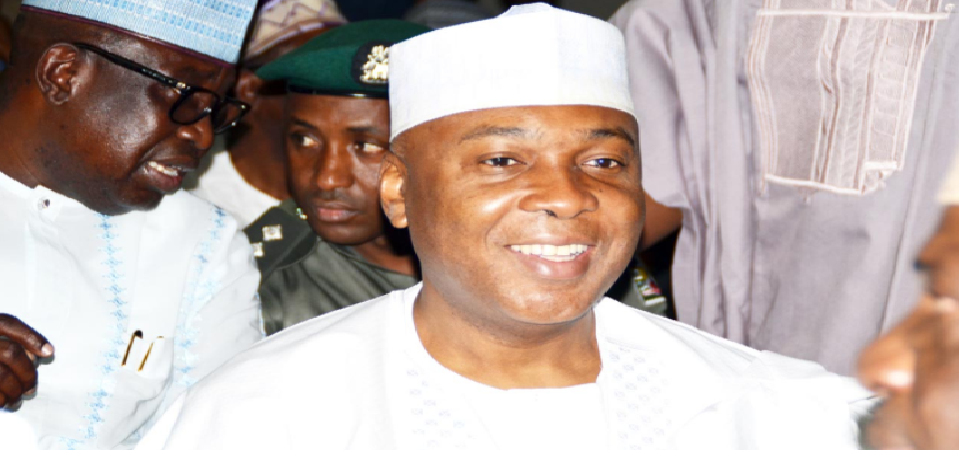
The President of the Nigerian Senate, Senator Bukola Saraki, presented a paper during the National Conference on ICT and Cybersecurity which was held early this week in Abuja. He spoke eloquently on the challenges of cybersecurity in our nation, and the need for government to engineer effective policies to curtail their impacts.

As the nation’s third citizen and the leader of the Senate, Senator Saraki’s statements certainly have influence. I note the following from his presentation:

Internet Crime on the Rise

The Senator noted that “Internet-facilitated crime seems to be growing” in Nigeria. He explained further as follows:

Our cyber borders are very porous indeed. Some $450 million was lost to 3,500 successful cyber-attacks over a one-year period.- roughly 70 percent of the overall hacking attempts in the country. Estimates suggest that the hole created in the economy by cyber-crime amounts to 0.08 percent of the GDP – a loss of about N127 billion. This, needless to say, is unsustainable.

Regulation of Bitcoin

The Senate President noted on the case of Bitcoin as follows:

Still on the mutability of cyber threats, some of you may recall that the last major Ponzi fever in Nigeria fizzled out in a hail of bitcoin – a cryptocurrency exchanged anonymously on the Internet. The operators stopped paying investors in Naira, offering them bitcoin instead. However, cryptocurrencies, being relatively new, are not subject to any local laws regulating their use. This is an internet grey area that impacts on real people in real-time. I note that the Central Bank of Nigeria (CBN) and the Nigeria Deposit Insurance Commission (NDIC) have set up a committee to look at the use of bitcoin in this country …as there is clearly a need to establish a framework for the regulation of bitcoin and other cryptocurrencies.

Commentary

Certainly, the Senate President will like to see Bitcoin regulated in Nigeria. That means that Bitcoin could be legalized in the nation for it to be regulated. He could have said that Nigeria would ban Bitcoin, but that was not where he was going. It seems obvious that most nations will arrive at the conclusion that cryptocurrencies would need to be regulated, over outright ban, since it would be hard to enforce a ban. Nevertheless, regulating Bitcoin may be extremely hard since the Central Bank of Nigeria will not have the absolute supernatural power over Bitcoin. My recommendation will be to create a digital currency that will be tied to the Naira which CBN could easily regulate.  I expect the CBN and NDIC committee noted by the Senator to provide directions in coming months.

My position remains that we do not need Bitcoin but Nigeria needs a digital currency tied to the Naira that will enable the efficient functioning of the blockchain infrastructure which I expect to evolve in coming years in the nation. If the Central Bank blesses such a plan, we will experience a virtuoso innovation system in redesigning the architecture of some of our industrial sectors and make them more efficient even while being cost-efficient. As I noted in my entry on Blockchain Africa, blockchain has a promise for Africa. Nigeria just have to find a way to lead in that promise at least in West Africa where its impact is huge. As Goldman Sachs goes closer to Bitcoin and digital currency, we may be too slow that very soon, it becomes an entirely foreign imports to Nigeria.

What Great Consultants Tell You

0

I lead an Advisory Services Practice in my Group. We serve clients in U.S and across Africa. In this business, we do not do rocket science. Consulting, under most circumstances, is someone telling you to do what you could have figured out yourself. Sure, there are very complicated assignments where you have to crack your brain, develop and use frameworks, relying on data to help clients. Those projects task the power of brainpower and the capacity to manage complexity to bring order to a client’s business challenges.

But most times, it could be easy. This week, I helped a small hotelier. I went to a tier-3 Nigerian city for a project preparation phase. My flight was delayed so I landed very late. My client took me to a hotel very close to the airport since I did not want to drive deeper into the city in the night.

When we got to the hotel, I noticed that out of the five bulbs in the reception, only one was shining brightly. Others were dim. I asked the receptionist if I could speak with the Manager. She obliged and called the Manager. I told the Manager that he was not doing a great job. I explained that he could be losing more than 30% of potential customers in the night due to those bad bulbs. I asked him to go immediately and changed them. He was not saving any money for not replacing them.

Interestingly, they have MOPOL and excellent security in the hotel. The rooms were also above average. But they simply neglected one of the most important elements of the business: the reception. I estimate that the 4 bulbs may not cost more than N2,000.

In the morning as I was leaving the hotel, the Manager came and told me that he changed the bulbs in the night. I commended him and also told him to go and buy paints and paint the hotel gate. That may not cost him more than N20,000, He said he would do so. We exchanged business cards. I left for my client’s business location with his driver.

What I did is nothing but consulting. Sure, it is unpaid and unsolicited. The recommendations are possibly what a good consultant could have told that hotel if they have hired one to explore how to improve growth in the business. Little things matter. I will explain how great institutions do simple things to win:

  • The Rwandan Development Board (RDB): RDB is one of the finest investment ecosystems you can visit in Africa. It looks like a trading hall. Once you enter RDB, you may think you are in Goldman Sachs. They take care of everything, polishing the tiles and communicating excellence in their physical outlook. The impression is legendary. You will like to do business in RDB: I like going there. Nigeria has not done a good job in this area. We sincerely need to improve how we project the image of our key institutions to the world.
  • U.S. Universities: Most U.S. top universities make their schools excursion destinations to create real impressions to visiting potential students. They repaint seasonally so that those students, when they visit, see a spotless campus. That is part of a competitive system: you need to project an image of excellence. Nigerian universities hardly afford resources to keep great buildings in good conditions.

Little things matter in business. And when you work as an advisor to firms, it makes sense to even begin with those little things. Last year, on a project in East Africa with primary focus to boost organic growth, we worked with the client to take outside photos of all its stores. We ran a small comparison and noticed that revenue was nearly correlated to the outlook of the stores. The better stores attracted more customers and performed better. So, even before the real strategic work commenced, the client knew that upgrading/moving stores would be part of the recommendations. And indeed that was a key part of it and within 6 months, in addition to other minor changes, including changing the brand color to entice the market segment, revenue went up.

And when you talk of taking care of little things, it goes beyond being a founder to also when you are leading a unit in a company. One of my best projects was helping a client to model the profitability of all ATM machines and branches in its business. We developed a ranking on which ATM, branch, etc should be brought up first by the IT Group should many be down at the same time. When links go down, IT Group has a technology problem, but it was important that someone transitions that thinking to become a business problem. So, they have a ranking under bounded timeframes on what to do when links go down. It does not make sense to be working to fix an ATM in my village when the link to the one in the National Assembly is also down, when the former generates only less than 1% of the latter’s volume. You do not even need a consultant to tell you to do that. Yet, I am grateful you do!

As you run your startup, I challenge you to be mentally aware of your business. You must develop that spirit of awareness and do all necessary to understand the root cause of issues. Successful business leaders know how to take care of those basic elements. Google spends efforts before adopting a color or font for its products. Yours may be making sure that you have a decent illumination in your reception so that customers would be comfortable to wait, as they explore business opportunities with you. Having awareness should not need consultants, because most times, they simply tell you to do what you could have done yourself.

Optimal Pricing In Non-Asymmetric Distribution Channel

2

There is one big problem that can destroy any business, irrespective of the quality of its solutions or products: lousy pricing mechanism. In other words, you have either over-priced or under-priced. Pricing is not magical; you have to work on it. You can start high and keep tracking sales to understand how customers are responding. If they are responding well, it may be that your price is low. You may upgrade the amount a little and check outcome.

For digital startups, it is even easier: you can check how many items were left on the cart to ascertain the inertia to pull the buy-trigger. If there are many items in the cart, you may decide to lower the price and then over time check if the hold-outs in the carts have dropped. By working on that process, you will attain a pricing optimality where the price and the product demand have attained equilibrium.

Yet, in the Internet age, there may not really be anything as optimal pricing because the distribution is unbounded and unconstrained which means that customers can see your competitors’ prices. Even if you are marginally higher, they could be moved to buy from the competitor. This brings a big challenge: how to make sure that you are price-aware and relevant in the age when pricing has become dynamic with software that set them, with instructions to match or beat an authentic price across the web. Your software has insights on the prices maintained by your competitors and quickly looks for ways to beat them. Internet has removed the information asymmetry because everything is available for robots to see online.

To understand the importance of pricing, Amazon during this holiday season will extend its price-matching to even 3rd party sellers on its platform. That means, after merchants have set their prices, Amazon can lower the prices to ensure the items sell. And when the items sell,  Amazon will cover the discounted price from its own money.

That might sound like a technical distinction, but it’s critical to a new discounting technique Amazon is deploying ahead of Black Friday and the holiday season. “Discount provided by Amazon” lets the company subsidize goods sold by third-party merchants on its online marketplace, making prices even more attractive to customers

“Amazon may fund a discount to customers beyond your item price on select products,” states a short message on Amazon’s “Seller Central” forum. “In these instances, you will receive payment for the order and pay referral fees based on the full item price you set.” (Sellers on Amazon pay “referral fees” to the company on items they sell.)

[…] The Wall Street Journal, which reported on the program over the weekend, said sellers claimed they weren’t alerted to the change.

According to the Journal, Amazon has lowered prices from third-party sellers by as much as 9%. For example, the Journal said a Boots No7 Instant Illusion Wrinkle Filler sold by kn9ght had been marked down 6% to $19.99, while a Risk Legacy board game sold by VirVentures was down 6% to $43.92, slightly less than the price offered by Walmart.

This does show that winning in this age of unconstrained distribution channel will require a lot of offering low margin products, if the goal is to attract customers. The alternative will be to create highly differentiated products which will be unique to a specific platform. But even with that, it makes sense to find ways to keep cost low.

I like how Jay-Z has managed to keep its concerts very popular, through cheap tickets to the masses, but extremely expensive pricing for the VIP sections. So, with that, Jay-Z sells a ticket for $6, severely subsiding it from thousands of dollars it charges those that actually have the money to pay for VIP seats. Finding a way to execute such in your product offering will bring success. You still need growth even as you need to boost revenue. That level of balance is catalytic and only possible when the expensive offering can bring value to entice the customers.

The Lesson Here

In the age where we do not have information asymmetry, typical when decisions in transactions are made with one party having more or better information than the other, we have to innovate for the balance between revenue and customer growth. There is the possibility that you can have a product online and after one month, no one has bought anything from you. The problem may not be the product, it is likely that customers have access to information that your pricing is off mark. And in the web, the switching cost is small, and that means they can buy from others without suffering any undue extra pain in the process.

That first customer, for a product or solution, is very critical, and to make that happen, experimentation on pricing is vital. You must find how to make that happen. As Jay-Z pricing strategy shows, the cheap tickets provide the ecosystems for the rich guys to have fun and be celebrated. Those rich guys will not pay the big money if there will not be people in the concerts. So, technically, the cheap ticket holders seed the opportunities for Jay-Z to command that level of price from the rich concert goers. This is a win-win: the non-affluent people get the cheap tickets and provide the buzz for the rich guys to have fun in the VIP sections. At the end, Jay-Z adds more millions in his bank accounts

This is unlike airlines which do not have any major correlation between economy and first class. They can fly the first class people even if they do not have enough people in the economy class. But in concerts, if you have 20 people that paid $10,000 each, without others joining in the show, there is no game. You need the $6 payers to bring the fun in the concerts. Jay-Z is innovating based on this pricing engineering. The $6 is so low that anyone can come to fill the stadium and create an atmosphere for lovers of concerts.

Amazon has already made it clear that it wants all ecommerce shopping destinations to end on its portal. There is nothing again to be written because Amazon is ready to lose money and profits to gain or keep market share. How do you compete against such competitors? The only option is to offer something that is unique and differentiated which cannot be price-matched because it is exclusive to you. I do believe that differentiation will be the new normal, for competitive startups, since big companies are using their sizes as their most important competitive capabilities. When you innovate and differentiate, you put a separation that cannot easily be compared and price-matched.

Go back and think on your pricing, and make it a learning science. There needs to be a number that kicks in the equilibrium for sales to happen, keeping customers happy while the bank accounts grow.