DD
MM
YYYY

PAGES

DD
MM
YYYY

spot_img

PAGES

Home Blog Page 7265

Intel Shows How To Fight Competitors with AMD Partnership: Do Not Have Pride

4

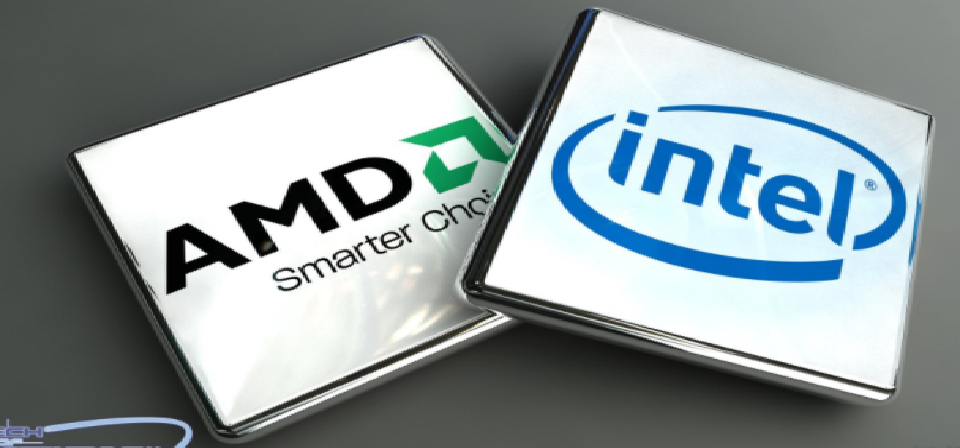
I like it when companies take away pride to make sure they do things that accelerate growth. That Intel could partner with Advanced Micro Devices (AMD) to fight a common enemy is not something you would expect in the highly competitive semiconductor industry. But anyone in the industry knows that Nvidia Corp is eating the cake, and if Intel and AMD hope to have a future in modern personal computing, they must deal with Nvidia.

Intel Corp. and Advanced Micro Devices Inc., archrivals for decades, are teaming up to thwart a common competitor, Nvidia Corp.

Intel planned to announce Monday a laptop-computer chip that combines an Intel processor and an AMD graphics unit, according to a person familiar with the matter. The chip is intended for laptops that are thin and lightweight but powerful enough to run high-end videogames—attributes that lately have been driving sales in an otherwise waning market for personal computers.

AMD and Intel have been fighting for years. But in this business, Nvidia Corp is now the new target. Nvidia emerged as a parallel competitor when AMD and Intel were in the ring, destroying values with AMD getting the worst aspects of the combative onslaught.  Intel was barely wounded.

But recently, under a new leadership, AMD is emerging, introducing new microprocessors which are now better than Intel’s in some categories. The Ryzen series has been well received in the industry, and AMD is looking very great with Wall Street liking what the company is doing. Yet, despite that feat, Nvidia remains a big threat. Nvidia pioneered the GUI microprocessor business and remains the category-king. As computing moves into AI-anchored, Nvidia is well positioned.

There is a lesson here for African entrepreneurs and startups: if we deal with pride, we will find glory. For Intel or AMD to contact the other partner to work together is not something you will consider lightly. But it happened. Intel wanted to destroy AMD and for decades, AMD has been fighting to survive. But today, the fight has moved, and they are coming together to have a future. We need to learn to partner and work together in Africa. Doing so does not diminish your business.


Apple’s Dishonest Explanation Of The iPhone X Screen Problem

0

Apple is still learning the core elements of semiconductors. It is never easy because the legends that do this cannot be leapfrogged. They master the nuts with years of understanding atoms and how they relate to what we have come to enjoy as technology via products.

Apple put out a press release notifying the world about the problems with iPhone X display. In reality, Apple was not saying anything in a very serious issue. The iPhone X has been heralded as the best possible phone at the moment and one would have expected that it will be the most advanced in engineering.  It seems it may not really be the best in engineering. Of course, in branding, iPhone remains peerless.

The Super Retina display in iPhone X was engineered by Apple to meet our incredibly high standards. We believe this is the best OLED display that has ever shipped in a smartphone while offering the best color accuracy in the industry. The 5.8-inch Super Retina display has incredible contrast at a 1,000,000 to 1 contrast ratio, high brightness, and a cinema standard wide color gamut. Together with the best system color management, colors are precisely calibrated at all times to deliver an optimal viewing experience.

Yes, Apple has an excuse for something really important: the iPhone X screen is not working optimally.

If you look at an OLED display off-angle, you might notice slight shifts in color and hue. This is a characteristic of OLED and is normal behavior. With extended long-term use, OLED displays can also show slight visual changes. This is also expected behavior and can include ‘image persistence’ or ‘burn-in,’ where the display shows a faint remnant of an image even after a new image appears on the screen.

Get it from me: Apple is not honest in that statement. There is nothing in the design of OLED that makes it permanently to behave that way. I recall when I was in Analog Devices, we were working on the accelerometer for iPhone, the instruction was clear: fix any known problem so that Apple would have the best product in the market. We made that possible. You do not ship a great product with a known industry problem which has been solved, even if that is from your competitor.

The iPhone X already has a problem with its screen (Picture: David Paul Morris/Bloomberg via Getty)

The fact is this: the problem Apple is trying to explain away has been solved by Samsung for years. Google also used fancy words to explain the same OLED problem. Samsung, the real semiconductor company, has since solved that issue.

It’s unusual for Apple and Google to experience these problems, because it is an issue that other manufacturers have worked hard to avoid.

Samsung’s Galaxy S8 is one of many Galaxy devices to carry an OLED screen in the last few years, and there is no indication of blue tinting or colour issues on that device.

Samsung has also taken steps to avoid screen burn in by having elements that are constantly on display (such as its ‘virtual’ home button) move very fractionally around the screen during the day. In day to day use these small flaws are not going to affect the iPhone X (or indeed the Pixel 2 XL) but issues that have been solved in other smartphones have returned with Apple’s latest.

That brings me to this simple observation: how can someone spend $1,000 and the world richest company will focus on explaining away a problem other companies have solved, instead of admitting that it failed. OLED is a new technology, but it is not an infancy. Apple could have sourced this product from Samsung and it would spare it this embarrassment of creating a technical illusion to explain out a problem industry leaders have since solved. Humility is what Apple needs. I hope it fixes that via software or ask Samsung to take over the supplies. Reputation chips away with mistakes like this especially when you are a luxury brand.


Tips, you can use iPhone manager to manage iOS content on your iPhone X.

Replicating Pricing Model

3

When we work with startups in my Practice, one of the things I put so much efforts is pricing. Besides the cost-based pricing, value-based pricing and the typical marginal cost modeling, I like to look for a costing system that can replicate itself. Of course, there are just few products and services that can deliver such capacities.

Replicating pricing model is a pricing model where the product has a low initial cost-burden for users, making it easier for customers to adopt the product, but with the requirement that over the life of the product, the product will be generating  additional income. The implication is that  you can easily scale the product through faster penetration due to the low initial cost required to acquire it.

However, the product-system additional cost, while largely low, runs for years and will generate more revenue over the lifetime of the product. (Think of a very low fixed cost with a variable cost that is also low, but in continuum.) For this type of product, there is a duality: you have a main product with another supporting product. The customer has to buy the main product, and will then need the supporting one in perpetuity, for the main product to be useful.

Subscription service pricing is not a replicating pricing model because most times the acquisition cost remains the same cost you pay over time. You have a subscription to Tekedia and you pay $20 yearly but that amount does not change year-on-year.  Also, there is no other supporting element to Tekedia. It is simply the same product (access to all contents in Tekedia) with no duality.

Good product examples of replicating pricing model are the following:

  • Razor and blade: You pay for the razor and over years you keep buying blades. The guy that pioneered this sales model in the U.S. military gave away the razors for free. He made money from the blades.
  • Printer and Ink Cartridges: You make the cost of printer very low and then make money via ink cartridges. Dell at a time was giving free printer with any laptop purchase. The company knew that it would make money on the ink cartridges, over years from the customers to cover the printer giveaway.
  • Espresso Machines and Coffee Pods: In most Western cities, people make their coffees at home. The machine to make it is a one-off purchase. They keep it low to make it affordable. But the deal is the coffee pods which someone has to be buying to make the coffee. By keeping the machines low, it makes it easier for people to acquire them. Then, through the sales of the pods, a company can cover discounted espresso machine costs.

As I have noted in the past, pricing is a very important element in any startup. Without the ingenuity of the pioneer of software sales, the industry would not have made so much money. In software, you buy a product, but you never really own it unless you keep paying licensing fees. Once you stop paying the licensing fees, you have automatically defaulted and are now using an illegal product. Imagine if Microsoft and Oracle do not have annual licensing fees from their corporate clients, they would not have made a lot of success.

Also consider if Ford and Toyota had required that to remain having the legal rights to your car, you must service it with them yearly with some fees paid. If you do not pay that fee, the car rights automatically return to them. They could have done that when the automobile sector was at infancy, and the world might have accepted it. This will be different from your typical oil change. Even if they do not need to do anything, you would be required to pay the fees to Ford or Toyota to have legal rights to continue using the car. Annual software licensing does not consider whether you are using the software. Simply, provided you plan to use it, once the license is due, you have to pay. So, you see companies paying for licenses for software that is still inside a package, unopened.  If they do not, they are “storing” that software illegally.

That brings me to the challenges of Qualcomm which has a novel way its mobile chipsets are priced. Today, you can buy a mobile chipset for $10 and use it to make a product that sells for $500. Qualcomm pioneered a model where instead of paying for the chipset, you pay it on the percentage of the final product. In other words, if say 10% compensation, it means they get $50 if the product sells for $500. That certainly gives them a better pricing positioning. Unfortunately for Qualcomm, other semiconductor companies are not interested in that. So, only Qualcomm was pushing and using that pricing model in the industry.

The implication is that Qualcomm has seen resistance from companies like Apple and many governments in some Asian countries where it has competitors. What Qualcomm wants to do today could have been done at the onset of the component and chip distribution industry. I think it is late now. Apple wants to pay $18 for Qualcomm chipset and not a percentage of its iPhone price.

So, as you work your products and services, think carefully on pricing. Besides innovation and technology, you can go far with the right product pricing models.  Facebook has a freemium pricing model, knowing that it can use aggregation to build a huge advertising business. You need to find what works right for you. Pricing is not something you just wake up and do: you must think critically on its implications to growth and scalability of your startup.

A Major Opportunity in Nigeria’s InsureTech Sector

0

We have a very exciting fintech (financial technology) sector in Nigeria. But that fintech has technically equated to bank-tech as startups are focusing on what the banking sector is doing, neglecting other areas in the financial industry. Startups have left on the table a latent opportunity in the insurance sector. As I have noted many times here on Tekedia, the insurance sector has more opportunities than even the banking sector. While the insurance companies are lethargic on their capacities to unlock the opportunities in the industry, blaming Nigerians for not patronizing insurance policies, the banks are ready for whatever you throw at them. Yes, the banks can be fintech or bank-tech if they want because they have the capabilities to execute at the highest level.

But when you come to insurance, the lack of productivity gain through information technology is truly unfortunate. The sector has not found how to unlock new vistas despite the opportunities in front of them. I see moments of glory for founders with guts to attack the sector.

But be warned, the insurance industry regulator is extremely tough to deal with. The National Insurance Commission of Nigeria (NAICOM) is not like the Central Bank of Nigeria which publishes policy documents to provide guidance which startups can operate. (I do think that NIACOM is doing a good job. It has to be tough to police and sanitize the sector. Nevertheless, it has to evolve and create a balance to allow innovation.) Also, the layers in insurance with brokers below the insurers, and the insurers under the re-insurers, create a highly complicated pyramid. You cannot be a good insuretech if you are just a broker. Yes, I do not think having a brokerage license will add any value to any serious insuretech. You need to have an insurance license to do this disruption in Nigeria.

Here is why: no matter any product you can conceive in Nigeria, if there is no insurer that will insure it, it is dead on arrival. And many of them cannot insure because they are extremely conservative in their risk models. How do I know? I know by working with farmers. If not for the federal-owned Nigerian Agricultural Insurance Corporation (NAIC), most farmers will not have any place to insure. The private sector participation in the agro-insurance is largely negligible.  Again, you may not have to blame the insurers: the farmers have attitudes. So, at the end, that trust element is broken and insurers are right to be cautious.

That trust element is why the sector has not grown as one could have expected. The sector is tough and I will not diminish that.

A fresh recapitalisation in the nation’s insurance industry owing to its low capital base and penetration has spurred mergers and acquisitions to reposition the sector for a new era of efficient operations.

The move, according to stakeholders, is part of efforts by the National Insurance Commission (NAICOM) to make the sector once again attractive to Nigerians.

Following the apathy for the industry, mainly caused by acts of omission and commission manifest in the forms of non-payment of dues to policy holders and the shirking of other obligations over the years, the citizens now avoid insurance products. To reverse the trend, it has, therefore, become incumbent on the regulator to win back the confidence of Nigerians by strengthening the financial base of the sector. If the sector comes fully alive again on the basis of the new policy, the incidental benefits are many. Jobs will be created and the contracting national GDP may experience a breather and an opportunity to expand.

Broadly, I do not really blame the insurers. It is very possible that Nigerians are not interested in insurance. However, that excuse remains lame: most times, people are not interested in things they do not see any value. Nigerians were not interested in banking, until they became interested in new generation banks. The new banks in early 1990s brought many new people into the banking sector through better services. That is a possibility in the insurance sector today. We need our new generation insurers and I do think the insuretech will lead there.

The Opportunity

Specifically today, I present one area we need a pioneering AI-driven insuretech in Nigeria: cybersecurity insurance. I see three keys areas:

  • Private Sector: No one is insuring most of our businesses in the domain of cybersecurity today. The foreign players will not do so because they do not have much presence locally. With largely no product in the market, an insuretech can create a new sector, even without any disruption, in the cybersecurity sub-policy category. I also do think that in near future, banks may be asked to carry cybersecurity and data protection coverage as part of the Securities & Exchange Commission regulation. Banks do transport customer data just as oil tankers which move oil; the oil tankers carry insurance in case bad things happen. To get that insurance, the banks will have to secure their networks and stay up-to-date on the latest data protection systems. This makes sense as the Central Bank of Nigeria has noted that Nigerian financial sector has lost more than $470 million to cyber-related frauds.
  • Government: Though the opportunity may be limited in the public, I do believe that forward-looking institutions like Corporate Affairs Commission, Securities & Exchange Commission and Nigerian Stock Exchange may be in play here, if there is a credible product.
  • Credit Bureaus: I have noted some key points before Nigeria ratifies many elements of its credit bureau system in our fledgling credit system. Traditionally, looking at what is happening in U.S., credit bureaus do not really care about customer data. They profit by selling data which banks and other sources send to them. So, irrespective of their actions, their customers (the banks, mortgage lender, etc) will always come to them. The customers whose data are sold are never in the picture. That is very bad and needs to change. I expect the Nigerian credit bureaus to under-invest in cybersecurity and broad data protection: naturally, people want the easier path. Insuretech can provide insurance products for the credit bureaus to take insurance. The regulator, NAICOM, will mandate that for all Nigerian insurers. For the credit bureaus to get the insurance coverage, the insuretech will then require that they harden their networks and systems with up-to-date security systems. Through that, there will be an alignment on what the bureau does and what the overall interests of the customers will be.

All Together

The insurance industry is still on stasis. It needs the innovation capabilities of agile insurance technology companies. I do believe that we need to have founders who can lobby NAICOM to open up the industry by giving license to carefully vetted insuretech firms.  I am expecting a truly online-only insurance company in Nigeria that is asset-light, but very strong on the key ratios because it will save money on buildings and other old artifacts of the industry. Insuretech can help to unlock insurance value in Nigeria and grow the sector. But that can only happen if the entrepreneurs step up and NAICOM blesses them. Government must find a way to enable insuretech participation besides any policy it is engineering to reshape the industry.

Zenvus To Present During Wellbeing Economy Festival (WEF) in South Africa

0

Zenvus, my agtech precision farming pioneer, will take center stage during the Wellbeing Economy Festival (WEF) in Pretoria South Africa later this month.  My talk will focus on how technology is revolutionizing small-scale farming in Africa.

Zenvus is a pioneering precision farming technology company that uses computational algorithm and electronics to transform farms. Zenvus collects soil fertility and crop vegetative health data to deliver precision agriculture at scale. It then uses the aggregated and anonymized data to deliver financial services to farmers.


My talk will begin at 11am and the venue for the talk segment is at

CSIR International Convention Centre, Pretoria (South Africa)

The WEF will host an incredible line-up of innovators, entrepreneurs, technology experts and academics discussing how to change policy, business and society.