DD
MM
YYYY

PAGES

DD
MM
YYYY

spot_img

PAGES

Home Blog Page 7266

Join me at 2018 Africa Trade & Investment Global Summit, Washington D.C USA

0

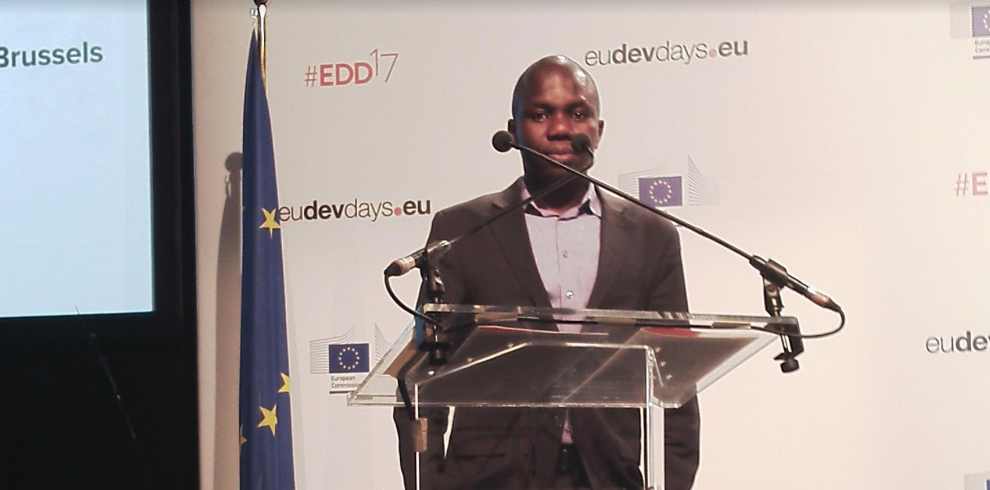
Join me in Washington DC at the World Trade Center next June. Last week, I accepted to deliver a major speech during the 2018 Africa Trade & Investment Global Summit (ATIGS). I am hoping to learn, share and connect as business leaders continue to build our continent.

Kindly find attached, an invitation to speak at the Africa Trade & Investment Global Summit (ATIGS) on June 24 to 26, 2018, in Washington, D.C at the World Trade Center Washington, DC – Ronald Reagan Building. ATIGS amplify trade, investment, & economic development in Africa, with the 2018 edition projected to gather 2000-plus key economic players from more than 70 countries including government delegations, high-profile African leaders, project developers and international investors. 
The Summit is at the heart of what we do in Fasmicro Group and JPL Financial Group where we continue to accelerate the deployment of quality capital in promising  major African public projects.

Nigeria’s Paylater Should Buy Piggybank or Build a Saving Business

4

Paylater, the Nigerian online lending ecosystem, continues to grow. It noted few days ago that its app has been downloaded more than 500,000 times. I wrote a comprehensive piece about its operations and opportunities few weeks ago. Indeed, Nigerians want money and they are following the easier path since banks will keep asking for collateral which the very people that need the loans do not have. The banks are right to ask for same because they are keeping other people’s money. That problem will be solved when Nigeria has a credit system to ascertain credit worthiness of borrowers.

Paylater brilliance is that it can offer very fast loans to people without collateral. Though the loans have above-banking interest rates, at least the people have the money.

Paylater is pioneering a new area in fintech along with other lending startups in Nigeria. Though their annual interest rates can vary from “31% to 213%”, for most people, it is better than nothing. Simply, they are meeting the needs of customers, left behind by banks. For the very fact that they are CBN regulated, it means that they have to disclose every element of their loan terms in ways that customers will understand.

For Paylater, the firm is totally online, away from the bulk of the people that need its loans. That is the main weakness but also the strength since the Internet gives its unbounded distribution channel to scale, even while excluding the millions of Nigerians who are not yet online. Most of the excluded people are the people that desperately need the product. But Paylater has to start from somewhere and succeed first. It cannot serve everyone. The Internet helps it to operate lean with positioning to serve its desired customer segment efficiently. I see brilliance in this company and its mission.

But as this firm expands, this company will have to deal with one major irony: it may need collateral itself to get funding from banks, before it can lend. Yes, it can make its own loans without collateral but getting that money to lend will be hard. Of course, it can overcome that challenge by selling equities to investors. That is probably the best capital for the business. I am really surprised that it has not done that already, based on the apparent traction with its app. Sure, app download is not the key indicator of financial health for a fintech.

Borrowing and paying help clients borrow more

The fintech lending business in Nigeria and Africa will be won by four things:

  • Ability to have cheap capital to lend: You need cheap capital for this business. Equity will be an optimal option when families and friends cannot help. But where such options are not possible, companies like Paylater will have to take debts which is usually at high interest rate
  • Ability to lend that capital as fast as possible. You do not want to keep expensive capital in your bank account. It needs to start working immediately. And that means lending it out to customers.
  • Higher lending rate: You need to make sure that the interest rate paid by the borrower is higher than the cost of capital, plus expenses. Yes, you need to lend at a higher interest rate to have a chance. This is catalytic to the business survival: making it clear that your interest rate is what it is (yes, very high) without freaking people to forgo the loan.
  • Near single digital default: This is the heart of any lending business. You need to make sure that you are lending to the right people. That is one way you can have a good business to service your loan from a bank or even grow as a business. By keeping default low, you can engineer profitability. This is the most important aspect of the business in a country with minimal credit score.

Warren Buffet Strategy and Marginal Cost

To have a sustainable business in this sector, lending fintech needs to follow the business philosophy of Warren Buffet: have access to cheap capital to finance growth. Yes, Warren Buffet’s business controls Geico, an insurance company, which provides cheap funding through insurance premiums paid by customers. With that cheap capital, the company can put capital in businesses that will take very long to deliver great results.

I do think that startups like Paylater have to consider that model: it needs a way to attract cheap capital which will be needed to lend to customers. Even if it can borrow from a bank, that does not change this insight because if it has cheap capital, its margin will improve. Here are ways it can do this:

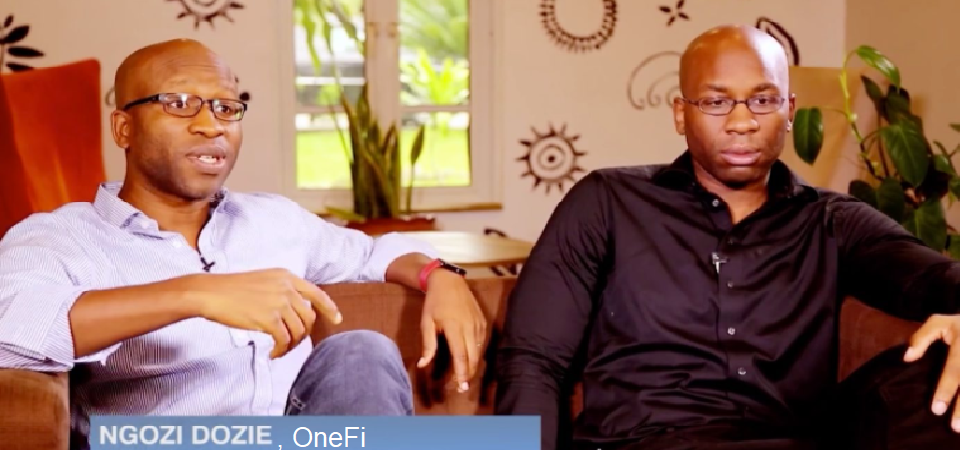
  • Acquire Piggybank: Paylater needs to acquire Piggybank, a Nigerian online saving platform. Upon acquisition, it must keep it as an independent operating company, under Paylater’s parent company OneFi. Piggybank is in the business of getting customers to save their money with it, offering largely above-banking saving interest rates, which is fair. And it has the incentives to entice these customers to keep the money for longer. That is the key, you want customers to come and save for longer period since Piggybank has to put that capital to work. It cannot just keep the money in the bank. By acquiring Piggybank, Paylater will have access to those funds to lend to the other side of the customers. Here the Piggybank is like the Geico to Warren Buffett and that means Paylater has access to cheap funds.
  • Partnership: There is also a possible option for partnership where sharing data could help companies like Paylater to work with Piggybank. Yet, that partnership can be on user data and should not necessarily include Piggybank funds since Piggybank cannot unilaterally risk client funds to support an external company like Paylater without collateral. The Central Bank of Nigeria will likely not approve such plays. This means that partnership will not unlock the saved funds in Piggybank for Paylater. However, Paylater can borrow under regulatory terms such funds to invest.
  • Build a Savings Business: Where it cannot acquire Piggybank, it needs to find a way to build a savings business. But this savings business must be operated independently despite being a unit in its OneFI holding company. This savings business will help to generate the cheap capital for lending.

Besides, for Paylater to do well, its marginal cost must be low. The digitization of its operation has taken care of the operations. It costs largely nothing to add a new user. However, the capacity to lend to a new user becomes where the business will win or struggle. What is that marginal cost? It cannot answer that question until it has a clear roadmap on how it funds its loans. I do not think that debts will be a sustainable path. But without equity, that may be the only option. I have also noted in their website a reference to DFIs (development finance institutions) like African Development Bank. It remains to be seen if DFIs in their typical natures will support high interest lending business to largely non-wealthy citizens.

All Together

Building an online business in Nigeria will remain challenging for a long time since the rich citizens are not yet online.  The implication is that size will play a role, and what works in places like U.S. and Europe may not work here. For online lending startups, the arbitrage between cost of capital and lending rates (with default rates) must be well structured, otherwise liquidity issues could happen. The key to this business will be the players coming together so that they can have scale to compete in the marketplace.  Industry-leaders like Paylater (lending) and Piggybank (saving) could set the stage and come together.  If that happens, even the banks will notice that fintech is on the march. I am very confident that size will play a role and M&A(mergers and acquisitions) in the Nigerian fintech sector will unlock more capabilities to accelerate innovation in the land. Paylater should acquire Piggybank.

iPhone X Begins the Era of Facial Behavioral Biometrics

0

We are all humans. Our faces define our identities. When you see a man on the street, the face is the most important element that personifies that person. From school year book to Facebook, our faces are our lives. They initiate us at primary schools where most of us take our first passport photos for entrance examinations into secondary schools. When we get jobs, they ask for photos for badges. At immigration services, they want to see our faces. Indeed, our faces are our journeys in life.

Now, Apple wants to use those faces to secure our digital lives. The iPhone X facial recognition feature is not new because Samsung has already implemented a face-based technology in Galaxy S8 to unlock phones. What Apple has done differently is the immersive use of 3-D topology of a face as a password. That 3-D is the key innovation. Apple uses infrared lights with advanced AI (artificial intelligence) to correlate a person’s face with the one already stored in the iPhone X memory. If there is a match, the phone is unlocked. The Face ID feature in the iPhone X will make it into other smartphones in coming months, with varying levels of efficiency.

But the value of the face is not going to stop with Apple. According to the South China Morning Post, China is developing a facial recognition technology with the capability to match the faces of about 1.3 billion Chinese to their ID photos with more than 90% accuracy. As they build this massive dataset of faces, they will connect them to surveillance camera networks powered by cloud computing solutions across China. Go figure: the same human face, now a national symbol of tracking everything a citizen does. With the requirements that citizens use their real identities in their social media networks, before they can comment on things, China is sure to have a good grasp of what is happening in the lives of every citizen. And the fact that China also wants to take about 1% of equity in many Chinese technology companies, you will understand where that country is going. From Fortune Newsletter:

Chinese internet regulators are looking into taking 1% stakes and management roles with corporate decision-making powers in social media giants Tencent, Weibo and Alibaba Group’s Youku Tudou, as the tech companies rapidly expand beyond their niches into finance, health care and transportation services that affect hundreds of millions of Chinese citizens.

From Apple to China, using our faces is now part of the digital lives. Facebook ran some algorithms which made it possible that someone can pick a photo, put it in Facebook ecosystem and using that image, Facebook will tell you whom that individual is. That is the same technology that makes it possible to auto-tag your friends when you are in a group photo. It saves you time, but it also confirms that Facebook knows you really well. That is the new age we are now.

The Future of Face in Tech

What Apple has done with its Face ID is unleashing AI and advanced 3-D microprocessors in our pockets. To all the possibilities, this is at infancy. In coming versions of iPhone, I expect the deployment of these tools and technologies to drive facial-based behavioral biometrics which make it possible for people to use their facial movements to shop, initiate phone calls, and do banking.

In coming models, I expect Apple to link this facial technology to how we use our phones. That includes how we navigate menus, scrolls, close pages, and more. Those elements which are certainly unique in the way we use digital systems can be used to detect fraud. To make that happen, you may be asked to use your phone for two weeks and after the two weeks, your bank app will activate the feature since it has collected enough data about how you use your phone.

If someone is trying to impersonate you, it is not likely the person can easily construct the subconscious movements which the phone and apps have built about you. This application will work even if you are using a different device. All you need to do is to log into the bank app, and they will use the already stored insights about your behavior, to ascertain if fraud is about to happen.

All Together

Voice and face will drive a new dawn in computing and security. Amazon Alexa is pushing the envelope on voice, to create a new operating system which will be pivotal to the new age of computing. Apple’s iOS will introduce us to more behavioral biometrics as it continues to integrate the face, and subconscious human usage of mobile devices and commerce. The zenith will come when they can use these fascinating datasets to extrapolate our thought processes. In other words, by looking at your face, and how you are moving your cursor, Apple could determine what you are thinking or about to do, and help you finish it up. Calling a taxi, or calling sick for work, or calling a doctor could in future be outsourced to our phones: they look at our faces, piece together subconscious movements on our devices, and using both make the calls on what we are thinking. Our faces can go far indeed. Yes, it will be a key element to Thought Computing, after we are done with perfecting Voice Computing.

Our Advisory Services

0

I lead an Advisory Services Practice in Fasmicro Group.  We help clients architect winning strategies through new business models, technologies and processes. We provide deep insights to clients’ business challenges, uncovering patterns, and delivering outcomes that win in markets. Our clients include leading banks, telcos, fintechs, militaries, governments, insurers, and more.

The centerpiece of our work is to structure how technology will help clients to accelerate innovation and growth. We work to deliver technology which goes beyond running an organization to one that actually transforms a firm. As we do this, we stay focused on the corporate goal, making sure that technology is anchoring the realization of business objectives.

Our work covers change, leadership, and strategy. We serve clients in these areas, among others:

  • IT Strategy
  • Board/Executive Management IT Roadmap presentation (industry landscape tailored for your firm/industry, delivering what to prepare for in short-, mid- and long-terms)
  • IT Skill Capabilities Mapping
  • Digital Products (business model, strategy, growth)
  • Quarterly Report (max of 8 pages, summarizing key industry evolution, around your business, with how you can prepare)
  • IT Governance
  • IT Value Realization
  • IT Process Documentation
  • Center of Excellence (design, development, deployment, evaluation)
  • IT Product Conception and Launch (business model, strategy, growth)
  • IT Spend Planning
  • Data Consolidation

I lead my team and we handle engagements with absolute commitment to quality. Our clients receive the highest level of value, and our pricing is industry-competitive.

Contact: info@fasmicrogroup.com or audrey.kumar@fasmicrogroup.com

Nigerian Banks Are Plotting Decade-Long Growth Strategies

0

In the subscriber section of Tekedia, I wrote how GTBank (Nigeria) plotted one of the finest corporate redesigns in Nigeria’s banking sector and became the category-king. Today, across many indicators, GTBank is the industry leader. Its market capitalization can buy more than 80% of our local banks excluding Zenith Bank. GTBank is winning and continues to open new vistas with enviable cost-to-income ratio of sub-45%. To do this, GTBank made a pivotal decision in mid 2000s. That decision has since paid off, evidently. It was a decade-long business strategy with one mission:  make GTBank the preferred bank for upward mobile (professional) customers in Nigeria. Today, GTBank is the bank for working professionals. It was not automatic: GTBank was like most new generation banks before 2004. Then, it took off and became a king. (It is important to note that GTBank has been having severe technology challenges these days. Last month, services were down for hours.)

As you look at the data and read banks’ annual reports, you can see trajectories of banks on their missions. Most of the plans take years for the impacts to be visible in the financial statements. Briefly, I explain what some banks are doing:

  • GTBank: Many years ago, GTBank wanted to become the preferred bank for Nigerian corporate working professionals. It executed that strategy with some enablers which I have noted here. The bank has some of the most profitable customers in the nation. Interestingly, these same customers are also the cheapest to serve because they are well educated, and can do many things by themselves without the bank support. This remains the heart of GTBank strategy.
  • Wema Bank: Wema Bank through ALAT has made it clear that it wants to on-board youthful customers. This business model is still ongoing. By having its ALAT business “partly separated” from the main bank, it wants to become a largely clean bank, a digital bank. This is a nice strategy, and I do predict that in five years, if banks do not curtail their fees, the favorability will drop: bank fees in the nation’s banking sector are skyrocketing. The risk is that there will be many ways to do banking without banks, and solutions like ALAT could be in that equation for young people. My local bank now charges me monthly debit card maintenance fee of N40. That fee comes besides the stamp duty on digital transactions. And there is the monthly N302 maintenance fee. Wema’s future will be finding a pan-African strategy where it can pioneer a currency-agnostic solution that will serve most parts of Africa. That ALAT’s future may not involve Wema Bank at its core. And needless to say that it will take time to bear fruits. ALAT is a startup and must go through its growth phase before the push for monetization begins.
  • Diamond Bank: Diamond Bank is deepening retail banking at scale. In Lagos, it is easy to see Diamond Bank associates wearing Diamond T-shirts looking for business. I do think that the bank is working to win through agency banking and that means it wants to be the king of retail. Diamond Bank since it pioneered Diamond Bank Integrated Banking System (DIBS) has been loved by traders and retailers. DIBS fixed a major friction: eliminated the need of moving cash in intra-national trading. With DIBS, traders could travel from Aba to Lagos without having to carry cash. Before DIBS, that was not possible as bank branches were not connected. In other words, if you had an account in Union Bank Aba then, you could not collect money from Union Bank Idumota. DIBS changed that and traders loved that. The bank through its agency banking business is planning for another win. The redesign will take years to yield fruits: the bank has to grow the customer base before it can make money serving them.
  • United Bank for Africa: UBA is Africa’s global bank with operations in excess of 19 African countries, the largest of any Nigerian bank. UBA believes that its future will be Africa and it has a leg-ahead of other banks. It has invested massively over the years, building these country networks, and the moments of glory may already be here. In the last two years, the stock has moved from N2.73 to above N9. Its growth is working. Its decision to push into Africa is making it a pan-African bank in the age where integration will be the order of the day.

Other banks have also anchored their businesses on strategic core visions. I will discuss those in the subscriber section. The most fascinating is First Bank which wants to add new 16 million customers within three years. We will examine how the bank could do this, and if that is even possible, by pointing its growth strategy which I think will be in excess of five years to be practically visible. Skye Bank which was clipped by the Central Bank of Nigeria when its ratios deteriorated has sold assets in its non-Nigerian businesses, to boost its balance sheet. Today, it has a clear growth plan. Keystone Bank under the new CEO is working on digital strategy for its future. The most fascinating is what Union Bank is doing as it is clearly linked to Atlas Mara team in Dubai which has invested in the bank. I will discuss.