I will deliver a speech tomorrow at Obafemi Awolowo University’s Campus Innovation Summit. Time will not permit me to be there in person but I have just finished taping my talk. The team likes it and they will play it at 12 noon tomorrow. Pre-presentation feedback from the student is promising: “The speech is brief and amazing! We love it sir. Thanks so much for this commitment. We appreciate so much”. The talk is below 5 minutes because of the taping software I used but it offers something new and insightful. I want to wish them great program as they begin their entrepreneurial journeys anchored on innovation.
With so many possibilities, enthusiasms and passions wrapped up in the Nigerian entrepreneurial sphere, it is no small wonder why our campuses are not already awash in the cultures of entrepreneurship and innovation.
[…]
Campus Innovation Summit (CIS) is a convergence of awesome Nigerian undergraduate innovators and entrepreneurs to learn, share and network.
Date: October 20th, 2017
Time: 12 Noon
Venue: Oduduwa Hall, Obafemi Awolowo University, OAU, Ile-Ife, Osun State
I have accepted to keynote the largest fertilizer conference in Africa. The 9th Annual Argus Africa Fertilizer conference will take place in Addis Ababa, Ethiopia on 26 – 28 February 2018. As the founder of Zenvus, I am a pioneer in the deployment of digital technology in helping to overcome the constraints inherent in the use of fertilizers in Africa. That is a key element of our work besides the acceleration of precision farming. Delegates from more than 60 countries will attend.
The 9th annual Argus Africa Fertilizer conference will take place 26-28 February 2018 in Addis Ababa, Ethiopia – the number one meeting place for the African fertilizer supply chain. This is an unrivalled networking forum – the only place to be if you want to build your business across Africa.
Over 520 participants from 63 countries of which 23 are African attended the 2017 event in Cape Town. At the annual Argus Africa Fertilizer event you will join a cross-section of stakeholders including government leaders, finance providers, NGOs, regional distributors and global producer. […]
Argus organises 10 global industry fertilizer events in Africa, Asia, Europe, Central and Latin America. All conferences are targeted at decision makers throughout the long supply chain from production through shipping to consumption.
My talk will focus on a new architecture we have engineered in Zenvus on how modern fertilizer companies should redesign themselves using data. We are working to make fertilizer application customizable. That means we want the production of fertilizer to be personalized for the location where it will be used.
That means that a fertilizer for Kano Nigeria may be different for the one to be used in Lagos Nigeria. We do think that by making sure that fertilizers correlate with the needs of the soil, farmers will win. The era of guesswork will be gone. Farmers will use the right fertilizers for their farmers.
If a farm has urea, it may not need much Nitrogen. Our model will inform the farmer to buy a fertilizer without much Nitrogen. That possibility could mean that the fertilizer producer can remove Nitrogen in the mix. The implication is that the cost of the fertilizer can drop, saving farmers money, even if their governments are subsidizing the supply. I believe in Personalized Farming and with Zenvus we are pioneering that.
On Tuesday Oct 24 2017, I will deliver a major speech in the Nigerian Defence Academy, Kaduna. Unfortunately, it is not open to the public and we cannot discuss the topic. But I cannot just pass the irony of the opportunity.
As a teenager, I wanted to attend NDA. But there was a problem: my family did everything to get the application form for the guy living in the village to no avail. At the end, I could not find the application form to apply. The form was esoteric.
But by next week, I will be in NDA, not as a student, but as a professor to speak to some of the most brilliant young people in their generation. I have also accepted to work my global schedules to help deepen capabilities in some critical areas by developing programs in the iconic university.
I am from Ovim (Abia State), the land of Igbo generals. We have military people in nearly every family. We love the military. I am expecting a great moment working with these young people. When the nation called, I had no choice than to answer to assist.
The biggest lesson in life is to keep moving: I will be in NDA – the same one many years ago I could not even find the application form to apply. That is awesome.
And one final word: they will tell you that Nigeria is a hard place to make progress. Sure, we have a long way to go. Nevertheless, the fact remains that brilliance makes way for a man (and woman). Someone in LinkedIn made this opportunity possible. He read my post and called the government. I woke up one morning and a very big person from the military was on the line from the Defence HQ. They had been interviewing people but he told me that you do not need any interview. He noted that “your works are enough interviews”. Just like that, we have clusters of opportunities to serve.
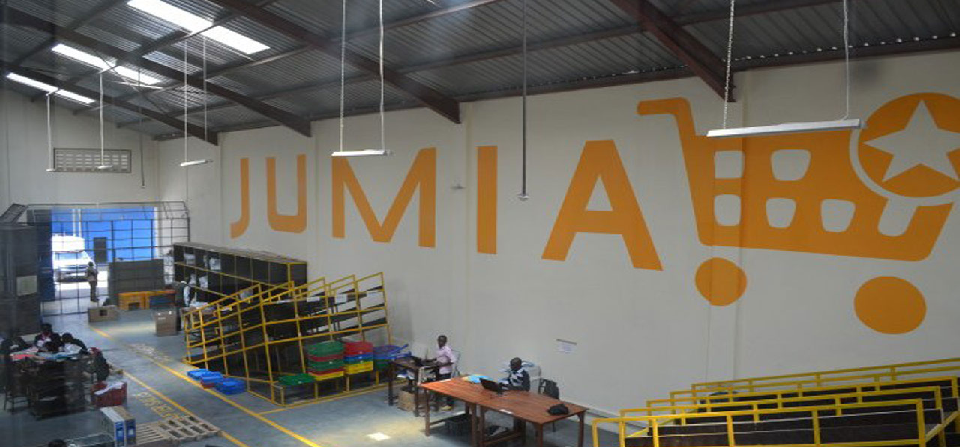
No one has to wait any longer to know the grand plan of Jumia. Simply, Jumia wants to build a massive market share. That market share comes first before any push for profitability. In one of the most candid comments in the industry, Jumia revealed that it is yet to attain profitability. The Global CEO, Jeremy Hodara, made that revelation during a press conference where Jumia announced that it would be making loans to some of its Nigerian partner-vendors.
Hodara [Jumia Global Chief Executive Officer (CEO), Jeremy Hodara], who disclosed that despite Jumia celebrating five years in Nigeria, “we have not been profitable. Despite that, we are still investing in the business in various forms. Jumia is a Nigerian company that will be here for another 100 years. We are on the long term. Nigeria is our biggest market. We are not in a hurry to make profit.
It took Amazon about 25 years before they could become profitable. But we shall remain consistent, serving the Nigerian economy thoroughly.”
(See NB below. Amazon is not even up to 25 years old. The theme of the comment is right. But the company technically made a cameo profit after year 10, and then went on losses.)
This revelation is not necessarily surprising as the parent company, Rocket Internet, has been publishing Jumia’s financial statements for quarters. But what is exciting about the statement is the reference to Amazon. That reference to Amazon is the heart of Jumia and that is the lens to examine the grand plan on what Jumia plans to do in Africa.
Jumia Grand Plan
Jumia wants to conquer territories and become a dominant category-king. It wants to own the ecommerce ecosystem by running losses as much as necessary. As it spreads and expands, it can manage its marginal cost which is heavily affected by the distribution cost. That distribution cost in a region with no postal service is the main pain point. The only way to manage that cost is to have scale. Once critical scale is maintained, Jumia can serve more customers at cheaper distribution rates.
There are three major marginal costs which are consequential in the broad ecommerce business: cost of goods sold (COGS), distribution cost and transaction cost.The distribution cost is the most challenging in Africa because that is the cost that turns an ecommerce operation into a traditional physical business. The first, COGS, is incurred irrespective of the nature of the business. It is the cost of production, i.e. the cost of producing the product which is being sold. The last, transaction cost, is mainly the fees incurred as part of the commercial transaction activity. This can include a merchant fee for accepting credit/debit card from the payment processor. Here, I explain how the distribution cost can be handled.
Note that the internet side of this business has a near-zero marginal cost since it does not cost Jumia anything to sign up an additional user. But the logistics part does require huge marginal cost making Jumia to constrict its geographical area of operation. Usually, an internet-based business should be in a position to serve any customer irrespective of location. However, ecommerce is not necessarily a pure internet business because of the logistics part.
Lessons from Kalahari
Jumia understands what it wants to do and that is a very good thing. It has operated for five years in Nigeria and was referring to the fact that Amazon operated for 10* years (see NB, Amazon is not even up to 25 years) before profitability. The implication is that Jumia is open to go long on its grand plan to build a massive business before pursuing profitability. This means that anything written because of the likes of Kalahari, a defunct ecommerce business operated by Naspers, Africa’s most valuable company, is irrelevant. Kalahari was losing money and Naspers decided to shut it down. Jumia has a different philosophy: long-term market domination before the plot to profitability.
The Amazon Illusion
Yet, Jumia has to consider this statement very well: “It took Amazon about 25 years before they could become profitable. But we shall remain consistent, serving the Nigerian economy thoroughly”. Technically, Amazon got to profitability after 10* years and then went back to years of losses. But it made it to sustained profitability later but not necessarily because of ecommerce but by something else. Amazon became (sustainably) profitable because of Amazon Web Services (AWS) which sells cloud services to startups and companies around the world, even when it was losing money on ecommerce operations. So if Jumia focuses on the profitability without considering the very reason why Amazon was profitable, at about the 10th year, it may miss the mark.
The Amazon ecommerce business is the best product from Amazon and it was also the first customer to AWS. AWS was built to serve Amazon ecommerce business. People associate Amazon with ecommerce but Amazon makes money from AWS relying on the goodwill and scale that the ecommerce provides as it bulldozes itself around the world. When merchants join the ecommerce platform, AWS ensures that computing resources are available to deliver top-notch user experiences. These two products are now inseparable in the Amazon world.
That said, Amazon has scaled so well that its ecommerce business is making money. If Jumia does the same in Africa, it will reach that level where profitability will come from ecommerce.
All Together
Today, we have seen where Jumia is going. It is here for the marathon. Unlike companies like efritin which came to Nigeria and expected to pack money in boxes back to Europe within weeks, Jumia understands that the market may not be easy. So, with its grand plan of pushing for growth and market share before worrying of profit, Jumia will find success, over time. The future is ecommerce and the question has always been thus; who can sustain the losses to make it happen? Jumia wants to be in that midst. All it needs to do is to keep raising money and pumping same in the operations.
Efritin (pronounced ‘Everything’) has stopped further investments in Nigeria and has wound down operations, just 16 months after its official launch.
Investigation showed that high cost of data and operational demands forced the e-classified advert player to close shop.
Lastly, I do expect Jumia to keep raising money to sustain its operations. A very great reward awaits it, because if it takes over and dominates the territories, it will define the architecture of ecommerce operations in Africa. The stated grand plan has the capacity to make that happen.
NB: Jumia CEO made a rounding error in the 25 years of Amazon. Amazon was created in July 1994 and is not even up to 25 years. Amazon made “cameo” profit the first time in 2004 but then went on losses until it got back to profitability. AWS was launched in August 2006 and continues to fuel Amazon profitability since then.
Qualcomm, a global chip maker, has filed a lawsuit in China against Apple. It wants China to ban the production and sale of iPhone in China. Without China’s assembly lines, there will not be any iPhone. So, technically, if China agrees with Qualcomm, iPhone will be off market.
Bloomberg News reported on Saturday that Qualcomm had filed a lawsuit in Beijing seeking a ban on the assembly and sale of iPhones in China — a vital Apple manufacturing base and sales market.
The two California companies are fighting over Apple’s claims that Qualcomm is abusing its market power over certain mobile chipsets in order to demand unfair royalties
The fashion company named Apple (get the joke, we like fashion companies) which largely scratches core engineering is living on crises it manufactured. Apple thinks that Qualcomm is greedy by asking smartphone companies to pay a percentage of the product value as royalty for using its mobile chipsets. Apple had wanted a fixed price for the chipsets. By asking for a fixed price, it will be possible for Apple to buy a Qualcomm chipset at say $18 and create a luxury product it sells for $1,000. Qualcomm maintains that it wants a percentage and that means if Apple jacks up its price, Qualcomm makes more money since the percentage remains the same.
Apple pivots into a fashion company, in the likes of Louis Vuitton, with the launch of iPhone X today. It costs $999, heavy on fashion elements, but hardly moves the technology trajectory. But that does not matter, because it is Apple. The world will cover it for free, and Apple will enjoy a great earned media. From CNN to NBC to Nigeria’s AIT, the message will be the same: there is a new product from Apple.
In the semiconductor industry, what Qualcomm is asking is new. Usually, partners pay for fixed prices of components. The prices are usually discounted for bulk buyers. Apple buys many chips from Samsung and pays at fixed prices.
Apple has scale and as the world’s most valuable company with hundreds of billions of dollars in cash reserves, it can bully anyone it wants. It wants Qualcomm to fade by asking manufacturing partners to even stop paying anything to Qualcomm. Its argument was that Qualcomm pricing was not fair.
When a fashion company tells an engineering company that how it prices its products is not fair, you will agree with me that there is a problem. A fashion company can use materials valued at $300 and make a product it sells for $1,000 to the people. But for it, that is fine: the people want the best phone ever, a luxury. Simply, Apple wants all the margins for itself and does not care if Qualcomm has a right to a new business model.
Qualcomm has maintained that its pricing is fair and Apple knew about it before choosing its chipset. Yes, Apple has been paying as agreed for years to Qualcomm. Apple knows that only one company in the world can provide the 4G chipsets it needs. Intel Corp and others are just getting into the party and no one comes close to the quality of Qualcomm’s mobile chipsets. For 5G, the gap is even more: Qualcomm has a decade advantage. (It has been reported that Apple has been hiring many engineers from Qualcomm to help build its own internal chipset.)
Apple has hired Esin Terzioglu, a vice president of engineering at mobile chipmaker Qualcomm.
Terzioglu had worked at Qualcomm since 2009, where he had led the company’s central engineering organization and was responsible for directing the company’s technology roadmap. Before Qualcomm, he was the cofounder, CTO and CFO of Novelics, a provider of memory intellectual property that was acquired by Mentor Graphics
[…]
Apple and Qualcomm are also currently locked in a major legal battle over how Qualcomm licenses its phone technology. In January, Apple filed a lawsuit against Qualcomm for alleged monopolistic tactics and overcharging for its patents. Some analysts speculate the lawsuit comes as Apple may be working on its own cellular chip — an expensive and complicated piece of technology. Apple has filed a number of patents in this area.
Apple game plan is to weaken Qualcomm. As those engineers see their stock options evaporate, they will start moving to Apple. As this happens, the anti-trust busters will continue to think that they are dealing with St. Apple who is fighting a just fight. They ought to allow market forces to settle this. Apple does not need government help on how much it pays for its components. It is the richest company in the world. Its crusade to sainthood is troubling.
Over the last few months, Apple has used its power to push anti-trust campaigns against Qualcomm. Qualcomm has paid severely for that as its market capitalization continues to fall. Apple has succeeded by getting countries like South Korea and U.S. to believe that any firm has a right to determine for others how to price their products. Apple has all the rights to go and develop its own chipsets or buy from others based on the terms they want.
Sure, I do not really commend unfair market practices but in this case I do support Qualcomm. Apple wants to play the win-lose game they always do to semiconductor companies where you buy components for pennies and make products you sell at huge margins. Qualcomm is pioneering a new model where the value of the component is tied to the final price of the product. I do agree that it is not only Qualcomm products that power iPhone, but its model can be copied by other chip makers to their advantages. So, everyone gets a piece of the price hike by Apple as it turns iPhone into a fashion product.
To Qualcomm, the move in China will not work. China will never stop the production of iPhone because it will mean it will fire tens of thousands of people that work on the assembly lines and material sourcing to produce iPhone. The lawsuit is a waste of time. China will not take jobs away from its citizens to please a foreign company over another foreign company. Qualcomm needs to try another plan to get Apple to begin to pay the royalties. The suit at the World Intellectual Property Organization makes more sense than this Chinese one. If WIPO can ban iPhone, Apple will come back to pay Qualcomm and there is a possibility that will happen.