DD
MM
YYYY

PAGES

DD
MM
YYYY

spot_img

PAGES

Home Blog Page 7269

Summarizing Tony Elumelu Presentation at 2017 Elumelu Entrepreneurship Forum

0

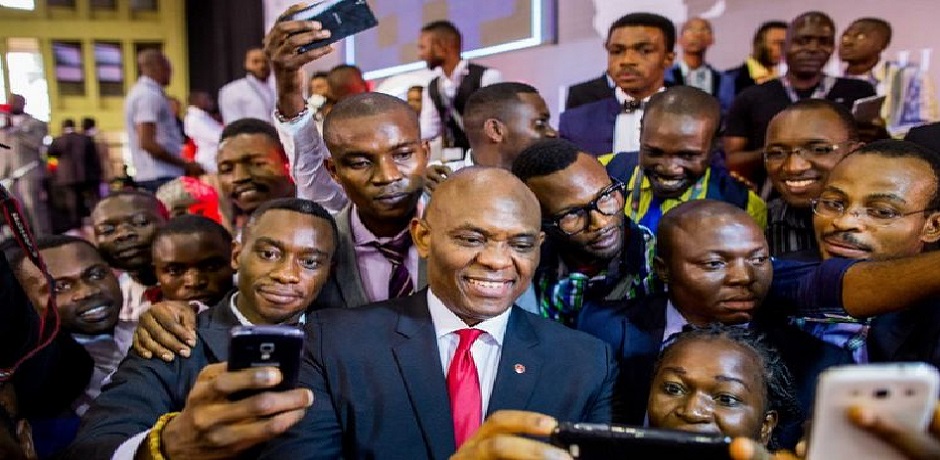
On October 14, 2017, Mr. Tony Elumelu, the Founder of the Tony Elumelu Foundation, and the Chairman of both Heirs Holdings and United Bank for Africa Plc, addressed entrepreneurs, policymakers and other shareholders during the Tony Elumelu Foundation Entrepreneurship Forum. The Forum is a key component of the Tony Elumelu Entrepreneurship Program (TEEP) which selects 1,000 African entrepreneurs and supports them with a combined $10 million as part of building entrepreneurial ecosystems in Africa. Mr. Elumelu had committed $100 million over ten years for TEEP.

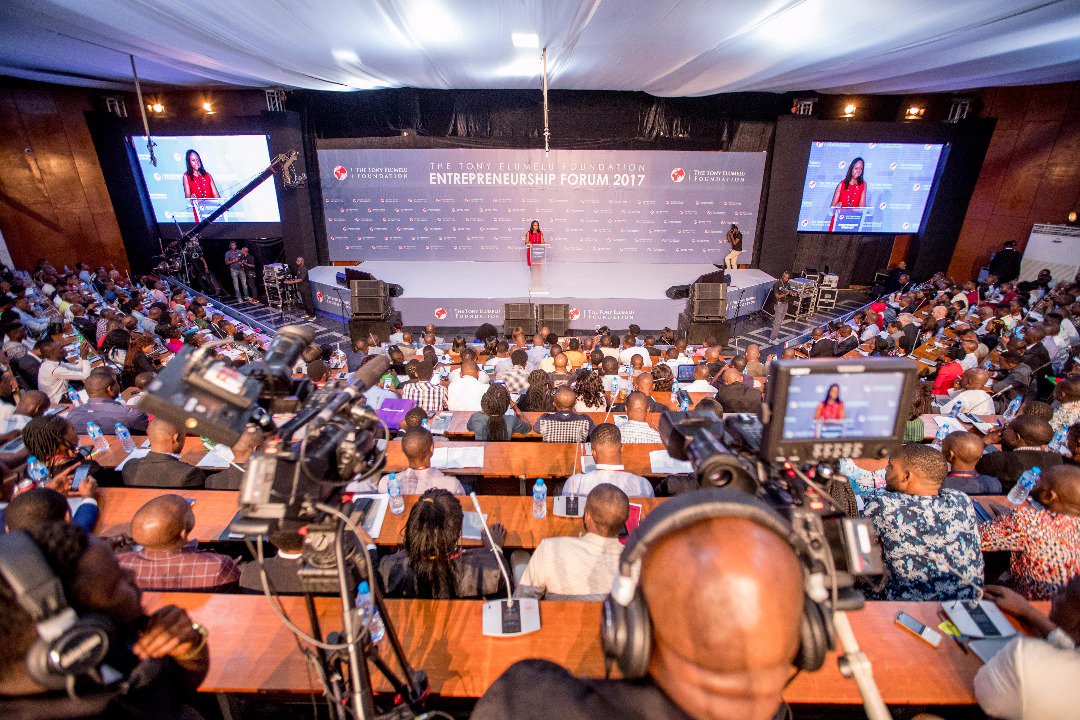
He spoke before more than 1,300 entrepreneurs including alumni of TEEP, Vice President of Nigeria, governors, ministers and representatives of corporate entities.  The key thrust of the talk was the Africapitalism which is an investment philosophy he has pioneered globally.

In this piece, I will summarize his presentation which I listened live in the Nigerian Law School auditorium, Victoria Island, Lagos.

Preamble

Before we go into Mr. Elumelu’s presentation on Saturday, I will like you to read the basis of his talk by understanding the vision that drives the Foundation and TEEP. This will give you a good perspective as I summarize and analyze his presentation.

As an entrepreneur myself, I understand what it feels like to yearn for a lifeline, to hope for a ‘big break’, to look forward to enjoying some luck.

In 2010, we launched the Tony Elumelu Foundation to spur our continent’s development through entrepreneurship and competitiveness.

As an entrepreneur myself, I understand what it feels like to yearn for a lifeline, to hope for a ‘big break’, to look forward to enjoying some luck. As a matter of fact, part of my own success is owed to someone that believed in me, and was prepared to invest in my talents and take a bet on my future.

It is for this reason that I developed the economic philosophy of Africapitalism, which positions Africa’s private sector and most importantly entrepreneurs, as the catalyst for the social and economic development of the continent. Based on this guiding philosophy, we have launched successful programmes and forged meaningful partnerships with stakeholders across the globe.

In 2015, I heralded the ‘Decade of the African Entrepreneur’ by committing $100 million, to the TEF Entrepreneurship Programme – the first of its kind and scale in Africa. Since then, our alumni – across all 54 African countries – have begun growing businesses and improving lives, contributing to our goal of empowering 10,000 entrepreneurs who will collectively create one million jobs and generate $10 billion in revenue.

We are committed to giving from the perspective of empowering the recipient, rather than making them dependent on us, because prosperity is assured only when ALL Africans are financially independent. My vision for the Foundation is to unlock the obstacles that Africa’s entrepreneurs face, so that they, rather than aid agencies or governments will spur the continent’s transformation.

At the end of our 10-year commitment, thousands of businesses will grow and flourish, driving sustainable prosperity across Africa. This is my vision. I invite you ALL to learn about what the Foundation does, what we hope to do and to discover what we can do together. In doing so, I am confident that we will achieve sustainable development in Africa.

That is indeed this summary. But I hope you can read on.

The Africa Challenge

Mr Elumelu began his presentation by acknowledging King Ebitimi Banigo, the king of the Okpoama region in Nigeria’s Niger delta. King Banigo had owned a bank which Mr Elumelu worked. Tony used the moment to show appreciation for the opportunity his mentor provided to him. It was a very fascinating moment in the auditorium.

Then he began his presentation by examining the challenges African youth face today with dwindling job opportunities. He noted that youth need jobs. With jobs, they will not be leaving the continent. Jobs will reduce the mindless deaths in the seas as many young Africans migrate to Europe and other places. He also noted that with opportunities at home, these young people will not be selling their organs just to survive.  He made a case that Africa needs hope.  That hope will reduce vices and crises that precipitated to the Arab Spring which saw upheavals in most parts of Northern Africa. Opportunities will solve the problem of human trafficking and restore the dignity of our citizens.

Nigeria’s Vice President spoke in this program

The Development Paradigms

Mr. Elumelu noted that African governments and their largely foreign development partners have been working for years to provide roadmaps that can help provide the opportunities for our young people. These entities have tried many models and initiatives but the impacts have been marginal.  The lack of opportunities remains because the solutions offered have not been extremely successful. He noted that about $500 billion has been spent through different programs by development partners and yet at the end, the African youth remain with limited hope. Largely, the efficiency in the deployment of the capital has not been stellar. So, he pushed that the world needs to rethink how it is engaging in the development of the African continent.

He has an answer: the Africapitalism through vehicles like TEEP. TEEP offers a new development model in Africa, built and organized around young people under market-driven forces.

A New Model – Africapitalism /TEEP

Tony is the father of Africapitalism, an economic philosophy which “positions Africa’s private sector and most importantly entrepreneurs, as the catalyst for the social and economic development of the continent”. His vision is that he can build a vehicle to use business to seed a new Africa where entrepreneurs will create jobs and prosperities in the continent.  By empowering these young entrepreneurs, their businesses will grow and over time, they will have places people can find jobs to earn decent livelihoods.  It is a virtuous circle that the entrepreneurs supported by the Foundation will blossom providing opportunities in their local African communities. Those communities will progress and the welfare of the citizens accelerated. The impact will be that hopelessness will be replaced with hope across many African communities. Simply, TEEP wants to accomplish the following:

  • Unlock potentials in young Africans
  • Overcome hopelessness in the land through economic prosperity

Examining the TEEP Development Model

The core of the TEEP Development Model is anchored on free enterprise. It is based on the construct that the path that will fix Africa will go through the private sector and young African entrepreneurs are going to be the catalysts to that growth and development paradigms. TEEP does believe that by investing directly in the young Africans, it can have more catalytic impacts across African communities if the entrepreneurs are fixing and improving challenges in their places through markets.

Mr Elumelu noted that entrepreneurs and markets can redesign Africa. He noted these key facts:

  • Steve Jobs started Apple. Apple has a market capitalization in excess of $800 billion with cash reserves of about $300 billion
  • Bill Gates started Microsoft. Microsoft has a market capitalization of nearly $600 billion
  • Jack Ma started Alibaba. Alibaba has a market capitalization of nearly $460 billion

When these companies are compared with a big country like Nigeria, the point becomes obvious that entrepreneurs can have huge impacts beyond whatever government can do. Nigeria’s foreign reserve is a paltry $35 billion, far below what a technology company has in its bank account. Mr. Elumelu sees this as a reason why the use of markets to accelerate development will have more impacts than what most developmental organizations are doing.

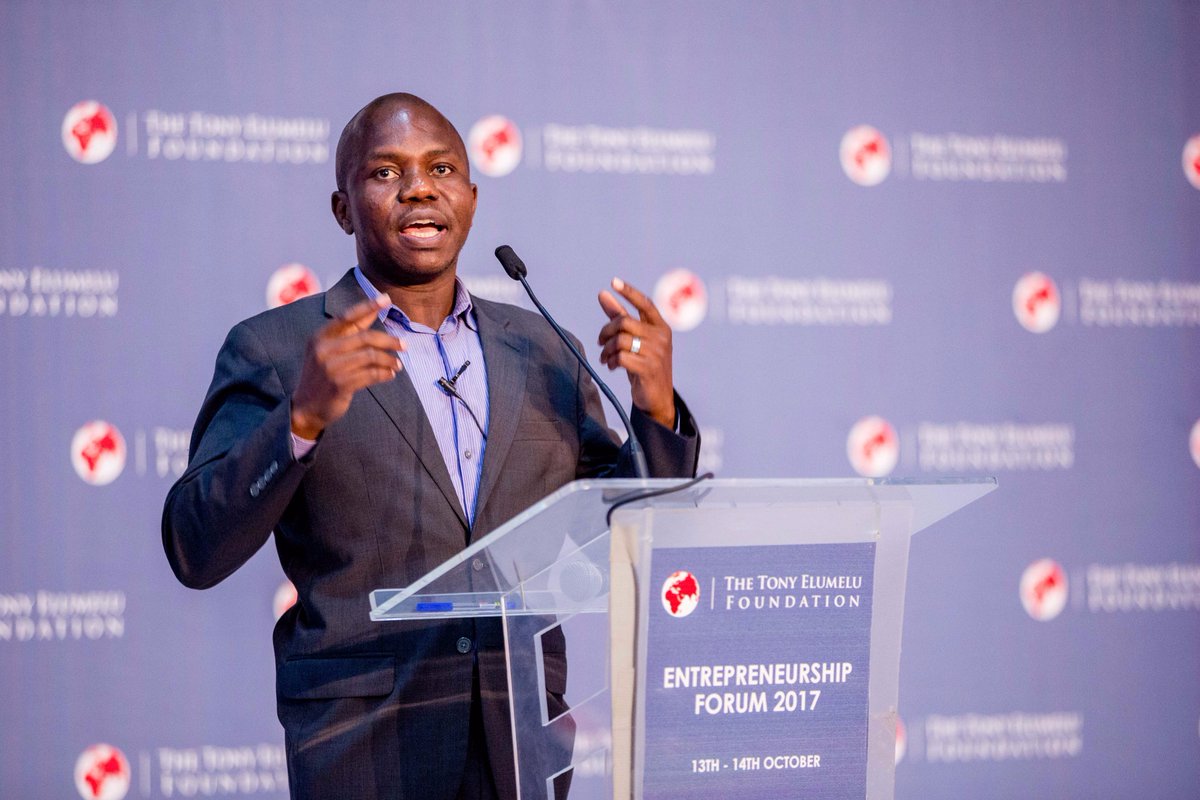
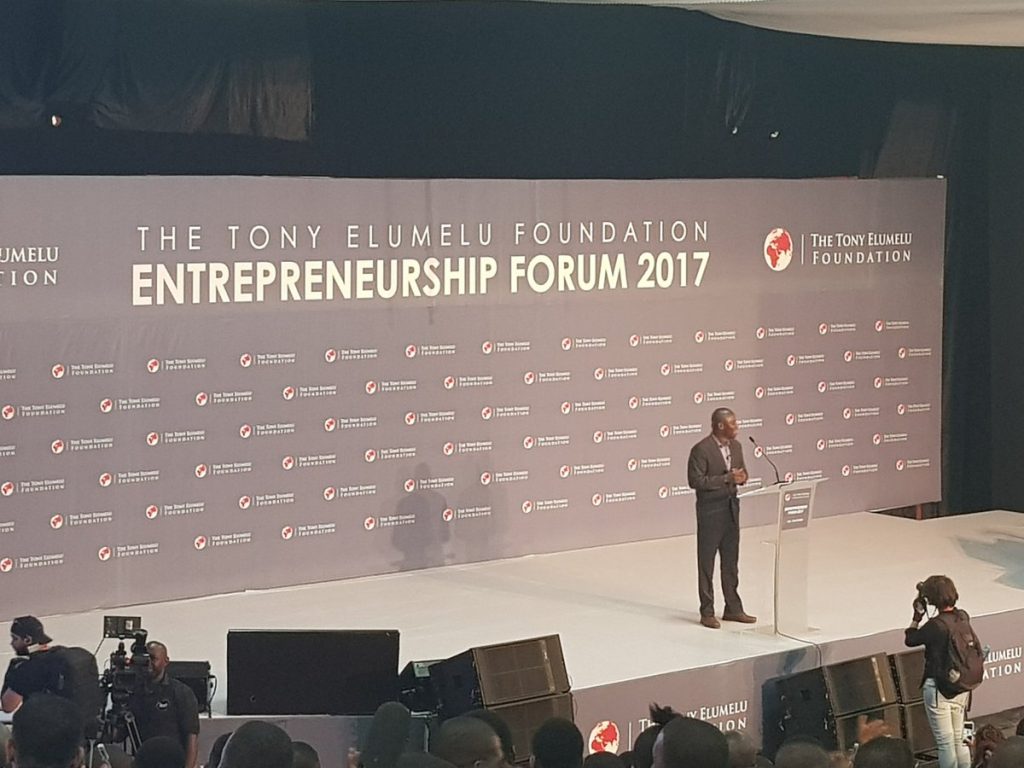
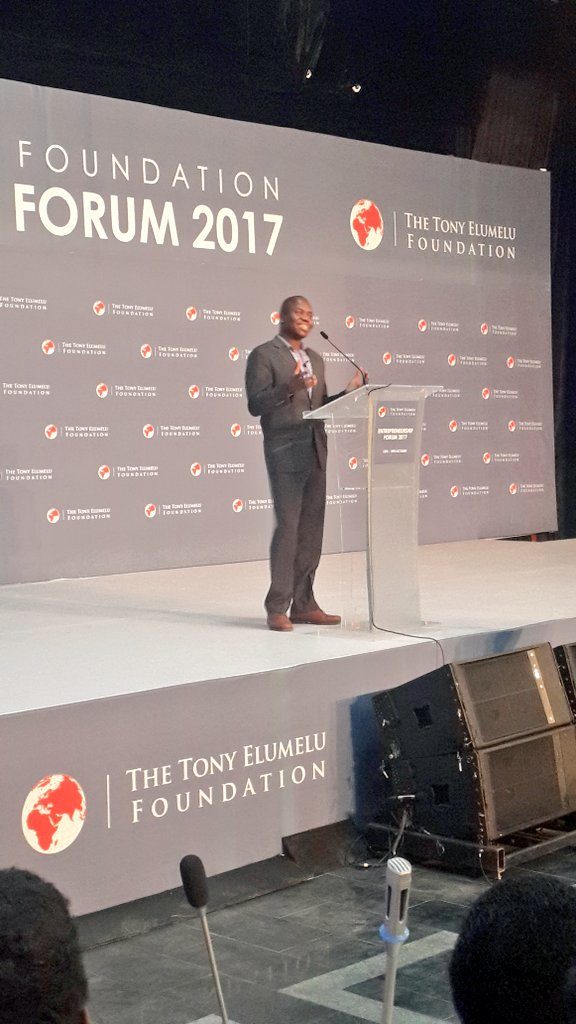
Mr Elumelu on stage speaking to the audience

Key Elements and Factors for Success

As he explained the nexus of the TEEP program, he noted three core elements for the African entrepreneurs to triumph:

  • Ingenuity
  • Creativity
  • Passion

Mr. Elumelu noted the following as factors for success which entrepreneurs with the above noted key elements will need to succeed:

  • Operating Environment: The operating environment deals with the whole nexus of legal, infrastructure, policy and other enablers and anchors that can help organizations thrive. African entrepreneurs need those for them to compete effectively in an increasingly globalizing world. He also noted that within these operating environments, there are inhibitors like negligence of the needs of entrepreneurs by policymakers, lack of meritocracy, and problem of entitlement mentality.
  • Transmission Mechanism: Here, entrepreneurs will need to have the ability to effectively transmit ideas into products and services. In other words, they need to take action besides any idea they may have. And when that action is taken, it needs to lead to products and services which markets want.

The Peerless Philanthropist

Mr Elumelu noted that only Africans will develop Africa. He explained that luck should be democratized through the institutionalization of pillars which can help build businesses. He made a reference that Steve Jobs might have died with his ideas. But America did the right thing by making it possible for him to impact his world through structures and catalysts made possible in that nation. Africa needs to find ways to support its innovators.

According to him, he is leaving a legacy and every African should aspire to do something. Our strength is the legacy we leave behind and not the size of our bank accounts. That passion is the motivation for the $100 million commitment to stimulate an entrepreneurial ecosystem in Africa through the Tony Elumelu Entrepreneurs.  The program is sector agnostic and extremely competitive with only 1,000 accepted this year out of excess of 98,000 that began the application. (Disclosure: I am one of the selection committee members.)

He concluded by making a case that we need to transform Africa to ensure that poverty is eliminated. Otherwise, there is a huge risk that our continent can be gone if our youth continue to struggle with lack of opportunities. We want a future with unbounded opportunities in the continent and he challenged Africans to commit to build our continent since “no one but us will develop Africa”.
 

Summary and Analysis of Dangote Presentation at 2017 Elumelu Forum

9

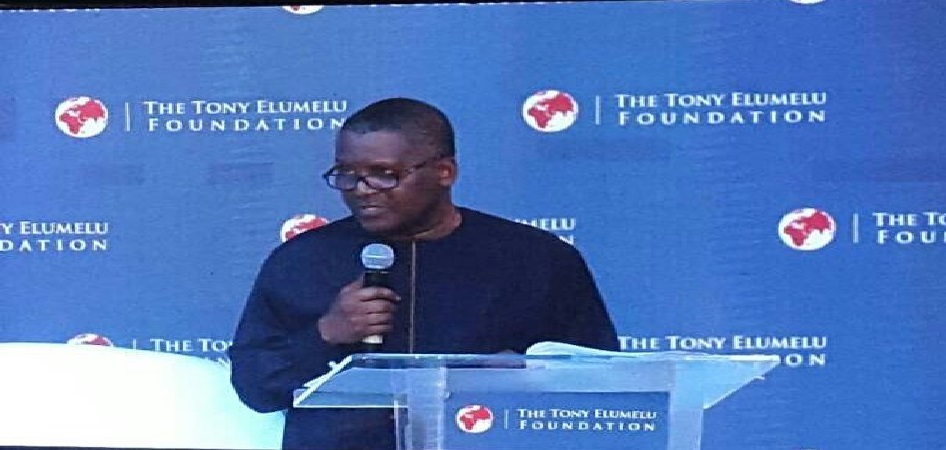
Today, Mr. Aliko Dangote spoke in the Tony Elumelu Foundation Entrepreneurship Forum which brings thousands of entrepreneurs, policymakers and corporate entities together for a shared vision of empowering and institutionalizing luck through entrepreneurship in Africa. Mr Tony Elumelu had committed $100 million over ten years to seed a new generation of 10,000 African entrepreneurs. Today’s event was graced by governors, investment bankers, ministers and the Vice President of Nigeria. The Founder and Chairman of Dangote Group, Aliko Dangote spoke. In this piece, I will summarize his presentation which I listened live in the Nigerian Law School auditorium, Victoria Island, Lagos.

The Beginning

Mr Dangote explained that he began his business as a trader. Then he moved upscale becoming a bulk trader. From the inception at 1978 to around 1997, he was largely an importer, trading commodities. Then from 1997, he began the push into redesigning the business by making it an industrialized conglomerate. Simply, Dangote over time moved his business from the downstream commodity operation into an upstream business: he went from trading into manufacturing.

Aliko Dangote began with a N500,000 loan from his grandfather. To give a perspective on the value of this money around 1980, his first Mercedes Benz cost him N5,100. If an average Mercedes Benz (he did not specify if he bought it new or old) goes for $40,000, that loan should be in the region of $4 million today. But he did note that he returned the money to his grandfather as he felt that he did not need the money. He was contented with the N5,000 he was generating per day from the four trucks of cement he was managing. (You can also use this to ascertain the value of the loan. Around 1980, Nigerian naira was stronger than the US dollar. So, even if you make it 1:1 then, and have to multiple by today’s ratio of 350, you will get N175 million. But even today’s dollar has lost value to the dollar of 1980. The implication is that N500,000 was a lot of money in 1978).

The Discovery Process

Dangote made a very important comment during his presentation. He did note that he tried many businesses but some did not work out. He tried building a bank but was not successful in it. His words” “I tried banking but was not as lucky as Oba Otudeko”. Oba is the Chairman of FBN Holdings Plc, the major owner of First Bank of Nigeria Plc. He is one of the most respected bankers in Nigeria. During the presentation, Dangote noted that “there was nothing we did not try”. In other words, Dangote had come a long way, learning along the way and figuring out what worked and what was not working. I knew the day they launched his failed bank in Port Harcourt. I was an intern and I represented the company I was doing internship. The bank was named Liberty Merchant Bank. It has since folded.

When Dangote could not find success in banking and some other areas he journeyed, he returned back to building industrialized conglomerate which according to him was “what we know best”. He quickly figured out that he could succeed by expanding the industrials over competing in banking and other sectors he was not doing well.  One of those key areas he focused was cement production. Today, Dangote Group has totally transformed Nigeria’s cement sector.

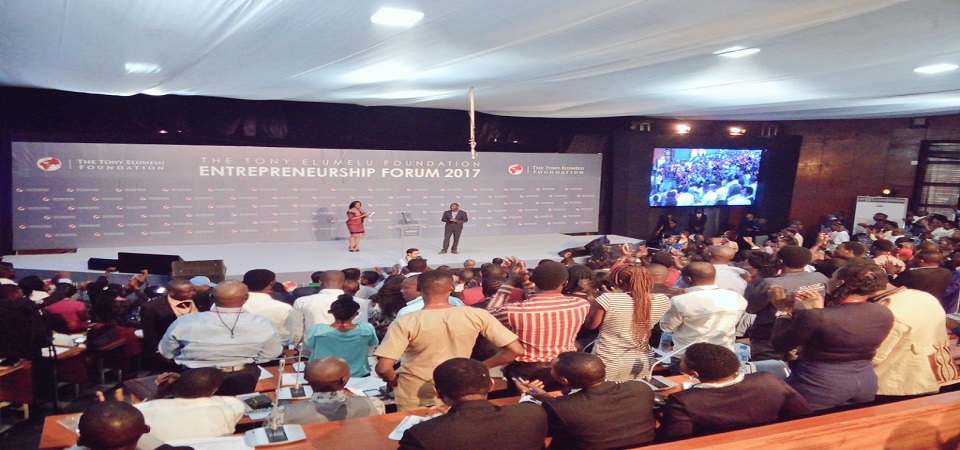
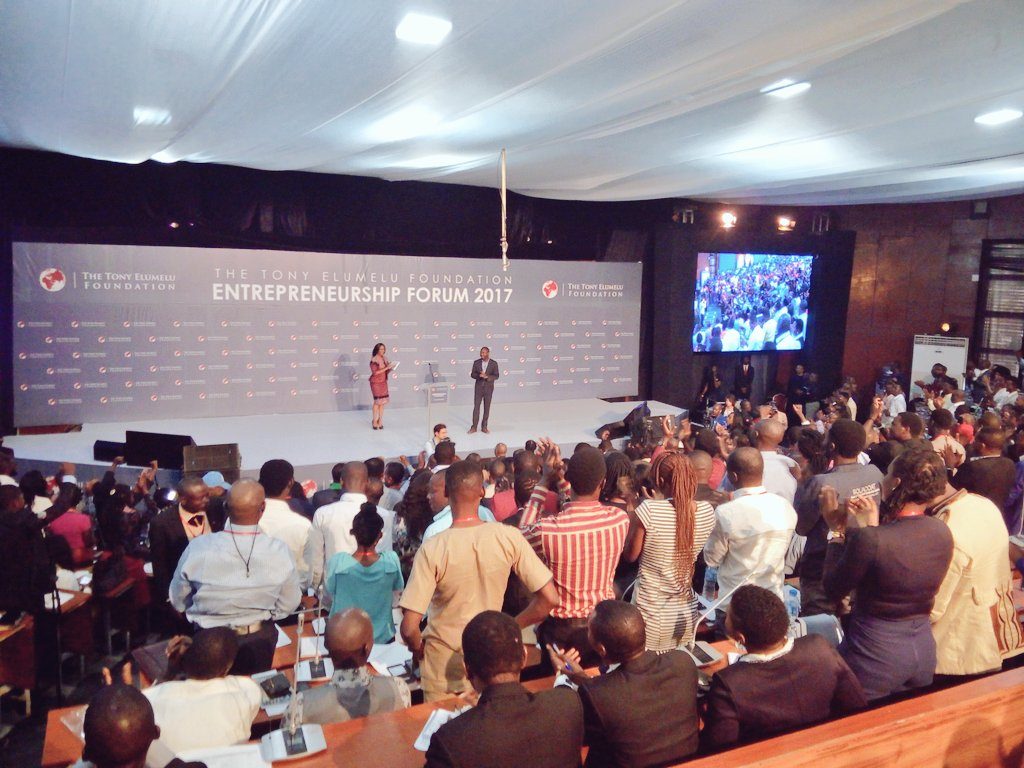
The auditorium where TEF Forum program took place

The Dangote Group Evolution

Upon the realization that industrials were going to anchor his vision, he pursued it with vigor. From 2007 till now, he moved into the phase of consolidation and diversification. Essentially, he deepened his capabilities by expanding his empire while consolidating to make it nearly impossible for competitors to challenge him through strategic moats. He also diversified and then began the modern Dangote business. Today, Dangote Group plays in agriculture, petrochemicals, agro processing, and many other sectors.

The evolutionary process also saw enormous strategic vision. This is part of the accumulation of capabilities and building moats which make it harder for competitors. By improving efficiency across all segments of its operations, even in a region where there are challenges with infrastructure, a competitor cannot easily find things to improve upon. With its scale, you cannot find any area to improve and have lower cost advantage. In other words, if Dangote Group can efficiently move items, you cannot come in and use that element to compete because the efficiency attributed to transportation in the conglomerate has been built into product costing. Dangote listed some areas he deepened capabilities to improve his business processes as follows:

  • Building a strong transportation network: A conglomerate makes items and building a strong transportation business is a key part of the Group. So Dangote invested heavily in that space.
  • Local sourcing of raw materials: The company invested in sourcing materials locally. That helped it to reduce cost as well as preserve foreign exchange
  • Partnership with GE and Saipen: He worked with the best possible partners as he built different parts of his business.
  • In-house academy (now turning it into a university): The Group invests in developing local talent it needs to run its business. This is a very critical part of its success in a region with challenged educational programs.

The Industrialization Challenges

During his presentation, Dangote noted two things which he observed were affecting industrialization in Nigeria. He listed the following:

  • Inadequate electricity: He did note that lack of adequate electricity in Nigeria is a major problem in the nation’s quest to industrialize. He has a solution to that problem. (I have noted that building such structures is one of the reasons why Dangote is successful)
  • Government Policy: He did note that government does not create jobs. Rather, government only facilitates jobs by providing enabling environment. He did note that working with government to improve some of its policies to advance the capacity of businesses to drive job creation and industrialization is one of the things he does. Dangote understand the importance of working with government.

Consolidation

As Dangote Group accumulated capabilities in the industrials, he quickly became an industry-leader in each of the sectors where he operated. As he gained from the strength and economies of scale, he began massive consolidation in the industrials. In cement for example, from the numbers Dangote recited, there is no way any competitor can break in easily. The consolidation is massive as he built a vertically integrated business with top-grade operational quality.

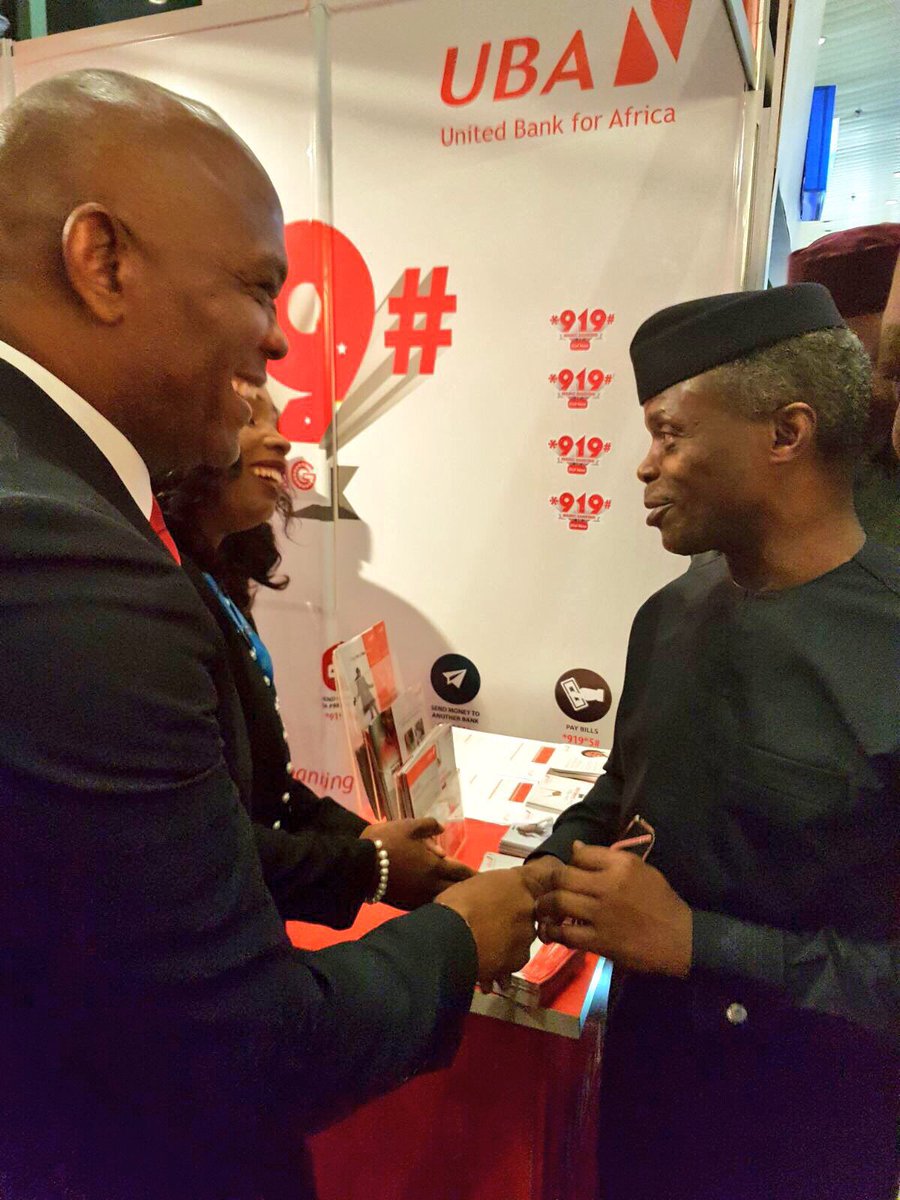
The Chairman of the Foundation, Tony Elumelu, shakes the Vice President of Nigeria who also spoke

The Emerging Dangote, Totally Diversifying

From 2013, I will think that is when we have a new Dangote Group from the presentation. With the consolidation of the sectors where he has won, he then began a push to diversification. This diversification goes beyond sectors to geographical diversification. At the moment, the Group is working to invest billions of dollars in U.S. and EU markets to give it geographical spread from Africa. Today, the firm is totally diversified with sectors that include the following among others:

  • Petrochemicals / Refinery: Dangote believes that his refinery will fix Nigeria’s gas shortage problem. That will ensure that power plants get the gas they need to operate. His sub-sea gas pipeline provides a perfect solution to the incessant destruction of energy infrastructure by militants in the Niger Delta
  • Agriculture/Agro Processing: The Group is committing at least a billion dollars to invest in rice and other crop production
  • Fertilizer production: Dangote will commission its fertilizer plant next year. The good thing about this plant is that Dangote Group will be its biggest customer since the company is investing heavily in farming. So, it will be buying its fertilizer. That reduces any investment risk therein.
  • Sugar processing: The Group runs the second largest refinery in the world
  • Coal mining: The firm is investing in mining
  • Cement production: Dangote is an African leader in this business.
  • Power generation: Dangote Group generates at least 1,300MW of power mainly for its business operations (Nigeria’s total distribution capacity is around 4,000MW). He did note though that he sells power to the government of Senegal

Message to African Entrepreneurs

Dangote noted that “Africa is a land of opportunity” and “any resilient investor can overcome African challenges”. He did note that he survived the time when banks could only give him a 90-day loan at nearly 40% interest rate. He urged African entrepreneurs to make products which customers will need. In other words, entrepreneurs need to setup companies that make products that many people will need to use. He noted that those that think big, even when starting small will win. He challenged the entrepreneurs to be prudent and wise in their spending. Also, they should not be afraid to fail. In that failure one, he listed names of some very prominent global business leaders like Bill Gates, Jeff Bezos (Amazon), and Henry Ford on how their initial business attempts ended in disappointments. For Ford, he noted that the man nearly ruined his reputation with failures with his automobile passion until he got it right.

As part of motivating African entrepreneurs, he dropped some hints on what he reads: China now controls about 36% of global billionaires and plans to get to 50% in the near future. Mr. Dangote does hope Africa will have more players like him in that list very soon.

I gave a plenary during this event titled “Extending the Frontiers”

The Tenets of Dangote Success

Throughout the 15-minute presentation, I picked the following as some of the major pillars of Dangote success:

  • Quality partnership: He really invested in getting the best possible partners around him. By partnering with elite brands at the beginning, he was able to establish a mark of quality in the market
  • Downstream to Upstream: You need to accumulate capabilities in your business and use them to transition from the downstream to the upstream level where you can find more value. He began at the downstream, trading, but quickly built capabilities and moved to the upstream. That upstream provides him more margins as there are fewer players. Also, upstream is where governments supports can be easily obtained. Besides, that is where influence on government policy can be more effectively exerted. Dangote Group can push for help in a refinery business but fuel stations may not necessarily get such supports because the biggest pain points are in the upstream level. Governments understand that and offer support to companies that fix market frictions inherent in the upstream.
  • Define Your Battle: It is always easy to think that you can take any fight you want. But Dangote shows that it may be smarter to define your battles. He did poorly in banking and exited because it was not working. The lesson is that you need to quickly understand what you do best and focus on that.
  • Dominate Your Domain: Once you have noticed what you do well, the key is dominating that sector. That means, using resources, process quality and excellence in execution to become the industry-king. Dangote came into sugar and quickly won. He did the same in cement, and other sectors. That dominance is how he gets great margins. By dominating, he takes over territories, and competitors exit. Then, he defines the new rules of the markets.
  • Customer-Centricity: The big lesson is to identify what customers want. He noted that he was always looking for opportunities where many people would buy the products. People will always need cement, sugar, flour and fuel. That is how he defines the battles and markets he wants to participate
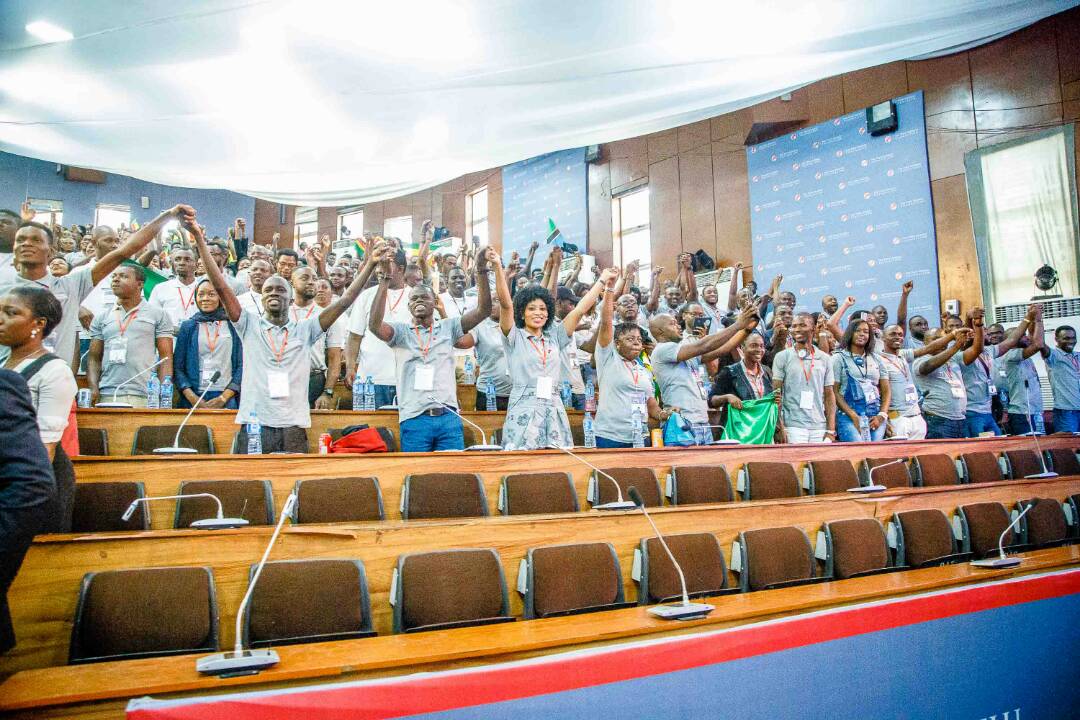
A program peerless in the boundless energy of the youth

The Dangote Way

I summarize by noting the following as the core elements of Dangote business philosophy and operational capabilities.

  • Take Action: You need to find a way to begin, even if small. But make sure, you are always planning big.
  • Market Scanning: Scan markets by exploring opportunities. See the ones that are picking up and then massively scale those promising ones. Dangote tried banking, noodle making and other things but gave up to focus on things that were working
  • Accumulate Capabilities: The value is always at the top. Find ways to accumulate skills and competence to compete and win at the top. Dangote moved from trading to manufacturing. That was possible because he had amassed so many capabilities in his business
  • Consolidation: Consolidate on the areas where you are winning. This is the typical Art of War principles. Fight and take over a territory, consolidate your win, then move to another territory to conquer
  • Diversification: That another territory is diversification. You need to keep diversifying in sectors and geography. Where possible, win the new areas as you diversify. If you do that, the empire continues to grow.

Thank You Tony Elumelu Entrepreneurs For Standing Ovation After My Talk

4

To all the great African entrepreneurs, I want to thank you all for the standing ovation after my plenary talk during the Tony Elumelu Foundation Entrepreneurship Forum. As we continue to celebrate African entrepreneurship, I want to challenge every one of us to continue to dedicate for our generation to “cure” extreme poverty in our beautiful continent. A land where hunger will not be found in a community of farmers. A land where optimism will rule in the homes of makers. A community that is hopeful and vibrant with boys and girls growing with hope and aspirations unbounded by hunger. Let us continue to Believe. Thank you for giving me a moment.

Time and Livestream Link for My Plenary At Tony Elumelu Entrepreneurship Forum

0

Good People,

I will be speaking today at the Tony Elumelu Foundation Entrepreneurship Forum. I want you to connect online from anywhere you are. It will be awesome. Details below.


“There is no tech ecosystem in Nigeria” Emeka Okoye Repeats

0

In Data Science Nigeria today, Emeka Okoye, one of the panelists clarified an earlier comment he made. He had noted in the past that Nigeria does not have any technology ecosystem. Part of his thesis was that Nigeria was simply building applications, instead of instituting technology pillars. He made a case that Nigeria has no culture of R&D and broad innovation enablers, and without those elements, it would be hard for us to develop an indigenous technology capability.

He had listed the following as part of the components:

Someone in the audience challenged Emeka, pointing out that Nigeria may not necessarily need to invest in R&D for us to advance in our technology sector. The person did note that Nigeria can just cut and paste, relying on the works of others, as we develop our technology capabilities. Emeka replied that building on top of other technology platforms will not necessarily help the nation. His point was largely that we cannot have the capacity to evolve our technology ecosystem if we do not invest in the fundamental elements that make technology happen.

In other words, any limitation imposed by Silicon Valley owing to how it sees global problems will bound our abilities to create solutions that address our needs. That we have Android to make apps does not mean that we are technically advancing the nexus of technology creation. In his opinion, we are only accelerating the vision of Google at consumerism phase.

Emeka, the founder of Cymantics, a startup working in the domains of semantic web, AI, and analytics, later explained to me today in a private conversation that he would expect Nigeria to go beyond computer science to work on the development of mathematics, physics and broad technical education. In his view, we cannot sacrifice all these fundamental elements of technology with fixation on coding. He wants our universities to lead the charge for that redesign into a future where Nigeria will have real technology ecosystems, over ones structured to accelerate mere technology consumerism.

In some ways, I do agree with Emeka. There are many technology elements besides our fixation with IT and computer science. Yet, I do not really think we need to build everything from scratch. That may not be necessary. I have made similar points in a different way in the past.

Ndubuisi Ekekwe, a professor of engineering at Babcock University in Nigeria, speaking at the Tech4Africa conference in South Africa, said the continent has the ability to climb the technology pyramid, and be the creators of technology, not just the consumers. “Africa has to have a strategy whereby we do not just consume technology. We have to figure out a way to create technology. We can get there by re-designing our educational model and then providing an intellectual property framework so that people can actually make investment risks in Africa, but knowing that their investment is well protected by the law,” said Ekekwe. Ekekwe discussed different technology sectors in Africa, and urged researchers to look beyond information and communications technology. Nanotechnology, he said, can create systems that are very energy efficient, as well as provide another engine for Africans to build upon, innovate, and invent a new future. But, he added, “Africa has a very marginal participation in Nano technology. It’s not just Nano technology – our agricultural technology is dead, our mining technology is dead and our geo-physical technology is dead.

Selected Comments from LinkedIn on this Feed

  • Ndubuisi Ekekwe…this is surely a promising read and I will be deep diving into it over the weekend. But for your synopsis above, here’s my one thought. Both sides of the argument is right to some extent. Emeka is right for the long term, while the audience person is right for the short to medium term. In supporr of Emeka though. I posit that Nigeria missed opportunities in the technology development space in the short to medium term, therefore it must now look to the long term lest it misses another opportunity. It was countries like India and China that took advantage of short to medium term opportunities in technology. By demonstrating a can-do attitude and certain work ethic, they convinced the world that they could do tech much cheaper. Even though not better but at least those companies would have a chance to scale their core operations and meet market demands in the medium term, and clean up any tech messes much later. It worked for India and China. Nigeria couldn’t do it. Today, India and China has moved on to the long term with resources and capabilities they built exploiting opportunities in the short and medium term. It’s codenamed China 2.0 and India Rising.
  • Well, this sounds more like an academic statement than what reality tells us in Nigeria’s case. The subjects mentioned are basic sciences, and we have been doing them for ages; unfortunately they cannot or have not been able to address our challenges. From Number Base System to Trigonometry and Geometry, and then further mathematics of Partial Fraction and co, up to engineering mathematics of Laplace, Fourier and Partial Differentiation. Then in Physics, from Weighing Systems and SI Units to Energy and down to Wave Particles and Duality of Matter; we have been doing them. What are we going to do differently in these subjects now? Yes, we do not have a clearly defined tech ecosystem, but we have leveraged on existing technologies to build applications that have helped to reduce frictions and provide solutions in several fields. Silicon Valley is what it is, and you cannot have a replica of it elsewhere. You can only look at where there are gaps and try to see how you adapt the existing technologies to fill those gaps. Expecting every country to develop a tech ecosystem from scratch may never work, because you don’t earn much credit for reinventing the wheels. Knowledge rules, use what is available to deconstruct and reconstruct.
  • Firstly I doubt if Nigeria will catch up with others if we focus our efforts on going back to build technology pillars. We can have a strategy of “adopt, extend and expand” of the incumbent and emerging technology substrates. The extend part will need a good grasp of the fundamentals which universities and research can help with. And we will do that in a way that speaks to our needs! By expand, I mean there must be a clear path to industrialise and commoditise. China produces a lot of tech for its market today; Apple and Facebook aren’t No 1 there and Google is not even allowed there. Where and how did they start? My second point touches on what one of the earlier commenters wrote. Mathematics? Physics?… I’m not an educator but the fundamental principles in these areas don’t change that often. I love Calculus dearly and I appreciate how Statistics is an enabler of machine learning today. Maybe I can help Emeka make the point here: we need to uplift “Applied subjects and courses”. It’s a shift, in my view, from pure Tech and Engineering. Quickly transition students from the basic and fundamentals principles to real life applications. This puts them in a good place to “adopt, extend and expand”
  • …most of us are aligned that there is not a fundamental organic technology ecosystem in Nigeria and we’re at the ‘fringes’. The ‘hype’ with computer science/application development is led by developed economies and we’ve caught the bug. But we are not in control so before it plateaus, we can take a step back to analyse how our education system translates applied sciences into industry, that ‘gap’ is wide as our academic curriculum/teaching methods have not evolved. Hence, the case to build new R&D led institutions (#AFRIT) or at the least a new curriculum that serves to deliver the fundamental organic technology framework to enable localisation of applications/new technologies etc.
  • I love the conversation here. Both points are valid. I would have to agree with Justin though. Without growing our technology ecosystem, we will have stunted growth in the existing applications we are leveraging. There are good developers and coding is hip these days, but without the technological base (Applied Sciences, Math), we will plateau very soon and the innovation that is currently gathering momentum in the Nigerian Techspace will become stunted. It is necessary we build up on them because they are truly the only way we can predict our growth. It is the reason why modern day innovators like Elon Musk, Bill Gates, and Mark Zuckerberg can delve into different industry spheres. It’s because they understand the foundations of applied sciences. It’s more of a long-term vs Short term result.

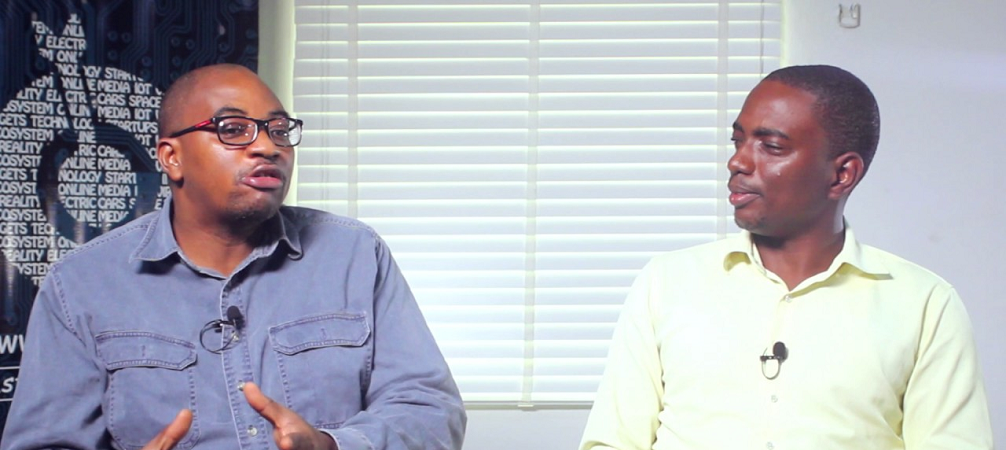
(Photo credit: techpoint. Emeka,left, with a techpoint staff)