DD
MM
YYYY

PAGES

DD
MM
YYYY

spot_img

PAGES

Home Blog Page 7274

The Destructive Web Transduction System

0

ICT brought productivity gains across industrial sectors, delivering immense values to companies. However, Internet is going to destroy the values in many sectors. The transfer of most of the values, from the physical world to the digital one, will not be optimal. Some values will be “dissipated” during the “transduction”, the process of converting energy from one form (meatspace) to another (online).

At the early phase of Internet publishing, many digital publishers made money when Google AdSense (Google product that helps websites show ads) made much sense. But over time, it has become increasingly difficult to earn any decent income on digital publishing, especially when your contents are not premium to command subscription. When you engage in click-bait, people can live without you unlike WSJ which drives news that move billions of dollars around the world. So financial and business journalism will be fine in the age of digital subscription, but generalists will be totally commoditized. Even fighting for more users will not save the generalists. Why will you pay subscription to read Punch Nigeria when more than 80% of the contents are in either Sun or Vanguard?

Some brands are going through what I have called the Diminishing Abundance of Internet. I explained: “It is a construct that some companies become poorer even when they are growing in numbers of customers reached. That applies to industrial sectors like publishing and telecoms. The lesson here is that risk, in any business model, must be examined from the lens of this mirage abundance, which Internet has provided in some sectors”. One company that is going through that at the moment is the very popular Mashable which has evolved as a technology blog to anything-blog platform.

Yes, Mashable has agreed to sell itself to trade publisher Ziff Davis for $50 million, compared to its earlier $250 million valuation.

Digital-media firm Mashable has clinched a sale for the company — and it’s not for a price that founder Pete Cashmore or investors including Turner were looking for.

Ziff Davis, a tech, gaming and healthcare publisher, is buying the New York-based company for about $50 million, the Wall Street Journal reported, citing anonymous sources. That’s 20% of Mashable’s valuation of $250 million following a $15 million round of funding last year led by Time Warner’s Turner.

Mashable has been trying to sell itself or raise additional outside capital for months

That is a very small amount for a digital blog pioneer. It used to have so much influence until Facebook started abstracting publishers in the consciousness of readers.

The Transduction System

When meatspace systems and processes move online, value is always destroyed. When we started chatting via WhatsApp over using SMS, value was destroyed for companies like telcos that used to make money via SMS. When Skype took up the telcos, the same happened. The only good news is that the customers save, even when getting better experience. But the enterprises at the centers always struggle. You can call this disruption.

Yes, something is destroyed and disrupted. But most times, the company destroying does not really make so much money while redesigning the industry: it simply destroys values for the enterprises in the sector, as you do not pay Skype for the money you did not pay the telcos for the one hour Skype call from Lagos to New York.

Note that Mashable is not losing readers, at scale. Unfortunately, more users may not help it. The ad revenue model does not just add up any more unless you have a big syndicated ecosystem like the type Ziff Davis commands which allows it to push adverts across its platforms. That scale helps it win contracts from advertisers. And that is why they are looking for properties.

Yahoo, TechCrncuh and HuffPost parent, AOL, enjoys the same. The old era of one popular blog in the general category with strong revenue base is challenged. Those sole blogs decimated print publishers, but the unconstrained and unbounded Internet is now after them. In the unbounded Internet, aggregation becomes critical. Selling to enterprises like AOL and Ziff Davis is a quasi form of aggregation as that helps abstract the platforms, focusing on the gatekeepers who have scale.

Everything goes back to Facebook and Google which have emerged as top publishers without budgets for contents. Any digital business that does not examine how Google and Facebook will affect it does not have a comprehensive strategy. What happened to Mashable will keep happening. Gizmodo has since sold to Univision which added six to help it has scale to command ads. You just wonder how this transduction process from the physical world to digital will play out in ten years, even for the digital natives.

The Trajectory Advantage: Understanding Your Startup Speed of Growth

0

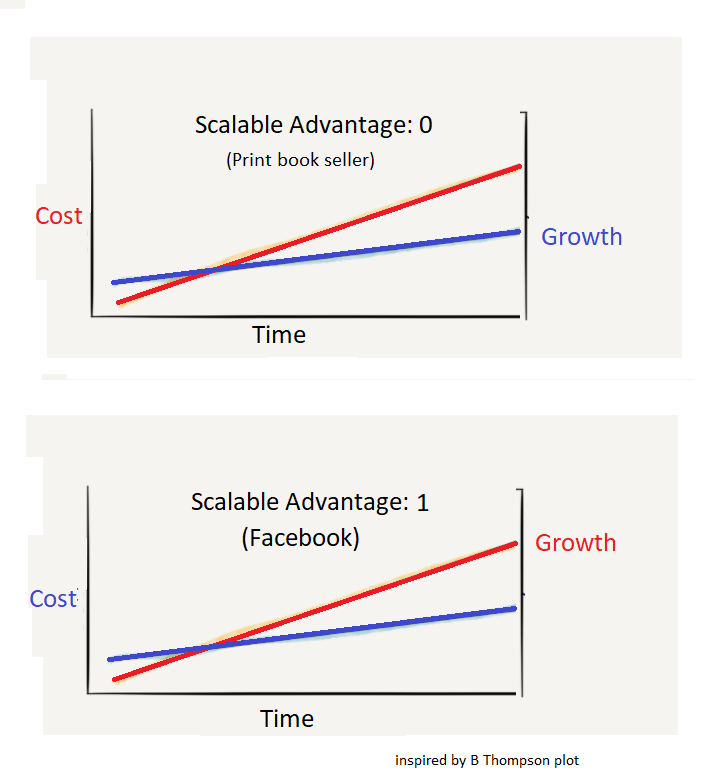
The relationship between acquisition cost and growth is at the heart of any startup operation. There are largely two paths to growth, and the one your startup follows will determine how fast you can grow through limitations imposed by marginal cost. When you follow the path that favors business models with scalable advantage tending towards “1”, your business will generate value faster.

When marginal cost goes low, a company can experience a virtuoso moment, anchored on network effects, where more users bring more partners, and more partners more users. But that happens to startups with certain characteristics which make it possible for them to INVERT the positioning of growth trajectory and acquisition cost typical in most traditional firms.  At scalable advantage of 1, the acquisition cost curve can even begin to flatten, and yet the growth will continue to experience positive slope. Google did not waste money in advertisement for years, and yet it was adding many users.

In this video, I explain the two most important plots that define how fast you can grow that business or startup, especially at the early phase, before maturity. It is about ascertaining the speed of growth through The Trajectory Advantage of a business.

You can revisit the Scalable Advantage video below.

Experience the Best Free Data and Photo Recovery Software

0

Technology continues to evolve and we continue in that paradigm of adoption. We build our lives on digital ecosystems, as typical of modern users of information systems. But sometimes, bad things happen. We make errors, and some of those could be very problematic and consequential. That happens when you suddenly delete important files that run your business or personal life. Imagine deleting, by mistake, a journal paper that has taken you months to develop. It is an accident, but sometimes, it is not really an accident: we just purge our PCs, laptops and other devices files only to note that we need those files within days.

If you have experienced this type of scenarios and more, there is good news. There is a solution from EaseUS. They have the world’s best free data recovery software to recover deleted, formatted or lost data from PCs, laptops or removable devices easily and quickly. It goes beyond data, the EaseUS solution has a digital photo recovery capability which helps with photos, facilitating the process of recovering photos and data with speed and efficiency.

The Capabilities of EaseUS Recovery Software

The EaseUS free data recovery software restores crucial data for sudden deletion, formatting, hard drive corruption, virus attack, system crash, volume loss, improper operation or other reasons. It is extremely easy and safe free file recovery software for PC/laptop/Server and helps to retrieve lost or deleted files, photos, music, audio, emails, etc. from hard drive, memory card, USB, digital camera, mobile devices and other storage media. It is an omni-recovery ecosystem that can handle any media type. The key attributes are as follows:

  • PC data recovery wizard: Recover deleted files from hard drive, external hard drive and SSD on your PCs, laptops or servers, or even lost and formatted partitions
  • Memory card recovery wizard: Restore lost data from damaged or corrupted memory card including memory stick, SD card, CF card, Micro card and more
  • USB drive recovery wizard: Rescue data loss on USB drive, flash drive, pen drive and other removable storage media due to accidental deletion, formatting, virus attack, etc.
  • Other digital device recovery wizard: Retrieve lost data from devices like digital camera, mobile phones, iPod, music and video player for deleting, formatting, hardware crash and other reasons

Use EaseUS Photo Recovery Software to recover lost, deleted and formatted digital photos, pictures, music files on removable media, after an accidental deletion, media format or corrupt media. EaseUS Photo Recovery is the best data recovery software which works with any type of digital card reader or storage media that appears as a drive letter in your local PC. The program displays images and files that it finds and allows you to recover all of them.

Recovery Features and Comparisons

EaseUS Recovery Wizard has three main editions and they have different recovery features as noted in the table below. With this, you can recover your photos and then go and create bedroom canvas wall art photos prints.

Operating the EaseUS Interface

The EaseUS Data Recovery Software is a free software that you can download on your computer. It works with both Windows and Mac systems, making it convenient to be used by anyone. Let’s take a comprehensive look at how to recover your files using this free file recovery application.

  • Installing and Operating the Wizard

The program is free and easy to download. After it is downloaded, simply launch the program and you will be able to observe first hand that the interface is super user friendly and easy to make sense of. You can find everything you need inside the Menu icon on the top of the window.

  • Beginning the Search

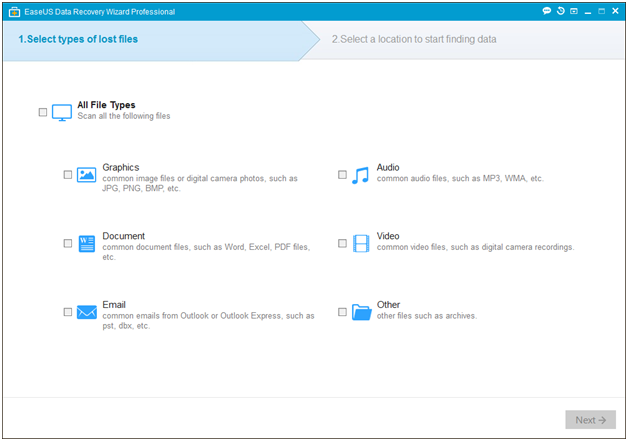
Beginning from the ‘Home’ screen, you can select what kind of files (documents, audio, video) you would like to search for. The next screen will ask you to select which part of the hard drive or the attached drive you would like the software to scan for the deleted file.

  • Quick and Deep Scans

The next step would be to click on ‘Scan’ on the bottom right of the page.

When you do a Quick Scan, the software takes just a few minutes to extract a small bunch of files from the selected place. The Deep Scan, however, extracts over hundreds and thousands of files for you to select from and recover. It is also understandable that such a difficult feat takes a considerable amount of time as well. You can pause or stop the Deep Scan anytime you want if you are not willing to wait through the two or three hours of searching. You are still able to preview and restore the files that the software has recovered till that point in time.

  • Exporting and Importing Scans

You can save your scan results if you would like to view them later by clicking on the ‘Export Scan Status’. Whenever you would like to view them again, you can simply choose the ‘Import Scan Status’ option and bring back the Recovery State File into the window.

  • Finally: Recover!

Once you have decided which files you want un-deleted, you can either right click on that particular file and choose ‘Recover’, or in the case that there are several files you would like recovered, you can tick all the files and press the ‘Recover’ option on the bottom-right corner. You can choose where you would like to place these newly recovered files. It is better to store them in a new place if they were deleted because of a damaged drive.

Download Here

You can experience the EaseUS data recovery software by downloading here.

Zenvus Industrial Camera Goes Into Production (Photo Concepts)

20

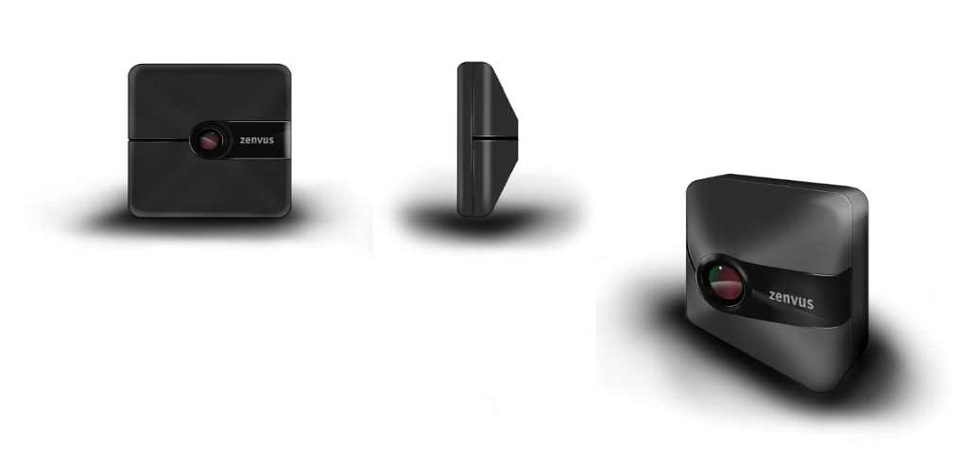
In August, I shared some images of a camera system we are designing in Zenvus, a subsidiary of Fasmicro Group. We have made great progress and everything is working perfectly for the industrial applications we engineered the system for. Today, we are moving into designing the packaging for the camera system.

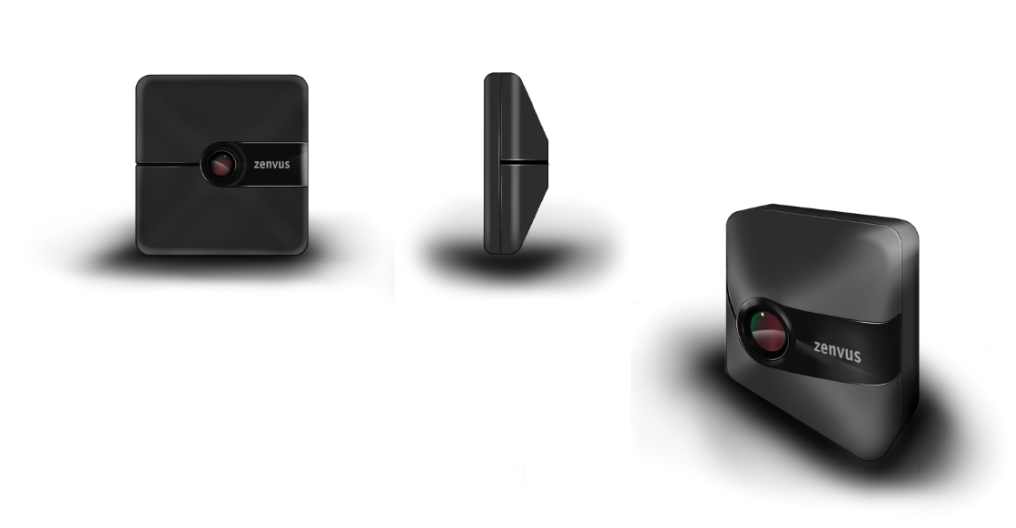
Find below the two options we have: I have chosen Concept 1 to move into production. Too bad, you cannot buy this camera in Ariaria or Computer Village; this is for pure industrial applications in specific key areas. The name of the product will be made public when we launch it next year as we begin shipping to clients.

Interestingly, it will have ‘Made in USA” but this is really a Nigerian brainpower. I wish patriotism is a good business strategy, we will have a factory in Aba. We have massive assets but no light. I am not a magician to move electrons without power.

Zenvus (Name Withheld) (concept 1)


Zenvus (Name Withheld) (concept 2)


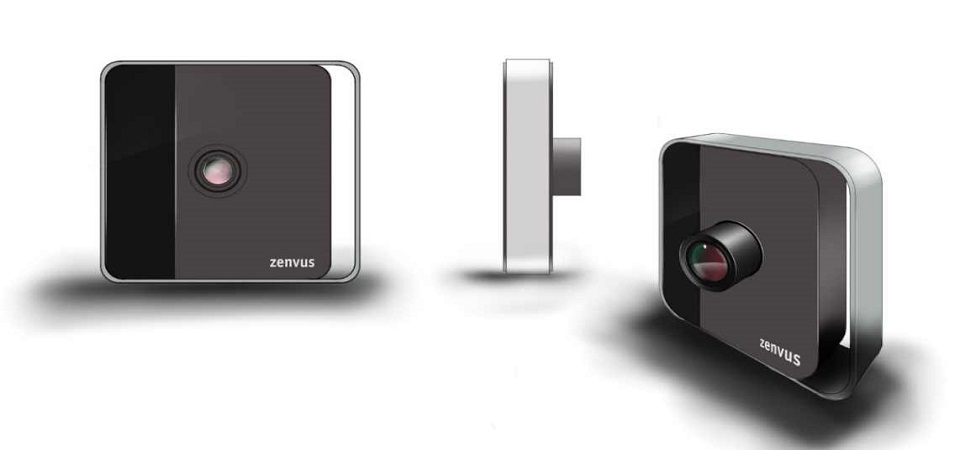
Updated: This is the concept 3 which does not change our choice of #1


Zenvus (Name Withheld) (prototyping setup)

AmEx Test-Drives the Future of International Banking

0

Visa and MasterCard are on hangovers, doing everything possible to protect their current businesses. When you examine what they are doing in Africa, the mission is clear: on-board as many merchants as possible into the networks. By doing so, Visa and MasterCard will continue to enjoy their merchant fees, which are taxes imposed on merchants for their financial transactions passing through their networks.

But their minor competitor, American Express (AmEx), losing steam in many areas, is looking into the future. It is not protecting its network because it does not really have a large one, being a premium brand. But who cares if your card is “black” or red when the numbers are stored in digital wallets. Digital payment is attacking the heart of AmEx business, making what used to be luxury brand consistently irrelevant in the age of ecommerce.

In this video, I explain how AmEx is plotting its future with a product African fintechs should care more, over what Visa and MasterCard are marketing across African capitals and banking institutions. AmEx is  partnering with blockchain startup Ripple to use blockchain to move some international payments between the United States and Britain.

American Express has introduced instant blockchain-based payments using Ripple, a fintech startup, for U.S. corporate customers sending funds to U.K.-based businesses that bank with Santander U.K., the companies said on Thursday. American Express said its FX International Payments (FXIP) business had partnered with Ripple to provide real-time, trackable non-card payments from the United States to Britain. Customers are already using the service, the companies said, and it would be extended in the future.

While that is happening, innovators are soon going to make the use of cryptocurrencies to be as easy as using debit and credit cards. Square, a payment processing company, is experimenting with making it possible for users to sell and buy Bitcoin via its Cash mobile app. Simply, in near future, expect a Bitcoin credit or debit card and that will make Bitcoin mainstream, removing the geeky complexity for everyday person.

Payments company Square said it has started allowing select customers to buy and sell bitcoins on its Cash app, as it looks to tap into a craze that has sent the cryptocurrency up nearly sevenfold this year

This industry is moving very fast. MasterCard has filed a patent on a blockchain-based money transfer. Generally, I see a future where remittance fee will drop to near zero and commissions on payments will also. In a perfect Internet, there should not be a fee for moving money across the web, as I have explained on Tekedia. Blockchain will likely make that happen, as it removes frictions between buyers and sellers, and by that process removes the needs for companies to emerge,  to become intermediaries to fix those frictions.

AmEx is taking us to that future and our fintechs should take note because this is real. A partnership with AmEx will be more vital than what Visa and MasterCard are offering today in Africa, because AmEx operation is closer to the equilibrium point. Sure, AmEx focuses on richer people, which may not be common in Africa. Nevertheless, the forward thinking view on technology should be attractive for our leading banks to meet emerging business needs.

Always remember that blockchain can fix Africa’s intra-remittance. A company like AmEx may get there before most, with this bold vision.

In this videocast, I discuss the need to build a truly pan-African digital remittance/transfer banking product which is agnostic of location or currency in Africa. None of the products we have today meets that standard. Largely, I envisage a situation where all you need to buy and sell across Africa is one bank account in just one African Union country. With that, you do not have to even think about the specific currency of that account as technology will seamlessly make it possible to access other African markets for payments, transfer etc. The banks or fintech companies must still comply with all regulations related to inter-national transfers, forex etc. The only difference is that customers will not see them as they will be hidden with technology.