DD
MM
YYYY

PAGES

DD
MM
YYYY

spot_img

PAGES

Home Blog Page 7276

The Italian Azzurri Crashed, American Soccer Retreats, Alabama Crimson Tide Soars: Business Lessons

0

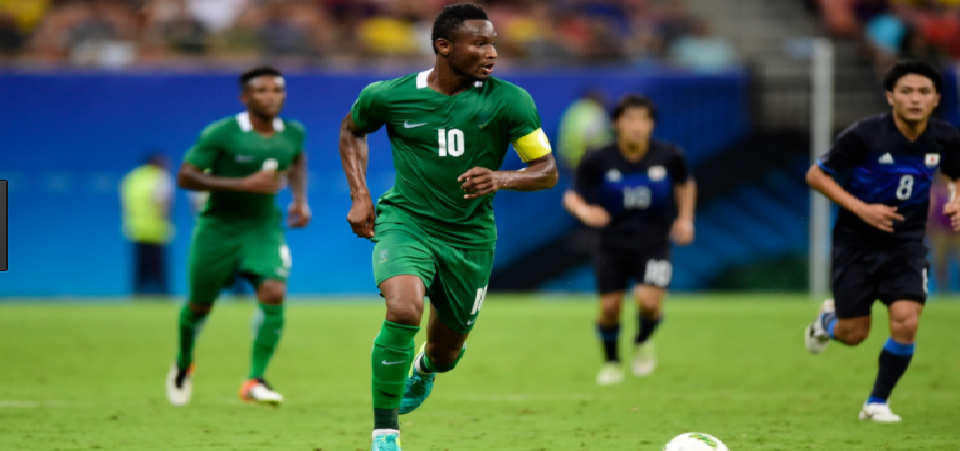
Italy, yes, the Azzurri, will not be playing in the 2018 World Cup in Russia. That will be the first time that Italy would fail to qualify since 1958. In a match that decided its fate, the four-time world champions could not overcome Sweden. Sweden will be in Russia while the Italians will enjoy their coffee and pizzas as they watch the games on televisions and online video streams, at home.

Few weeks ago, U.S. Soccer team also failed to qualify: Trinidad and Tobago knocked out the U.S. team.

United States is a brilliant nation. It has the capacity to connect its citizens to a shared vision. From science to technology, literature to military, America has always set the global benchmarks. But in one specific sports, soccer (yes, football in anywhere else), America continues to struggle. This year, a very small country, Trinidad and Tobago, extinguished the U.S.’s plan to play in Russia 2018 World Cup. That is it: U.S. Men Soccer lost to Trinidad and Tobago and will not play in the next World Cup.

But my favorite sports team in America, the college football undisputed king, the Alabama Crimson Tide of the University of Alabama Tuscaloosa continues to perform. The Crimson Tide is so consistent that you know what you are getting when they march into the field against an opponent. As the Tide rolls, expect people living longer in Alabama (oh yes, football is a religion in Southern America!). With no top-four professional leagues (National Football League, Baseball, Hockey and Basketball) in that state, the Tide and the Tigers (The University of Auburn) are all that the citizens have as top-grade sports.

In all these occasions, there is a business lesson: legacies mean nothing, what matters is what is happening now. Yes, IBM was a storied tech juggernaut but today we have the likes of Google and Amazon eclipsing it. GE was iconic, but GE has since lost what made GE supremely legendary. Markets do not care about legacies, they care about results. When the results fizzle, markets move to the next great firms.

The Systems

There are three things in football (soccer for Americas) as you build teams: recruit, train (or prepare) and deploy. You have to have the talent, and you have to train them. Then, you need to deploy them to go and win games. The recruitment means that you must have a pipeline of talent from which you can assemble those that will work with the coach. Where you do not have that, a great coach may struggle.

In a scenario where you have the team, the next phase is preparation. That is where the coach leadership and capabilities come into play. Lastly, after you have done preparation, you must condition the team to go out and execute the strategy. They need to play, as you have prepared them.

U.S. Soccer: Soccer is a new game in America. It is not attractive and the finest sports people in U.S. have better options. Why join a soccer league to be paid $40,000 per year when you can play American football or basketball and command millions of dollars? The U.S. Soccer does not have the talent and that is the biggest challenge today. Without that talent pipeline, the training and deployment fail. The problem that stifle progress there is Recruitment.

Italy Football: The Serie A, the Italian league, has since lost its shine, and evidently diminished compared to the glory days legends like Maradona, Lothar Matthäus and George Weah played in it. Today, Serie A is a shadow of its past.  The best footballers do not see Serie A as the top destination. So, with a broken local league, Italy faces a challenge on building national teams. Yes, they still have Juventus but that will not be enough. The problem with Italy is not lack of talent, but preparation. If the league is not strong, even the best talent may not flourish. The problem in Italian football is at the phase of Preparation.

England has the same problem few years ago when it also failed to qualify for World Cup and then instituted that Premier League teams must commit to develop local football even if they are not playing English players. England was addressing the Recruit issue, at least to develop the talent pipeline. England has a good league but continues to struggle with local talent.

Alabama Football: The Alabama football team is the most successful college football program in the last ten years in America. Its recruitment is legendary with some of the reserves very capable of being starters in some other college programs. Also, the coach of the team, Nick Saban, has developed a process which makes it easy to build a consistent system. College football is inherently challenging because the average duration for players is about 2.5 years since most do not start on first year in college and within four years they have to graduate. The very best do not even wait to graduate; they abandon school and join the professional league. The implication is that a coach will have to recruit new students to develop, constantly. That process of finding them is not easy. There is nothing like contract as the students can also transfer to other schools. So, Nick Saban has recruited right, prepared the players, and then motivated them to go out and execute. The implication is evident: the team is winning.

The deployment phase is critical. In most African national football teams, we do have talent though we struggle with preparation. But even when we prepare right, the deployment could be an issue.  Imagine in cases where Nigeria’s Super Eagles or Elephants of Côte d’Ivoire say they would not play unless their allowances are paid. With that challenge, these players are not in the best conditions to go out and execute anything they have been prepared for.

Business Lessons

Largely, running a sports team mirror how companies function. We compete for talent. We train staff and we expect them to perform their duties right. They need to execute so that we can win in the market place. If you want to start an AI company in Nigeria, you may struggle with elite AI talent, and that immediately puts you at a huge disadvantage to Silicon Valley. Also, in some sectors where you have seen the talent, but the training apparatus to develop them severely lacking, you can still struggle. Besides, there is the issue of staff motivation in order to execute the corporate goal and mission. When you miss any of those phases, companies struggle.

We talk of legacy, but truthfully markets do not respect such. There are constant disruptions happening and those disruptions are based on these factors of recruit, train and deploy. If you pay very close attention to them, you can get to Alabama Football quality. The Crimson Tide has mastered how to manage all the phases, and yearly, it presents to America a strong football team with potentials to win championships. It has a process, and there is something to learn from a team that remains consistent despite losing more than 70% of its players to graduations, professional leagues, etc yearly. If a sports team can work with that, it means companies with longer staff tenures should even perform better.
Double Play Business Models of Amazon and Alibaba

4

In baseball, double play is a defensive play where two players are put out. It turns out that the leading ecommerce companies like Amazon and Alibaba have such strategies in their businesses. Amazon runs an ecommerce operation, which largely loses money, but makes money via cloud computing services. In the world of Amazon, if it can destroy many brick and mortar retailers and force them to go online, it will have cloud services to sell to them.

For Alibaba, its double play comes from its asset-light marketplace and the Ant Financial which processes payments across its ecosystems. Besides the commission for selling on Alibaba, Alibaba takes another cut for handling the payment. When you examine these companies, one thing is obvious: no one makes good money by running just an ecommerce operation; you need a double play to supplement it.

Repositioning Your Nigerian Business By Studying Local Cloud Service Providers

0

The cloud service sector in Nigeria has been growing as companies begin to move their services and operations to the cloud. Besides the largely cost-competitiveness, cloud simplifies operations, with data consolidated more effectively. But the problem is that Nigerian cloud service providers are not getting these businesses: most Nigerian startups and companies, excluding banks, are […]

This post is only available to members.

Facebook’s Broken Free Basics in Nigeria

0

Facebook runs the Free Basics which is an initiative through which it offers free Internet services to some selected websites including most Facebook products. In other words, when you visit the websites, your meter will not be running on your mobile devices. According to the company, it is a way to make Internet affordable. In Nigeria, that initiative partners with Airtel, a major telecommunication operator.

It is very hard to ascertain how that service has worked in Nigeria. By that I mean if people are making decisions to buy Airtel SIM cards for the ultimate access to the Free Basics. In Lagos and across Nigeria, I did not have that feeling. MTN has remained the largest network, with Glo coming far behind. Airtel is #3 and remains so even after striking the partnership with Facebook on Free Basics.

Besides Airtel, other telcos across Africa now support Free Basics. Facebook pays the mobile operators since the customers do not have to pay for the data. That means that Facebook is the paying customer. Facebook through its balloons and other tools provide the broadband services which the telcos “retail” free for the end-consumers to use to access the chosen websites. If Facebook does not pay the small fee for the operations, the telcos ideally will not bother.

Also, there is the possibility that some telcos can use that as a consumer acquisition strategy, getting customers to use their SIM cards, knowing well they will stick with them when they need to enter the open Internet, which has to be paid for.

The Problem with Airtel and Facebook Partnership

A major problem with Free Basics is that the chosen websites are largely not for productivity. While Wikipedia is a good website, the fact remains that if you are restricted on the site, even the site you have access is diminished. There is always a feeling that the other site is better.

Imagine a scenario where a student is chatting with a friend on Facebook via Free Basics, and the friend tells him that the professor has posted a homework available in the university portal. The student wants to access the school portal but Free Basics does not support that site. The option for the student is to buy credit to have access to the real open Internet. When that is done, the student can see the assignment. This experience will surely diminish the Free Basics before the student.

The implication is that the best way to run Free Basics is to partner with companies that understand how to offer Internet free, even if it means watching adverts, to do so. People watch the adverts to have access to the web. So, when they are on Free Basics, they access the available sites, but when they want to access the open web, they watch adverts to do so. The Facebook-Tizeti partnership should be anchored on that framework. But that is not what we are getting.

The Facebook-Tizeti partnership

Tizeti, which manages Wifi.com.ng and Flobyt, a free WI-FI  service, would have been a natural partner. It can offer end-to-end experience on totally free service for Free Basics website and the open Internet for users. That means, what Facebook supports get delivered and the other websites can be accessed by watching adverts. That was possible in the old Tizeti; not anymore.

Tizeti Network Limited is a fast growing Wireless Internet service provider in Lagos, Nigeria, delivering high-speed unlimited wi-fi Internet access to residential and business customers. Founded in 2012, the Company has established wi-fi networks all over Lagos. The Company was the first ISP to deliver unlimited internet using wide area wi-fi in Nigeria and is now offering its services all over Lagos and the South.

Yes, after Tizeti raised money from global investors, it pivoted from its old business model of offering free WI-FI services. Now, you need to pay to have access to its WI-FI services. Nonetheless, on this Express WI-FI, you can still access the Free Basics part free on its network. From Facebook and Tizeti press release:

Tizeti … announced a partnership to expand Express Wi-Fi by Facebook in Nigeria, …, this initiative supports Facebook’s and Tizeti’s shared goal of connecting more people to the internet in a cost-efficient way.

A fast and affordable public wi-fi hotspot service, Express Wi-Fi in Nigeria is focused in areas where people gather and work, including markets, cafes and public outdoor spaces. Using affordable internet through Tizeti’s wi-fi technology, anyone with a wi-fi capable device and the ability to receive a one-time SMS will be able to use Express Wi-Fi without switching SIM cards or having a data plan. People can connect through Express Wi-Fi on most Android and iOS phones, tablets, and laptops.

{…}

Our Express Wi-fi plans are affordable and range from N50 for 100MB to N2,000 for 10GB.

In addition, anyone connected to an Express Wi-Fi hotspot can access Facebook Flex and Free Basics, which offers people access to impactful local services, including health resources, education and business tools and more.

From the press release, you can get the Facebook Free Basics via this partnership. But if you need the open web, you have to pay. The cost of 10GB of data is N2,000 which is really cheap; 9Mobile would reduce your pocket by N7,000. Yet, it did not solve the pain point even though it has lowered the cost of broadband. A free win would have been if Facebook has pushed Tizeti to adopt its original free WI-FI service, supporting it with funding to make up any revenue from advertisements. That is when we will know great things will happen.

All Together

Free Internet has emerged as a stunt which entrepreneurs use to get free media. Once they start operations, they begin to charge customers. Most of them that promised free Internet are now charging customers. Of course, it is not an easy business model to run free WI-FI because it costs money to build the infrastructure. The Free Basics remains limited, because offering one part of Internet free and other parts paid will always create poor experiences for most people.

A company that can use advertising to support the cost of the open web will be a natural partner to this initiative. They can cap the maximum data usage for the open web while Free Basics remains unlimited to the chosen websites. That way, people will know that even though I do not have money, I can be in Free Basics contents, and if something triggers me to go to the open web, I can watch ads and access the contents while making sure that I do not exceed my available data allocation. Not doing that weakens Facebook vision and India was right to have banned it outright: it is a distortion of the mind.

That inability to find a way to get people to the open web remains the weakest link of this initiative. I will never encourage a family member to use such a service because it rewires the brain on the possibilities of the web. Facebook can fix this with its money. Yet, I respect that the firm has to execute its business model on its own terms.

Fixing Nigerian Electricity Sector through Decentralization

20

A professor from Nigerian Electricity Regulatory Commission (NERC) gave a speech in Owerri last week. In that talk, he broke down all the problems with the Nigerian electricity sector. He explained the near-impossible seamless interface between the distribution companies (Discos) and the generating companies (Gencos) despite the presence of the NBET (Nigerian Bulk Electricity Trading Plc) and the Transmission Company of Nigeria (TCN).

The Discos are not motivated to carry all the available electricity sent to them because the tariff to sell them to the consumers is below market price. According to the professor, the Discos devised a way to manage that problem by stalling the implementation of the smart meter, giving them the opening to do estimated billing. Through that, Discos could rip-off customers, making money, even when not delivering any electricity. The Discos are not fully privatized: government retains about 49% in each of the Discos.

The Gencos are not happy because since electricity through the Nigerian grid cannot be stored, and Discos cannot accept all that Gencos are capable of generating, Gencos are not energized to operate at their maximum capacities. So, Gencos cut capacity, idling plants and losing on economies of scale. Most of the assets by Gencos are fully privatized.

The TCN, wholly owned by the Nigerian government but on contracted management, has its own problem. Its transmission system cannot carry more than 8,000 MW of electricity which means that even if Gencos generate above that amount, Discos will never get them.

NBET was designed to help to smooth these relationships, removing the friction which may exist between Gencos and Discos so that even if Discos cannot accept the electricity, Gencos will not lose money badly. Most times, it is irrelevant if the end customers have electricity. NBET is in intermediary role to make sure that an equilibrium point is maintained and the markets function well.

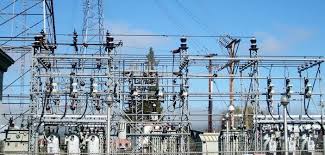
Nigeria needs to modernize its power systems (source: fosuji)

As the don spoke, I saw a clear ceiling in the whole problem: Nigerian problem is centralization  of our energy policy. This is what I think we can do:

  • Dismantle the whole nexus of national grid. Nigeria will never have enough money to beef up TCN to provide the transmission capacity we need to have 50,000 MW we need in this country. With that knowledge and TCN capacity stunted below 8,000 MW, a simple decision can be made. Do away with national grid and allow private sector to come in and run this business.
  • More capacity from Gencos is not the answer: Our problem is not more capacity. Even if Gencos produce 50,000MW, only 8,000 MW can reach the Discos through TCN pipelines. My suggestion will be for the Gencos to have the capacity to sell their power directly to customers, without going through Discos. They can find a way to do that through their partners and investors
  • Discos should lose exclusivity on meters: Government should make it possible for any company that can generate at least 50MW to have the capacity to sell meters and install same for customers under defined supervision for quality and fairness. Our fuel stations use meters and government regulates them, making sure they are fair as they dispense the petrol; we can do same on smart meters for electricity.
  • Absolute and total decentralization: From generation to distribution through transmission, allow competition. Simply, decentralize the whole aspects but with requirement that no LGA can have more than two Gencos (above 50MW capacity) and two Discos and where those institutions operate they must share meters and transmission lines. If we do that, we will solve the problem of the national grid. That will also take out the problems the Gencos are experiencing of not operating on full capacity. This will also push Discos to innovate and function better through competition.
  • Government should allow reflective tariff: As naira loses value, it makes sense to allow electricity to be optimally priced. Nigerian government should allow that to happen.

I understand that the Gencos who are used to producing massive power to transmit regionally  and nationally will not be happy with decentralization. The fact remains that they can fund such infrastructures to reach new markets, if they decide.

Generally, if we decentralize and deal with the issues of national grid and meter, we will get closer to having constant power. The structure we have today will not work, because even in ten years, I don’t see where Nigerian government will find money to improve the capacity of the transmission lines. In a system, a weak link renders everything useless: the transmission system is the permanent weakest link here. Because TCN is still Nigeria’s issue, Gencos and Discos cannot reach real equilibrium based on market forces. We need a real market dynamics to have electricity in Nigeria: decentralization will get us closer to that.