There is a very deep conversation which is going on LinkedIn since I wrote that the Nigerian government can indeed regulate cryptocurrencies like Bitcoin. As I noted, my preference is for the government to create our own cryptocurrency, NairaCoin, and tie its value to the Naira. I have a reason for that.
In commercial contracts which need to be insured, most times, you need to put monetary figures on them. If you have a contract that is created on blockchain and quantified in Bitcoin, in Nigeria, for the supplies of items and your partner refuses to do its part, after you have paid, you have to go to court to seek help. I do think most Nigerian courts may note that the Nigerian law does not recognize Bitcoin to assess the true value of that contract. In short, your partner can even countersue that the contract is voidable. Technically, you will have two issues to deal with:
You have to prove to the court that blockchain contracts are legally enforceable in Nigeria. I know of a time when emails were not admissible in courts. And banks would not accept emailed instructions or mandates. The Law fixed that and we now take them for granted. Nothing has been done in the area of blockchain and the default is that such contracts are potentially voidable
The Bitcoin is not a legal tender in Nigeria. The implication is that the monetary value is not permissible in Nigerian court. You will need to convince the court to offer value to that contract which largely was written outside the law. This is different from US dollar based contract. Nigeria is part of United Nations, and we recognize all global currencies. That means if you have a contract in South African rand, our court will enforce it. But today, I have no idea if any Central Bank has adopted Bitcoin and made it its legal tender.
Always remember that you can do anything you want in business. But what matters is when there is problem. I tell people to always operate in areas where there is clear certainty of the law unless they want to speculate and that speculation must be clear and evident.
This does not mean that we cannot advance blockchain-based technology. My point is that you are going to be surprised if things go bad. In short, for any Nigerian insurance company to insure your blockchain-based contract and the associated business it drives, you will expect them to be in the same financial system you are operating. If you are in Bitcoin and they are in Naira, I do not see how that insurance policy can be sold. Also, there is a possibility that the regulator, NAICOM, does not recognize Bitcoin. The insurers will not insure you, period. Sure, you can do business without insurance, but that may not be a good idea.
There was a time in U.S. when school kids recorded their “friends” intimate moments via webcam. Yet, district attorneys could not bring charges against the kids, because there was no law in the statue to prosecute those kids. Of course, the law has been upgraded to deal with such.
Yet, you can put your blockchain-contract in Naira, but since this is digitized architecture, my suggestion is to simply create a Nigerian cryptocurrency backed by the Central Bank of Nigeria so that Nigeria has its cryptocurrency (NairaCoin) which is tied to the Naira. That will make blockchain contracts more efficient. The NairaCoin will maintain exchange rates with Bitcoin and others, just as paper Naira has with U.S. Dollars and Euro, while making sure that the paper Naira and NairaCoin are always correlated.
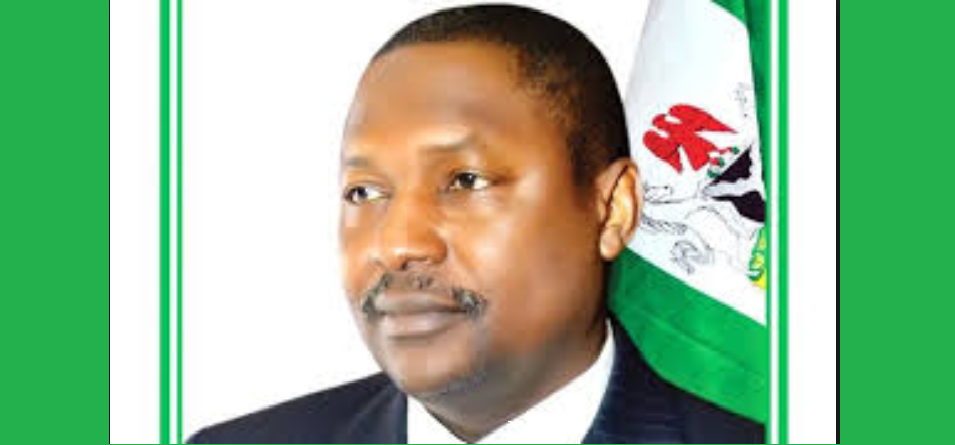
*image: Nigeria’s Minister of Justice and AG, Abubakar Malami
We are fixated on the Over-the-Top (OTT) solution providers like WhatsApp, Skype and WeChat which allow people to consume audio, video and other media services directly, via the Internet, as standalone products bypassing telecommunications service providers that typically function as the gatekeepers of such contents. The implication is that OTT deprives companies like MTN, Glo, Airtel and 9Mobile extra revenues besides what customers have paid them to have access to the Internet.
In most strategy conversations, people are focusing on these OTT companies. Interestingly, there is a huge disruption that is coming which may even deprive the telcos the mere opportunity to even earn at least the fees customers pay them to have access to the web to do the WhatsApp and Skype in Africa. KonnectAfrica is leading that charge and it is ferocious. From a newsletter:
Konnect Africa, the Eutelsat-owned satellite broadband service provider, has unveiled SmartWIFI, a new hotspot service, as part of its ongoing commitment to bring digital opportunities to Africans.
This new service leverages Konnect Africa’s powerful, reliable satellite broadband network to enable sales outlets (retailers, hospitalities, gas stations, etc.) as well as healthcare centres or schools to become a connectivity point and digital gateway to opportunity for the surrounding population. Users will be able to access the internet from a distance of several hundred metres around the hotspot. Access can be extended to several kilometres through off-the-shelf Wi-Fi repeaters.
Users can access the SmartWIFI service through vouchers or mobile payment schemes. In addition, SmartWIFI comes with a unique local data storage system, enabling users in remote areas to access smart digital content free of data charges, including online courses and education programmes, sports and entertainment. Mobile and computer applications will also be available to help support daily business activities.
If this company succeeds, we will see a new basis of competition in the telecommunication sector. While many may argue that satellite broadband may not be as fast as terrestrial broadband, the fact remains that the satellite technology has improved over the years for broadband services. What KonnectAfrica is offering is a threat to the present telcos business models. Satellite broadband cost model is better since it is using satellites, meaning that its products will be cheaper.
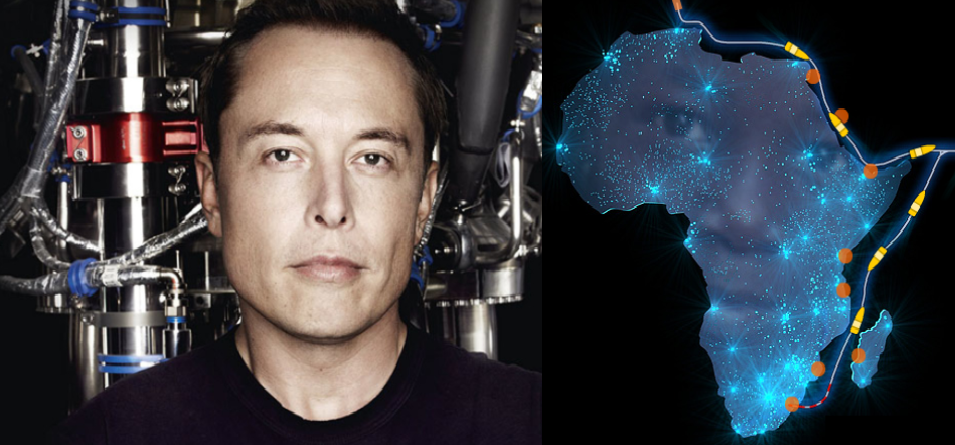
Elon Musk is coming with satellite broadband in 2019 and Africa is one of the main focus areas. Who wants to compete with Musk? He is the most brilliant innovator in our time, and I do think he wants to do good in Africa with these satellites. That means, the price will be low. Innovators offer better services at usually lower costs.
Elon Musk’s SpaceX plans to start launching satellites into orbit in 2019 to provide high-speed internet to Earth. In November, the company outlined plans to put 4,425 satellites into space in a Federal Communications Commission (FCC) filing. But the document gave little detail on the timeline
The SpaceX is expected to cut the cost of broadband in Africa by least a factor of 2. It is going to be a brutal moment in the industry because other players will join the competition. Just as KonnectAfrica is doing, most of these players will bypass the telcos working with schools, churches, mosques, and health centers as business partners to reach their customers. Just like that, terrestrial telcos will be cut-off. The threat is many orders of magnitude to what OTT is giving them today. OTT gives them options to earn internet connectivity revenue; satellite broadband provides a new basis that does not follow their paths.
Meanwhile, many global players have seen that Africa is the growth market for telecommunication services. Nokia and Vodacom have signed partnership to trial “Nokia 5G technology to accelerate the launch of the new technology and enable Vodacom to drive digitalization for the benefit of businesses and individuals in South Africa”. As Vodacom is working with Nokia, MTN and Ericsson have also sealed a deal on 5G trial.
Ericsson and MTN have announced the first 5G trial in South Africa to start in the first quarter of 2018. The two companies signed a memorandum of understanding (MoU) at AfricaCom 2017 to collaborate on the rollout of 5G technologies in South Africa, one of the first in Africa.
In today’s videocast, I make a case that Africa will enter the era of affordable broadband internet in 2022. That will be the year we will begin a new dawn of immersive connectivity where you can eat and surf all you can. Industry players will take off the Internet meter and then focus on service, experience and quality. From satellite broadband vendors to the MNCs with balloons and drones, the sector will become very competitive and service will drive growth. This has happened in the past – every decade, Africa experiences a major industrial transformation. We saw that in banking and voice telephony. 2020s, starting at 2022, will be the decade of immersive connectivity.
All Together
As you build web products and services, have in mind that by 2022, most African cities will be at parity on broadband with most areas of EU and United States. My model and capacity to track technology penetration have given me confidence that our business model can shift to an era of affordable Internet, starting 2022. It will change many things including more global competitors and access to new markets. Even the products we make today which are designed for metered Internet may evolve because Internet will be more affordable: from Facebook to Microsoft, from KonnectAfrica to the telcos, we will see huge price collapse. That will be the beginning of the new era of web business in the continent.
Last week in Lagos, I ran a Board Meeting strategy for a major client. The business had many products and was looking at how to coordinate capital investment to ensure optimal asset allocation and utilization. Our job was to drive the visioning process to make sure investments are synergistic across the product lines. During my work, I introduced my clients to One Oasis Strategy (my phrase) which I have used with major clients in U.S. You will read an extended piece if you subscribe to Harvard Business Review print.
Before explaining the One Oasis, let us refresh what oasis means:
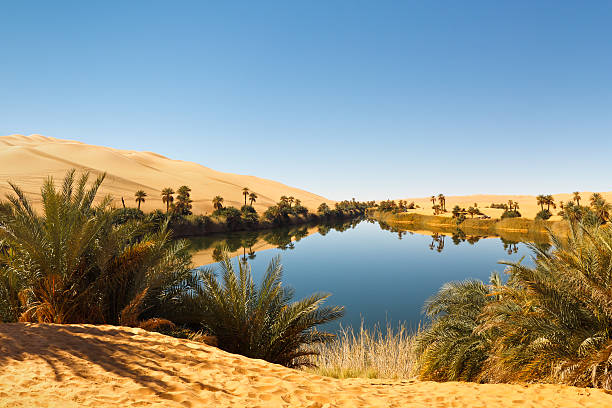
In geography, an oasis is an isolated area in a desert, typically surrounding a spring or similar water source, such as a pond or small lake. Oases also provide habitat for animals and even humans if the area is big enough. The location of oases has been of critical importance for trade and transportation routes in desert areas; caravans must travel via oases so that supplies of water and food can be replenished. Thus, political or military control of an oasis has in many cases meant control of trade on a particular route.
Indeed, oasis is very critical and every company has oasis. Your best product is the oasis in your business. Every other product feeds on that best product. If you build your investment around that main product, you will find success, because those investments will have a clear “customer”, and that reduces market risks. In other words, if your new business investments are geared to support the best product, and the best product is doing well, it means the risks on the new investments will be easily managed. Provided the best product continues to do well, demand on the new investment is assured. That is the One Oasis Strategy.
Every product is like the animal that returns to the oasis for water. Every product is like the humans that depend on the oasis for habitat. Provided that the oasis is there, and doing well, their survivals are guaranteed. Yet, as those new products do well, they could find new customers, beyond the first customer (that best product). That means, you can introduce them to the markets for other customers to buy, even when they are supporting the best product, which is the most important reason the original investments were made.
For my client, we spent time and agreed upon the best product in the business, using many indicators including brand, financials and market positioning like market share, etc. We then worked on how investments could support that best product while also having the capacity to serve the broad market in future. We want the best product to be the category-king and purely peerless in the industry. The massive accumulation of capabilities in the company to deepen its position was designed to make that happen. We structured some business lines and reshaped how some products were made. Simply, we engineered a One Oasis Strategy. I have so much confidence that my client has paid for elite insights.
An oasis (istock photo)
Cases of One Oasis Strategy
In this section, I will explain two companies which have used the One Oasis Strategy.
Amazon: Amazon is an ecommerce company with massive user base. It supports billions of transactions in a year and needs computing resources to keep its portal functioning well. Amazon could have called IBM to rent a cloud infrastructure for its ecommerce. Rather, Amazon decided to build one in-house knowing that the future of its ecommerce will be driven by the capacity to offer great experiences to clients. The cloud infrastructure investment is necessary as growth in the ecommerce keeps going up. It does not make sense to be sending that money away. So, Amazon went and invested in cloud. The ecommerce is the oasis and the cloud is like the animal that finds habitation from the oasis. Provided the ecommerce is doing well, the investment in cloud has minimal risk. The first customer to the cloud business was ecommerce and that means Amazon does not have to worry if there is any external customer for the cloud services. Amazon does not need to check market dynamics to invest in cloud provided its ecommerce business is doing well.
But interestingly, after time, Amazon did find opportunities in the external market to sell its cloud services. Those services are now called Amazon Web Services (AWS). Tekedia is hosted on AWS, just as many websites which include brands like Dropbox and Instagram, present or in the past. The oasis (the ecommerce) has been served by the new product (cloud) and now that new product is making profit for Amazon.
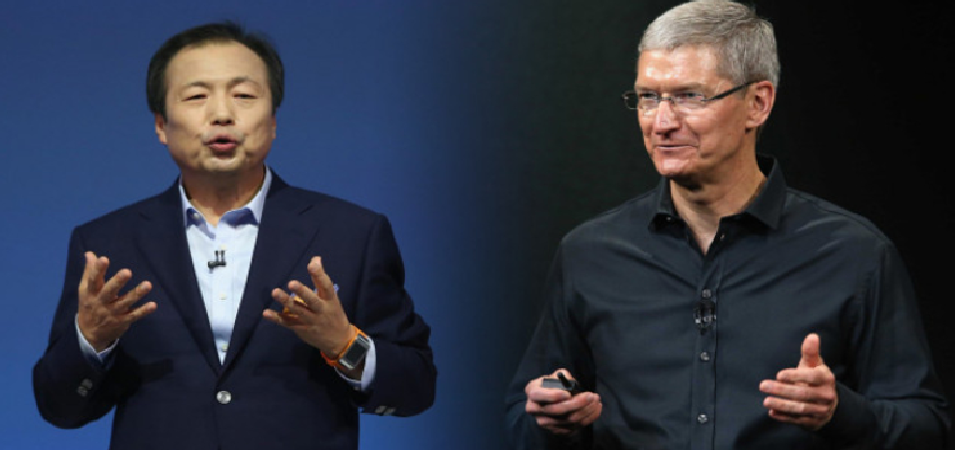
Samsung: In the global semiconductor business, Samsung is one of the most prominent companies. Others are Chartered, Intel, TSMC and GlobalFoundries (old IBM). While Intel makes chips it sells to customers to be bundled in products, it does not have any direct customer-end products of itself. Others are largely pure foundries. But Samsung is different: it makes all these chips, fabricates them, and it has products in the markets that use them. The Samsung Galaxy series is the best Samsung product, an oasis, which the semiconductor is serving.
This is what makes Samsung competition with Apple very interesting. It can afford to invest in new memory chips and OLED display irrespective of what the market trajectories are. Why? The first customer to Samsung semiconductor business is Samsung mobile devices unit. That means Samsung semiconductor has an incentive to innovate because it wants to make the best mobile devices in the world. No other company in the world has those capabilities, at scale, as Samsung.
Between Apple and Samsung, Samsung is a better business in terms of re-positioning, but Apple is a fashionista brand which makes customers great fans. Samsung has better engineering, but Apple builds better customer perceptions on products. But when you look deeper, you will notice that without Samsung, there will not be any Apple iPhone in this world, at least at its quality level. Samsung will make about $110 from each iPhone X sold.
Simply, with this capacity to feed the oasis, knowing that Samsung semiconductor has no risk in the business, it makes it harder for competitors who are in OLED display and memory chips. Those competitors have to find customers, and then get their assurances they will stay with them for long. But Samsung semiconductor has the customer in-house and can wager without any risk since its best customer is a unit in the group business. That explains why Apple has been unable to find an alternative to Samsung in supplying these critical components used in iPhone: no one can take the risk required for innovation unless Apple can lock in for years. But Apple will not do that. So, at the end, only Samsung has the best product. That is the reason why Apple has to use Samsung, its arch-rival.
Apple along with some investors bought Toshiba memory business. Sure, this new business can see Apple as its first customer, based on the One Oasis Strategy, to invest. But with private equity (PE) firms involved, they will not be in a hurry to invest billions required to match Samsung scale. Apple will not just have to guarantee taking those supplies; Apple has to be ready to pay at the rates that PE will like to see. It is not likely that is possible because Apple is a minority investor which will likely look for the best deal in the market. Samsung has the best price along with the best product. Toshiba has to win on both ends.
All Together
The One Oasis Strategy is about finding how to create solutions which can find their first customers within the business. Amazon Cloud has the ecommerce operation as its first customer thereby removing any market risk. Samsung Semiconductors has the Samsung mobile devices business as the first customer. With those assured internal customers, these firms deploy resources, irrespective of the market dynamics, because they have found the first customers already, in-house. But over time, the products are now made available to the general public. You need to identify your best product (the oasis) and get others to find how to build habitations around it.
Since my piece where I noted that Senate President of the Federal Republic of Nigeria, Senator Bukola Saraki, spoke that Nigeria has setup a conference to explore how to regulate Bitcoin, I have read many comments on LinkedIn that this could not be done.
The Senate President noted on the case of Bitcoin as follows:
[…] This is an internet grey area that impacts on real people in real-time. I note that the Central Bank of Nigeria (CBN) and the Nigeria Deposit Insurance Commission (NDIC) have set up a committee to look at the use of bitcoin in this country …as there is clearly a need to establish a framework for the regulation of bitcoin and other cryptocurrencies.
Largely, commentators do believe that Nigeria will not have the capacity to regulate Bitcoin since it is a global digital currency. (My suggestion has been that Nigeria should create its own digital currency and tie it to the Naira to facilitate the efficient functioning of blockchain-based businesses in Nigeria.) Here are samples of the comments:
While rushing into regulating that ecosystem might sound like a smart idea, I personally think that the Nigerian congress is riding a bubble in trying to overinvest and waste their political capacities especially on things that have no direct impact on poor people. Did you advise them during your visit with them to focus on education, healthcare and quality jobs ? Nigerians will benefit from social welfare policy reforms well more than bitcoin regulations. It’s a shame the type of joke Saraki and his colleagues are running in that country .
I do not really like to hear Bitcoin being mentioned on the same breathe with regulation. Preferably, the word – crptocurrency should be used. I am aware that we easily associate foremost brands (eg. OMO as detergents; Indomie as noodles; maclean as toothpaste, etc) with the name of entire products segment. You can only regulate what you can control, so mentioning Bitcoin isn’t helpful here. For those who are against any form of regulation on crptocurrency, the last time I checked, the nations are still being run by governments. So, expecting a fully democratized currency anywhere in the world could be an invitation to chaos. People still work very hard to undermine every decent invention, and crptocurrency is no exception.
Doubt if they do…. They should just be watching… From my Limited knowledge bitcoin is a virtual money not real create by software, Internet and online business…. Money should be a means of trading and savings but bitcoin is only means of trading not savings….. Like you likely said you can’t regulate what you don’t legalize…. But you can’t legalize something in an ecosystem you don’t have full control of…, unless cbn is creating her cryptocurrency…. The idea of setting up committee is by Senate, cbn and ndic is normal but idea of legalizing and linking to Naira is suicidal.
As far as I’m concerned if they knew what they are talking about they’d understand that a cryptocurrency is not a national currency subject to the same rules and processes. Then more importantly a cryptocurrency is an ecosystem not just a coin, the systems and methods to support the ecosystem are more important than releasing a coin. Yes three hundred people can sit in a room clueless
How Government Can Regulate Cryptocurrency
When we talk of regulation, people are increasingly thinking of only supply. That means, if you do not control the supply of cryptocurrencies like Bitcoin, it would be nearly impossible to regulate them. You do not need to have control of the supply side to regulate a digital currency. There are many options available. Here are some ways the Nigerian government can regulate Bitcoin and other cryptocurrencies:
Ban Cryptocurrency: Simply ban the purchase and sales of Bitcoin (and other cryptocurrencies) in Nigeria. When that is done, the banks will be asked to block any transaction going or coming from known cryptocurrency exchanges around the world. It is important to note that you will need Naira to buy the digital bits which are now money. Government can make it illegal for banks to support that. That is regulation.
Make all cryptocurrency-related contracts voidable: If government bans cryptocurrency, any contract or agreement around that currency will not hold up in the court. If the court does not recognize the contracts, that means the currency has been regulated out. This is not hard to do as government can say that paying or being paid with any cryptocurrency is illegal and any transaction based on that is illegal. So, if you bought a car with Bitcoin and the dealer refuses to deliver the car, the court will not be there to help you. It is that simple. From the point of the court, you have done an illegal activity and cannot be protected by the law. Government does not help armed robbers who have disagreements when they are sharing money they have made criminally. Should the robbers go to court (they will not of course), government will lock them up.
Let me explain with Western Union. When Western Union fraud went up online, most U.S. banks deactivated interfaces to Western Union digital API making it nearly impossible to send money via Western Union through money in the banks. So, people would have to go to the bank, withdraw the money, and then visit a local agent to wire the money. Government can ask banks to block all Bitcoin-exchanges. Sure, people can withdraw money, visit the exchanges, and pay cash for Bitcoin.
All Together
I will make this point that regulations do not need to be very sophisticated. At the early phase of the Internet, email and digital documents were not accepted by banks like Zenith Bank Nigeria. I bought the bank’s mutual funds, and when I needed to redeem the investments, they would not accept documents sent over the web. They wanted the documents sent via the traditional mail system or I come in person to sign the documents. I did not like that option but my concern was irrelevant. Then, Nigeria has not updated its laws to make the law admit electronic documents as evidence in the court. As soon as the government did that, all the banks including Zenith Bank started accepting documents delivered digitally.
The European Union had the same issue. Those days after journal papers and conference papers were accepted in the EU, one had to send physical hard copies of Copyright Transfer to the publishing house or conference organizers. But over time, the law was updated: they now accept digitally signed Copyright Transfer.
The point is this: there was a time Nigeria needed to upgrade its law to make email admissible as evidence in the court. You do not want loopholes in commerce and government has obligations to fix any known problem.
Right now, I am not sure if contracts executed on blockchain can be recognized by the court in Nigeria. It is not illegal but at the same time you cannot say that it is purely legal. A law has to make that obviously clear to markets. Yes, simply making that obvious will help many people move into blockchain with certainty that regulations require.
For Bitcoin and other cryptocurrencies, Nigeria can provide clarity without managing the supply side. But the biggest regulation will be plotting a roadmap that will give Nigeria a digital currency it can control to stimulate growth in Nigeria-domiciled (legal jurisdictions) blockchain contracts. That digital currency becomes integrated into our banking system and deliver certainty that will need the growth of our markets.
Apple has a clear arch-rival in the smartphone business: that is Samsung. Though Google Pixel is emerging along with Huawei, the company that keeps Apple awake in the night in the smartphone business is Samsung. Samsung delivers the best Android devices, at scale, which challenge Apple products across many indicators.
Between Apple and Samsung, Samsung is a better business in terms of re-positioning, but Apple is a fashionista brand which makes customers great fans. Samsung has better engineering, but Apple builds better customer perceptions on products. But when you look deeper, you will notice that without Samsung, there will not be any Apple iPhone in this world, at least at its quality level. Samsung will make about $110 from each iPhone X sold.
Samsung actually has a vested interest in the iPhone X being a huge success. According to The Wall Street Journal, the company stands to make around $110 from each phone sold, which all told could result in billions more than the company even made on its own most-recent flagship, the Galaxy S8.
To be clear, all that money will go to Samsung Group, the conglomerate, as opposed to specifically the mobile division of the company. Why the windfall? Samsung made the OLED display, NAND flash, and DRAM chips in the iPhone. It’s currently the only company capable of manufacturing these items at the volume that Apple needs, which means Apple has to buy the parts from Samsung.
If the iPhone X sells the way analysts think it will, that means Samsung stands to make billions of dollars off its competition. In fact, the Journal reports that one analyst thinks Samsung will likely earn $4 billion more from selling parts to Apple than it did from sales of its own phone.
Technically, Apple is equipping its main competitor. For Samsung, that iPhone X is selling very well is not really a bad thing, since that means Apple will need more display and memory chips from it. And should Apple struggle, Samsung can easily fill-up the gap since it has its own big smartphone business.
Personally, I do think that Apple will be having quarterly nightmares whenever it sees Samsung break sales records just as Apple is breaking sales records, especially when Samsung has shot itself in the leg. Apple was the primary reason why Samsung recovered easily from its burning phone scandal: the revenue coming from Apple to Samsung’s chip business was enough to make a huge scandal to fizzle.
So, no matter what Apple does, Samsung will win. If it does not do well in its products, Samsung technology will come after its customers. And when it does well in its products, Samsung components will be needed in huge numbers thereby helping Samsung. So, irrespective of the circumstances, Samsung will profit from or on Apple. I call this Circular Profit.
Simply, you have circled your competitor that no matter any action it takes, you will benefit. When the competitor is doing well, you are also doing very well. And when the competitor struggles, your product fills up the space in the market. Under both circumstances, you will profit from or on the competitor.
What Samsung is doing to Apple is also close to what Intuit has done to some partners with the major difference being that the partners built as parasites within the Intuit ecosystem. Apple is not doing so, as it has a clearly differentiated product despite the fact that it uses Samsung components.
One company that has done that very well is Intuit, an American company that is known for selling tax software. A key attribute of Intuit is giving most things free. You can accuse the firm that it hates revenue. You see competitors building products and solutions on its platforms. But there is a catch: after few years, the competitors become invisible. They become folded into Intuit business in the eyes of customers.
So, for decades Intuit continues to swallow competitors without buying them. I have called its model: Fish Bait Acquisition Construct. It is a model where you give things free to competitors. As they come to enjoy the freebies, you trap them, and over time, they become weak. The end game is that over time, they beg you to take over their assets.
All Together
The finest moment for a company or a nation is when you circle around your main competitor. When that happens, all actions the competitor takes will generate money for you. Head, you win; tail, you also win. Samsung has successfully circled Apple. Largely, if not for global regulations, Samsung can decide if Apple will have iPhone X in the market tomorrow. It can simply says “Apple, we cannot supply to you”, but that of course will not happen because Samsung wants to move products out of the factories.
At national level, colonizing states like France and Britain have circled most African countries, profiting from any action they take. If Cameroon grows its economy, France will have more markets to ship consumer products for the citizens since nothing of value is made in Cameroon. And when Cameroon struggles, France also fills up with loans which ensure that the nation is tethered to France. And if crises happen, be sure that France is going to supply the ammunition. Simply, under all permutations, France will profit from the conditions in Cameroon.
The relationship between Apple and Samsung is unprecedented. And I do think that there is an inherent risk element there as we expect the $1 trillion Apple valuation very soon. But of course, Wall Street does not see it that way, and for Apple that is all that matters. But whether it hurts Apple or not, I do suggest you never allow your main competitor to circle you. You must work to accumulate capabilities to mitigate such scenarios from happening.
Apple’s business model is what i call *Design, Outsource, Assemble & Market* (DOAM) Model. They design what they want and it is usually sleek, custom made and can be perceived to be better than what is already available for example their System On Chip (SOC) and then outsource the fabrication. Taiwan Semiconductor Manufacturing Company (TSMC) manufactures Apple’s chips while Apple assembles, program and markets.
Samsung on the other hand uses a model i call *Design, Manufacture & Market* (DMM) Model. Apples DOAM Model has been profitable over they years that they stopped using Samsung chips and launched the A-series SOC. Then out of nowhere, Samsung made the first and only breakthrough in OLED Screen Technology. They are the only ones that can Mass produce OLED Screens on Planet Earth at this point in time.
Apple’s Marketing Strategy is to *WOW* their customers but their isn’t much about the iPhone X that would wow anyone up to the point of spending $1,000 to purchase an iPhone X if you take away the OLED Screen which is the latest innovation in Screen Technology and that is exactly where Samsung got them.