DD
MM
YYYY

PAGES

DD
MM
YYYY

spot_img

PAGES

Home Blog Page 7282

The $25 Million Afro-Unicorns

0

In a piece in the Harvard Business Review last year, I noted the need for African entrepreneurs to calibrate their levels of enthusiasm as they pursue the lofty ambitions to build startups with valuations of at least a billion dollars.  A billion dollar valuation makes a startup a Unicorn. I enjoy it when I read African founders confidently posit that they would build a billion dollar business.  That is a good race for the continent. However, it may not be necessary.

As an entrepreneur, I do believe such an imagination misses the key point. While New York and Silicon Valley with their cousins Paris, London and recently Shenzhen influence us, we are not in the same league with them. I mean, the GDP of the United States is about 40 times the size of Nigeria’s GDP. Nigeria is perhaps the largest economy in Africa. So, if Nigeria is that far behind, using purchasing power parity and common sense calibration, our unicorn number should be around $25 million. In other words, an afro-unicorn is worth $25 million.

That may not make guys feel great because we like to talk big, but it is a sensible number to begin. That does not mean that we cannot get to $100 million. Sure, they will come. Without a strong middle class and infrastructure, it makes us look highly unserious to be making noise of $1 billion unicorns in Africa.

I met a young man in Kigali, Rwanda who explained to me how his startup would be the first unicorn, not the afro-unicorn, in his country.  I did not have to remind him that the GDP of Rwanda remains less than $9 billion. Sure, he plans to build a business of $1 billion valuation because the Internet can make it possible. He would scale from Rwanda to all places Napoleon set his feet and beyond. Simply, I commended his efforts but challenged him to get that business to a valuation of $10 million in Rwanda first. That would be the unicorn the country can cherish, and believe.

In business, they talk of fundamentals. In valuations, we use those fundamentals to evaluate all opportunities in the business and arrive with numbers that make sense on its value. There is a limiting factor in anything because the world, according to Pythagoras, is made up of numbers. If an American entrepreneur that helps people to wash their clothes, when they are at work in Google and Amazon, says he could build a $1 billion business, he may. Why? He has the numbers. But that does not mean that someone who plans to do the same business in Chad can get there. Chad has a number that makes that practically impossible today. So, when the Chad-based entrepreneur drops the world “unicorn”, he or she diminishes the ecosystem before investors: local and foreign. It shows absolute lack of awareness and understanding of the business environment.

I am certainly not against people dreaming high, but to ensure it is not as a result of malaria, we need to ascertain where the dream ends, and reality sets in. Africa’s unicorn number today is $25 million and if you can build a company that gets that valuation, you have done well. Congratulations. The western unicorn breed is a valid pursuit but passing the test to the afro-unicorn should anchor your strategy.
Beyond Cost-to-Income Ratio In Nigerian Digital Banking And Fintech

0

Winning  the competition in the Nigerian digital banking and fintech sectors will be determined by the ability to change the basis of competition, over mere cost management. GTBank keeps delivering its category-leading cost-to-income ratio at sub-45% (2017 H1 was 40.2%), but that does not mean much in the digital banking era. Why? We may not even have cost to start with. The numerator of the cost-to-income ratio will tend to zero in coming years and that will be the new normal.

Within a decade, moving money around the world will be free. It is already done. Circle which received funding from Goldman Sachs allows Americans and Europeans to move money at zero fee across the Atlantic.

The future of lending, remittance and payment processing costs will be zero because technologies will reduce the friction which makes the need of having companies necessary.  If buyers and sellers can come into direct contract at minimal friction, many industries will go. I expect ICT utilities like Google, Amazon and Facebook to simplify the use of blockchain within five years. If they become simplified like that of using or paying with debit/credit card, the world will change.

In this video, I explain how the Nigerian digital banking and fintech sectors will evolve in coming years. Brace for cost-to-income of sub-10% and any firm that cannot deliver that will fade.


Nigeria’s Central Bank Bitcoin/Blockchain Moment

4

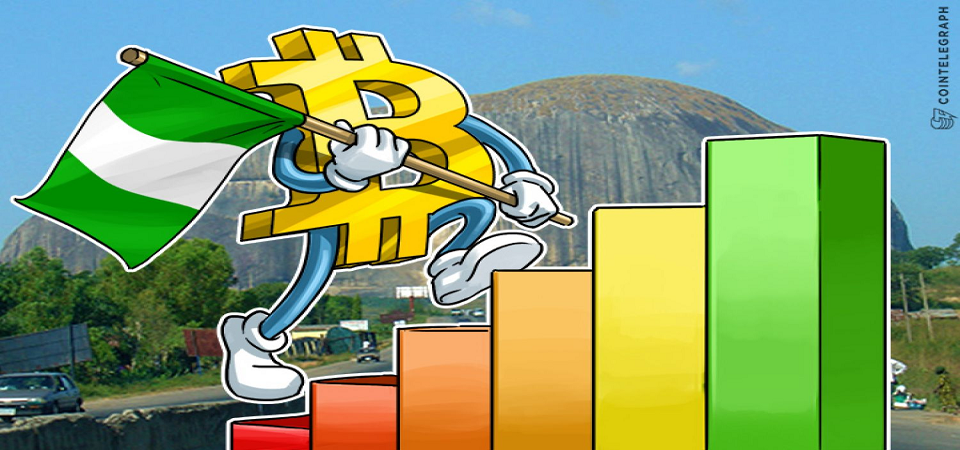
I see the fusion of blockchain and cryptocurrency from two angles and in both, Nigeria can play  major roles in West Africa if not the whole continental Africa. First, Nigeria can become a trillion dollar economy by making Lagos or any of the major cities the hub for digital currency/blockchain innovations. Nigeria needs sandboxes for testing models for digital currency and blockchain across industrial sectors including banking, insurance, real estate and more.

The Central Bank of Nigeria needs to put smart regulations for cryptocurrency and blockchain and make Nigeria the preferred destinations for innovations in these areas. Globally, the plan to stifle the adoption of these emerging technologies is not a smart policy. There is no technology that rises the way blockchain has done that vanishes without impacts.

In less than a decade, Bitcoin and blockchain are now household names. They are for real. Yet, that does not mean the former is safe. We must stay ahead and lead Africa, at least, and make our country the centerpiece of the digital future.

Secondly, why I may not believe in Bitcoin, I have so much confidence in the durability and sustainability of blockchain.  Since the leading nations like U.S. and Germany have refused to regulate these new technologies, Nigeria has an opportunity to lead and enjoy the benefits inherent in them. Whether the world likes it or now, Bitcoin or its incarnate under the architecture of blockchain is certain to be part of future commerce. The earlier we understand that and make it legal, the better.

According to the Bloomberg, it seems the moment is emerging. Simply, Nigeria’s Central Bank cannot ignore digital currencies. The best strategy for us will be to issue our own digital currency and tie it to the value of the Naira.

The world’s central banks can’t ignore the growth in cryptocurrencies and may at some point have to consider whether it makes sense for them to issue their own digital currencies, according to the Bank for International Settlements.

“Whether or not a central bank should provide a digital alternative to cash is most pressing in countries, such as Sweden, where cash usage is rapidly declining,” the BIS said in its quarterly review. “But all central banks may eventually have to decide whether issuing retail or wholesale CBCCs makes sense in their own context.”

In making these decisions, institutions will need to take into account of not only privacy issues and efficiency gains in payment systems, but also potential economic, financial and monetary policy repercussions, according to the BIS.

It is already happening with the “Dutch central bank having created its own cryptocurrency, albeit for internal use only”, according to the referred report. In March, Federal Reserve Governor Jerome Powell had acknowledged that U.S. is also exploring the technology. They have to understand challenges around cyber-attack, privacy and counterfeiting. Nigeria needs to do likewise and begin that trajectory of working to make sense on how we can play a major role in the future digital currency. A good idea will be to tie that currency to our national currency, just as the BIS suggested in the report..

According to the BIS, one option for central banks might be a currency available to the public, with only the central bank able to issue units that would be directly convertible with cash and reserves.

The Big Tech Utilities

Many people like Bitcoin but to use it is still hard. I expect the ICT utilities like Google and Facebook to simplify it. Google is marching on that path with its payment API update which can in theory “accept” Bitcoin.

According to Gaundry, the new functionality that enables bitcoin payments is meant for accepting future payment methods that don’t fall under the official list of methods. So, in theory, the API could support any currency as long as it has a three-letter code. Talk about competing currencies; merchants can potentially accept any digital currency under the sun. By using bitcoin as an example for how this new utility works, though, Gaundry — intentionally or not — has suggested that the future might already be here.

We do not need Bitcoin but Nigeria needs a digital currency tied to the Naira that will enable the efficient functioning of the blockchain infrastructure which I expect to evolve in coming years in the nation. If the Central Bank blesses such a plan, we will experience a virtuoso innovation system in redesigning the architecture of some of our industrial sectors and make them more efficient even while being cost-efficient. As I noted in my entry on Blockchain Africa, blockchain has a promise for Africa. Nigeria just have to find a way to lead in that promise atleast in West Africa where its impact is huge.

Blockchain can be deployed in agricultural value chain, insurance, pharmaceutical supplies, peer-to-peer trading and lending, cross-border commerce, banking and other sectors in the continent. This underlining technology that supports Bitcoin, the crypto-currency, offers many capabilities to power new forms of business models owing to its consensus-driven decision architecture and trust networks. Blockchain delivers reliable, quality and verifiable data which enables assured digital identity during transactions. Bankymoon, a blockchain-based smart metering solution provider for power and utility grids, and BitPesa, a startup that enables trading on digital currency, are examples of the applications of blockchain to businesses. Another company, EnLedger, uses blockchain to combat fake drugs besides other applications like energy, law and land management. Circle, a startup funded by Goldman Sachs uses blockchain to make international remittance done at zero cost to the customers

All Together

The reason why we need leadership from the CBN is that without its ratification, the investing community will not support most of the blockchain-based projects in Nigeria. The reason is simple: you can build a blockchain-based remittance and CBN can ban it from being connected to our financial system. So, a regulation is needed for all the stakeholders to have clarity on the way forward. That will help unlock opportunities in the ecosystem.

Blockchain Applications in Africa

2

Bottomline: New technologies are emerging around the world. They include technologies like cloud computing, blockchain and AI (artificial intelligence). Among them, blockchain is one of the most fascinating in that it can change the basis of competition across many industrial sectors. In this section, I explain the numerous opportunities available for African entrepreneurs and startups […]

To access this post, you must purchase Tekedia Mini-MBA (Feb 9 – May 2, 2026) | $170 or N120,000.

How To Win Nigeria’s Digital Banking Competition

0

Nigeria’s GTBank key enabler which has helped it to run efficiently delivering industry-leading 40.2% cost-to-income ratio (CIR) will anchor its scalable advantage into the digital domain. At this low CIR number, the bank is strategically positioned  to lead the new ecosystem of banking: digital. Simply, when the cost of doing business is cheap, a firm enjoys huge advantage in the competition. Yet, this digital banking competition is still open.

Yes, any Nigerian bank or fintech can win the digital banking competition. The key element is managing your marginal cost to be as low cost as possible, thereby making it possible to enjoy scalable advantage. Once that is done, other benefits will fall in line. If the marginal cost does not tend to zero, the fintech or bank will struggle to enjoy a huge scalable advantage that will deliver scale within the unbounded distributed internet channels.

Internet makes it easy to have low marginal cost, a major contributor on top of the broad ICT productivity gains we already enjoy on our businesses. With the low marginal cost, digital products do better. This ability to scale massively on internet via possibly zero cost is the reason why blockchain poses a threat to the banking industry. Blockchain technology can attain that zero marginal cost thereby moving customers to blockchain-based platforms. The key competitive weapon is any technology that delivers zero or near zero marginal cost.  I recommend for Nigerian banks and our fintechs to critically examine the adoption of blockchain in their business processes.

Back to GTBank, it may be having a CIR of 40.2% but blockchain can make digital banking to deliver 5%. If that happens, you have changed the basis of competition. When that happens, you are talking of disruption.  Any bank or fintech that gets ahead will have an immense advantage. I expect these evolutions as Internet matures.

  • Remittance: As internet matures and the core elements developed, the world will have one “currency” and the elements of remittance will not be needed. Besides, the transfer of funds, if necessary, can be done without fintech in the midst. We already have companies doing remittance for free between U.S. and Europe. In future, that will not be a service because technology will make Internet to get all nations and their currencies to converge.
    • Within a decade, moving money around the world will be free. It is already done. Circle which received funding from Goldman Sachs allows Americans and Europeans to move money at zero fee across the Atlantic.  And that reminds me, if you have a technical team, put efforts to see how blockchain can improve your business process and save you so much money
  • Payment: In a blockchain, no one  will need a bank or fintech to facilitate payment. The buyer and seller can exchange blockchain transactions to effect deals. It is going to be an advanced mPesa where buyer pays seller through the mobile number, except that mPesa is not owned by any corporate entity
  • Lending: With most frictions gone, lenders will lend to borrowers and all contracts sealed in the open general ledger of blockchain. The need for fintechs and banks will be limited.

What To Do

You must find a technology strategy to have a marginal cost as close to zero for you to win.  Blockchain may be that path today.