DD
MM
YYYY

PAGES

DD
MM
YYYY

spot_img

PAGES

Home Blog Page 7286

Beyond Facebook, the Opportunity for Real-Identity Social Media

0

Facebook is doing great. But in the next fifteen years, if Facebook does not evolve into a real-identity social media, it will struggle. As banking, insurance and more services move social, we will need social commerce. That social commerce will be anchored on real identities. Facebook does not have that today. Anyone can create a Facebook account without the real authenticity as maintained by government.

This assertion goes beyond government efforts to track its citizens. As China modifies its laws to demand that users of social media sites use their real names before they can be on registered, with posting/commentary privileges, on websites, phone apps and digital forums, other countries will pick that and adopt the philosophy. In Africa, Cameroon may prefer that over shutting down Internet. Eritrea and Sudan may join easily, telling citizens to use their real-identities on social media.

Starting Sunday, backstage real-name registration is a must for all Chinese Internet users before they can post comments on platforms in China.

Without registering their real identities in the background, previously registered users cannot post anything, including replies to posts, on Chinese platforms, said the circular released by the Cyberspace Administration of China on September 7.

Users, however, do not have to reveal their real identities on the frontstage of the platforms.

‘‘Such rules will apply to all websites, phone applications, interactive public platforms and any other communication platform that features public opinion on news or with the nature to mobilize the society,” stipulates the circular.

Screen bullets, or known as danmu in Chinese, together with other forms of posts that include such things as emojis and pictures also fall into the regulation scope, as explicitly stipulated in the circular.

The new law is simple: you can be on social media with a fake identity but you cannot have a voice unless you are real. By demanding this, fake news will be managed and decency online will be enforced. Of course, government will be watching. But they are already watching.

Outside China

Initially, this will be a very hard business model to execute outside China. But what I do believe is that some Chinese companies will perfect this and when they do, they will export the ideas to the world. These firms will work to find value in everyone using real identities online. If China makes it easier for people to get services online seamlessly, some will forget the privacy issues and go real in other countries. Over time, more people will register with their real identities. I do believe that as social media matures, there will be a convergence between online persona and the real persona of users. China could be providing a solid case with the new law to test how this will work at scale. Using real-identities online will unlock more opportunities and seed a new business model across many industrial sectors. No one knows but China will offer a case study in coming years.

All Together

I do not think this real-identity social media will work in Africa at the moment. So, there is no need wasting resources pursuing it. My recommendation will be to monitor how the new law in China is utilized not just by the government but by companies. If a social media account can be used seamlessly to provide insurance, it means that “Twitter” handle can become a trusted identity since that is tied to government records. The use of real identities online has a promise but no one knows the full implications.

Is there a collective power that once you take a loan, you may be worried that if you do not pay, your social networks will know because your social media account is tied to that loan? Can companies create products that will appeal to you based on that social connection? It is too early to ascertain all the possibilities but if we run the meatspace (i.e. offline) with real identities, I do think in the near future, internet and social media will need to be managed with real identities. Doing that may not necessarily be bad, if the government element is taken out. Businesses will find more opportunities to provide services right in the places where customers are spending time.

Ideas Everywhere, But No Products – The Problem with Africa’s Inventive Societies

3

There is no problem in electricity, road construction, transportation or agriculture that someone has not thought about in Africa. From our universities to our research institutes, we have inventions (yes, ideas) for most of the challenges. But despite these inventions, we do not have the products as we continue to experience poor electricity supply, poor roads, poor transportation networks, etc. If you visit food and drinking joints across most African cities, you will be amazed on ideas emanating from people on how to fix our challenges. Indeed, our continent is rich in invention. We are creative.

However, Africa struggles on innovation. That transition from invention to innovation remains our weakest link. We have the idea on how to pipe water from the ground in the Savannah for people to drink. Yet, we do not do it as people continue to struggle with clean water. We have the idea on how to provide the electricity. Yet, it has not been done. So ideas everywhere, but we struggle on product scarcity.

There is a fundamental reason why we have ideas everywhere but people cannot find products to buy. We are inventive but we are not innovative. In this video, I explain how we can change that by looking at more than 500 years of data on the acceleration of human capability to transition from inventive societies into innovative societies in the Western World. I also provide a key enabler that made that transition possible.

I am revisiting this topic as I continue to struggle on our readiness on building the core pillars to accelerate innovation as I did note in my new book – Africa’s Sankofa Innovation.

There are things which you cannot leapfrog, but you can create new basis of engagement. That you are sending drugs with drones to villagers does not mean that we do not need roads for farmers. That you are using mobile apps to bank does not mean that banks should not have rural branches to support farmers and traders on their financial strategies. By trivializing our deficiencies through the ephemeral modern technologies, we lose the capabilities to architect an enduring future for innovation.

Replicating Equifax’s Positioning

0

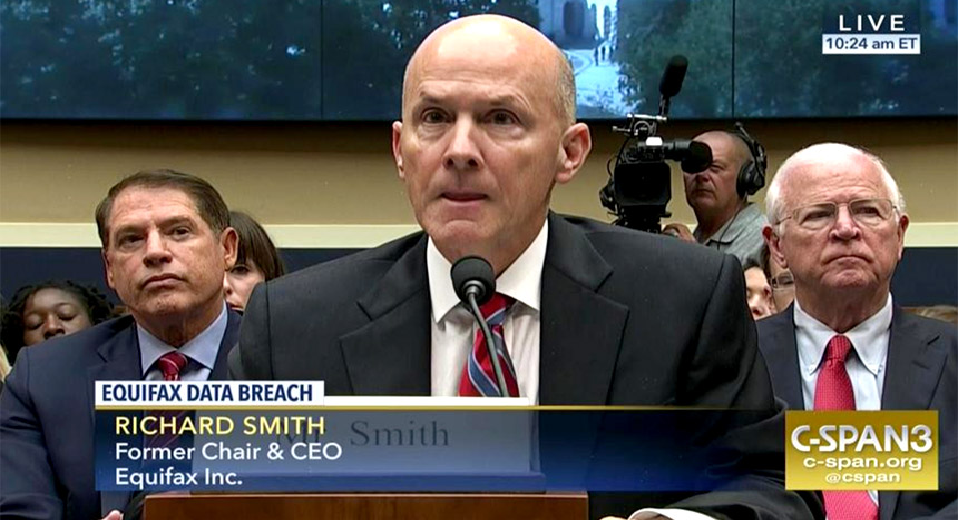
Equifax was hacked and excess of 143 million people private data were compromised. Bad people could use the data for identity theft resulting to years of nightmare to the people affected. U.S. Congress and American residents are unhappy. That is rightly so because Equifax was careless. It dropped the ball on the most important raw material of its business: the people’s data.

In a prepared testimony ahead of his appearance before a congressional panel, former Equifax CEO Richard Smith said he was “deeply sorry” about a data breach last month that exposed the personal data of more than 143 million consumers, saying his company “failed to prevent sensitive information from falling into the hands of wrongdoers.”

But as you look into this mess, there is something that is clear: Equifax has a business that is extremely well positioned that even in this mess, it can still profit. I mean, Equifax can be making money even as it is causing mayhem in the lives of American residents. Here are some ways Equifax is profiting:

  • Equifax offers enhanced credit monitoring to the same people its data breach is causing harm. So Equifax wants the customers to pay for services to help protect their identities from being used for fraud
  • LifeLock, a specialist on identity theft protection, which is experiencing massive business boom due to the Equifax data breach, buys its credit monitoring solutions from Equifax. Simply, even if you do not want to work with Equifax directly and decide to buy solutions from LifeLock, you will still be sending money to Equifax
  • U.S. Internal Revenue Service, the tax collection institution, signed a $7.25 million contract with Equifax just as the break was made public in September. The deal is for tax fraud detection and prevention.

Sure, Equifax will pay tons of money through class action. Trial lawyers are already circling. Yet, despite that, it is very evident that this company has deep positioning in the market. It can win on any side of the coin: head or tail.

Think about it, and see how you can build a company that can be structured with such deep positioning that even in crises, your customers will need your services, business partners will sell your services, and the government will come to you and buy your solutions even when you are the main catalyst of the mayhem. Its deep positioning is something every brilliant entrepreneur must aspire to replicate in its industry.

Usually when crises come, people run away from companies. But here, citizens are running to Equifax, partners are selling its solutions, and government needs Equifax help. Its positioning is very uncommon in markets.

Towards Africa’s Knowledge Economic Communities

0

About half a century ago, African leaders established the Organization of African Unity partly to promote socio-economic structures aimed at improving the welfare of the citizens and general integration of the continent. But owing to decades of political tensions and weak economic infrastructures, the goals have not materialized.

The success of the single European currency, Euro, which has become very central to many recent transformations in Europe by offering more efficient means of transacting businesses and using the human and institutional capabilities of the continent to foster more prosperity has shown the power of integrated monetary system in a globalizing world. As the world moves towards knowledge-based economic structures and data societies, which comprise networks of individuals, firms and nations that are linked electronically and in mutually dependent global relationships, the power of a single African currency has become very important.  A single African currency, if realized, would radically redefine Africa’s social, political and economic landscapes and position the continent on a solid footing to tackle the enormous challenges of the 21st century.

This plan is poised to offer an African market with reduced internal barriers in which the free movement of goods, persons, services and capital is ensured due to lesser friction associated with currencies. A single currency stands for an Africa of unity, integration and strength. However, there is a possibility of potential failure of a single currency if implemented haphazardly with enormous consequences to not only Africa’s image but also the member states’ economies and, ultimately, the citizens.

Irrespective of the challenges and opportunities, a single currency will not just solve Africa’s problems overnight and it would be a mistake to hedge all the future developments of this continent on this venture.

As the continent continues to work towards realizing the United States of Africa (by the way, I prefer, Union of African States), it is important that we evaluate this project beyond politics and solidarity. While it is possible to be carried away by the success of Euro, it is imperative that African leaders understand that the EU has been cooperating for decades and it took many years to realize the single currency after the Treaty of Rome. Signed by six nations  (France, Germany, Belgium, Italy, Luxembourg and the Netherlands) on 25 March 1957. The Treaty created the European Economic Community (EEC) that provided the foundations for European unity based on the common values of peace, freedom, equality, the rule of law and democracy. Today, the EEC (yes, Euro Zone) is the world’s largest free trade area.

An African equivalent of the Treaty of Rome is the Abuja Treaty signed on June 3, 1991. That Treaty created the African Economic Community (AEC). AEC provides the platforms for larger African market for negotiating favorable trading terms bilaterally and globally, boosting investment and economic diversifications. A larger market will support economies of scale, better market access and production efficiency through competition.

In addition, economically integrated Africa could provide stable exchange rate, increase cross-border trade with efficient banking clearing and payment systems. There will be more potentials for improved consumer welfare, stronger political and security ties in the continent. It promises to offer better fiscal and monetary cooperation among states with long-term macroeconomic stability.

Nonetheless, despite these potential benefits, the problems of poor transport and communication structures in Africa continue to limit more intra-regional and intra-continental trades among members. The incessant political tensions across the regions continue to affect the creation and expansion of trade. From South Africa to Nigeria, African nations continue to trade heavily with their ex-colonial rulers over African Union partners. As a result, many African products get to member states via Europe. For many of the fiscally undisciplined nations, a loss of national autonomy on macroeconomic policy could be challenging. Losing autonomy on currency devaluation and revaluation, fiscal and monetary policies on interest and exchange rates will present major worries across African capitals.

How this integration will play out is still not clear. Take for example, the Francophone Africa is considered an ‘undertrader’ despite the CFA franc zone having one of the most extensive monetary unions in the world. Projected data in case of doubling of trade (from integration) suggests that some of the five regional economic communities will have net welfare gains, while others will have losses. Yet, while the feasibility and desirability of a united African currency union could be debatable, the structure and dynamics of the globalizing world makes economic integration a necessity if the continent must survive global competition.

All the continent has to do is to approach the adoption of the single currency cautiously. African Union must work to strengthen the regional economic communities (REC) for better currency unions and financial integrations.  This will involve transforming them, I suggest, into Knowledge Economic Communities (KEC) where knowledge will become the main factor of production with coherent trade shocks among member states. This means more funding for science education, better information networks and transportation systems, revamped innovation and entrepreneurial environment and vibrant democratic institutions. Afterwards, these KECs will converge to a single African economy of one currency to be managed by a continent-wide supranational central bank. A knowledge economic Africa with our vast resources will transform every aspect of modern commerce and industry and move millions out of poverty.

Authentic And Sustainable Scalability

0

Bottomline: Few days ago, we discussed scalable advantage and quantified how companies can ascertain their capabilities to scale by looking at their marginal costs, distribution channels, market sizes and industry. In this piece, I explain how that scaling can be done in the most authentic and sustainable way. You want durable scalability: ability to grow […]

This post is only available to members.