DD
MM
YYYY

PAGES

DD
MM
YYYY

spot_img

PAGES

Home Blog Page 7291

The Innovation Constitution

1

Technology is the leader of the enterprising world. And it leads using a constitution. Unlike the traditional political structure, this constitution is Algorithms written by engineers, scientists, etc and not congressmen and politicians.

The global competition is largely who has the best technical group to write the best one; in this case, Algorithms, that comprise of patents, technical processes, tools, and so on. As a nation develops, adopts, applies and diffuses appropriately the contents of this constitution, it elevates the lives of its citizens. The more innovation a nation pursues, the more it refines this constitution.

Economists have shown a correlation between Knowledge Economy Index (KEI), productivity and standard of living. The challenge for any nation is to improve its KEI number. Doing that involves good education, economic regime and other variables that help to improve technology capability.

The age of natural resources dominating global commerce and industry is gone. What matters now is creating knowledge and applying it. Some nations will create, others will merely consume. But wealth is concentrated at the creative stage and nations that focus on consuming, without creating technology will not prosper.

Even with abundance of natural resources, which in many instances, the consuming nations cannot independently process without the knowledge partners will not change this trajectory of limited national wealth without technology creation.

The Layers

On this basis, I separate the two layers where nations use and compete with technology as upstream and downstream layers. It is like a two layer pyramid where the downstream is at the bottom with the upstream seated on top. What happens here is that some nations focus on the downstream layer while others combine both the downstream and upstream layers.

The most advanced nations combine the two layers as they seek international competitiveness. They provide technology roadmap that looks at the future and have plans to take advantages that technology brings. They create and develop things and in the 21st century are classed as knowledge driven economies. In those nations, there is plan for continuity and technology succession.

For the other nations, usually developing, they compete at the technology pyramid primarily at the downstream layer. They lack the know-how to create things and commercialize technology intellectual properties. The nations are not driven by technology, rather commodities. They are prone to trade shocks and are usually economically non-vibrant. They fail to create wealth using technology and participate in the pyramid as consumers or prosumers.


Let me illustrate using Nigeria where they speak the language of petroleum. In the petroleum industry, there are the downstream and upstream sectors. While the upstream focuses on exploration of crude oil, downstream does the distribution and marketing.

The money is in the upstream sector, a major reason we have the foreign partners concentrated therein. That is where the knowledge creation is done and utilized in the industry. I am cautious to say, without the knowledge partners in Nigeria, helping to explore this crude oil, Nigeria cannot mine this product. Verdict: the oil will be there and of no tangible economic use.

This will follow a pattern where villages have water underneath them but no drilling expertise to harness the water for cooking and drinking. That is the problem of anchoring national strategy at the downstream level. It lacks inventiveness.

In Africa and many developing countries where ICT has been embraced, they rarely know that there is more value than what ICT gives them. Sure ICT has helped many developing countries to improve their business processes, tools and people. They are so excited on the powers of quicker and faster communication. They savor the wonders of email, Internet and mobile phone and many more. These experiences are primarily on marketing, distribution and installation of these ICT systems. They rarely make them and can only play at the downstream layer.

The Limit of ICT

Their economists point out repeatedly the innovations ICT has brought to the economies. I agree, ICT is wired for innovation in so many areas. Nonetheless, the good news is that there are more benefits up in the pyramid if you move up to the upstream layer. By not creating technology, our techno-economic benefits are limited and this will not change until we move up the pyramid.

Though this point can be illustrated with any technology, I will use the ICT because it is common and familiar to people. I have already illustrated the point in the petroleum industry where many developing nations depend on petroleum refining technology of the developed countries to extract the oil. Even if they develop technologies for the distribution, the upstream idea will triumph. Nations make more money to license technologies at the upstream level compared to the downstream.

Back to ICT, the upstream level will involve designing computing systems, cellphones, routers, device drivers, and all other infrastructures that enable ICT revolution. Instead of importing the latest cellphones, we will think how to design them. In 80% of the developing nations where mobile technology is used, less than 2% of the technologies are designed and manufactured there.

Yes, there are businesses that distribute and sell these gadgets and make marginal profits. They can import a laptop from China at $500 and sell to their customers at $650. Because the barrier to entry is so weak, the margins are small. Everyone is selling and there are shops everywhere. They are technology firms to their nations because they can load the software and configure the networks and get the laptop working.

Compare that with giants like Intel and AMD that take a piece of sand (silica) and process it. At the end, that piece of sand of say a $1 can be sold for $3,000 because of the knowledge involved to transform the sand to a microprocessor. That is knowledge and the very best of human imagination and creativity. It is playing technology at the upstream level and that is where the value is.

Nations win at the upstream level. The sales margins are huge because the products create a niche, and in most cases, are innovative with few players participating. It is not just the trade or margins that benefits. Upstream technology layer create good jobs, whether in developed or developing nations. Some of the best jobs in Africa are in the oil giants where upstream technology rules. You create enviable good jobs for the citizens. They have the money to spend and lift other areas of the economy. They hold jobs that bring honor and dignity and they use their brains to shape the world.

You can make the same case for Pharmaceutical firms that mix elements, compounds, etc to create drugs. Some of the drugs are really expensive but the ingredients are cheap. People pay for the R&D invested in developing that drug. In developing nations, they focus on marketing and selling the drugs. As in petroleum, ICT, it is all about the downstream. Why the big Pharma can have margins of 1000%, these entities can barely command 6% margins.

All Together

So in essence, in this century, there are opportunities for nations. For developing nations, if they continue to compete at the downstream layer of the pyramid, they will find it hard to move forward since competition is basically synonymous with technology. There is more risk, more knowledge requirement and more value at the upstream. And we need to get there.

How do we do that? Our nations must have fundamental changes in our national policies on technical education or better Science, Technology, Engineering and Mathematics (STEM). That is the answer. I believe in knowledge and education evolves it. It is about expansion of commitments on microelectronics, nanotechnology, biotechnology, mathematics, chemistry, physics, computer science, engineering, medicine, and so on and within a generation we can become players at the upstream level of technology pyramid. And reap that great value therein.
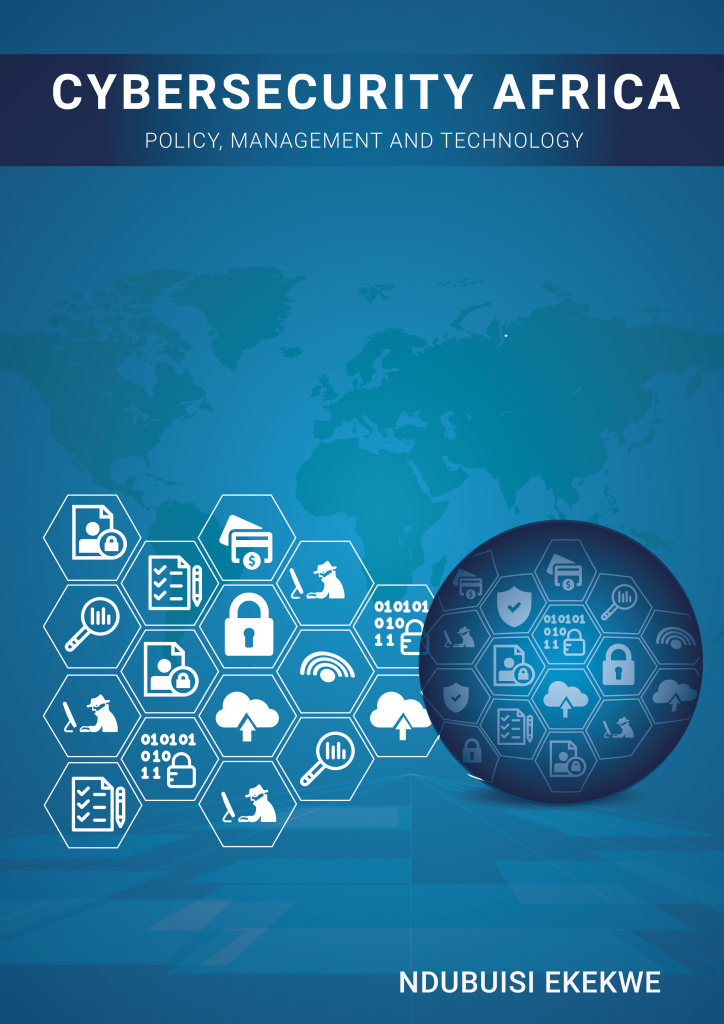
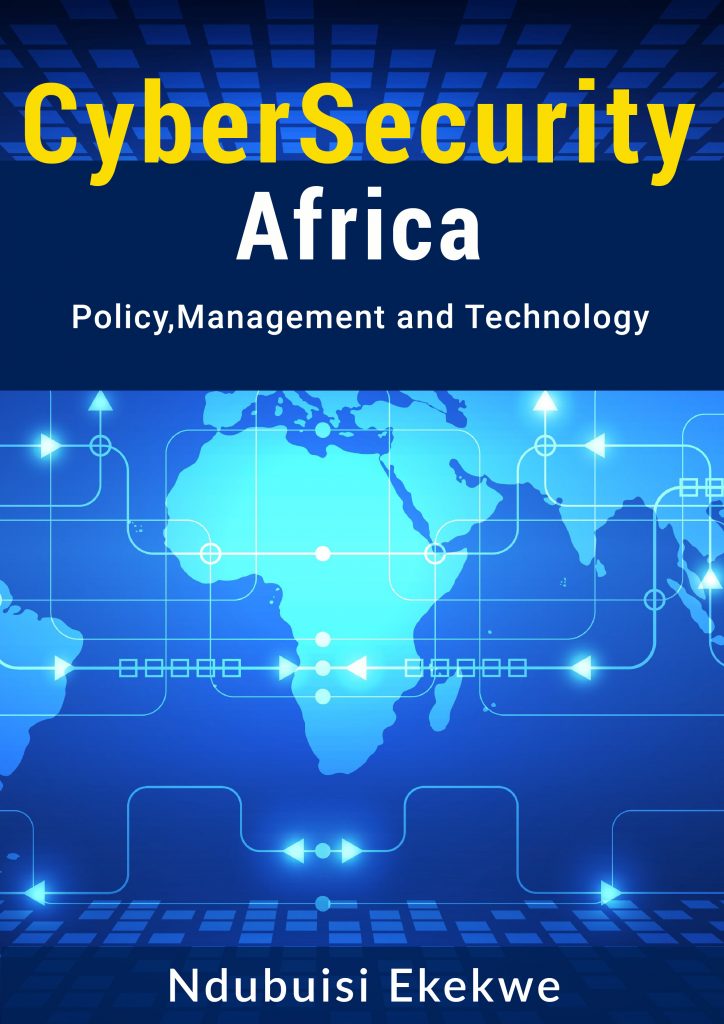
New Cybersecurity Book Design – Help Us Select The Best Cover

0

Good people,

Thank you for the help during the selection process for the cover of Africa’s Sankofa Innovation. That support has helped us to get traction with the book.

Now, I will need another support to help us select the best cover for a new book – Cybersecurity Africa: Policy, Management and Technology.  This new book is due next month. You can comment below or email my team. (I personally like #1.)

Thanks

#1


#2


#3


#4


#5


#6


#7


#8


#9


#10


#11


The Netflix Africa’s Effect, DStv and Showmax Adapt

0

The future of video-on-demand (VoD) market in Africa is beginning to evolve. iROKOtv was one of the pioneers of the digital VOD sector in the West African market. South Africa’s Naspers, Africa’s most capitalized business, with its brands lead the Southern African market through clusters of brands like MutiChoice, DStv, GoTV, etc. These African companies have stimulated the markets to get the attention of many international brands like Netflix.

The reason the VOD market is evident: Africa’s smartphone and mobile internet penetrations are improving. With the higher penetration, everyone wants to come in and competition goes up. DStv  and Showmax are changing strategies to better position the brands to compete.

In addition to getting access to Showmax’s catalogue of more than 25 000 TV series episodes and movies via the DStv Explora decoder, DStv Premium customers will also be able to access Showmax via the DStv Now app on their mobile device, media player or smart TV or watch online via a PC or laptop….

The Showmax subscription gives customers access to two concurrent streams on different devices, so parents can watch their shows on the big screen while the kids watch cartoons on their tablet. Showmax also gives customers the option to download up to 25 TV shows and movies to their smartphone or tablet for viewing later. It’s perfect for long road trips and flights.

To make accessing Showmax hassle-free, a link will be added to the DStv Now app and the DStv Now website. Premium customers can use up to four mobile devices such as smartphones and tablets to access the DStv Now app.

The simple fact is this: with Netflix in the region, growth is going to become harder and every local VOD player must find a way to differentiate its offering. DStv and Showmax want to combine their contents to deliver more value and through that compete. Distribution is vital and DStv has it. Showmax localized model will ride on that. At the end, the two combos will have the capacities to hold their terrains in the age where Amazon Prime and Netflix are coming to Africa.

The Players

Africa’s VOD is growing and very dynamic. Unlike text, there is no requirement that one has to be educated to read the contents. So technically, video has the full African market for itself provided the videos are produced in the languages of the customers.

There are more than 180 VOD platforms with focus on Africa and black culture. The same report noted that only about 6% of African web traffic is video related. This means that growth still awaits.

Netflix is now in Africa, delivering services to most parts of the continent except perhaps Somali and Sudan where US government has trade restrictions for U.S. companies.

Naspers, Africa’s largest company, owns ShowMax which is huge. This innovative firm has also added Econet Kwese TV which is delivered via satellite.

iROKOtv is the undisputed leader in West Africa, delivering high quality local contents. When it launched in 2011, it was followed by Kenya’s Buni.tv in 2012. Later, South Africa’s Wabona and West Africa’s Afrostreamm backed by Y Combinator. Some of these companies have merged resulting to Restless Global, Trace Play, etc. Wabona has since shut down. There is also Ericsson Nuvu, South Africa’s Vidi and many other small players across the continent. Sure, most of those startups will fade. But that should not be the end of the story.

All Together

I am expecting Amazon Prime to join in coming months as the company works towards its global domination. As I noted few days ago, Amazon will come via its best product which is ecommerce and using that will expand to sell services like Alexa, Amazon Prime and the Amazon Web Services. They have the scale and capital and will surely compete vigorously. The future of this sector will largely be driven by capacity to create highly differentiated and exclusive contents which can be distributed at scale. The local ones may have to adapt as DStv and Showmax have done. Also, more of them may need to merge because scale matters. This is a market in motion and it will be all good for the customers.

The Option for NigComSat’s Future

3

Our dynamic Honourable Minister of Communications, Mr. Adebayo Shittu, has noted that the Nigerian Communications Satellite Ltd. (NIGCOMSAT) would be commercialized in order to position it for relevance and growth. Mr. Minister is perfectly correct. NIGCOMSAT has failed Nigeria, and it is very shameful. Nigeria sent satellites to the space without a single strategy on what to do with them. That is why after years of operating satellites, through our international partners, we have failed to unlock the values to improve the lives of our citizens. That is typical Nigerian: buy the car first, before you even consider going for driving test. Yes, they wrote the plan to send the satellites to the space, but none to make use of the downward signals.

Mr. Adebayo Shittu, the Minister of Communications says Nigerian Communications Satellite Ltd. (NIGCOMSAT) will be a competitive commercial service provider via commercialisation.

Shittu said this in a statement signed by Mr Henshaw Ogbubike, the Deputy Director, Press in the ministry on Monday in Abuja. …

The minister said that ever since the launch of NIGCOMSAT 1R in 2011, several efforts had been made to optimise the value of the satellite success.

He said that the recent initiative to introduce Direct-To-Home Television Broadband and Global Positioning Services was the first attempt to commercialise NIGCOMSAT 1R and appropriately position the company in global 86 [billion] dollars annual revenue industry.

NIGCOMSAT, Nigeria (Source: Daily Trust)

But what the honourable minister plans to do may be too late for NIGCOMSAT unless the agency plans to launch new satellites. That will be a big mistake in this era of national austerity. The launched satellites are already old and are not optimized for most of the emerging opportunities today. Private satellite companies will do better than government, and that is the reason why government must sell NIGCOMSAT through a competitive bid. It is hopeless for government to continue to try. NIGCOMSAT mission is clear but it does not need to execute it for Nigeria,

NIGCOMSAT Ltd owns and operates the Nigerian Communications Satellite systems. The NigComSat-1R system is built to provide domestic and international satellite services via a 2 way satellite communications service across West, Central, South East Africa, Europe and Asia. Our main focus is to operate and manage the Nigerian Communications Satellites to provide on commercial basis, comprehensive transmission services via digital or analogue systems and to operate same by either fixed or mobile satellite, direct broadcast satellite services, end to end solutions and to engage in transponder leasing and such business for profit.

The Emerging Opportunities

Beyond TV, broadband and GPS services, satellite could help Nigeria unlock value in the agriculture sector. However, it is not very clear  if the resolution of NIGCOMSAT satellites can deliver some of the services required in the emerging fields.  Satellites can help detect pests, drought, diseases and other major challenges farmers deal with daily. Also, satellite can help in data transmission between farms and data centers where the data will be processed for insights. Nigerian farmers need this support. However, NIGCOMSAT is not positioned to deliver it. Besides agriculture, there are also opportunities in the defense sector.

All Together

There is a huge opportunity in the global satellite business which is estimated at $86 billion. At the moment, Nigeria loses $2.2 billion yearly owing to low adoption of satellites, according to Daily Trust. By commercializing NIGCOMSAT, Nigeria will reap huge benefits from the nation’s investments. The privatization must be competitively done to avoid the NEPA tragedy where privatization has brought nothing but more darkness. The nation must sell to quality companies with capacities to operate downside satellite operations. The minister got it right, and we hope he executes the privatization efficiently.

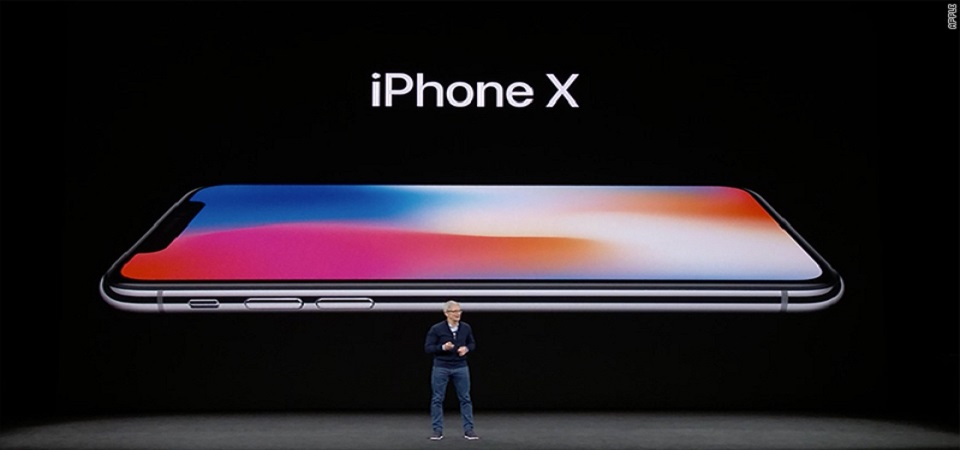
The Fashionista’s iPhone X

2

Apple pivots into a fashion company, in the likes of Louis Vuitton, with the launch of iPhone X today. It costs $999, heavy on fashion elements, but hardly moves the technology trajectory. But that does not matter, because it is Apple. The world will cover it for free, and Apple will enjoy a great earned media. From CNN to NBC to Nigeria’s AIT, the message will be the same: there is a new product from Apple.

“We have great respect for these words and don’t use them lightly,” said Cook, adding the new phone would set the path for technology for the next decade.

The new iPhone X kills the home button to make space for a larger screen. It has an edge-to-edge display, glass on the front and back, wireless charging so you can leave wires at home, a surgical grade stainless steel band around the edges. It’s water and dust resistant.

The 5.8-inch OLED display isn’t just bigger, it also packs 458 pixels per inch. Apple  calls it a Super Retina Display. It supports HDR, has a million-to-one contrast ration and improved color accuracy. …

The company also introduced a Face ID-enabled feature called Animoji, which serves up animated emoji that mimic your facial expressions. For example, you’ll be able to give your friends side-eye as a unicorn.

Apple deserves its moments. But when a phone costs $999, it is simply not a phone anyone. That is a paycheck to many people. Also, that will not matter because Apple has a strategy to deal with this pricing as I noted in a piece this morning.

In the coming months, we will all know how it works out for Apple. But no matter how you see this, Apple has entered a territory that may be the inflection point. This will either lead it to a more glorious future or could begin to open the opportunities for rivals, especially Huawei, to peel its fans (yes, the customers).

Fans pay for tickets and those tickets are never free. If you like a team and cannot pay to watch it, you are not a true fan. Apple fans will now have to pay $999 to become true believers. How many can go this path? We do not know. Apple has a record of making analysts look silly as it delivers great results. But this one may be different.

The Data Challenge

Apple needs data to compete against Amazon/Google in the new data war. When its phone is expensive, that is not a fine strategy to get that data. A premium product, differentiated by hardware and exclusively packaged by a proprietary software, is never going to be for the mass market. Is there a limit to this strategy? Apple will have to deal with these issues with this rising price:

  • Data is Critical. Right now, Apple is not collecting any data from the “poor world” for iOS, its operating system. The rich people will not be enough for the AI-first world. It needs all the data to help it make better products. A cheaper phone will help Appple
  • Car infotainment: In the next few years, many car companies will begin the adoption of mobile OS like Android and iOS at scale, as they bridge the gap between mobile and car. Since cars are sold in the emerging world, familiarity with OS will be a huge factor in adoption. Apple needs to ensure it has a cheap phone that will help introduce these citizens to the iOS
  • Emerging World is huge: Apple does not have any major strategy to win places like Africa. That is a big mistake because these areas will grow over time. Apple cannot just forget them. It needs a strategy to have them in its ecosystem.
  • Other Products/OS: Google Assistant or Amazon Alexa can possibly become the voice operating system of this era. You will like it to be in your ecosystem. The more the users, the better. If Apple remains the phone of the rich, developers may not just take it the way they will take Android which remains available for both the rich and poor with its wide range of devices, at different pricing points. So, it makes sense for Apple to expand the customer base.

All Together

I do think in coming months, Apple will return to the podium. It will introduce a cheaper phone for the emerging markets. This fashionista moment will come home.

Introduce a phone brand called Apple and make the price $350. Make the design of Apple (the phone brand) to be radically different so that you do not cannibalize the premium iPhone. By having these two brands, Apple can compete in both the upper and lower segments of the markets. We will have Apples in Nigeria while they will sell their iPhones in New York. This is similar to Toyota selling Lexus and Honda selling Acura.


Check out this iPhone manager to transfer photos, videos, songs, contacts, etc. from your old iPhone to iPhone X.