DD
MM
YYYY

PAGES

DD
MM
YYYY

spot_img

PAGES

Home Blog Page 731

Top-Performing Cryptos Today: Why BlockDAG, Stellar, Sei, & Cardano Could Dominate in 2025

0

The 2025 crypto market is shaping into one of the most opportunity-rich periods in recent years, with select projects showing strong technical setups, rapid ecosystem development, and robust investor backing.

For those analyzing the top-performing cryptos today, a few standouts combine market momentum, practical use cases, and identifiable growth drivers. From strategic presale opportunities to bullish chart patterns, the pace of change is fast, and the advantage belongs to those who act on reliable signals.

This review highlights four strong candidates: BlockDAG, running a record-breaking presale with real utility; Stellar, breaking out of a bullish technical formation; Sei, scaling rapidly in DeFi; and Cardano, sustaining a significant rally. Each presents distinct reasons to watch closely, whether for near-term performance or long-term positioning.

1. BlockDAG: Record-Breaking Presale with Product Rollouts

BlockDAG has secured a top spot among the top-performing cryptos today, offering a structured early-stage entry point. With its presale batch priced at $0.00276 and a confirmed $0.05 listing later in the year, the potential return approaches 30x for those positioned early.

This presale isn’t just about capital raise; it’s backed by measurable progress. BlockDAG has already secured $370 million in funding, moved 25 billion coins, and built a base of over 200,000 holders. Its 2.5 million X1 mobile app users and 19,100 ASIC miner sales indicate strong network activity well before the mainnet.

Adding to its strategic edge, BlockDAG has introduced a Demo Trading Dashboard, allowing participants to refine strategies ahead of public launch.

2. Stellar: Bull-Flag Breakout Suggests Continued Gains

Stellar continues to validate its place among the top-performing cryptos today, breaking out of a bull-flag formation, a pattern often preceding sustained upward movement. Current technicals point toward an eventual target of $0.67, with liquidity levels clustered at $0.42 acting as a near-term checkpoint.

Over the last 24 hours, Stellar has gained 12.3%, topping the CoinDesk 20 index and strengthening investor confidence. With the RSI at 62.4, market conditions remain balanced, leaving room for further upside. The upcoming Protocol 23 governance vote could provide the next spark for continuation, making Stellar a candidate for both tactical trades and strategic holds.

3. Sei: Expanding in DeFi with MetaMask Integration

Sei has firmly established itself as one of the top-performing cryptos today, especially with the recent MetaMask integration expanding access to dApps, tokens, and NFTs on its network. With $4.68 billion in daily stablecoin volume, Sei is surpassing many DeFi competitors in raw transaction activity.

Market projections point toward potential moves toward $4, driven by consistent protocol improvements and a visible rise in both institutional and retail engagement. For investors looking for immediate market traction paired with scalable infrastructure, Sei’s momentum makes it a high-priority watch.

4. Cardano: Sustained Rally with Strong Support Levels

Cardano’s recent performance solidifies its position among the top-performing cryptos today, with ADA rising over 30% in the last month. Bulls have defended the $0.80 level, while resistance at $0.74–$0.76 remains the key short-term hurdle. Breaking above could set the stage for an 85% rally.

Open interest and on-chain participation are trending upward, reflecting active involvement from both traders and long-term holders. Combined with strong community support and a resilient technical structure, Cardano has the capacity to maintain momentum if market conditions stay favorable.

Four Projects, One Theme, Strategic Growth

The standout performers in the top-performing cryptos today share a common thread: measurable progress backed by clear technical or ecosystem-driven catalysts. BlockDAG offers early-stage pricing at $0.00276 alongside tangible product developments and large-scale network activity. Stellar is technically aligned for further gains, Sei is achieving standout performance in DeFi adoption, and Cardano is proving its resilience with steady growth.

For buyers, the message is straightforward: in a market full of distractions, these assets provide both data-supported potential and actionable opportunities.

Nvidia Rebuts Chinese State-Media Claims Over H20 Security; Analysts Warn of Risks to China Market and U.S.–China Talks

0

Nvidia on Sunday forcefully denied new accusations from Chinese state media that its H20 artificial-intelligence chips pose national-security risks for China, calling the claims false and reiterating that its products contain no “backdoors” or remote-shutdown functions.

The criticism came from Yuyuan Tantian, a WeChat account affiliated with state broadcaster CCTV, which published a post saying the H20 chips were “neither technologically advanced nor environmentally friendly” and alleging they could perform functions such as “remote shutdown” through a hardware backdoor.

The article concluded with a consumer warning: “When a type of chip is neither environmentally friendly, nor advanced, nor safe, as consumers, we certainly have the option not to buy it.”

A Nvidia spokesperson told CNBC in response that cybersecurity is a core priority and that “NVIDIA does not have ‘backdoors’ in our chips that would give anyone a remote way to access or control them.” The company earlier rejected similar accusations, including suggestions that the chips contain a so-called “kill switch,” and reiterated those denials again in comments over the weekend.

The H20 chip was developed as a China-compliant product after U.S. export restrictions in late 2023 barred the sale of Nvidia’s most powerful accelerators. The chip is a less advanced alternative to Nvidia’s flagship models, such as the H100 and B100; it was designed so the company could legally serve the Chinese market while complying with U.S. rules. In April, the Trump administration briefly banned H20 exports to China, but the ban was reversed in July after intensive lobbying and high-level discussion, including interventions by Nvidia CEO Jensen Huang. After the reversal, licenses to ship the H20 resumed, although the episode left lingering political and regulatory sensitivities on both sides.

Nvidia has faced real financial pain from the disruption: the company took a $4.5 billion writedown on unsold H20 inventory in May and has said its top-line guidance for the July quarter would have been about $8 billion higher without the export restrictions. Despite the backdrop, Nvidia’s shares have held up: they closed at $182.70 on Friday, up around 1% for the day and roughly 36% year-to-date.

Chinese authorities have also taken a formal interest. Beijing’s cyberspace regulator summoned Nvidia for questioning amid concerns over alleged backdoors and has publicly pressed the company to provide convincing security assurances. State outlets such as People’s Daily have echoed the demand that Nvidia demonstrate the chips are safe if it hopes to rebuild trust with Chinese buyers.

Accusations Pose Risk to Nvidia’s China Market Strategy and Broader U.S.–China Tech Diplomacy

Analysts believe the escalating dispute over Nvidia’s H20 AI chips has the potential to reverberate far beyond a single product line, threatening the company’s competitive position in one of its most important markets while adding new complexity to the ongoing U.S.–China technology standoff.

Chinese state media’s framing of the H20 as “neither environmentally friendly, nor advanced, nor safe” is not only a public relations blow but could also influence procurement decisions in both the public and private sectors in China. Given the country’s growing emphasis on indigenous chip development and technology self-reliance, the allegations — including the claim of a potential “remote shutdown” hardware backdoor — feed into a broader narrative that foreign-made chips pose security vulnerabilities. Even if Nvidia has firmly denied these accusations, the perception alone could impact buyer confidence, especially in strategic industries like defense, telecommunications, and AI research, where trust in the supply chain is paramount.

For Nvidia, which has hoped to resume H20 shipments to China after the Trump administration lifted a prior ban, this is a delicate balancing act. CEO Jensen Huang has backed Trump’s broader tech policies while lobbying for export licenses that would allow Nvidia to sell more advanced chips to the Chinese market. His argument that U.S.-made chips becoming the global AI standard strengthens American influence is now challenged by Beijing’s messaging, which portrays the H20 as a compromised, second-tier product compared to Nvidia’s flagship H100 and B100 chips.

The timing of these accusations is particularly significant as Chinese officials push for the U.S. to ease export restrictions on high-bandwidth memory chips ahead of a possible Trump–Xi summit. Nvidia’s position in China and the political optics of U.S. tech dominance could become part of the negotiating equation. If Chinese buyers scale back purchases, either in response to political pressure or over perceived security risks, Nvidia risks losing market share to domestic competitors such as Huawei’s Ascend series or other state-backed chipmakers.

Economically, Nvidia has a lot to lose. China is one of Nvidia’s largest markets, and the company has already taken a $4.5 billion writedown on unsold H20 inventory this year, warning that July-quarter revenue would have been $8 billion higher without export restrictions. Any further contraction in Chinese sales could weigh heavily on its growth trajectory, particularly if the slowdown coincides with intensified domestic competition in the U.S. and Europe.

Bullish Setups Spotted Across HYPE & SEI Price Charts, But Demand Hits Hardest at Cold Wallet: 2M Users Onboarded Overnight!

0

Bullish setups are surfacing across the board. The SEI price chart just triggered a Supertrend flip, an indicator that previously marked major rallies, putting a potential move toward $0.54 in sight.

The latest Hyperliquid news is even louder: 35% of all blockchain revenue in July, $2.66 billion in Phantom Wallet trading volume, and 21,000 new users onboarded in a single month.

But while both charts hint at green, one opportunity isn’t just forming, it’s vanishing. Cold Wallet’s (CWT) $270 million acquisition of Plus Wallet has instantly added two million active users, and demand hasn’t stopped climbing. Over $5.9 million has already poured into its presale. At $0.00998, Stage 17 still offers a 3,424% projected ROI, but every new entry shrinks that number, and stages are closing fast!

SEI Price Chart Hints at Bullish Reversal Signal

The SEI price chart may be flashing a key turning point. Analyst Ali (@ali_charts) noted that the Supertrend indicator has flipped green right at the base of SEI’s channel, a technical cue that previously signaled strong rallies. If SEI follows its historical pattern, a move toward $0.54 could be on the table.

Other weekly indicators confirm this outlook. The RSI sits at a neutral 51.3, leaving room for upside. Altogether, the SEI price chart suggests a breakout scenario might be taking shape, with bulls gaining traction.

Hyperliquid News: Platform Dominates July Blockchain Revenue

Hyperliquid news is heating up as the platform raked in 35% of all blockchain revenue in July, outpacing even Solana in on-chain trading activity. The Phantom Wallet integration alone generated $2.66 billion in volume and brought in 21,000 new users, marking one of the biggest monthly expansions in DeFi this year.

Meanwhile, the HYPE token rebounded from $37 to $40, forming a clean V-shaped recovery pattern. With the HIP-3 upgrade on the horizon, Hyperliquid news suggests it’s not just a trading venue anymore; it’s positioning to be a full-blown Web3 powerhouse.

Cold Wallet Absorbs 2M New Users, Presale Approaches $6M Fast!

Cold Wallet’s recent $270 million acquisition of Plus Wallet is a clear signal of its potential dominance in the self-custody space.

The acquisition brings in over two million users, all of whom joined Plus Wallet in just seven months. These are users already onboarded, already active, and now being folded into an ecosystem that rewards every action through CWT, Cold Wallet’s native token.

What does this mean for the presale? A lot. With Stage 17 already live and 703 million tokens sold, buying pressure is building fast. Over $5.9 million has been raised, and each presale stage pushes the entry price higher. Traders joining now at $0.00998 are still staring at a projected 3,424.85% ROI based on the $0.3517 launch estimate, but every stage closed tightens that number.

This hasn’t gone unnoticed. Whale activity is increasing, with larger allocations flowing into Cold Wallet as big players move in ahead of the integration. The logic is simple: two million more users equals more wallet usage, and more usage means higher demand for the token that powers the rewards behind it.

Cold Wallet isn’t selling promises. It’s acquiring users, rewarding activity, and already proving demand at the presale level. As whales continue to take the early seats, retail participants could find themselves buying in at a much steeper price, with far less room for upside.

Which Is the Top Crypto to Buy Now?

The SEI price chart just triggered a Supertrend reversal near support, hinting at a potential move toward $0.54. Hyperliquid, meanwhile, pulled in 35% of all blockchain revenue in July, with $2.66B in Phantom Wallet volume and 21,000 new users joining in a single month.

But traders are increasingly considering Cold Wallet to be the top crypto to buy now for several reasons. A $270M acquisition just added 2 million active users to its ecosystem, and its model rewards every action, including gas, swaps, and fiat ramps, with CWT token incentives. Now in Stage 17 at $0.00998, the presale has raised $5.9M, with a projected 3,424% ROI still live for those who move before the next stage shuts the gap further.

Explore Cold Wallet Now:

Presale: https://purchase.coldwallet.com/

Website: https://coldwallet.com/

X: https://x.com/coldwalletapp

Telegram: https://t.me/ColdWalletAppOfficial

Nigeria’s Non-Oil Exports Surge 19.6% in H1 2025 to $3.23bn, Driven by Value Addition and Market Diversification

0

Nigeria’s non-oil exports grew sharply in the first half of 2025, reaching $3.225 billion — a 19.59% rise from the $2.696 billion recorded in the same period of 2024, according to fresh data from the Nigerian Export Promotion Council (NEPC).

The figures, announced in Abuja on Sunday by NEPC Director-General Nonye Ayeni during the presentation of the H1 2025 Non-Oil Export Performance Report, show that export volumes also climbed to 4.04 million metric tonnes, up from 3.83 million metric tonnes in H1 2024.

The performance builds on a strong first quarter, when exports hit $1.791 billion, up 24.75% from $1.436 billion in Q1 2024. Volumes for that period surged 24.3% to 2.416 million metric tonnes, suggesting the momentum is more than seasonal.

Ayeni said the scope of products leaving Nigeria’s shores continues to widen. In H1 2025, 236 distinct products were exported, up 16.83% from 202 products a year earlier. These ranged from agricultural commodities and extractive industry products to manufactured goods and semi-processed items.

She highlighted a slow but steady shift away from a purely agricultural export base toward higher-value semi-manufactured goods, which fetch better prices on the international market. Cocoa beans retained its top spot in the export mix, accounting for 34.88% of total export value, compared with 23.18% in H1 2024. Urea and fertilizer products ranked second at 17.65%, up from 13.78% last year.

AfCFTA and value addition drive growth

Ayeni credited the African Continental Free Trade Area (AfCFTA) with boosting Nigeria’s export prospects by opening new markets across the continent and lowering tariff barriers. This, she said, has encouraged more Nigerian exporters to explore opportunities beyond traditional partners.

The NEPC chief also pointed to a shift in export strategy: more businesses are investing in product transformation before shipment, leading to higher returns.

“The non-oil export of Nigerian products is gradually diversifying from traditional agriculture exports to semi-manufactured products,” she noted.

Ayeni said the council’s intervention programmes — from training on quality standards, packaging, and certification to guidance on export documentation — have made Nigerian products more competitive abroad. These initiatives, she explained, have been particularly important in meeting the standards of emerging markets such as India, Brazil, and Vietnam, which, along with several African nations, have driven much of the recent demand.

The export gains align with President Bola Tinubu’s Renewed Hope Agenda and the Ministry of Industry, Trade, and Investment’s push for a more diversified, resilient economy. Ayeni reaffirmed NEPC’s readiness to deepen collaboration with stakeholders to further boost export value and volume.

She said the combination of market expansion under AfCFTA, rising global demand for value-added goods, and government-backed capacity building has created the conditions for sustained growth in non-oil exports — a sector long seen as critical to reducing Nigeria’s reliance on crude oil revenues.

However, experts warn that while the latest figures are promising, they are not yet enough to transform Nigeria’s economic fundamentals. The country’s import dependence — especially for refined petroleum products, machinery, pharmaceuticals, and key industrial inputs — continues to offset export earnings. This means that any trade balance improvement could be quickly eroded if global oil prices dip or domestic manufacturing fails to scale up.

Additionally, the volatility of the naira remains a pressing concern. The recent export boost has provided some foreign exchange inflows, but sustained stability will require consistent export performance, diversification into higher-value goods, and a clear fiscal strategy to reduce reliance on foreign debt. Analysts stress that without long-term reforms — including infrastructure upgrades, energy reliability, and streamlined export procedures — the momentum could fade.

Overall, the export gains mark a rare positive note for Nigeria’s economy in 2025, offering policymakers a window to reinforce currency stability, encourage industrialization, and reshape the nation’s trade profile. The challenge will be ensuring that this short-term progress becomes the foundation for sustained growth, rather than another fleeting bright spot in an otherwise volatile economy.

Chinese State Media Escalates Security Criticism Of Nvidia’s H20 Chips, Says It’s Not Safe For China

0
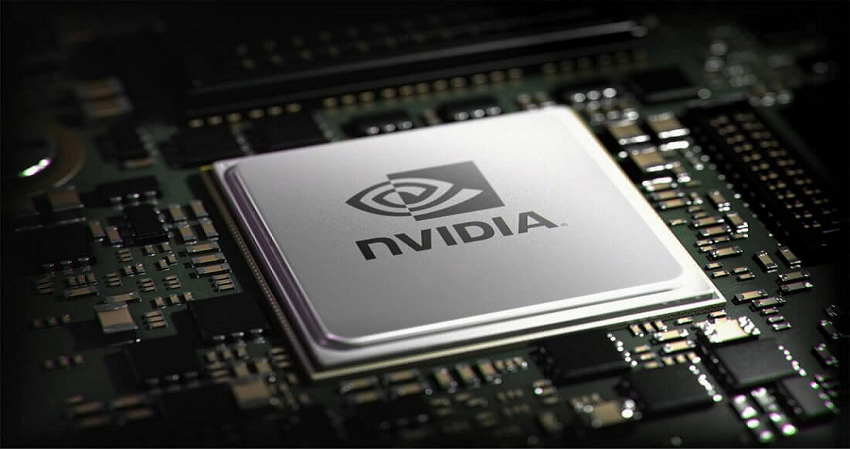
Nvidia chip

China’s state media has intensified its criticism of Nvidia’s H20 artificial intelligence chips, alleging potential security vulnerabilities and dismissing them as neither technologically advanced nor environmentally friendly.

The latest remarks, published Sunday on Yuyuan Tantian, a social media account affiliated with state broadcaster CCTV, come days after Beijing formally questioned the U.S. semiconductor giant over alleged “backdoor” risks.

The H20 chips—specifically designed for the Chinese market after the U.S. government imposed sweeping export restrictions on high-performance AI processors in late 2023—have become a lightning rod in the broader tech and trade standoff between Washington and Beijing.

Security Allegations and Beijing’s Official Probe

On July 31, China’s Cyberspace Administration summoned Nvidia executives for a closed-door meeting, demanding an explanation over concerns that the H20 chips could contain hidden hardware mechanisms enabling remote shutdown or unauthorized access—so-called “backdoors” that bypass normal security protocols. Such vulnerabilities, if proven, could theoretically allow foreign actors to disrupt AI systems or siphon sensitive data without detection.

Nvidia has repeatedly denied the allegations, stating both in July and again on Sunday that its products contain no such backdoors. The company maintains that the H20 chips were engineered to comply with U.S. export controls while meeting Chinese market needs, and that all of its hardware undergoes rigorous security testing.

Yuyuan Tantian’s post, published on the popular WeChat platform, struck a tone blending consumer caution with political signaling: “When a type of chip is neither environmentally friendly, nor advanced, nor safe, as consumers, we certainly have the option not to buy it.”

The post also claimed the chips could enable “remote shutdown” capabilities via hardware-level vulnerabilities, echoing growing security concerns in Beijing. The criticism follows a similar call from People’s Daily earlier this month, which urged Nvidia to provide “convincing security proofs” if it hoped to restore Chinese consumer confidence.

A Chip Born of Political Compromise

The H20 was born out of an awkward compromise. In April, the Trump administration banned its export to China over national security concerns, but President Donald Trump reversed the ban in July following high-level talks with Nvidia CEO Jensen Huang. Licenses to sell the chip in China were subsequently granted—albeit under an unprecedented condition that Nvidia must pay 15% of its H20 revenue from Chinese sales to the U.S. government, a first in American export control history.

Implications for the U.S.–China AI Arms Race

Beijing’s latest accusations appear aimed at undermining the H20’s credibility in the domestic market while reinforcing China’s push for indigenous semiconductor development. Industry analysts say the criticism is not only about the chip’s technical merits but also part of a broader narrative to cast U.S.-made AI hardware as unreliable or compromised, mirroring U.S. rhetoric against Chinese telecom and technology companies in past years.

Washington’s export restrictions have already triggered a reshuffling in China’s semiconductor industry, with domestic players like Huawei’s Ascend chips and startups such as Biren Technologies racing to fill the gap. Analysts warn that if China blacklists the H20, it could accelerate local chip self-reliance — the very outcome U.S. trade policy sought to slow.

This backdrop makes the stakes higher for Nvidia. China is both a major revenue source and a politically sensitive market, and any sustained consumer backlash could erode its position just as Washington is using export controls and licensing deals to limit Beijing’s AI capabilities.

The H20 chip has become more than a piece of silicon—it is now a symbol of how technology, economics, and national security are being negotiated in real time between the world’s two largest economies, especially as U.S.–China trade talks resume.