Sign in
  • Click here - to use the wp menu builder
Sign in
Welcome!Log into your account
Forgot your password?
Terms & Privacy
Password recovery
Recover your password
Search

DD
MM
YYYY

Logo

CATEGORIES

  • Home
  • ENROLL
  • Contact
  • Forum
  • School
  • Tekedia Capital
  • Blucera
  • Home
  • ENROLL
  • Contact
  • Forum
  • School
  • Tekedia Capital
  • Blucera

PAGES

  • School
  • Capital
  • Contact
  • Blucera
  • AI Consulting
  • Store
Facebook
Instagram
Twitter
Vimeo
Youtube

DD
MM
YYYY

Logo

spot_img
  • Home
  • ENROLL
  • Contact
  • Forum
  • School
  • Tekedia Capital
  • Blucera
  • School
  • Capital
  • Contact
  • Blucera
  • AI Consulting
  • Store

FACEBOOK

TWITTER

GOOGLE+

RSS

Logo

Logo

CATEGORIES

  • Home
  • ENROLL
  • Contact
  • Forum
  • School
  • Tekedia Capital
  • Blucera

PAGES

  • School
  • Capital
  • Contact
  • Blucera
  • AI Consulting
  • Store
Home Blog Page 7314

Steve Jobs’ Perception Demand Construct, for Africa

By
Ndubuisi Ekekwe
-
August 20, 2017
21
Products, perception demand

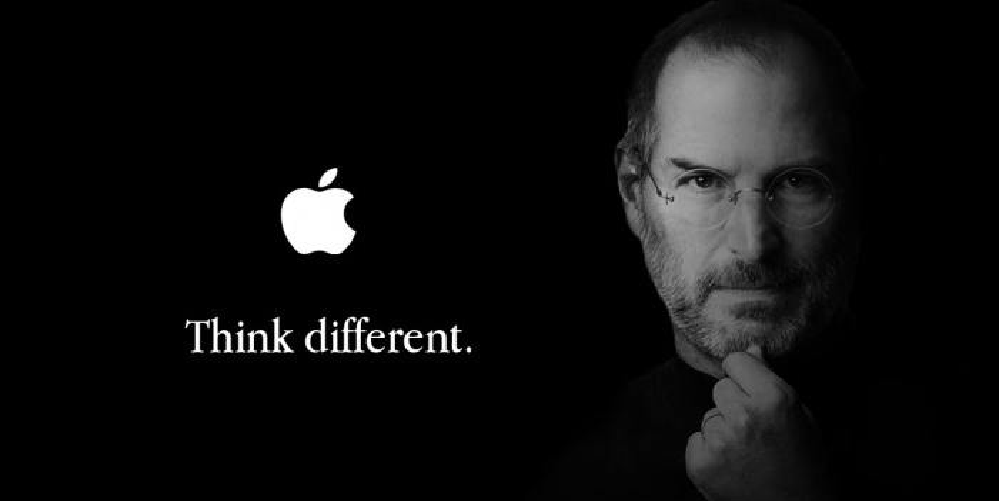
Steve Jobs, an Apple founder, was legendary for stimulating demand. He worked without surveys or focus groups. He was a genius, peerless in his generation. He saw an unborn future many years ago. He was an icon, who changed his world. He developed a good design paradigm of working at the perception of customers, beyond their needs and expectations. He found glory and Apple triumphed with iPod, iPhone, iPad and more.

I discuss why organizations must focus on developing products and services that go beyond the needs of customers to their expectations and perceptions. Focusing on the needs of customers is a recipe for disaster. The whole desire must be to deliver products and services at the level of customer perception where they are offered products and services which they might not have even imagined would be possible. But the day they see the products they will say wow: That is the thing I have been thinking. This also explains the limitations of focus groups because focus groups are  tethered to what the customers think they need. Perception of customer level  service is offering something which could not have been requested during focus groups, because such products will not come into the imaginations of the people being studied..

I call this Perception Demand because Mr Jobs used his vision to create new industrial sectors. He used his talent to launch the new dawns in the apps economy and the smartphone economy, at scale. Sure, Blackberry and Nokia might have been ahead, but he redesigned the sectors through his products. Blackberry pioneered the smartphone sector, but Apple is the world’s largest public company due to smartphone. Many predict that it will hit a valuation of $1 trillion very soon.

The Perception Demand Construct is a construct where you work on things which are not really evident to be in demand. Yet you go ahead to create that product. The demand may not be existing but you are confident you can stimulate it. Yes, you do believe that your product can elicit demand and grow the sector when launched. This is different from existing demand which could be met via starting a web hosting company or selling light bulbs where you know people actually need those services.

For example, in Africa, we have guys working on Virtual Reality (VR) /  Augmented Reality (AR). Some of them are inspired by Oculus Rift, owned by Facebook. They are consumer facing. They are having their conferences and meetups. Yet, personally, I do not see the demand in the consumer market in Africa in the near future for VR/AR handsets. Had they been medical or generally enterprise industry facing, AR/VR could certainly have real value, though at limited scale in our hospitals and companies, at the moment.

My take is that the founders do believe that if they get the VR/AR right, they could create local demand for African techies to spend $1000 to watch virtual world. There is no verifiable and visible demand of this product line at scale in the continent. They want to stimulate the demand by having the product before the demand.

However,  I have noticed that stimulating demand is very hard in Africa in the tech space. These are the major issues:

  • Raising money: this is very hard because few investors can see the immediate value. You are solving a problem with no real market opportunity
  • Talent attraction: attracting talent is very hard because even the workers may not see the relevance. What happens is that the founder toils around for years until he/she gives up
  • Lack of ecosystem: the government is not excited, making it hard to plug into any relevant initiative.

Simply, blindly following Silicon Valley to build the local products and hoping that demand comes rarely works. And by the time the founder is done, he has wasted the funds invested to bootstrap the startup. Of course, we do this many times, because we like to remind Silicon Valley people that inspire us, that we are working on the same things they are working on! But doing the same thing with people with largely unlimited resources, in different settings, does not mean it will work.

Apple does not do that: Apple rarely pioneers a new sector. In short, Apple is not an inventive company; it is an innovative firm. It has perfected the art of stimulating demand at perception level. In other words, while it does not do focus groups and surveys, it still uses market data of those in the areas to gauge the opportunities. Once it joins the sector, it radically changes the basis of competition, pushing the curves and then stimulates demand on this new basis. So, as a leader, Steve Jobs got Apple into mastering the construct of Stimulating Perception Demand at scale.

Stimulating Perception Demand

Perception Demand is very risky: you think without much learning curves decoupled from aligning scaling and market demand. But when you add “Stimulating” before it, you have a construct, Stimulating Perception Demand, which focuses on existing trajectories in the markets and how to take them to the next level, and around there massively get many fans to connect. Here, you have seen how the products in the markets are doing. You just want to take them to the next level. The product operates at perception level, but even with that, you must stimulate demand at new heights.

Technically, this is where Steve Jobs plays well. Steve Jobs and Apple in general are innovative and not necessarily inventive. They take ideas which are in the demand and then make them better. They may not be doing focus groups because the performance of existing products is a good data to make decisions. They knew that Walkman was selling but iPod could make Walkman better. They knew that Blackberry was selling but iPhone could take the smartphone business to the next level. They want to stimulate a new level of perception in the demand nexus. So even if there is no focus group, sales data from public traded Research in Motion (then name for Blackberry maker) and Sony were solid insights on the sectors and the products.

Founders working in Africa may not easily have access to capital. But one thing that works here is the model that people can prepay for most things. If you meet the real pain points of most customers, they can fund your business. We see the struggles in agriculture, from insurance to sales, and we do believe that there is a business to build products which by itself can stimulate demand, at perception level.

We have opportunities in education, energy and other sectors which have provided real data that businesses can be built in these areas. But unlocking them will come from doing things in totally different ways. That will help stimulate the new markets we want in them.

Stimulating the process is a new art which Steve Jobs also redesigned. By providing few data, Apple enjoys unprecedented media buzz. That helps to stimulate the demand of products it has already taken to the perception level. Everyone wants to write about Apple and the sequels of products. The fusion of great products and the media interests creates stratospheric goodwill that Apple does not pay. Everyone breaks the news – TV, newspapers, magazines, talk shows, etc – for free, and that is earned media. It is a huge saving.

I do think that if not Steve Jobs and his zen-like mastery, another company could have launched iPhone and  the world would think it was just another smartphone product. Steve gave iPhone a personality, stimulating passion in an already great product.

All Together

It is really important that the focus moves from the excitement on the technology to the value created in markets. We have to work on building products that bring perception demand. But just having the products is not enough. We need to find ways to also stimulate demand for them. By moving into perception demand, you have changed the basis of competition, a new curve, and if you do not clearly communicate, you could be alone. I never see Apple as a technically great company (yes, those fashion patents!). It does not need to be to have success. The company is peerless in innovation from the lens of customers and that is what matters.

Share this:

  • Click to share on Facebook (Opens in new window) Facebook
  • Click to share on X (Opens in new window) X
  • Click to share on WhatsApp (Opens in new window) WhatsApp
  • Click to share on LinkedIn (Opens in new window) LinkedIn
  • Click to email a link to a friend (Opens in new window) Email
  • Click to print (Opens in new window) Print

Like this:

Like Loading...

The Perils of Herding Business Vision

By
Ndubuisi Ekekwe
-
August 19, 2017
15

You never really liked Facebook. But you signed on when all your friends opened accounts. Despite your privacy concerns, the alternatives are few. Leave it; you have lost a stream of networks.

In this era of social networking, we simply follow the path of least resistance. And it has been proven that in doing so, we lose a bit of our independence. We begin and end the day with checking emails. Our lives revolve around people that make up our social networks (and to a lesser extent, professional networks).

Unlike before, reaching your friends demands immediacy. Otherwise, why will someone provide GPS feeds of his movements to the world? The human networks have become more communal and increasingly our social networks influence us so much that we risk losing our independent ideologies.

The reality is that when a friend begins a conversation and finds it great, others in the networks just agree, most times. Your friend rates a blog post high, even without reading it, you also rate it high. A friend likes a video and nearly everyone in the network will follow thus.

From New York Times  to Facebook, I have noticed that the early comments in any post influence the dialogue the most. Those early ones will decide the direction other subsequent commentators will follow. Though there are deviations, on average, the individual judgment is lost. We just follow the path of least resistance by not disagreeing with those in our networks.

There are many reasons we act that way. One, we want to retain that friendship and will work hard not to oppose our friends. Two, we never actually read the post; we just made a decision based on the comments of our friends who might have read the entire post. Three, the desire of least resistance and fear of being attacked by providing independent insights by our networks encouraged us to follow the popular opinion.

Unfortunately, irrespective of the reason under which we make comments, our digital identities are registered and to most people, we made the comments. That create a risk as in most cases we come back to notice that we misjudged. We suddenly noticed that our casual comments were wrong and very embarrassing to the issue under discussion.

The Consequences

In general, our personal independence on new ideas is under siege by social networks and Internet. We follow a lot and new insights are lacking because like buyer recommendations, we believe our social networks and follow their leads. There are both positive and negative consequences to this new aspect of human existence.

On the positive side, we can easily learn new things and some really good ideas can inspire and motivate us. When a friend shares a good idea on investing, the social network can help it go viral and it can benefit most that will follow, even without asking questions.

On the negative side, it can make us very dumb. The reality is that most people do not believe that the Internet is not edited and they believe everything they read or see on the web. When someone passes an idea, we rarely ask for facts. Take the PEW poll that 18% (24% from Time Magazine) of Americans believe that President Obama is a Muslim. Despite all evidence to the contrary, the most important being his relationship with his ex-pastor. He was vilified for his pastor’s actions, yet he is still a Muslim!

Before the Internet age, the network TVs would have edited out most of the issues that derail honest dialogue in political arenas. But with Internet, there is no editor and any idea can go viral. President Donald Trump has escalated those elements with his idea of press and facts.

When you watch some videos that have gone viral, nothing comes clearly on why they did. But on more observations, you can notice the social energy of networks. That brings the question of quality in media. Who truly cares? In most cases, it is not the quality that wins but social congregation. Provided that more people click a post, it has more chances of becoming more popular. And popularity is defined under the constructs of advertisement; more clicks, more money.

As this dynamics emerge, firms must adapt to understand that man is inherently being changed by the social circle. Having a good advertising campaign need not focus on expensive ad, rather a focus on pushing the content to few choreographed people with larger networks and then task them to give positive reviews. As soon as they do that, others in the networks will follow thus and a viral ad is born.

Also, companies must understand that immediacy triumphs over quality. A website that is updated ten times in a day could be ranked more than one that has a higher quality (who decides?) but updated once a day. To avoid this challenge of the web algorithm, firms open visitor comments thereby increasing the level of activity.

Man is passing through a very transformative phase. Today, a student can post his homework on his Facebook account and his friends will provide answers. When he is asked to develop a class concept, he goes to Yahoo Answers and someone offers a free solution. We are increasingly outsourcing our minds to our networks. We depend less on facts today than we did a few decades back. Anything flows into the web and the world consumes. We can edit an encyclopedia (yes, Wikipedia) and reference it immediately. It does not seem to be a progressive evolution of the human species

Herding Business Vision

I am getting to something and that is your business. The same way we herd in the social media is the same way we are herding while crafting business visions. Everyone wants to do the same thing: ecommerce, AI, blockchain and those new trends. Unfortunately, most times, we are not ready, or worse, we do not have the capabilities to execute such business models. Instead of figuring out how to help our local petty traders to improve productivity, we want to assist Wall Street traders to improve trading. Instead of helping local students in our secondary schools to understand mathematics, we are focusing on how to deliver programs that will support Stanford University students. When we have farmers struggling to get products to markets, we are engaged on figuring out the best way to deliver smartphones via drones. We want to be trendy; we love herding New York, Paris and Silicon Valley. It is the new normal.

To a large extent, we are wrong. Just as we need to decouple from the group thinking of social media, we need to have independence to figure out the best possible business visions that will work in Africa. Silicon Valley and New York have their unique peculiarities. Not everything done in Yankee will work in Africa. Airbnb can work in Boston, but it will struggle in Bauchi (Nigeria) because the people of Bauchi and Boston are different in many ways. This is the time to think local, and allow our independence to help us reconnect to our local challenges. Fixing those challenges are our paths to glory. Yes, the value we all want to create for ourselves, families, partners and all stakeholders, in Africa.

Share this:

  • Click to share on Facebook (Opens in new window) Facebook
  • Click to share on X (Opens in new window) X
  • Click to share on WhatsApp (Opens in new window) WhatsApp
  • Click to share on LinkedIn (Opens in new window) LinkedIn
  • Click to email a link to a friend (Opens in new window) Email
  • Click to print (Opens in new window) Print

Like this:

Like Loading...

The South Africa’s New Fintech Degree

By
Ndubuisi Ekekwe
-
August 18, 2017
0

A South African university, The University of Cape Town, has unveiled a degree program for fintech (financial technology) which is expected to equip graduates with the skills to launch fintech companies. The school wants to help deepen the talent pool in the sector.

The University of Cape Town (UCT) is now the first university on the continent to offer a degree specifically designed to equip students with skills and knowledge in the ever growing financial services sector.

The new degree is a Master of Data Science with a specialisation in Financial Technology and will be offered for the first time in January 2018.The aim of the degree is to combat the main challenges in the sector such as the rise of modern technology and lack of skilled graduates who are able to take charge.

Though the school has promoted this program as the “first” in Africa, the university is not necessarily offering anything different from most schools which have added Data Sciences / Big Data in their computer science programs. This is not an undergraduate program to merit that “first”. A master’s degree student can specialize in any area of choice, to a large extent. Had this been an undergraduate program, that is where disagreement will come and the claim of the “first” in Africa will make sense. Any student in a decent Master’s degree computer science program in any African university should expect to cover data science. But of course, UCT is making this a specialized program.

The Master of Data Science with a specialisation in Financial Technology is a welcome program. Covenant University Nigeria has Big Data/Analytics in its MIS program. Yet, the biggest challenge for these programs is not really what the students are taught, in theory, but the ecosystem (i.e. the lab) where they will practice the things learnt. Cape Town is a center of financial excellence, so if the schools create partnerships with the industry, the students will benefit.

The use of machine learning (ML) and the broad AI (artificial intelligence) cannot be limited to fintech. In short, the best education could be getting the Master’s degree in Data Science, focusing on the models and algorithms and dealing with the applications later via a project. I know that some of the models we have used in Zenvus, my precision agtech company, came from models developed for biological robots. It turns out that biological robots and plants share many things in common. In other words, focusing on the fintech may even limit the student. For all the nice names we call ML, it is really statistical modeling and computation at scale.

A fintech program like this should be designed with many labs. I will recommend that they ensure students get value through exposure to real market data. Instead of just teaching blockchain and bitcoin, they have labs where students can experience them. With such labs, many African fintech founders and entrepreneurs could be seeded with great insights on what these technologies offer.

I do hope one university in Nigeria will mimic the South African university and offer something for our entrepreneurs and students. But before they do so, they must have the labs where models can be simulated. It may not come easily because National Universities Commission (NUC) may not allow such. The South African university is seeing demand  for the program, and one will expect the same in Nigeria, especially in Lagos schools.

“We see extraordinary demand for the degree already,” continues Georg, “also because Cape Town-based students can do the degree part-time. This is quite important to us since we want working finance professionals to be able to complete the degree and acquire the skills to thrive in a changing industry. For students who want to do the degree full time, we do offer full scholarships to ensure that nobody will be excluded financially.”

Georg concludes “Fintech offers a unique opportunity to radically transform the industry. Young startups are already challenging the incumbents and our students will be on the forefront of this technological revolution in South Africa. Our focus on entrepreneurship means that we will change the students’ mindset so that they not only want to go out and ‘get’ a job, but also to go out and create a job – or a hundred.”

This could be a good program and South Africa wants to be on top of it. If they deepen the entrepreneurship component of this degree, South Africa’s role as Africa’s heart of finance will remain unchallenged. Yet, it is very debatable that you can use a Master’s degree program framework to create great fintech entrepreneurs. I still believe that the core pillars, in unlocking creativity, take place at undergraduate education. But one thing is clear: if the students improve their data science capabilities, they will have the world open to them, not just in finance but in many other areas. Data, they say, is one of the pillars of the 21st century commerce. Knowing how to manipulate it is a skill of our time.

Share this:

  • Click to share on Facebook (Opens in new window) Facebook
  • Click to share on X (Opens in new window) X
  • Click to share on WhatsApp (Opens in new window) WhatsApp
  • Click to share on LinkedIn (Opens in new window) LinkedIn
  • Click to email a link to a friend (Opens in new window) Email
  • Click to print (Opens in new window) Print

Like this:

Like Loading...

Just Accepted A Committee Invitation from the Government of Canada

By
Ndubuisi Ekekwe
-
August 18, 2017
0

I just accepted to serve in a committee to assist the good people of Canada and the Government of Canada on an important health project. It is part of the PhD club duties of being a subject matter expert in your area.

On behalf of Grand Challenges Canada (GCC) and the Canadian Institutes of Health Research (CIHR), it is with great pleasure that I invite you to serve as a member of the peer review committee for the Stars in Global Health program. Your participation as a member of the peer review panel would be greatly appreciated. Your name was recommended by Dr. Jere R. Behrman and we feel that your expertise would be an asset to this committee.
Thanks Prof Behrman of the University of Pennsylvania for the recommendation.

Share this:

  • Click to share on Facebook (Opens in new window) Facebook
  • Click to share on X (Opens in new window) X
  • Click to share on WhatsApp (Opens in new window) WhatsApp
  • Click to share on LinkedIn (Opens in new window) LinkedIn
  • Click to email a link to a friend (Opens in new window) Email
  • Click to print (Opens in new window) Print

Like this:

Like Loading...

Software Eats Cisco’s Networking Gears, Lesson for Entrepreneurs

By
Ndubuisi Ekekwe
-
August 18, 2017
0

Cisco, the venerable IT company, is going through a total redesign in its business.  The networking unit has seen its revenue decline for seven straight quarters. Not a good trajectory.

Revenue from Cisco’s switching business, easily its largest, also missed Wall Street’s estimates, resulting in the company’s total revenue falling for the seventh straight quarter.

 With its traditional business of making switches and routers struggling, Cisco, like other legacy technology firms, is focusing on high-growth areas such as security, the Internet of Things and cloud computing.

The reality is that Cisco is entering the IBM Moment where revenue in its core business will see continuous decline. This happens because their core products are increasingly being substituted by customers.

Networking is seeing some components move into software. And with that transition, the hardware has many competitors to deal with. Also, the big companies that used to spend easily on Cisco gears are buying non-premium products from Asia that get the job done, despite not being made by Cisco. So, Cisco is experiencing a double whammy: product substitution and competition from cheaper rivals. What Cisco sells at premium are available at lower prices by Chinese firms. As that happens, its business will drop further.

Most things are now outside the control of Cisco. It cannot stop Huawei from growing in Africa and around the world. It cannot do much to stop software being used to replace the gears it used to sell at premium.

HP went through that transformation and ended up breaking itself into two, with the legacy printing business as a separate firm. Cisco, if it finds success in the extremely new areas it is pursuing, will possible in future spin-off the networking business. At the moment, it is lagging in those new areas like cybersecurity. And networking business, at the hardware level, is a commoditized business.

Cisco demonstrates why it is hard running a hardware business: software indeed can eat it. Software is eating printing (with mobile, we print lesser), networking and other legacy hardware sectors.

Lesson for Hardware Entrepreneurs

No  matter what you do, as a hardware entrepreneur, always think how a platform can save that hardware business. A platform will provide the ecosystem to protect revenue and ensure you have your customers. But it requires an entirely new business model that is totally different from the way we run hardware business today.

Increasingly, it is evident that there is little competitive capability for hardware business with no element of software-driven platform. Everyone knows that sooner or later, someone will make any hardware cheaper, through commoditization of its core function. What will protect an innovator or a pioneer is the platform.

You cannot be running a solar lantern business  in Africa without thinking how you can build a lending business or something that will engage your customers around it. You cannot be installing solar panels for customers without thinking how they could be paying through subscription to give you room to innovate without worrying about risks of someone displacing you. In the electronics business, prices drop largely every two years. If you keep the present model of electronics business, you will experience the IBM, Dell and Cisco moments. Choose the Apple model which is organic with evolutionary features for whatever the markets bring.

There is no hardware business that will survive by itself in this age of Internet without an element of customer post-purchase relationship. You have to find a way to keep customers in your ecosystem. The old model of carry and go will be challenged by cheaper rivals.

Cisco is learning a lesson, and very soon, its remaining pricing power on networking gears, will decline as competitors continue to program them out from hardware into software. In software, the price drops and margins collapse. That was not the Cisco business model of old. The reality is here. You must learn from this as you build your business.

Further Insights via LinkedIn comments

I am posting these insights on this piece from LinkedIn users.

  • A good insight to those who rely so much on ‘experience’ and old ways of doing things. There’s one sub-topic in Chemistry, which every science student must come across, it’s called Displacement Reaction; there’s also another version of it in Physics. I want to believe that the ‘Displacement Reaction’ is now more pronounced and louder in hardware business than the mixture of acid/base and water as the case maybe. The central maxim must now be ‘rethink your strategy from time to time’, else you wait for your ‘moment’; not a good moment anyway.
  • “Cisco is learning a lesson” – ndubuisi ekekwe in a VUCA world you can’t be playing catch up especially when you are a brand like CISCO. One of the tenets of a solid strategy is ‘innovation that wins customer advantage’ – specifically staying relevant to the customer via value adding products and services that touch lives. Our lives are no longer stagnant like 20 years ago – businesses sleeping need to wake up. As I will share in an article soon, people fear change and that is essentially what strategy is; consequently the likes of CISCO have copied and pasted old strategies rather than proactively reinventing themselves. Despite the foregoing a company’s core purpose shouldn’t change e.g. Motorola’s purpose is “applying technology to the benefit of the public”, hence they and their products have evolved over time contributing to people’s lives (from TVs to microprocessors and more). What we are seeing in many businesses in CISCO’s situation is symptomatic of the absence of a core purpose and poor strategic foresight. ndubuisi as you have rightly said, they have to revamp their business models. But note that depth of #clarity of their business is required – that’s why I freely prescribe a diagnostic for such #clarity.
  • Great insight Sir! Businesses are expected to continously assess their competitive business environment. The Michael Porter’s Five Forces model provides a good framework in which this can be done. With this type of analysis, the likes of Cisco should have seen, before hand, the potential lowering of entry barriers, increasing power of substitutes and those of buyers. What other entrepreneurs would do is to also create high switching costs for their customers or simply evolve with the tide. Facebook has expanded the scope of the interactivity of its platform over the years by copying or acquiring potential competitors. This has made them look ever young. (edited)

Share this:

  • Click to share on Facebook (Opens in new window) Facebook
  • Click to share on X (Opens in new window) X
  • Click to share on WhatsApp (Opens in new window) WhatsApp
  • Click to share on LinkedIn (Opens in new window) LinkedIn
  • Click to email a link to a friend (Opens in new window) Email
  • Click to print (Opens in new window) Print

Like this:

Like Loading...
1...7,3137,3147,315...7,969Page 7,314 of 7,969

Products

  • Tekedia Board, CEO & Directors AI Bootcamp | $5,000 or N7,500,000 Tekedia Board, CEO & Directors AI Bootcamp | $5,000 or N7,500,000 $5,000.00
  • Investment and Portfolio Management | Immediate Access, $400 or N200,000 Investment and Portfolio Management | Immediate Access, $400 or N200,000 $400.00
  • Tekedia Startup Masterclass: from Start-Up to Unicorn | $400 or N200,000 Tekedia Startup Masterclass: from Start-Up to Unicorn | $400 or N200,000 $400.00
  • Artificial Intelligence (AI) in Business Masterclass | $400 or N200,000 Artificial Intelligence (AI) in Business Masterclass | $400 or N200,000 $400.00
  • Tekedia Mini-MBA Annual Package | $340 or N180,000 Tekedia Mini-MBA Annual Package | $340 or N180,000 $340.00

Recent forum posts

Justin and Hailey Bieber are all …by Oladosun Joshua Segun1 day ago
Bowen Yang is reportedly leaving …by Oladosun Joshua Segun2 days ago
As Oil Prices Fall, Nigeria Must …by Ndubuisi Ekekwe2 days ago
Kylie Jenner stole the spotlight …by Oladosun Joshua Segun3 days ago
Rihanna turns a quick CVS trip in …by Oladosun Joshua Segun3 days ago

Domain + CPanel Hosting

  • School
  • Capital
  • Contact
  • Blucera
  • AI Consulting
  • Store

© Tekedia. All rights reserved.

Term & Privacy

© Tekedia. All rights reserved.

Term & Privacy

%d