I own a Yahoo email account. Yahoo Mail is a very terrible product which is unusually slow. Yahoo used to work very well, but over the years, they made it extremely worse. They padded the product and at the end, Yahoo frustrates users. The most damaging aspect is the feature that keeps refreshing, annoying and frustrating the users.
If you live in a place where Internet is metered, Yahoo may not be optimal. It will not just take your time to get basic things done, it will also cost you more money.
Unfortunately, the new Yahoo Mail was introduced as an innovative (improved) product expected to serve customers better. The people that made it, perhaps created it in California, where internet speed might have been very fast. They had the perfect world and everything looked good for them. They saw no problem.
Yahoo does not have a global team spread as Google. Sure, it is now under the control of AOL, but that company also does not have local teams, across the world, as Google does. For Google, it has staff in practically most parts of the world. Their people use their products in the most natural and practical modes. That helps Google to understand the realities on ground, helping it to make products that meet the needs of customers from many regions.
Yahoo and AOL do not have that luxury, because in their minds, the world must be like America, Japan and Western Europe and anyone that cannot conform to those could be forgotten. That is a big problem.
Lesson for Founders
There is a lesson I am trying to draw here with this preamble. According to Fortune Newsletter, Google continues to optimize its search to ensure it works in different environments, saving people, in the emerging world, money on data.
Google tests “light” search app. The search giant is testing a data-friendly version of its search app in Indonesia, where connectivity and mobile data allocations are limited. The pilot is one example of how Google is attempting to cater its products to emerging markets, where it sees the next wave of Internet consumers.
That is it: Google has simply understood that even though the product may work very well in New York, it may not be optimal in Indonesia. This is the way it has innovated around the world, putting local realities in its products. When you try to use Gmail in slow internet, it quickly suggests using the HTML version to help improve the experience. Google is also investing in local languages thereby making sure that no opportunity exists for any competitor to sneak in.
Google sees product vision from the lens of the customers, focusing not on the supremacy of the product from Google’s point of view, but rather from the customer who is using the product. This makes Google to deliver a lesser aesthetic and ergonomic design to a customer in Accra who is more interested in saving money on metered Internet than how great the site looks.
Your product vision does not matter if what you have in mind is not what customers are getting. Internet business is not really about making the best graphics or websites, but rather, serving customers at the best possible way.
I see sites designed for African markets with so much graphics and video contents that play automatically on visits. Personally, if I am in Lagos, I do not visit sites that play videos automatically on arrival. I used to read ThisDay Nigeria but when they started the auto-video, I avoided them. I hate to be in a client’s office and then without my control, my laptop will start making noise.
Only customers can score product vision and the most complicated is not really what determines success. “Product is what customers say it is”, says Francis Oguaju (a LinkedIn user), and the way you deliver it to them matters for a digital product. You have that product you are testing which will be used across West Africa. Instead of doing real live test, you run it in your test server (in your above Internet speed Lagos HQ) and everything comes back 100% fine. Then product is launched and users are complaining from all parts of the region.
Why? Under slow internet, your product fails. I have dealt with this in a bank client’s headquarters. We quickly updated the going live strategy requiring that the bank tests across more than 13 states in Nigeria, making sure the tests happen away from the bank branches where Internet was typically faster than the ones used by customers. Now, when new products are launched, the customer experiences have improved.
Add SSL to Your Site
Yesterday, Google sent this email below and it does mean that sites without SSL will be heavily penalized by Google ranking system. Not just that, Google will be sending security warming on your site if you do not have SSL when users want to complete simple Contact-Us forms.
To owner of [Site Name]
Starting October 2017, Chrome (version 62) will show a “NOT SECURE” warning when users enter text in a form on an HTTP page, and for all HTTP pages in Incognito mode.
The following URLs on your site include text input fields (such as < input type=”text” > or < input type=”email” >) that will trigger the new Chrome warning. Review these examples to see where these warnings will appear, so that you can take action to help protect users’ data. This list is not exhaustive.
….
Here’s how to fix this problem:
Migrate to HTTPS
To prevent the “Not Secure” notification from appearing when Chrome users visit your site, only collect user input data on pages served using HTTPS.
Simply, there is no reason why you should not have SSL if you plan to make progress online. If your customers want to complete your form and see a warming, that will be the beginning to the end of your business. They will run away. There is no better product vision than making sure that Google likes your site.
A few decades ago, firms ruled supreme in getting the best profit margins out of their customers. It was an era of optimizing for the maximum possible profit. Market was very opaque because information was very expensive and untimely. Customers could not track price changes in real time. Even when they get the comparative prices, the distance to the other shop was a huge barrier. So in most cases, customers would knowingly pay high prices because of the need to save time.
This was the era when airlines maximized prices on tickets. When you leave your house to a travel agent, you have made up your mind to come back with a paper ticket. The travel agent was serving the airlines and the higher you pay, the better is the business. Though the agent may offer some choices among the competing airlines, there was no major price pressure, since at the end you would be forced to buy from the agent.
Why? You may need to drive another twenty minutes for another travel agent. Under this model where you either buy from the airline offices or travel agents, your choices are very narrow and the airlines were in control.
Then came the Internet era; from Wakanow to Jumia Travels, Expedia to Priceline, the customer for the first time had the power to make decisions based on price without even leaving the house. Go online; describe the trip and airline choices will roll down; usually, the cheapest one comes first. This market is a commodity business, especially for an average traveler. Who cares for the airline you flew from Boston to Baltimore? Without that brand loyalty, the cheapest ticket always wins. The travel agents have lost the power to control the price. The airlines suddenly must compete on price resulting to lower profit margins.
The internet has commoditized the airline pricing sector. Without the Internet which destroyed the pricing model, through commoditization, most airlines will still be commanding huge prices based on the mismatches owing to information asymmetry. The Internet has allowed the low-cost carriers to have direct access to customers. It has abstracted out the brand. The Internet was the most important factor that enabled these low-cost carriers to get into the industry. It provided a platform through which they connected to customers directly and competed on price effectively. You can now search, compare, and book in a few clicks without stepping outside. Many businesses that depend on stable digital channels build the stack to Own IP address blocks that keep traffic reliable and measurable. Control at this layer tightens feedback loops and sharpens pricing decisions.
We will continue to see major transformations and disruptions arising from the Internet.
Your Business on Internet
Starting and operating an internet business is not as easy as anyone could tell you. As I have noted on Tekedia, Internet has three main core features when you look at it from the business angle
Aggregation Capability: Internet has this feature that those that create contents and value may not be the core recipients of the value delivered. Those that aggregate become the people that earn most of the values. Wakanow will always be in a better position than most airlines in Nigeria because it is asset-light, aggregating ticket pricing with minimal risk. When you expand that to Facebook and Google, which offer services completely free, the entities that create the values like media firms are totally lost. If you can build scale on the Internet, a business that depends on this aggregation construct is always good. Airbnb, Uber and most modern digital firms are good on this. Narialand is also one, aggregating contents, legally or otherwise, under one man and earning big profits all the way.
Diminishing Abundance: Internet offers unconstrained distribution channel. This makes it so hard for anyone to control pricing because you do not just compete with your local peers; you compete globally. Yet, in some industries, the fact that Internet gives you global scale does not mean you can make money. ThisDay Nigeria newspaper may be accessible to any reader in the world, having thousands of readers daily, yet, it may not be making as much money as when it had very fewer readers, before the dawn of Internet. That is a diminishing return: internet is very notorious for that.
Commoditization: Any content that is online is simply commoditized because they all have the same level of access. And when the contents are linked on Facebook, they compete for the same positions. Unlike in the past, before Internet, where New York Times print would be seen as a more prestigious material than most competing papers, the fact is that within this Internet era, everyone is competing for positions with Google search algorithm. Mastering this commoditization is very critical in understanding how to find success on the web. Building a fintech must be designed on the construct that a great product can be chosen over a big bank product because for the internet user, say for remittance, provided the money gets safely to the destination, no one cares how nice the branch of the bank looks. So a fintech can compete on price against a bank, if its services are great. The bank heritage has been commoditized. To win and succeed on the web, one has to differentiate by efficiency, pricing and or elements of value.
All Together
The future of commerce resides on the web. You should go for it. But understand the biggest vulnerability of Internet business: lack of defense, because on Internet you compete globally, with limited defined boundaries. Your mistakes cannot be masked. Your pricing can easily be compared with peers, and you cannot be guessing while on the web because information asymmetry, typical in the meatspace, is gone. Internet demands the best from you because Internet is a huge “continent” that herds, working on the wisdom of the crowd, the network effects. You cannot trick the crowd and that is why succeeding on the web is harder. If you ask a typical web hosting company in Lagos, Nairobi and Accra, you will be surprised on the number of people that abandon renewing their domains after just a year. Why? The promise of a huge global market was met with the inability to find a space in a big sea, mimicking the seaman that shouted “water everywhere, but not a single drop to drink”.
Zinox Technologies, makers or distributors of laptops, PCs, UPS and tablets, has had its moments. Founded by legendary ICT businessman, Leo-Stan Ekeh, Zinox was a pioneer across many sectors in the Nigerian ICT industry. Along with Omatek, Zinox put Nigeria on an effervescence on a path to indigenous ICT capability. Unfortunately, that did not happen: the Nigerian problem was too much for Zinox and Omatek to overcome.
Zinox Technologies Limited manufactures and distributes computers and computer hardware in Africa and internationally. It offers ICT, telecoms, and after sales support solutions. The company sells its products through resellers. Zinox Technologies Limited was founded in 2001 and is based in Lagos, Nigeria. The company has additional offices in West Africa.
During Olusegun Obasanjo’s administration, a government policy was put in place to support local ICT companies. The former president had a vision – support the companies and a virtuoso system of local ICT ecosystem could be stimulated. From that framework, Nigeria could have a new industry, from the lens of creativity, over mere consumerism of technology.
That plan did not work. Zinox’s products did not meet key metrics to government customers that patronized them. Over time, that policy was relaxed. Yet, Zinox still won because the Zinox subsidiaries and sister companies remain one of the largest distributors of computer systems in the West African markets for global brands like HP, Dell and Lenovo. So, technically, even if governments did not buy PCs with Zinox logo, they did buy products supplied from the Zinox empire.
Of course, making more money was not the only thing Zinox founder was after. Mr Ekeh actually wanted to redesign the ICT sector in his country by making things locally and bringing local innovation, In a speech many years ago in the Harvard Business School, which I listened, he was genuinely focused on building that local capability. His vision was solid as he explained how millions of jobs and economic growth could happen if all kids in Nigeria are provided with laptops and other ICT equipment. He tried, but quickly met the inevitable problems in hardware business: it takes focused and sustained government intervention to build such an industry. There is no single company that can stimulate a hardware ecosystem. It requires the rise of many, at the same time.
With that I mean, you cannot make computers if you have to import all the pieces and then assemble them in Nigeria. Zinox would have done better if there were local companies making RAM, PCBs, components and other units used in its computers. That will save costs and time, and also stimulate many elements in the industry. It remains far cheaper to import one computer than import hundreds of the units, package them, and then resell them in Nigeria. The economics and the numbers are not there. Yet, people do just that because patriotism sometimes goes ahead of sound business strategy.
But it could have worked, if government had supported it more, especially by nurturing local supplier pipelines to Zinox. But that would have been hard, with some of the ICT equipment having quality issues. I cannot blame the government and you cannot say that Zinox did not try.
The Natural Trajectory
What Zinox went through is largely the same way many companies, under government supports, in different countries, emerge to become local technology champions. There is a government patronage to provide assured customer base. It is like the Nigerian government putting an order with say “ABC Group” to buy 1000 trailers of bags of cement, just to assure the firm that it supports its efforts to build a local cement factory. Using that order, the company will not worry if there will be customers to sell to. This is usually necessary in some specific sectors where government wants to stimulate.
Zinox had that opportunity. But it missed it: the products were not optimal. The users complained and largely revolted that government could not impose on them non-optimal products. But the problem is not just Zinox: no company gets it right just as fast. Iconic companies in Japan took years to perfect their products. They had quality issues, but over time, they fixed them. The country stood by them, as they marched through the evolutionary process of improving quality. Samsung experience with its kitchenware is globally celebrated. But the company struggled with quality for years. But using its chaebol, it was able to keep making progress, until it cracked the code.
But for Omatek and Zinox, Nigeria did not waste efforts. It left immediately. Just like that, the natural trajectory was cut-off. Zinox machines were supremely better than most Chinese products we import daily in Nigeria. The government of China continues to support those firms through massive subsidies, cheap loans, and export support assistance. Of course, I am not suggesting that Nigeria could have continued to keep the policy. Yet, the reality is that if it wants to build a local hardware business, it must do so in the future. There is no way around it; unlike software, hardware business is dangerously risky. You do not fix a hardware product (the hardware part) with a software patch which can happen in minutes. In hardware, you recall the product, and that is money. It takes efforts and money to operate in that sector.
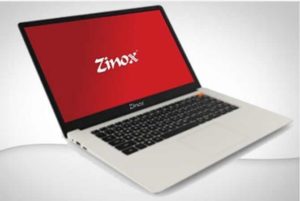
A Zinox laptop (source: Zinox)
Nigeria cannot really build a hardware sector without everyone open to go through that phase of pain where we could all sacrifice small things to support the local industry. But that is not just a hardware sector issue; we barely support local rice producers.
The Talent Problem
Most tablets and smartphones in the world are made by largely four companies: Apple, MediaTek, Flex and Samsung/Huawei. By that I mean the chipset that powers them. Apple makes its own which is largely exclusive to it. Samsung does its own also. Then more than 90% of the Android devices, excluding Samsung and other big brands like Huawei, are powered by MediaTek and Flex technologies. You buy the chipset and you assemble them in your box. For the low quality devices, MediaTek is very popular. If you go to China, in the Shenzhen area, people buy these chipsets and in their garages produce smartphones. The ecosystem is matured, with guys experienced in firmware porting offering services, just like a carpenter going around villages helping people fix broken windows.
In the PC world, Intel rules the world. AMD though promising these days, is not really a factor, especially in products sold in Nigeria. Most cores are powered by Intel. Zinox worked with Intel and Microsoft in its products. To make this type of product, Zinox will actually need to have a ready pipeline of talent, mainly from the Nigerian universities. The model of sending staff abroad for training or bringing expatriates to train staff in Nigeria will be limited for a sustained production system at this level. There is no way Zinox will sustain a top-grade production system with that type of model. This is the weakest link in Zinox strategy. The local support ecosystem is not there, thereby pushing labour cost high and exposing the business to risks. When you know that replacing departed staff could mean sending another engineer to U.S. for months, you will see the challenges of building a hardware business in Nigeria.
Indeed, Zinox’s challenges are largely issues it cannot individually deal with. Nigeria does not have the talent pipeline for what it plans to do. I have explained that Nigeria needs a national policy to stimulate the microelectronics industry.
Microelectronics is an engineering field that focuses on the design and manufacturing of electronics related products. Largely, every industrial sector depends on microelectronics as microchip, its bye-product, is the engine that powers the knowledge economy through provision of efficient computational systems. What we call ICT is an application-product of microelectronics as without the latter; the former can neither be possible nor advance. A creative ICT based economy requires a microelectronics strategy to help nurture sustainable innovation.
The Support Base
Who will like to run an electronics production system with generators? Only brave men like Mr Ekeh. The fundamentals do not make sense considering that it costs nothing to ship things from China, and Nigeria has an open import policy where any electronics can be imported. From electricity to water, the person making in China has a huge cost advantage. That means, Zinox products will naturally be costlier. But in this age of Internet with prices in our fingertips, it does not have the pricing power to recover those costs. So, at the end, it has to price to compete which means it will have lower margins.
Also, the market it serves is limited. Unlike the global brands like HP and Dell which can produce devices in millions, Zinox production capacity, I expect, is in the low thousands of units. In electronics, cost drops on volume. That means, Zinox systems are naturally going to be more expensive.
Combine that with the banking lending rates, you will see that Zinox must be magical to actually survive in producing its products in Nigeria. I do not see any specific advantage it enjoys for making in Nigeria, except that the factory could have a Nigerian flag on top of it with the keyboard having the Naira sign. I am not sure that is what Mr Ekeh cares about.
Yet, The Zinox Opportunity
Interestingly, Zinox has a promising future. Zinox has since changed its business. It has gone beyond making PCs to include services like educational contents and digital logistics in its business. Those services will be the future of the firm. Making PC is not really a great business: using the smiling curve, it is at the center which gets the lowest value. Zinox is moving to the edges with the services like Yudala, a hybrid ecommerce firm (i.e. both physical and internet based). It needs to move into ICT integration services at scale because those command more value than making PCs. That will help the firm build resilience from the low margin PC making business.
Zinox has accumulated capabilities and is certainly positioned to lead in unlocking more values in the broad ICT sector. It has to take its business to the upstream, but this time, not in building production systems in Nigeria where it will nearly not work. You do not produce computers with generators. There are fundamental things government must deliver before electronics manufacturing can happen locally. The process is so advanced that you cannot even afford electricity failure during production.
Aliko Dangote, Africa’s richest citizen, is a genius in mastering what it takes to move from a sectoral downtime to the upstream. He enters a sector, he begins the Accumulation of Capability, and systematically moves away from everyone. As soon as he does that, he takes industry leadership, making entry barriers harder, with economies of scale. Over time, he perfects that system, delivering higher productivity and economies of speed. His margin skyrockets, every other person struggles – most exit. He has won. In this videocast, I explain the Dangote strategy and what you can learn from it. A former trader, he now controls the largest conglomerate in West Africa, generating excess of $3 billion and employing about 30,000 people; he shows how wealth is built.
Zinox can replicate what Dangote Group does in the industries it operates in the ICT sector.
All Together
Zinox is rediscovering its vision: “To be the leading and preferred source of world-class Information Communication Technology products and solutions in Africa”. That vision will not have happened with making PCs in Nigeria. Today, it has transmuted itself, moving into services, away from the center of the smiling curve. But even as it adapts, Zinox brings the experience of the accumulated capabilities over the lost voyage in the hardware production business. Only the Nigerian government will decide when electronics production can happen in Nigeria, profitably and competitively. Until that electricity comes, Zinox should not bother. There is no shame to that. Software, they say, will eat the world, Zinox can rediscover its vision by being a good integrator, ICT support firm and distributor of hardware, leaving the hardware production out of the business model.
In this videocast, I explain how ICT accelerated productivity in Nigeria’s financial sector, and how Internet will change many things in both the banking and the insurance sectors. The texts are here and here.
It is October 1 2080; Ken’s parents have just renewed their marriage contract which expires every five years. This is the seventh time. Everyone is happy and they have reasons.
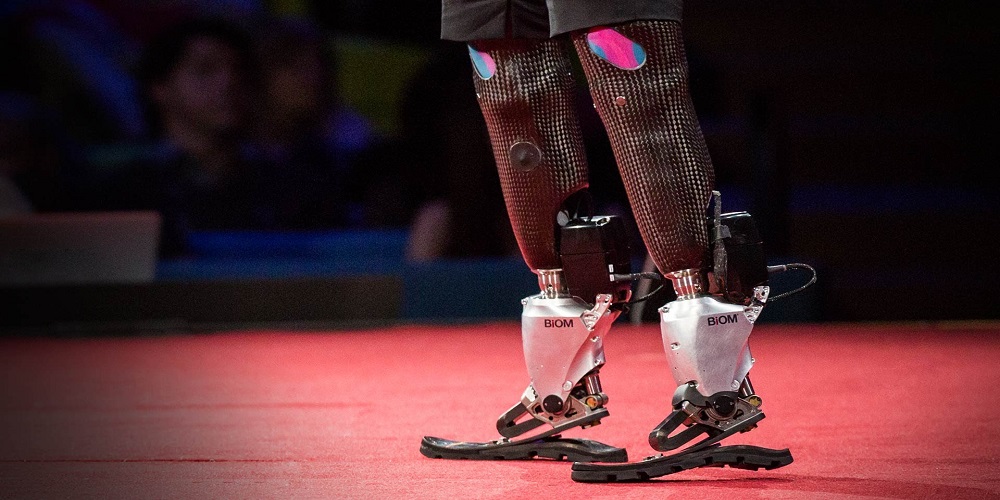
Two years ago, Ken was hospitalized for a severe fracture of the spinal cord. He had an accident and many thought he would never walk again. But thanks to experts in the state’s general hospital, his locomotion was restored through an electronic implant. They have used CPG (central pattern generators) implants to reactivate his motors.
For a young man who at youth joined a faith movement that considered implants immoral and unethical, it has been a long journey. He preached against it and even atoned to die to defend the sanctity of life by preventing human defilement caused by implants. He has reasoned along with the adherents of the faith that implants challenged the creative power of the deity.
But one afternoon while visiting his parents from college, he saw a boy he knew to be blind and deaf seeing and hearing. The joy, the hope and the energy from this boy and his parents enveloped him. The boy had gotten retina and cochlea implants. Ever since, Ken decided to become a neuromorphic engineer-a designer of implants.
Generally, technology takes time to penetrate and be accepted by the population. And in our contemporary society, the resistance to a new one like implants is expected. Unfortunately, that inertia to acceptability goes beyond safety and reliability concerns to morality and religiosity. But over time, the barriers usually crack and the technology is accepted. It could be inorganic food, medical MRI, medical robots, among others; attitudes change over time regarding innovations.
In the past, body enhancements for face and breast were despised until people began to appreciate how accident victims were remade by the technologies. Increasingly, in most societies, it is normal that people may want to improve their outlooks. Similarly for implants, some view that it is normal that someone could decide to hear better, see better and walk better. The issues of morality become blurred because man by nature wants to have a better quality of life. Why remain blind when there is a technology that can help you see?
Unfortunately, bionics touches a very potent area in religion because of apocryphal misinformation by some zealots. They say that implants are designed-ready for the biblical rule where doomed men will receive the mark of beast, ‘666’, in the reign of the anti-Christ as is documented in the book of Revelation. By avoiding implants, one inherently avoids readiness for this mark.
The reality is that the design of retina and cochlea all follow the typical processes used in making the microchips that power our cellphones and computers, except that quality controls are tighter because of their critical functions. As normal is the chip in the cellphone is the biochip in the implant.
We have been transformed by the phenomenal powers of microelectronics that opened the pathway to design tools that can restore vision, locomotion, among others; yet, many still cling on dogmas, denying themselves life-saving solutions. But with time, implants will be welcomed by the whole humanity and man will become mostly bionics. Moreso, as nanotechnology matures, we will see better implants with higher efficiency and lower cost as scientists take advantage of the migration from the classical Newtonian physics to quantum mechanics that provides more affinity to biology at sub-atomic level. Technology will triumph over dogmas with multiple ‘home-runs’.
Why? While it is easy to ignore vision implants on faith crusades, most will overcome personal beliefs to have their visions back through them. And if terrorists continue to ravage the world, governments may require implants in some troubled regions of the world to help save captives. In the near future, it is possible that military personnel will be bionics.
The human instinct to survival will continue to open opportunities for science to push further. As understanding of human biology improves, more efficient breeds of implants that seamlessly capture the event driven asynchronous parallelism of the nervous system will emerge. Will that be a path to attain that holy grail of human immortality? Can humanity in 20000 years today shop for bio-grade artificial brains on the Internet? In essence, this can go beyond body parts like retina, cochlea to all body. Simply put: can man electronically create biological quality human in the far future?
Possibly, this trend will be gradual that generations will experience techno-acculturation of gradual metamorphosis of Homo sapiens to bionics. It is very interesting that people are concerned about bionics when our present computing paradigm is simply a primitive system when compared to the way nature computes. There is going to be a quantum leap in bionics when spiking communication matures so that machine and nature could talk under a similar protocol.
In our time without looking deep into the future, man will be ready for bionics as more needs emerge for them. Our doctors will prescribe drugs that will take photos of our internal tissues and when needed reprogram them while inside us. To save us time, the drugs could be assigned Internet IPs so that irrespective of our location, our doctors can still help us. In other words, it is not just bionics, but man becoming an Internet node. Will this be welcomed? It all depends on the need for survival and life.
Our society will welcome implants as they mature and the health benefits well explained. The acceptance will positively correlate with the advancement. And as the buzz over the green tech fades in few decades, bionics will take central stage. But if society rejects bionics, the entertainment industry will help us break that barrier. When top golfers get new retinas for better vision on the course, we will hail them. And when we understand how those precisions come, the world will accept the inevitable outcome: the Homo sapiens will evolve to bionics.
I tell you today: the best companies have not been founded. Apple, Google, and Konga are placeholders. The world is unbounded, unconstrained and the future have possibilities and opportunities.