Facebook is making sure no one has a chance to challenge its dominance in social media. Any social media app or ecosystem that shows any element of competitive capability must be nipped at the bud. So, it copes Snapchat and it does it so cleverly that you cannot mistake the bravado. The good news is that Facebook copies legally and that is what matters. You should not be ashamed to copy; I do copy, legally.
Fortune email newsletter summarizes the latest efforts to copy Houseparty, a video meeting app, thus:
Like earlier tech giants, Facebook maintains its dominance in part by buying, copying or otherwise disrupting smaller upstarts that start to horn in on its turf. Wall Street Journal reporters take a look at how the social network keeps tabs on small startups with a report on the experiences of video meeting app Houseparty.
Facebook may already be trying to copy the app’s features, the paper reports: At an all-hands meeting last summer, Facebook Chief Executive Mark Zuckerberg told employees they shouldn’t let pride get in the way of serving users, another way of saying they shouldn’t be afraid to copy rivals, according to someone who was at the meeting. The message became an informal internal slogan: “Don’t be too proud to copy.”….
Facebook is being aided by an internal “early bird” warning system that identifies potential threats, according to people familiar with the technology.
There are three lessons here:
Copying is not bad, provided you do it legally. Most times, the best strategy is to copy what works provided you see a path of creating value after copying it.
Facebook has limitedo ego, when you examine how it has kept Snapchat in check by carefully copying its features. In a largely patent-free sector, Facebook has the upper hand. Size is an advantage and network effect is a huge competitive advantage.
Be watchful at the flanks: Facebook is doing all it can do to ensure it remains the category-king of its sector. It is watching its flanks, as Sun Tzu recommends in The Art of War, making sure that no company comes to dislodge it. This is the way to play defense by running a good offence as that means putting pressure on the people coming after your sector.
Few years ago, it was reported that Google tracks promising startups with good stats on its cloud and then invests in them. What these big U.S. tech companies are doing is the very reason it will be challenging to disrupt them. They buy, copy or disrupt new startups, and they do not care. Mark Zuckerberg, Facebook CEO, noted that copying criticism does not worry him: ” I guess I’m not that worried about that,” Zuckerberg said in response to criticism about Facebook copying Snapchat.” I think it should not worry you too. The key is making sure you do so legally.
The smartphones of the future will be data harvesters. They will harvest data on the activities we perform with them, in order to improve them and make them smarter. The path to artificial intelligence (AI)-anchored smartphones world cannot happen if smartphone makers do not use users’ data. They need the data to improve the navigational systems, recommendation engines and also build some core features on what we have as apps as part of the phone functions, right at the operating system level.
Most people will see the data collection as invasion of privacy. I disagree. Over the years, the smartphone companies have been lackluster on the ways they manage data flowing through their pipelines. Google knows most things about you as you use their search engine, relying on that data to improve its products. The world has come to understand that Google needs that data to do business, more efficiently. Few people worry that searching on Google will reveal to the big algorithm what they are thinking in their minds. The only alternative, of course, is not to use the product because you know that Google search has a memory.
For the AI-first world, now is the time for smartphone companies to participate in that data competition if they want to make products that will win markets. User privacy cannot be left only for software companies to decide. Just as Facebook harvests our data, Tecno can do the same to make better products, provided it is the metadata that is aggregated at population level, instead of at individual level.
We cannot call the hardware devices “smartphones” if the smartness cannot use data to evolve. The only way to make that happen is to utilize the data from users to continue to perfect and improve them. What makes a smartphone smart is not that it can do Facebook, it is that the hardware and operating system can have elements of memory and do many things beyond what the typical feature phone does. But to continue to elevate that engineering vision, phone companies need data. And finding a balance to tap into the data coming from the solutions running on the phones will help them.
The Coming Change
Consider a scenario where you have a smartphone and the phone can harvest all the activities in what you are doing on Facebook, Google, WhatsApp and more. The hardware company will use that data to improve how it makes processors and other elements of the phones including the operating system that powers that phone. At the moment, the hardware companies have avoided that, leaving the software companies to be ones harvesting the data. I do think in near future, they will see the immense opportunities to improve products and will then look for data to do just that.
Data harvesting power cannot just rest with only software firms. The future competition is going to be driven by data because the more data, the better algorithms. Phone companies may decide to have two versions of their products and price them differently. For people that want the status quo, the price will go higher. For those that do not care, the price should be lower. They must not collect people’s private and personal data, rather aggregated metadata of activities.
Also, they cannot sell the data to any third party. For example, Tecno cannot sell data it has collected to Konga which can help the e-commerce company to improve its business by understanding what users are searching, discussing and more. Simply, the data can only be used within Tecno to improve its products.
We need to see this from the same lens as Google (maker of Gmail) which used to harvest users’ data to improve its products. Hardware makers need to do the same. If Google could do that legally (it was doing so until it decided to stop), a phone company could also glance through user data to see how it could make its systems to make that process better.
The Paradox of Ford and Windows
As I have written in the past, the brilliance of Microsoft Windows is not just the product, but also the pricing model. You buy a software and you never own it – you must keep paying for license to own it legally, especially if you are company.
Microsoft is one of the finest technology companies in the world. It has IPs and it is a respected innovator in the technology world. But for me, I respect Microsoft, not just for Windows, but for perfecting Licensed Pricing of its products. When it scaled the constructs that buying a piece of Windows does not mean absolute ownership, it shaped the software industry.That singular vision was one of the most consequential factors that transformed Microsoft into a global icon, and rewarded the founders with tickets into the billionaire club. Not many people like paying licensing fees; unfortunately, that is the default strategy of modern software pricing.
With this strategy, you cannot resell most software. That model has generated huge returns for software companies. Now, imagine if Toyota, GM, Ford and other car companies never allow you to own your cars. You must return every 4 months to service the car in their outlets. You have to pay for that service. If you do not, you have ceased to own that vehicle legally. Also, you cannot resell your car. The reality is that hardware firms have not been stellar in their pricing models; software firms have always been smarter. So, that is why Tecno cannot collect data while Facebook is allowed to do so, even though Facebook runs on Tecno. That has to change and hardware companies need to modernize their constructs.
The Balancing Act
Making phones is not necessarily a great business unless you are Apple, Samsung and Huawei. But when data is embedded into these phones, they can do more. Bringing AI which does rely on data can see more smartphones perform better thereby pushing the phones from where they are at the moment, providing tools and pipelines for Facebook and Google to reap huge benefits, to where they need: deliver more value to users on their own terms. This is one of the reasons why Apple is peerless – it differentiates on hardware to deliver industry-leading experience via software. It has all under its construct, using the data from iOS to improve the Apple A microprocessors.
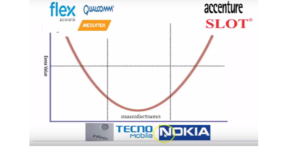
Using the Smiling Curves, I explain why phone companies need to get into the data business. By using more data and improving the solutions, they can abstract more things into the hardware, giving themselves opportunities to compete in the higher value areas which are at the edges.
Phone manufacturers can move at the edges with data
The Evidence is Here
Do not think my argument is a mere theoretical construct: the fact is that my points are here. Our smartphones will be data harvesters. From Fortune newsletter and WSJ, we have the case of Huawei collecting data of WeChat users and Tencent (the owner of WeChat) is not happy. But understand that Tencent is not saying users’ data should not be collected, its point is that only Tencent should be the one collecting the data.
Huawei and Tencent’s data dispute. Chinese phone maker Huawei has been collecting data from users of its Honor Magic smartphone to bolster its artificial intelligence functions, but Tencent contends that unauthorized use of information seized from their WeChat app infringes on the privacy of WeChat users, and has asked the Chinese government to intervene
This is going to be a huge fight as we move forward. As the constructs of privacy erodes, the software companies like Facebook and Tencent may be surprised that phone makers like Samsung and Tecno could decide to feed on their data. While a user is a Facebook customer, Facebook is a customer to a phone maker which means the phone maker can claim rights to user’s data as well. I personally believe that if Facebook can collect it, the phone companies should also collect provided they make it VERY clear to users that they will collect data on their activities (they already partly do), to improve the smartphone development. Understand that as you use your phone, it understands you, that means it is keeping data about you. Samsung phones will know when you are driving to work and can predict how long it will take you to get there. They know the words you use a lot and will suggest to auto-fill. So, they do collect. But in the near future, they will start harvesting deeper data which the social media firms are already collecting from us.
All Together
Anyone that thinks of assured privacy once he/she is on Facebook, Twitter and LinkedIn is certainly wrong. Over the years, the phone companies have been dumb terminals relaying data which help software firms like Facebook and Tencent to improve their products. But as modern phones evolve, phone makers will need some data insights to make phones of the future. I do think they have the rights, if properly disclosed to users, to have access to some limited data going through their ecosystems. We need smartphones of the future to be smarter and we will be unable to have that without data. That explains why they need to have a framework so that between the social media firms and the phone makers, they use this data without hurting the user. For the software companies to think that only them should have access to the data implies that the only way phones can improve is through software. Making better microprocessors and improved operating system can only happen with better data insights. So as you use Facebook, expect in near future for Samsung, Tecno, etc to collect metadata on what you are doing to help make better phones of the future.
When I joined the Nigerian banking sector many years ago, out of college, one of the first assignments I was asked to perform was to look for a specific memo in a file cabinet. I did just that. But something happened when my senior colleague that gave me the assignment asked me to sign that I had looked and could ascertain that the memo of interest was not there.
Honestly, I was surprised. Just coming out of NYSC, I was not used to that level of responsibility and ownership of actions. I mean, I had looked for the memo and it was not there. But asking me to sign was another level to it. At the end, I did sign the document, but I had to re-check again to be doubly sure. The second checking was more intense and more thorough. I was casual in the first attempt, but when I was put to own my action and be responsible for the consequences, I made sure that I did a better job. Good enough, the specific memo was not there.
Over the years, across industrial sectors, I have come to understand the importance of responsibility and ownership of actions. As a supervisor or as a subordinate, you must know that actions you take at work and indeed in life have consequences.
But why this today? I just read a Fortune newsletter which I will quote a portion below:
Salesforce’d out. Salesforce fired its director of offensive security and another senior security staffer after they revealed details about an internal hacking tool, colorfully dubbed MEATPISTOL, during a presentation at the hacker conference Defcon last month. Salesforce apparently signed off on the talk initially, and it reportedly planned to open source the tool eventually. The duo is now being represented by the Electronic Frontier Foundation.
Notice clearly in that report that ” Salesforce apparently signed off on the talk initially”. This means, they approved it for the guys to make the presentation. But using “apparently” could imply they never approved it. This implies that it was not well documented. (ZDNET provides more information on this.)
Lessons
Simply, it is important to note that only the big boss can disclose anything (yes, technical issues) about a firm without consequences. Before attending seminars and presentations, a good idea is to show your slides to your supervisor, seeking a written approval (an email will do) before you present the work. Do not assume anything.If the supervisor thinks he/she cannot make the call, it is left for him/her to seek further approval. That is not your business. Provided your supervisor has approved, no company will penalize you. Also, when you do the presentation, be guided, do not deviate from the bounds of your limitations, no matter how exciting the questions or interactions are.
President Donald Trump can disclose or declassify whatever he wants about U.S. government to a large extent. That is the reason why the President cannot technically leak any information because he has the final say on what is being disclosed or declassified. The same applies in companies, the CEO can share anything he or she wants. (I am focusing on technical disclosure here, without concerns on market moving data that can manipulate markets.) But for everyone, a written approval is required.
I am hoping that the Salesforce men who were fired had documents that can prove they have the right approval to disclose. It does not make a lot of sense for a Director of a leading technology firm like Salesforce to lose his job in this way. The very fact it is happening is a key lesson for everyone on how to handle technical disclosure.
Just thinking about it, America and Nigeria share many things in common. I have lived in four states in U.S. and have experienced the diversity of its economic systems. In Alabama, you have the farms with extremely affordable food. As California creates its technology startups, New York is setting the pace of global financial innovations. You cannot forget Texas, with its energy leadership, even as Florida makes itself a place to go and relax. That diversity of America is what makes it great.
Sharing a story with a friend on how I used to buy a whole chicken for 65 cents in Alabama as a student, he told me that I was even wasting money. Apparently, going to the farms, you could get the chickens far cheaper. Potatoes were largely free. You could get it for free by welcoming farmers returning from farms every Friday, as a student. Alabama contributes to U.S. food security.
Florida is a destination for people to come and spend their money. It makes itself a heaven on earth depending on how you look at it.
Truth be told, the way America is wired is largely similar to the way Nigeria exists. The only problem is that the latter has not unlocked the opportunities in its systems. Kano is Nigeria’s Alabama for food. Chicago reminds me of mercantile and trade, just as Aba and Onitsha. I know that Lagos is our New York, a center of excellence in finance. Port Harcourt or Warri is there as our seat of energy, representing Houston, Texas. Calabar and Jos could be the beautiful Miami and Orlando (all in Florida).
There is nothing you can find in America that Nigeria does not have. In our case, we are missing leadership which can help redesign the country and unlock the opportunities. That we have Kano, Lagos, Aba, Calabar and other great cities are opportunities. That is why I do think Nigeria represents strength as one nation. We cannot be forgotten if we band together. With that diversity, we can manage challenges, compensating for the cyclical movements in industries and markets, if only there is a leader that can harness them.
Knowledge will rule modern man and this knowledge is new, fresh and combative. Since Adam Smith’s ‘Wealth of Nations’, there has never been a more urgent time in the history of man where innovative economic and political leadership is required of leaders. The reason is simple; globalization makes it difficult to control factors like trade and labor, which hitherto, could be easily controlled to the advantages of nations. Because of the “new continent”, Internet, only nations with dynamic and insightful leadership can prosper.
This is Nigeria’s time and we need to do whatever is necessary to unlock the opportunities in our national diversity. Wasting the immense opportunities of a highly blessed nation is a shame to our generation. Yet, we still have time to correct whatever that needs to be fixed.
As most African countries work on the diversification of their economies, agriculture is going to be one of the core pillars of that economic redesign. Agriculture employs more than 60% of Africa’s working population and generates a huge component of the gross domestic product (GDP). The path to Africa’s wellbeing will run through improved agricultural processes. The sector is the low hanging fruit, to improve Africa’s economy, and everyone knows that.
To make that work, we need new technologies in farms to drive new processes that will improve productivity and farm yields. If Africa improves its farm yields, the possibility of reducing mass poverty will be certain. Across human history, when productivity improves, human welfare always accelerates. This implies that African farming systems must be redesigned to move them from largely subsistence model into a scalable architecture that delivers value at scale. In others words, the inventive processes must be engineered to become innovative ecosystems that bring massive commercialization, turning rural villages and communities into center of commerce. Farmers then transmute from being just farmers into business-people, focusing on profits and generating value, over just experiencing ancestral cultural ways of living.
The Future Farming
The future of African agriculture must be technology enabled. Here are areas technology can help:
Soil Mapping: African farmers need soil data to make better decisions on what to plant and how to grow crops. The soil data will be used to support building growth model for crops for each area as well as managing fertilizer mix, for each region. This means we want farmers to focus on crops where they will earn more, over just following cultural traditions handed by ancestors
eFarm Diary: farmers need to use electronic farm diary in real-time. This diary will keep all records – financial, staff, tools, etc in one secured place.
Pricing Information – empowers rural farmers with real-time produce prices across major cities. This will provide farmers with data to effectively negotiate prices with merchants who normally pay them little, owing to lack of pricing information
Capital – helps farmers raise capital (loan or equity) by providing independent farm data from precision sensors to help banks and investors evaluate overall profitability of farms.
Crowdfund – helps farmers crowdfund capital from local donors who they can deliver produce after harvest.
Insurance – helps farmers insure their farms by providing independent farm data from precision sensors to insurers. This will help insurance companies to model risks based on actual farm data.
Marketplace – provides a platform for farmers to sell their produce. This will be an avenue for farmers to expand their markets by removing geographic limitations. Farmers list their harvest days and buyers connect.
Precision farming: Farmers do not need to make sacrifices to gods for bumper harvest. They cannot do farming blindly. Now is the moment for technology to provide insights in what they do. They need sensory data from farms to help provide insights on what, how and when to farm
One of the biggest challenges that continue to affect the deployment of technology in Africa’s agriculture is connectivity. For all the modern technologies to work, farmers must have access to the web or be connected. Yes, they have to be connected. I had noted that telcos across Africa have opportunities in this area.
With AgTech IoT (Internet of Things) innovation, companies like MTN, Airtel, 9Mobile and Glo can pipe a lot of agriculture data to farmers, banks, insurers and others, across the food chain. The telcos will aim to improve the connectivity of sensors and other data-capturing devices on farms to help farmers turn data into actionable insights through software platform. The opportunity is huge as this is an untapped market. I am hoping that telcos can come together to seed a new layer of African farming through connectivity. An initiative to connect African farms would be a necessary investment for them to expand beyond where they are today.
The telecom companies will help agtech entrepreneurs handle connectivity issues with a standard, if necessary, set for the agriculture space. This is good business because the new business will help boost demand for data. We suggest for the telcos to work together and build a new business segment. Bringing networks, and platforms from agtech startups together, will quickly help drive the ag-innovation process.
In addition to providing farmers with the ability to track everything that’s happening in their fields, such as water pipe leak, irrigation, efficient fertilizer application, the telecom firms working with agtech entrepreneurs will aim to provide farmers with prescriptive recommendations, based on the combination of historical, geospatial and on-farm data. The key is partnership with the startups working in the agriculture technology space, who will need ways to move their data to farmers. Farmers pay data subscriptions and telcos enjoy.
Unfortunately, the telcos do not seem to be highly interested in this space.
The HITCH Innovation
HITCH makes technology which helps people consume online content for free or largely free. It is a cloud platform that enables curation and access to videos via a HITCH-designed (smart) WiFi hotspot that caches content, and lets users access it offline. It is working to execute the following as noted in referred site:
Nurture and sustain economic opportunity, gender equality and empowerment, & social standing, using videos.
Achieve significant savings from a multi-sided platform of customers and users, as well as other technological innovations, as the core of its model.
Are owned/managed by local community operators, with whom it shares revenue from customers.
Offering also includes: market-based information, freemium entertainment (from Nollywood, etc.), & off-grid energy access(recharging service for phones, LED appliances, etc.).
HITCH has an African vision and already operating in Nigeria. What they do is developing a technology that “removes the barriers posed by availability, affordability, and accessibility of broadband, to the reliable, cost-effective, and seamless creation and consumption of video, in underserved communities around the world”. They innovate at the elements to make enjoying online contents to be more affordable.
By “free”, we mean that we are focused on leveraging technologies, processes, and use-cases that enable on-demand user-driven “video buffet” content delivery to them. This video buffet encompasses a sustainable value offering?—?ranging from free, to a fraction of current costs, especially as is relative to average monthly incomes, irrespective of their underserved status or location.
HITCH has a vision and it touches many pieces of connectivity in Africa. It wants to empower underserved users in emerging markets through unrestricted access to impactful videos that transcend literacy barriers. It has also made its technology easy to use: “Local community operators just turn on HITCH smart WiFi hotspot and service is automatically enabled. The users access free service by connecting to open SSID at HITCH smart WiFi hotspots; after which their devices automatically redirect to landing page (no further input required)”.
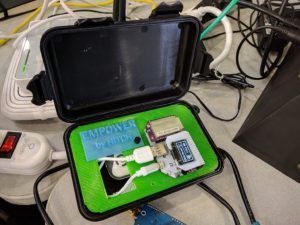
What HITCH has developed can be used in other sectors like video-on-demand markets, education and more. It goes beyond agriculture. They are already working with partners like Empower in East Africa to make access to online contents possible.
Empower from HITCH (source: HITCH)
The Promise of HITCH In Nigeria
With this technology ease of us, it is very possible that farmers cooperatives can organize and connect in the HITCH ecosystem. The company clearly understands the enormous opportunities of reaching rural communities, beyond cities, where the telcos focus, as noted in its homepage.
Globally, over 4 billion people don’t have sustainable (available, affordable, & accessible) broadband. Most of these users are un/underserved by existing coverage and service infrastructure; and live in rural and urban emerging markets. Thus, are denied the ability to benefit from real technology-driven economic growth.
Broadband is important because low digital and conventional literacy in these markets, means video (especially in local languages/dialects) presents an enhanced medium for information, knowledge, and power. For these users, the prevalent notion of “trickle-down broadband” is a death knell; as ROI of current options struggles to present a reliable pathway to sustainable broadband delivery.
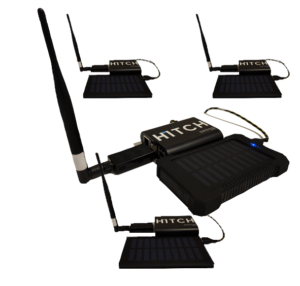
HITCH system (source: HITCH)
All Together
HITCH offers great value for people with limited access to the web. It is not the only company working in this space. Flobyt, Cafe Neo and Surfwella are other entities which are providing free or affordable internet in Nigeria. But HITCH takes this business model forward with its inclusion of rural community like farming areas. It will have to deal with many challenges (power, density, purchasing power, etc) typical in serving rural regions across Africa. How it solves those problems will determine its sustainability and potential profitability.
My company Zenvus will surely benefit from this initiative because a limiting factor in our work is connectivity in farming communities. We have solved some of the problems through satellite connectivity. But that has its cost element which makes it limiting to some clients.
HITCH is very exciting and a startup to watch in Nigeria, and beyond, over the next few years. If they succeed, we will be certain that poverty will drop because farmers will surely improve yields and earn more.