In this videocast, I discuss the best year the e-commerce business in Nigeria will enter an era where entrepreneurs can actually make profit doing so. Today, no one that runs any e-commerce business is profitable. But in 2022, the inflection point will come. Many things will converge and e-commerce will be a profitable business.
MTN Nigeria, a telecommunications giant and industry leader in Nigeria, is part of the MTN Group, headquartered in South Africa. It was the first company that heralded GSM service when on May 16, 2001, it put Nigerians “y’ellow-ing”. Shorting, around August 2001, it launched full commercial operations in Lagos, Abuja and Port Harcourt.
It has since expanded into most parts of the country covering the 36 states, and the Federal Capital Territory, Abuja. It has built capacities across villages, highways and cities and is recognized as the leading brand in Nigeria in its industry.
Getting the license cost MTN $285 million. It made that payment in January 2001. According to public documents, MTN has invested about $2 billion in building its network infrastructure in Nigeria.
Nigerian operation is a very profitable one for MTN.
Despite recent challenges, most self-inflicted, when the company ran into regulatory and compliance issues, resulting to a hefty fine of N1.04 trillion (later reduced to N330 billion to be paid over three years) by the Nigerian government, MTN Nigeria has felt at home in Nigeria. The company has made money in Nigeria and it has also contributed to Nigeria’s economic development. Generally, having MTN in Nigeria has been a huge net positive for the Nigerian people.
Directly or indirectly, MTN Nigeria, in my model, has anchored or sustained more than 400,000 jobs over sixteen years. But that is a small part of its contributions. MTN Nigeria has paid substantial amounts in taxes having generated trillions of naira in profits.
MTN Nigeria Profitability, Plus Glo, Airtel and Etisalat
MTN Nigeria is a private company, in Nigeria, though publicly traded via its Group in the Johannesburg Stock Exchange. According to Bloomberg, the company is worth about U.S.$16.5 billion in total market capitalization. This makes MTN Group one of the most important African companies. It has lost more than 10% since this year, largely correlated with its compliance problems in Nigeria. Around August 2014, MTN Group was worth around $40 billion.
To estimate how much MTN Nigeria has made in profits, I looked into its total payments to the National Information Technology Development Agency (NITDA). Of course, Federal Internal Revenue Service has the tax data – you can ask them. What I am doing here is pure estimation by using public data to extrapolate.
The Director-General of NITDA, Dr Isa Ibrahim Pantami, noted that telecom companies like MTN, Globacom, Etisalat, and Airtel are required by law to pay a certain portion of their annual profits to National Information Technology Development Fund (NITDEV). Section 16 of the Act notes that FIRS should collect the money and remit to NITDA account with CBN.
The Act establishing NITDA mandates that telecommunications companies in Nigeria are required to pay 1% of their annual profits as levy for NITDEV. According to Dr. Pantami, the only operator that has been consistent in paying the levy is MTN.
With this statement from NITDA, we can model the total profits of MTN. According to him, MTN Nigeria has paid a total of N19 billion since the inception of the fund in 2007. That is about nine years to 2015. MTN recorded loss in 2016. This means, from 2007, MTN Nigeria has recorded a total profit of N1.9 trillion.
Globacom paid N1.3 billion for 2011, 2012 and 2015. If we do direct extrapolation, Globacom made total profits of N130 billion for 2011, 2012 and 2015.
Airtel paid N677.7 million for 2007, 2008 and 2015 while declaring losses in other years. This implies that Airtel had made a total profit of N67.8 billion since 2007.
According to NITDA, Etisalat, has claimed losses since its founding in 2008. It has paid nothing to NITDA. Again nothing for Etisalat in Nigeria.
The Total Profits in Nigeria by MTN, Glo, Etisalat and Airtel
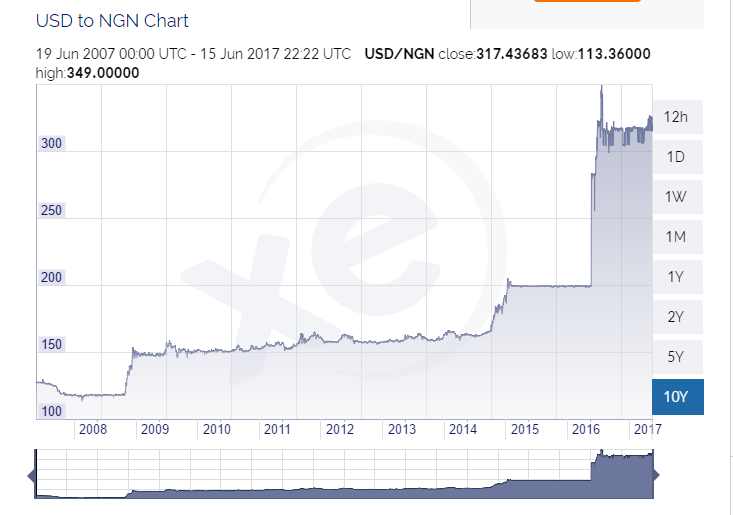
We will do a good extrapolation to determine the total profits by the telecom companies. After doing that, we will convert the Naira to US dollars. To take into considerations, the fluctuation of the Naira to USD, we will use the plot below. We need to get the numbers in US dollars to help non-Nigerians appreciate the content.
For the purpose of this analysis, we will use $1 for N175 since in the plot above, during most of the years the average was N157 to $1.
MTN Nigeria
2007 to date: N1.9 trillion in estimated profits
2001 to 2006: We estimate N3 trillion profit because this was the golden era in GSM business in Nigeria. The competition was low and MTN Nigeria was dominant
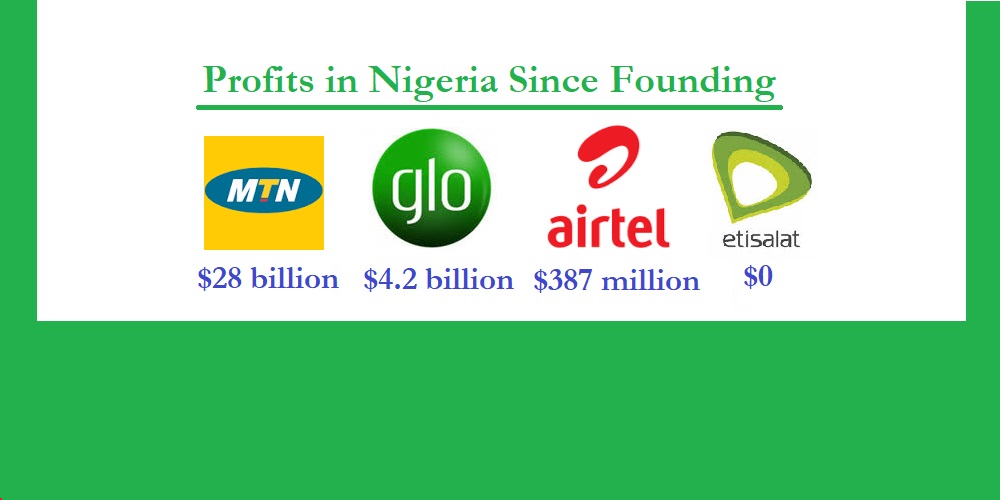
With this, MTN has generated a total profit of N4.9 trillion ($28 billion)
Airtel Nigeria
2007 to date: N67.8 billion in estimated profits
Before 2007, it has different owners (Zain, Celtel, Econet). Let us forget any estimation
With this, Airtel Nigeria has generated a total profit of N67.7 billion ($387 million)
Etisalat Nigeria
$0 forever
Globacom
2011, 2012 and 2015: N130 billion in estimated profits
From 2003 to all the missing years, we estimate a profit of N600 billion. This was also a good period of unprecedented profitability for Glo. It was founded in 2003 which was early enough for some of the nuclear profits in the sector.
With this, Glo has generated a total profit of N730 billion ($4.2 billion)
More Companies for NITDEV
NITDA under the new leadership is extending its tentacles to compel companies like Ericsson, Alcatel, Siemens, Microsoft, Facebook, Oracle and Cisco to pay the NITDEV.
“I also wrote a letter to some of the companies. We wrote to Microsoft, Facebook, Cisco and Oracle. We believe they have been making profits in Nigeria, but they never remitted. Some of them responded to our letters, but others didn’t. MTN, as a leading GSM company, has been consistently paying. It contributed N19 billion so far. In 2016, MTN recorded a loss, so they couldn’t pay,” NITDA DG, Dr Pantami
In short, any large size “technology” company in future will be sending its 1% profit to NITDA. All they need to do is to identify you and just like that you have to payoff.
Yet, These Companies May Not Be Paying All
According to NITDA boss, he remains helpless as the FIRS is not providing NITDA documents to ascertain the profits of the companies. NITDA may have to sue FIRS under its Act if FIRS cannot assist.
“We only rely on what the companies send to us because we can’t get anything from FIRS. I don’t have any record to verify whether MTN is remitting what it’s supposed to,” he lamented.
You could see that the suspicion is there that the telcos may not be paying up. But pity them, Nigeria is a den.
Nigerian government is also collecting another percentage through Industrial Training Fund. That one is 1% of payroll.
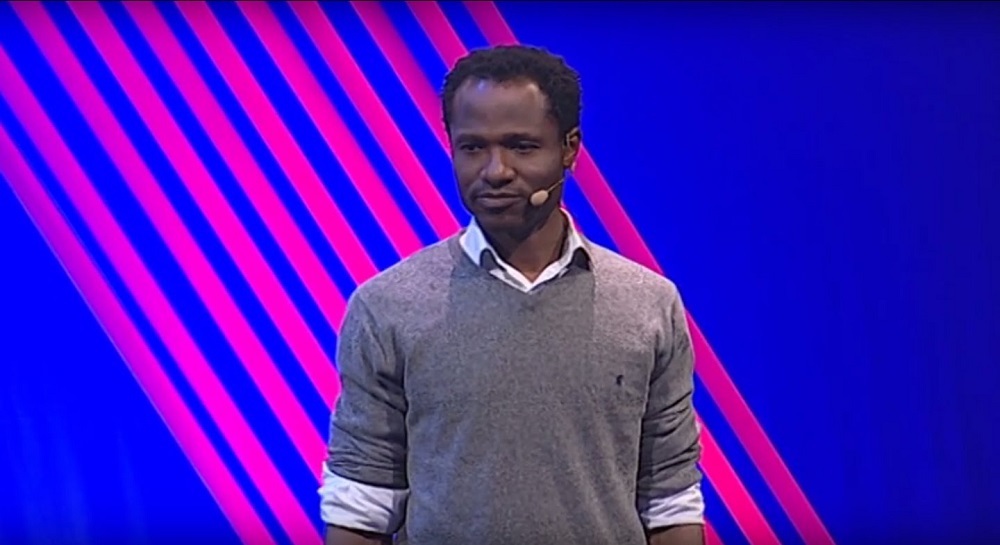
Nigerians are awesome. A young Lagos-born entrepreneur-but-now in California is extending the boundaries of impossibilities. Oshiorenoya Agabi runs Koniku which operates at the intersection of biotechnology and electronics. According to an entry in Crunchbase, the startup proclaims thus:
Koniku is the world’s first Neurocomputation company. We start with a premise that the human brain is the most powerful computer ever devised. We show that capturing that computational power is an engineering problem. Koniku proceeds to meet that challenge with clear solutions.
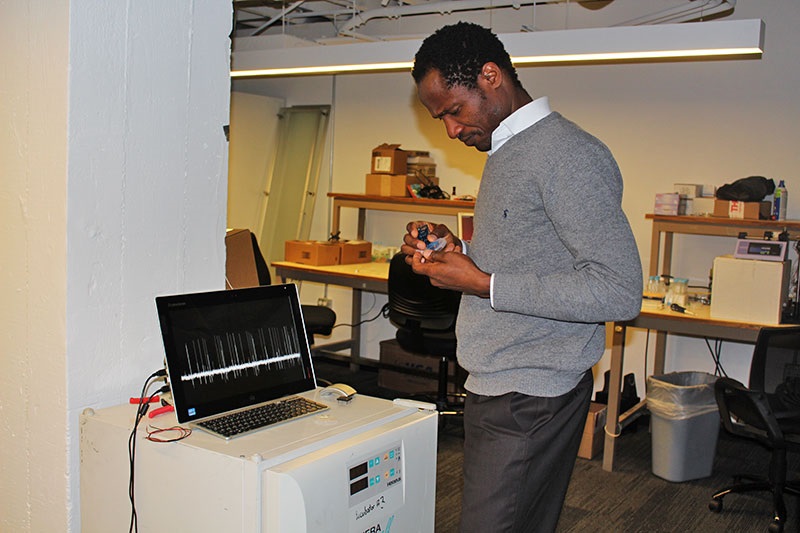
With his startup Koniku, Oshiorenoya Agabi is working to integrate biological neurons and silicon computer chips, to build computers that can think like humans can. Faster, cleverer computer chips are key to solving the next big batch of computing problems, like particle detection or sophisticated climate modeling — and to get there, we need to move beyond the limitations of silicon, Agabi believes. Born and raised in Lagos, Nigeria, Agabi is now based in the SF Bay Area, where he and his lab mates are working on the puzzle of connecting silicon to biological systems.
“Koniku eventually aims to build a device that is capable of thinking in the biological sense, like a human being. We think we can do this in the next two to five years.” — Oshiorenoya Agabi
Agabi had raised $250,000 in seed funding. He did that in Sept 2015. He followed with another $1.4 million in venture funds last August. He is hoping to be in the markets with his chips later this year (87 days from today, exactly).
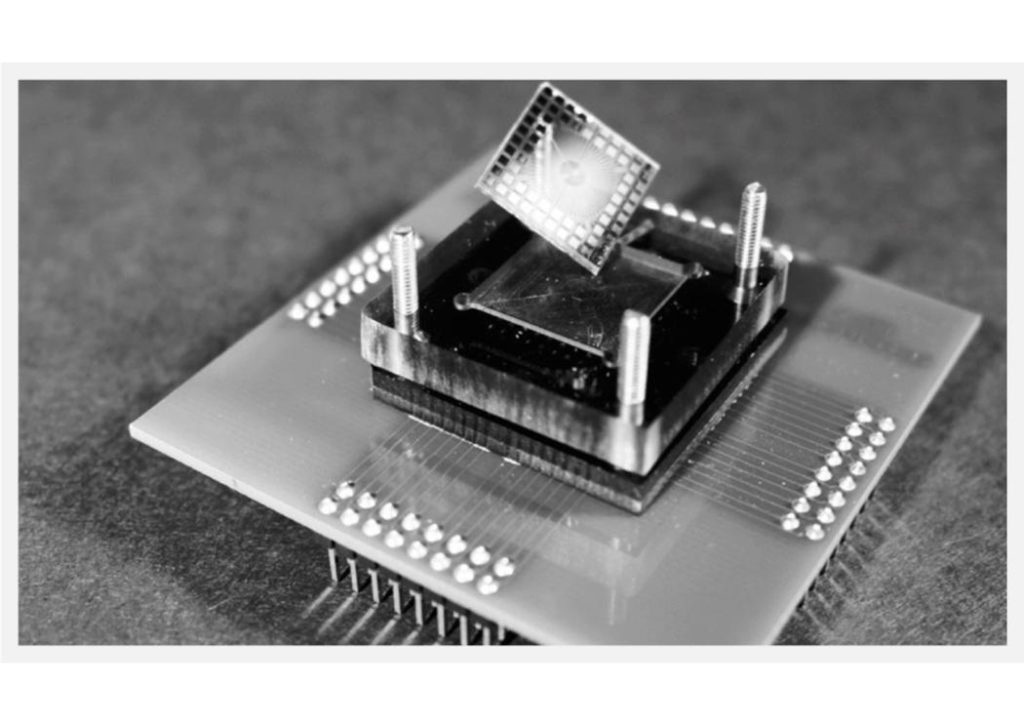
Agabi prototype chip
According to Vice, “Koniku, which completed a stint at the biotech accelerator IndieBio, touts itself as “the first and only company on the planet building chips with biological neurons.” Rather than simply mimic brain function with chips, Agabi hopes to flip the script and borrow the actual material of human brains to create the chips. He’s integrating lab-grown neurons onto computer chips in an effort to make them much more powerful than their standard silicon forebears”.
He is hiring and if you can dream, you can email him – cv@koniku.io
Very impressive selections. The African Innovation Foundation (AIF) today announced the top 10 nominees who will be contending for the 2017 Innovation Prize for Africa (IPA) , to be awarded in Accra, Ghana on 18th July 2017. Innovators from nine African countries including Democratic Republic of Congo, Egypt, Kenya, Liberia, Morocco, Nigeria, South Africa, Uganda and Zimbabwe have been shortlisted for the prestigious Prize. Nigeria has two entries.
This year’s innovators have demonstrated incredible proficiency through innovative solutions addressing challenges in agriculture value chain, health care, energy, communications, service industries as well as surveillance using drone technology.
Find below the shortlisted top 10 IPA nominees and a summary of their innovations. These selected nominees will pitch their innovative projects to the esteemed IPA panel of jurors during the closed pitch sessions on July 15th and 16th in Accra. Following their pitch, three winners will be selected and announced during the Awards ceremony slated for 18 July 2017 at the Mövenpick Ambassador Hotel, Accra.
Innovations in communications and smart solutions
Peris Bosire, Kenya: FarmDrive
FarmDrive is a financial technology company that has developed a mobile phone based application that collects data and provides an alternative risk assessment model for small holder farmers. While the continent remains largely dependent on agriculture, one of the biggest challenges facing smallholder farmers is access to credit or finance. Most financial institutions are reluctant to grant credit to farmers because their risk assessment models flag small farmers as being very risky. FarmDrive has developed a new methodology for assessing credit worthiness of farmers that has led to higher acceptance rate of loan applications by farmers while maintaining a very low default rate. This could have the effect of significantly boosting agricultural production on the continent while helping financial institutions cost effectively increase their agricultural loan portfolios.
Nokwethu Khojane, South Africa: Lakheni, Turning Social Capital into Buying Power
Lakheni is a social and business model innovation which seeks to aggregate low-income households into buying-groups in order to negotiate favourable discounts for goods and services supplied to these households. Most poor people end up paying for goods and services at a unit price that is usually much higher than the unit price paid by other people with more disposable income. This is because as goods and services are packaged into smaller and smaller units to make them affordable, they become less economically efficient and end up costing higher than if one was to buy in bulk or in larger units. In essence, the poor end up paying a poverty premium. Lakheni solves this problem by aggregating poor households into a buyer’s market by leveraging mobile technology.
Omolabake Adenle, Nigeria: Voice Recognition and Speech Synthesis Software for African Languages
This is a software solution that can understand and digitize spoken African languages, and synthesize speech from African languages presented as digitized text. Digitizing African languages in this way allows Africans to interact with hardware devices such as mobile phones, and digital services such as call-center applications by speaking their local language. The software can be integrated into a wide range of devices and third-party software applications. While voice recognition and speech synthesis software have been developed for various Western and Asian languages, there has been very limited commercial application or academic research for African languages. The difficulty lies in modelling tonality present in most African languages and limited data resources for language modelling. This innovation opens up opportunities for Africans with low literacy levels to also enjoy the benefits of the digital revolution.
Nzola Swasisa, Democratic Republic of Congo: Lokole
Lokole, is a device that enables access to efficient email communication anywhere with cellular coverage at a price that is one hundred to one thousand times cheaper than accessing email via regular cellular bandwidth costs. Lokole achieves this firstly by creating a shareable local area network where up to a hundred users within a 25 meters’ radius can access the network and share the costs. Secondly, it contains advanced algorithms that compress email and also schedules uploads and downloads of data to when data bundles costs are at their cheapest. Costs per user could be as little as $0.01/person/day. More than 71% of the African population doesn’t have access to efficient communications. Lokole solves this communication problem and enables many communities to access efficient communication for the first time. Applications of Lokole include: health (remote-doctor), education (remote-teacher), commerce (purchase orders via email), business (attachment documents) and many more.
Leveraging artificial intelligence and mechanical solutions
Badr Idriss, Morocco: Atlan Space
Atlan Space develops software technology that is then deployed to manage the operations of unmanned aerial vehicles (UAVs) or drones. The software is currently tested for use in managing operations in detecting illegal or harmful maritime activity such as illegal fishing or oil spills over wide expanse areas. UAVs operated by this software can be launched and deployed into monitoring operations without having an aircraft operator. Also, by using Artificial Intelligence they are able to collect data, analyze and produce actionable reports. African governments face numerous challenges in monitoring activities and operation over wide areas. This includes border patrols, deforestation, animal poaching and maritime activity. The software allows for the deployment of UAVs at a very cost effective price without need for highly skilled human intervention and over a wide number of uses.
Aly El-Shafei, Egypt: Smart Electro-Mechanical Actuator Journal Integrated Bearing “SEMAJIB”
The patented innovation (SEMAJIB) presented by Dr. El-Shafei, is a smart bearing which is versatile and can change its characteristics as it operates. It consists of a magnetic bearing imbedded in an oil-filled journal bearing, thus forming the smart controllable bearing. The flooding of the bearing with oil is a game changer as the purpose of bearings has traditionally been to expel oil. There is a significant improvement in turbine performance using the SEMAJIB particularly in single line combined cycle plants, as well as conventional generator technology. The device is designed to be used to support energy generating turbines and can be used to improve efficiency and reduce costs of generating energy in Africa.
Discoveries in healthcare solutions
Dougbeh-Chris Nyan, Liberia: New Technology for Rapid Detection of Many Infections Using Only One Test
This is a rapid diagnostic test that can detect and simultaneously differentiate at least three to seven infections at the same time within 10 to 40 minutes. In most African countries, there is a lack of sophisticated diagnostic devices and limited expertise in high-tech diagnostics. This hinders the clinical decision-making ability of healthcare providers. This test provides a solution to this clinical problem. The innovation is easy to use in any setting and particularly in rural areas. Additionally, the device is able to detect and distinguish multiple infections which bear the same symptoms for instance, when a patient has yellow fever, malaria, and Ebola. Whereas most testing methods take 3 – 7 days, this device gives test results in 10 – 40 minutes. This would provide a significant step in the detection and management of infectious diseases on the continent.
Olanisun Olufemi Adewole, Nigeria: Sweat TB Test, A non-invasive rapid skin test to detect Tuberculosis
Sweat TB Test, is a non-invasive rapid diagnostic test to detect tuberculosis (TB). TB is second only to HIV/AIDS as a leading cause of death in Africa. Available methods are high tech; cannot be deployed in rural centres, dependent only sputum which sometimes may not be collectible and considered messy by patients. It is also time consuming with patients making repeated clinic visits before a diagnosis is made. Delay in diagnosis and missed diagnosis of 3million TB cases occur leading to continuous spread of the disease. Sweat TB Test leverages on TB specific marker in sweat of patients, to produce a point- of- care test to detect TB, within ten minutes, without any needle prick. In simple steps, reports are read and patients commenced on medication as needed at the same clinic visit. It has the potential to contribute towards effectively controlling TB, reduce TB related deaths and holds promise to prevent drug resistance TB in Africa.
Gift Gana, Zimbabwe: Dr. CADx
Dr CADx is a software solution that helps doctors and health care workers diagnose medical images more accurately. Due to the scarcity of radiologists on the continent, most medical images are read by general doctors or other health care workers who lack expertise and end up misdiagnosing more than 30% of the cases that they review. As a result, millions of patients fail to get the right treatment or the treatment is delayed leading to more complications and even death. Dr CADx uses deep learning to interpret medical images and achieve an accuracy of 82% an improvement over the 70% average for radiologists. Dr CADx is designed to work in low resource settings with poor internet connectivity opening it up for use in many rural settings in Africa.
The Electronically Controlled Gravity Feed Infusion Set (ECGF) is medical device designed to accurately administer intravenous (IV) fluids and drugs by controlling the rate of fluid flow based on feedback from a drop sensor. Over 10% of children admitted to East African hospitals need immediate infusion therapy. Findings from the FEAST trial indicates that over-infusion in children increased the absolute risk of death by 3.3 % at 48 hours. Erroneous delivery rates can result into serious adverse effects. The ECGF solves this problem as it is very easy to operate and has key safety features which include alarms for rate of infusion (rapid or slow), total volume (over or under) and faulty sensors. A battery utilizing a hybrid (AC mains and solar) charging bed powers the device. The ECGF has the potential to save lives by providing accuracy and safety at 8% the cost of a brand-new infusion pump.
Have you noticed that some of the agencies in the Federal Ministry of Industry, Trade and Investment (MITI) are improving their turnaround times. You can incorporate a company now with the Corporate Affairs Commission within two weeks, if you get all the rules right on first attempt. For example, do not have engineering in the name of your company if you do not belong to COREN (Council for the Regulation of Engineering in Nigeria).
Also, now one can search for a company without going to Abuja through the CAC pubic search. Though it does not give much information, it provides the first line of ascertaining the credibility of potential partners.
It seems Microsoft is behind these transformations. According to government press release, MITI is partnering with Microsoft, through its Africa Open4Business programme, to digitally transform the delivery of services to the investor community in Nigeria and evolve the regulatory and procedural environment governing business incorporation. By harnessing advances in cloud technologies, MITI aims to transform the reach and scope of government-to-investor services in the country, creating an agile and investment-friendly environment.
MITI strongly believes that digital technologies play a pivotal and fundamental role in evaluating and changing the landscape for reforms, with e-reforms becoming the next big thing for Nigeria, for government operations and services, and for the economy at large.
“Our partnership with Microsoft is designed to drive business model innovations, which will transform the delivery of services to current and prospective investors in Nigeria,” says the Honorable Okechukwu Enelamah, Minister of Industry, Trade and Investment. “The objective is to deliver self-provisioned, expedient and technology-driven services to the highly-valued constituencies of investors that we are mandated and keen to serve”.
Nigerians welcome the redesign we are seeing in this Ministry. The Ministry of Education is also showing a lot of innovation despite the paltry budget it has. In Agriculture, the federal ministry is also pushing hard to remove pricing asymmetry through technology. It must execute that project as that will benefit our rural farmers. Technology can help simplify most of our processes.
Well done the two ministers running the Ministry. Your predecessor, Olusegun Aganga, did well also.